ಪರೀಕ್ಷಾ ಪ್ರಾಮಾಣಿಕತೆ ಕಾಪಾಡಿ, ವಿದ್ಯಾರ್ಥಿಗಳಿಗೆ ಆದ್ಯತೆ ನೀಡಿ: NEET-UG ಮರುಪರೀಕ್ಷೆಗೆ ಧರ್ಮೇಂದ್ರ ಪ್ರಧಾನ್ ಮಹತ್ವದ ಸೂಚನೆ

ಪರೀಕ್ಷೆ

ನವದೆಹಲಿ: ರಾಷ್ಟ್ರೀಯ ಮಟ್ಟದ ಸ್ಪರ್ಧಾತ್ಮಕ ಪರೀಕ್ಷೆಗಳ ವ್ಯವಸ್ಥೆಯಲ್ಲಿ ಭದ್ರತೆ ಹಾಗೂ ವಿದ್ಯಾರ್ಥಿ ಸ್ನೇಹಿ ವಾತಾವರಣ ಎರಡಕ್ಕೂ ಸಮಾನ ಆದ್ಯತೆ ನೀಡಬೇಕೆಂದು ಕೇಂದ್ರ ಶಿಕ್ಷಣ ಸಚಿವ ಶ್ರೀ ಧರ್ಮೇಂದ್ರ ಪ್ರಧಾನ್ ಮಹತ್ವದ ಸೂಚನೆ ನೀಡಿದ್ದಾರೆ.

ಪರೀಕ್ಷೆಗಳ ಭದ್ರತೆ ಮತ್ತು ಪಾವಿತ್ರ್ಯ ಯಾವುದೇ ಕಾರಣಕ್ಕೂ ಹಾನಿಯಾಗಬಾರದು ಎಂದು ಅವರು ಸ್ಪಷ್ಟಪಡಿಸಿದರೂ, ಅದೇ ಸಮಯದಲ್ಲಿ ಪರೀಕ್ಷಾ ಕೇಂದ್ರಗಳಲ್ಲಿ ವಿದ್ಯಾರ್ಥಿಗಳಿಗೆ ಅನುಕೂಲಕರ, ಸುರಕ್ಷಿತ ಮತ್ತು ಒತ್ತಡರಹಿತ ವಾತಾವರಣ ನಿರ್ಮಾಣ ಮಾಡುವ ಅಗತ್ಯವನ್ನೂ ಅವರು ಒತ್ತಿ ಹೇಳಿದರು.

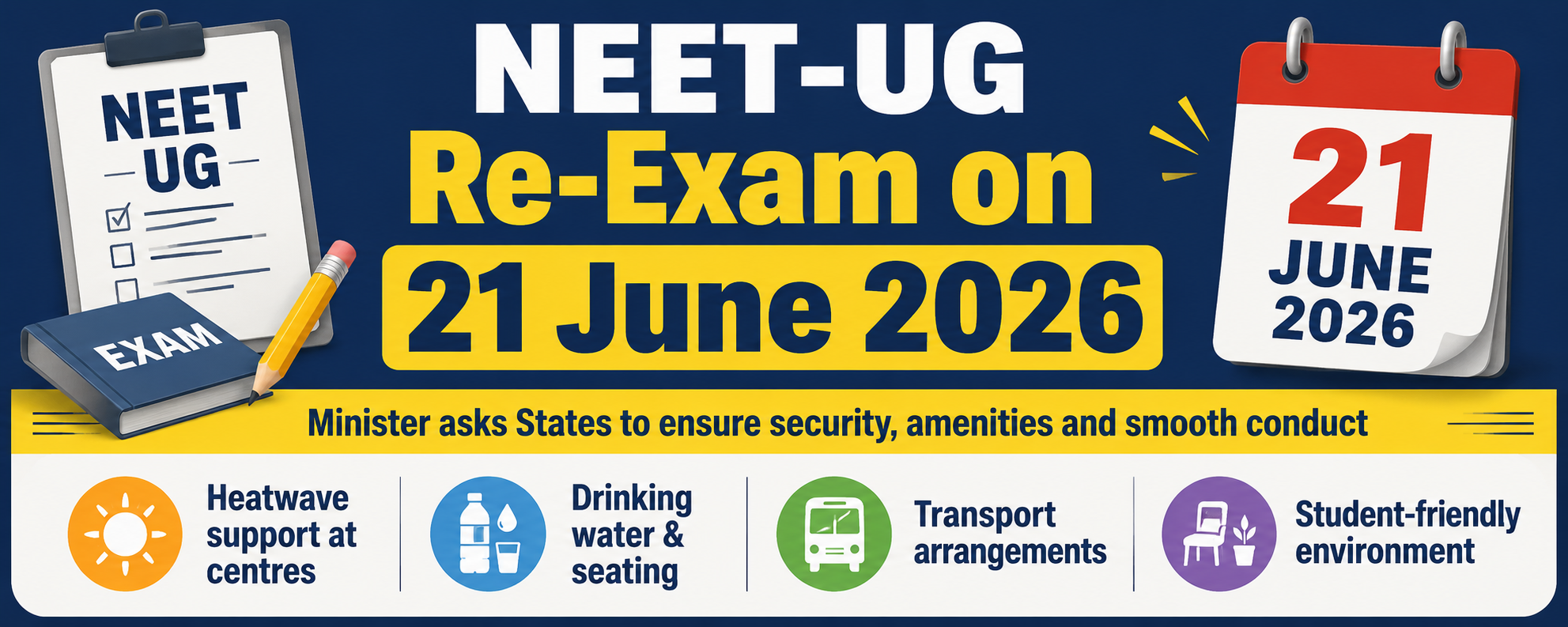
ಈ ಸೂಚನೆ, ದೇಶದ ಅತಿದೊಡ್ಡ ಶಿಕ್ಷಣ ಸಂಬಂಧಿತ ಕಾರ್ಯಾಚರಣೆಗಳಲ್ಲಿ ಒಂದಾದ NEET-UG ಮರುಪರೀಕ್ಷೆಗೆ ಸಿದ್ಧತೆಗಳು ನಡೆಯುತ್ತಿರುವ ಸಂದರ್ಭದಲ್ಲಿ ಹೊರಬಿದ್ದಿದೆ. ರಾಷ್ಟ್ರೀಯ ಪರೀಕ್ಷಾ ಏಜೆನ್ಸಿ (NTA) ಜೂನ್ 21, 2026ರಂದು ದೇಶದಾದ್ಯಂತ 550 ನಗರಗಳಲ್ಲಿನ 5,400ಕ್ಕೂ ಹೆಚ್ಚು ಪರೀಕ್ಷಾ ಕೇಂದ್ರಗಳಲ್ಲಿ ಮರುಪರೀಕ್ಷೆ ನಡೆಸಲು ಸಿದ್ಧತೆ ನಡೆಸುತ್ತಿದೆ.

ಭದ್ರತೆ ಜೊತೆಗೆ ವಿದ್ಯಾರ್ಥಿ ಕಲ್ಯಾಣಕ್ಕೂ ಒತ್ತು

ಇತ್ತೀಚಿನ ಉನ್ನತ ಮಟ್ಟದ ಸಭೆಗಳಲ್ಲಿ ಕೇವಲ ಅಕ್ರಮಗಳನ್ನು ತಡೆಯುವತ್ತ ಮಾತ್ರವಲ್ಲದೆ, ಪರೀಕ್ಷೆಗೆ ಹಾಜರಾಗುವ ಲಕ್ಷಾಂತರ ವಿದ್ಯಾರ್ಥಿಗಳ ಮಾನಸಿಕ ಮತ್ತು ದೈಹಿಕ ಆರೈಕೆಯ ಮೇಲೂ ವಿಶೇಷ ಗಮನ ಹರಿಸಲಾಗಿದೆ.

“ಪರೀಕ್ಷೆಯ ಭದ್ರತೆ ಮತ್ತು ಪಾವಿತ್ರ್ಯಕ್ಕೆ ಯಾವುದೇ ರೀತಿಯ ಧಕ್ಕೆಯಾಗಬಾರದು. ಆದರೆ ಅದರಿಂದ ವಿದ್ಯಾರ್ಥಿಗಳಿಗೆ ಅನಗತ್ಯ ಒತ್ತಡ ಉಂಟಾಗಬಾರದು. ಒತ್ತಡದ ವಾತಾವರಣ ವಿದ್ಯಾರ್ಥಿಗಳ ಸಾಧನೆಗೆ ಪರಿಣಾಮ ಬೀರುತ್ತದೆ. ಪ್ರತಿಯೊಂದು ಪರೀಕ್ಷಾ ಕೇಂದ್ರವೂ ಸುರಕ್ಷಿತ, ಸುವ್ಯವಸ್ಥಿತ ಮತ್ತು ವಿದ್ಯಾರ್ಥಿ ಸ್ನೇಹಿಯಾಗಿರಬೇಕು.”

— ಶಿಕ್ಷಣ ಸಚಿವಾಲಯದ ಮುಖ್ಯ ಸಂದೇಶ

ಜೂನ್ 21ರ ಮರುಪರೀಕ್ಷೆಗೆ ಪ್ರಮುಖ ಸೂಚನೆಗಳು

ವಿದ್ಯಾರ್ಥಿ ಸ್ನೇಹಿ ಹಾಗೂ ಭದ್ರತಾ ದೃಷ್ಟಿಯಿಂದ ದೇಶದಾದ್ಯಂತ ಇರುವ 5,400ಕ್ಕೂ ಹೆಚ್ಚು ಪರೀಕ್ಷಾ ಕೇಂದ್ರಗಳಿಗೆ ಕೇಂದ್ರ ಸರ್ಕಾರ ಹಾಗೂ NTA ಕೆಲವು ಮಹತ್ವದ ಮಾರ್ಗಸೂಚಿಗಳನ್ನು ನೀಡಿವೆ:

  • ಕಟ್ಟುನಿಟ್ಟಿನ ಭದ್ರತಾ ವ್ಯವಸ್ಥೆ: ಬಯೋಮೆಟ್ರಿಕ್ ಪರಿಶೀಲನೆ, ನಿರಂತರ CCTV ನಿಗಾವ್ಯವಸ್ಥೆ ಹಾಗೂ ಕಠಿಣ ಪ್ರವೇಶ ನಿಯಮಗಳನ್ನು ಜಾರಿಗೆ ತರಲಾಗುತ್ತದೆ.
  • ಬೇಸಿಗೆ ತಾಪಮಾನದಿಂದ ರಕ್ಷಣೆ: ವಿದ್ಯಾರ್ಥಿಗಳು ಮತ್ತು ಪೋಷಕರಿಗಾಗಿ ಕುಡಿಯುವ ನೀರು, ಕಾರ್ಯನಿರ್ವಹಿಸುವ ಫ್ಯಾನ್/ಕೂಲರ್ ವ್ಯವಸ್ಥೆ ಹಾಗೂ ನೆರಳು ಪ್ರದೇಶಗಳನ್ನು ಕಡ್ಡಾಯಗೊಳಿಸಲಾಗಿದೆ.
  • ಸುಗಮ ಪ್ರವೇಶ ವ್ಯವಸ್ಥೆ: ಉದ್ದ ಸಾಲುಗಳು ಹಾಗೂ ಆತಂಕ ತಪ್ಪಿಸಲು ಹಂತ ಹಂತವಾಗಿ ವರದಿ ಸಮಯ ನಿಗದಿ ಮತ್ತು ಹೆಚ್ಚುವರಿ ತಪಾಸಣಾ ಕೌಂಟರ್‌ಗಳನ್ನು ವ್ಯವಸ್ಥೆ ಮಾಡಲಾಗುತ್ತದೆ.
  • ವೈದ್ಯಕೀಯ ಸಿದ್ಧತೆ: ಪ್ರತಿಯೊಂದು ಕೇಂದ್ರದಲ್ಲೂ ಪ್ರಾಥಮಿಕ ಚಿಕಿತ್ಸೆ ಕಿಟ್ ಹಾಗೂ ಆರೋಗ್ಯ ತುರ್ತು ಪರಿಸ್ಥಿತಿಗಳನ್ನು ನಿರ್ವಹಿಸಲು ವೈದ್ಯಕೀಯ ಸಿಬ್ಬಂದಿಯನ್ನು ನಿಯೋಜಿಸಲಾಗುತ್ತದೆ.

ಮರುಪರೀಕ್ಷೆಯ ಪ್ರಮುಖ ಅಂಶಗಳು

ವಿವರಮಾಹಿತಿ
ಪರೀಕ್ಷೆಯ ದಿನಾಂಕಜೂನ್ 21, 2026
ಪರೀಕ್ಷಾ ಕೇಂದ್ರಗಳು5,400+
ವ್ಯಾಪ್ತಿದೇಶದ 550 ನಗರಗಳು
ಪ್ರಮುಖ ಉದ್ದೇಶಭದ್ರತೆ ಮತ್ತು ವಿದ್ಯಾರ್ಥಿ ಸ್ನೇಹಿ ವ್ಯವಸ್ಥೆಯೊಂದಿಗೆ ದೋಷರಹಿತ ಪರೀಕ್ಷೆ

ವಿಶ್ವಾಸ ಪುನಃ ಸ್ಥಾಪಿಸುವತ್ತ ಸರ್ಕಾರದ ಹೆಜ್ಜೆ

“ವಿದ್ಯಾರ್ಥಿ ಸ್ನೇಹಿ ಪರೀಕ್ಷಾ ವಾತಾವರಣ” ನಿರ್ಮಾಣ ಮಾಡುವ ಸರ್ಕಾರದ ನಿರ್ಧಾರವನ್ನು ಶಿಕ್ಷಣ ತಜ್ಞರು ಹಾಗೂ ಪೋಷಕರು ಸ್ವಾಗತಿಸಿದ್ದಾರೆ. NEET-UG ಪರೀಕ್ಷೆಗೆ ಸಂಬಂಧಿಸಿದ ಒತ್ತಡ ಮತ್ತು ಆತಂಕವನ್ನು ಕಡಿಮೆ ಮಾಡುವತ್ತ ಇದು ಅಗತ್ಯವಾದ ಹೆಜ್ಜೆಯಾಗಿದೆ ಎಂದು ಅಭಿಪ್ರಾಯ ವ್ಯಕ್ತವಾಗಿದೆ.

ಜೂನ್ 21ರ ಪರೀಕ್ಷೆಗೆ ಇನ್ನೂ ಕೆಲವೇ ವಾರಗಳು ಬಾಕಿ ಇರುವ ಹಿನ್ನೆಲೆಯಲ್ಲಿ, ದೇಶದ ಎಲ್ಲಾ 550 ನಗರಗಳ ಸ್ಥಳೀಯ ಆಡಳಿತಗಳಿಗೆ ತಕ್ಷಣದಿಂದಲೇ ಮಾಕ್ ಡ್ರಿಲ್‌ಗಳು ಹಾಗೂ ಮೂಲಸೌಕರ್ಯ ಪರಿಶೀಲನೆ ನಡೆಸುವಂತೆ ಸೂಚಿಸಲಾಗಿದೆ.

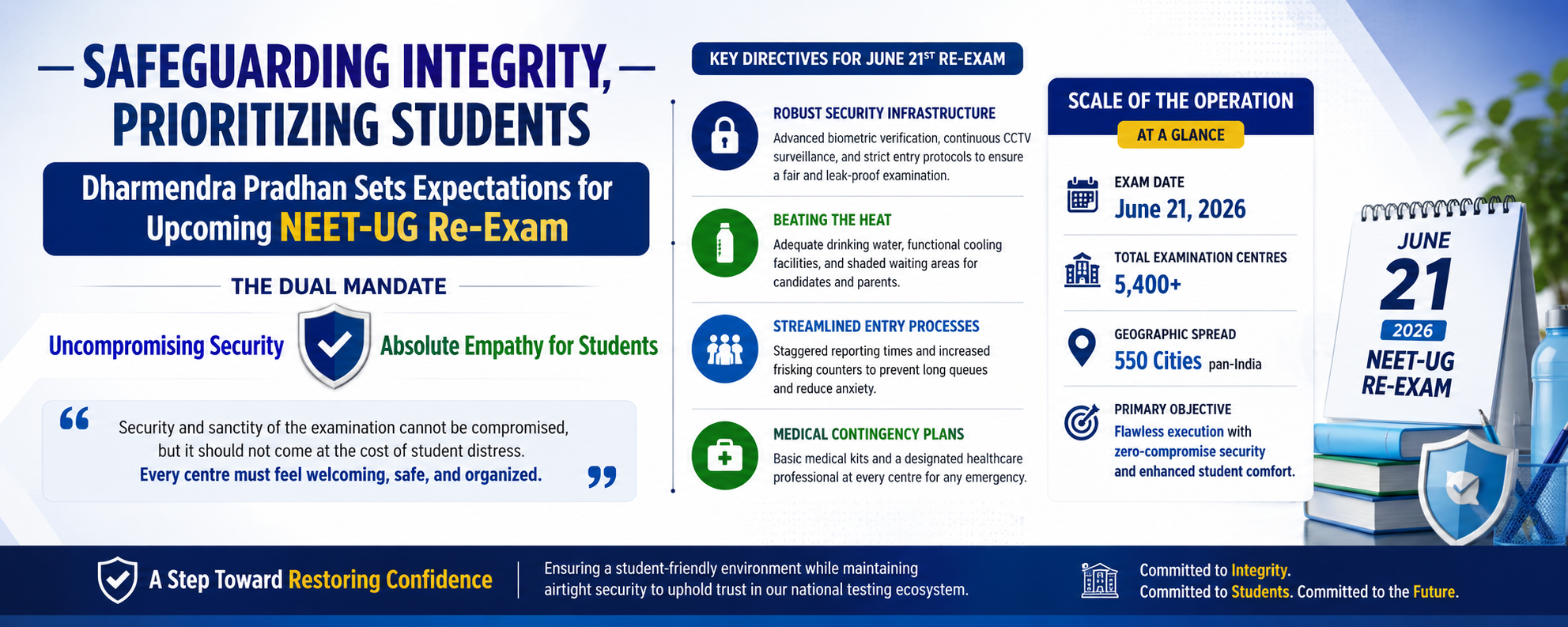
Safeguarding Integrity, Prioritizing Students: Dharmendra Pradhan Sets Expectations for Upcoming NEET-UG Re-Exam

Exam

New Delhi — In a definitive push for balanced examination reforms, Union Minister of Education Shri Dharmendra Pradhan has underscored a dual mandate for the upcoming national competitive exams: uncompromising security and absolute empathy for the candidates.

While emphasizing that examination security remains of paramount importance, Shri Pradhan stressed that equal priority must be given to ensuring adequate facilities and a student-friendly environment at examination centres across the country.

The directive comes at a critical juncture as the National Testing Agency (NTA) gears up for one of the largest academic exercises of the year. The NEET-UG Re-examination is scheduled to be held on 21st June, 2026, at over 5,400 Examination Centres in 550 cities across the country.

The Dual Mandate: Security Meets Student Comfort

The Minister’s statement reflects a holistic approach to large-scale testing. In recent high-level briefing meetings, the focus has shifted from merely preventing malpractice to actively safeguarding the physical and mental well-being of the lakhs of students appearing for the high-stakes medical entrance exam.

“Security and sanctity of the examination cannot be compromised, but it should not come at the cost of student distress. A stressful environment impacts performance. Every centre must feel welcoming, safe, and organized.”

Key takeaway from the Ministry’s directive.

Key Directives for the June 21st Re-Exam

To translate this vision into reality, the Ministry of Education, in coordination with local authorities and the NTA, has outlined specific areas of focus for the 5,400+ centres:

  • Robust Security Infrastructure: Implementation of advanced biometric verification, continuous CCTV surveillance, and strict entry protocols to eliminate any possibility of leaks or impersonation.
  • Beating the Heat: Given the late June timeline, centres are strictly instructed to provide adequate drinking water, functional cooling facilities (fans/coolers), and shaded waiting areas for parents and candidates.
  • Streamlined Entry Processes: To prevent long queues and anxiety, staggered reporting times and increased frisking counters will be deployed.
  • Medical Contingency Plans: Every centre will be required to have basic medical kits and a designated healthcare professional on standby to handle any heat- or stress-related emergencies.

Scale of the Operation at a Glance

The logistics for the June 21st re-examination are massive, requiring seamless coordination between central and state machinery.

MetricDetails
Exam DateJune 21, 2026
Total Examination Centres5,400+
Geographic Spread550 Cities pan-India
Primary ObjectiveFlawless execution with zero-compromise security and enhanced student comfort

A Step Toward Restoring Confidence

The decision to ensure a “student-friendly environment” is being viewed by educators and parents as a necessary step to reduce the intense pressure associated with NEET-UG. By demanding that local administrators treat candidates with empathy while maintaining airtight vigilance, the government aims to restore absolute confidence in the national testing ecosystem.

With just weeks left before the June 21st date, local administrations in all 550 cities have been instructed to conduct mock drills and audit their infrastructure immediately to comply with the Minister’s mandate.

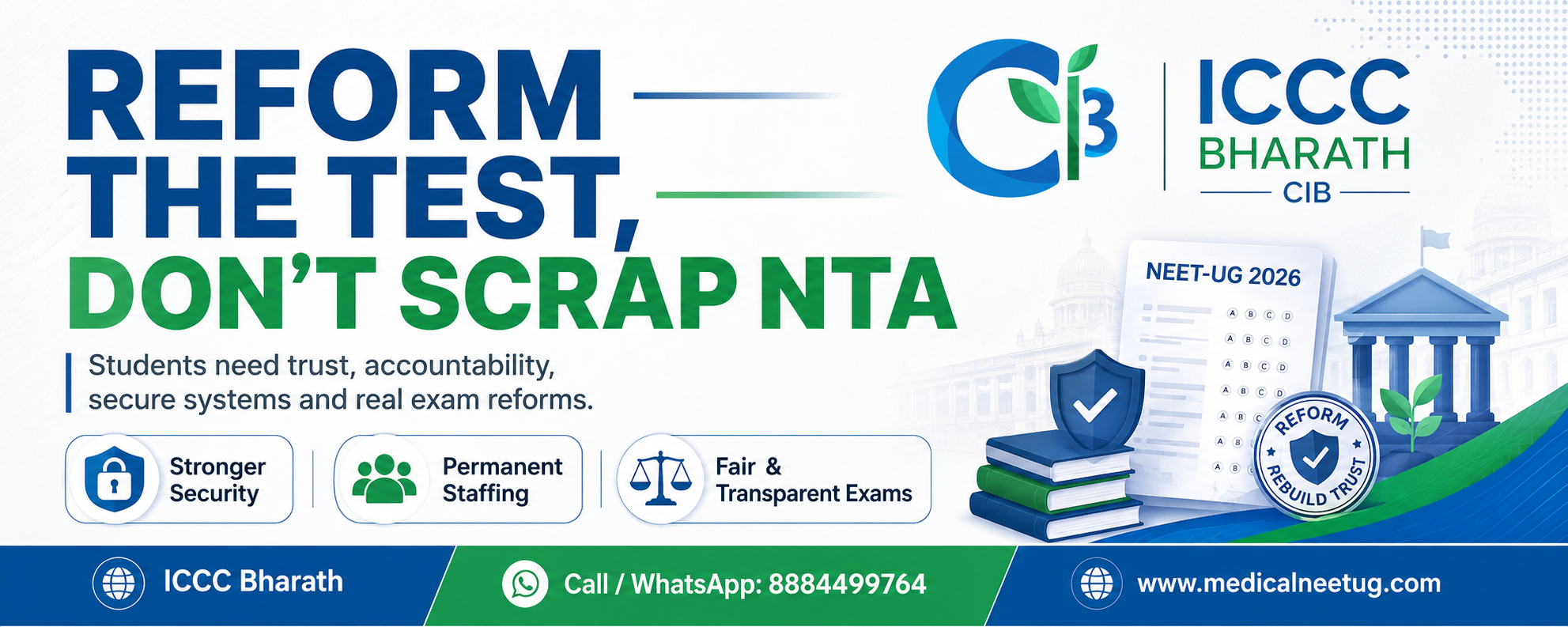
Reform the Exam System, Don’t Scrap NTA

The NEET-UG 2026 paper leak controversy has once again shaken the confidence of students and parents across India. For lakhs of families, NEET is not just an entrance exam. It is years of sacrifice, coaching fees, hostel life, sleepless nights, emotional pressure and one dream — to become a doctor.

When such an exam is cancelled due to paper leak allegations, the pain is not only academic. It is emotional, financial and psychological. Students who prepared honestly feel punished for no mistake of theirs. Parents feel helpless. The system loses trust.

But at this point, the question should not only be whether NTA should be scrapped. The bigger question is: How do we reform the examination system so deeply that students never face this trauma again?

NTA Handles a Huge Examination Ecosystem

The National Testing Agency does not conduct only one exam. It manages several major national-level examinations, including NEET-UG, JEE Main, CUET, UGC-NET and other specialised tests for ministries, regulators and institutions.

This means NTA handles lakhs and even crores of test events every year across multiple languages, thousands of centres, rural and urban regions, and different academic streams.

Such a large testing ecosystem cannot be run casually. It requires permanent leadership, trained manpower, strong technology, clear protocols, real-time monitoring and strict accountability.

NEET-UG 2026 Exposed the Weakest Link

NEET-UG is still conducted in pen-and-paper mode. At this scale, a physical paper system becomes highly vulnerable.

The question paper has to be prepared, translated, printed, packed, stored, transported, opened and distributed at thousands of centres. Every physical step becomes a possible weak point.

For honest students, even one weak link can destroy months of preparation.

This is why reform is urgent. The system cannot depend only on trust. It must be protected by technology, law, accountability and professional management.

CBT Can Reduce Some Risks

Computer-Based Tests are not risk-free, but they reduce many dangers linked to physical paper movement.

In CBT mode, question papers can be delivered through encrypted systems. Access can be controlled. Sessions can be monitored digitally. Audit trails can be maintained. If a problem happens in one centre or one shift, that session can be isolated and corrected without cancelling the entire examination for lakhs of students.

This is one reason why NEET-UG should gradually move towards a secure CBT or hybrid model, with proper infrastructure and support for rural students.

But CBT alone is not enough. Technology must come with honest governance.

The Real Problem Is Weak Structure and Accountability

The NEET crisis is not only about a paper leak. It also exposes deeper administrative problems.

If an agency is conducting exams for more than one crore test events in a year, it cannot run with vacant posts, temporary arrangements, outsourced dependency and unclear responsibility.

Reports of senior vacancies and lack of permanent manpower inside NTA raise serious concerns. A national testing body must have competent people in technology, cybersecurity, logistics, examination law, data management, audit, finance and grievance redressal.

Appointments should not be influenced by lobbying or convenience. They must be based on proven experience, integrity and capability.

India has enough talented professionals. The problem is not lack of people. The problem is lack of transparent selection and serious institutional planning.

Reform Should Be Serious, Not Cosmetic

After every controversy, committees are formed, reports are written and promises are made. But students need more than statements.

India needs real reform:

Clear responsibility at every level
Permanent and qualified manpower
Strict exam security protocols
Digital tracking of question paper movement
Encrypted paper transmission systems
Biometric and face authentication
AI-based anomaly detection
Independent audit of exam processes
Strong cybercrime coordination
Faster grievance redressal
Public accountability after every failure

The Radhakrishnan Committee recommendations should not remain on paper. They must be implemented with deadlines, monitoring and public reporting.

Do Not Punish Honest Students Again and Again

The worst part of any paper leak is that honest students suffer the most.

A student may have travelled hundreds of kilometres. A family may have spent money on coaching, rent, food, exam travel and emotional support. Many students are repeaters who have already given one or two years of their life to this exam.

When the system fails, their pain cannot be dismissed as a technical issue.

Students need assurance that their hard work matters more than money, contacts or manipulation.

Reform NTA, Strengthen It, Make It Accountable

Scrapping an institution may sound attractive during anger, but the real need is to rebuild it with stronger legal and administrative foundations.

NTA should be made more accountable, more transparent and more professional. If needed, it should be given statutory backing through Parliament, with clear responsibility, audit power and public reporting.

The agency must not become a body that conducts exams but avoids accountability when things go wrong.

A national testing agency must be independent, competent and answerable.

Conclusion

The NEET-UG 2026 crisis is a painful reminder that India’s examination system needs urgent reform. But reform should be thoughtful, practical and student-centric.

The goal should not be only to blame NTA or defend NTA. The goal should be to build an examination system that students can trust.

India’s students deserve fair exams. Parents deserve peace of mind. Honest preparation deserves protection.

Reform the test. Strengthen the system. Fix accountability. Protect students.
NEET-UG ಪ್ರಶ್ನೆಪತ್ರಿಕೆ ಸೋರಿಕೆ ವಿವಾದದ ಬಳಿಕ ಸುರಕ್ಷಿತ ಪರೀಕ್ಷೆಗಾಗಿ NTA ಪ್ರಮುಖ ಸುಧಾರಣೆಗಳನ್ನು ಘೋಷಿಸಿದೆ

NEET-UG 2026 ಪ್ರಶ್ನೆಪತ್ರಿಕೆ ಸೋರಿಕೆ ವಿವಾದದ ಹಿನ್ನೆಲೆದಲ್ಲಿ ರಾಷ್ಟ್ರೀಯ ಪರೀಕ್ಷಾ ಸಂಸ್ಥೆ (NTA) ದೇಶದ ರಾಷ್ಟ್ರೀಯ ಮಟ್ಟದ ಪರೀಕ್ಷಾ ವ್ಯವಸ್ಥೆಯನ್ನು ಇನ್ನಷ್ಟು ಸುರಕ್ಷಿತ ಮತ್ತು ಪಾರದರ್ಶಕವಾಗಿಸಲು ಹಲವು ಪ್ರಮುಖ ಸುಧಾರಣೆಗಳನ್ನು ಘೋಷಿಸಿದೆ. ವಿದ್ಯಾರ್ಥಿಗಳು, ಪೋಷಕರು ಹಾಗೂ ಶಿಕ್ಷಣ ತಜ್ಞರು ವ್ಯಕ್ತಪಡಿಸಿದ ಪರೀಕ್ಷೆಯ ಸುರಕ್ಷತೆ, ವಿಶ್ವಾಸಾರ್ಹತೆ ಮತ್ತು ಪಾರದರ್ಶಕತೆ ಕುರಿತ ಆತಂಕಗಳ ನಂತರ ಈ ಕ್ರಮ ಕೈಗೊಳ್ಳಲಾಗಿದೆ.

NEET-UG 2026 ಮೇ 3ರಂದು ನಡೆದಿತ್ತು. ಆದರೆ ಹಲವು ರಾಜ್ಯಗಳಲ್ಲಿ ಪ್ರಶ್ನೆಪತ್ರಿಕೆ ಸೋರಿಕೆ ಮತ್ತು ಅಕ್ರಮಗಳ ಆರೋಪಗಳು ಕೇಳಿಬಂದ ಹಿನ್ನೆಲೆಯಲ್ಲಿ ಪರೀಕ್ಷೆಯನ್ನು ರದ್ದುಪಡಿಸಲಾಯಿತು. ಈ ನಿರ್ಧಾರದಿಂದ ದೇಶದಾದ್ಯಂತ ಸುಮಾರು 22 ಲಕ್ಷಕ್ಕೂ ಹೆಚ್ಚು ವಿದ್ಯಾರ್ಥಿಗಳು ಪರಿಣಾಮಕ್ಕೆ ಒಳಗಾದರು.

ಭವಿಷ್ಯದಲ್ಲಿ ಇಂತಹ ಘಟನೆಗಳು ಮರುಕಳಿಸದಂತೆ ತಡೆಯಲು ಕೇಂದ್ರ ಸರ್ಕಾರ ಉನ್ನತ ಮಟ್ಟದ ತಜ್ಞರ ಸಮಿತಿಯನ್ನು ರಚಿಸಿತು. ಸಮಿತಿಯ ಶಿಫಾರಸುಗಳ ಆಧಾರದ ಮೇಲೆ NTA ಈಗ ತಾಂತ್ರಿಕ, ಆಡಳಿತಾತ್ಮಕ ಮತ್ತು ರಚನಾತ್ಮಕ ಬದಲಾವಣೆಗಳನ್ನು ಜಾರಿಗೆ ತರುತ್ತಿದೆ.

ಪ್ರಮುಖ ಸುಧಾರಣೆಗಳ ಕ್ಷೇತ್ರಗಳು

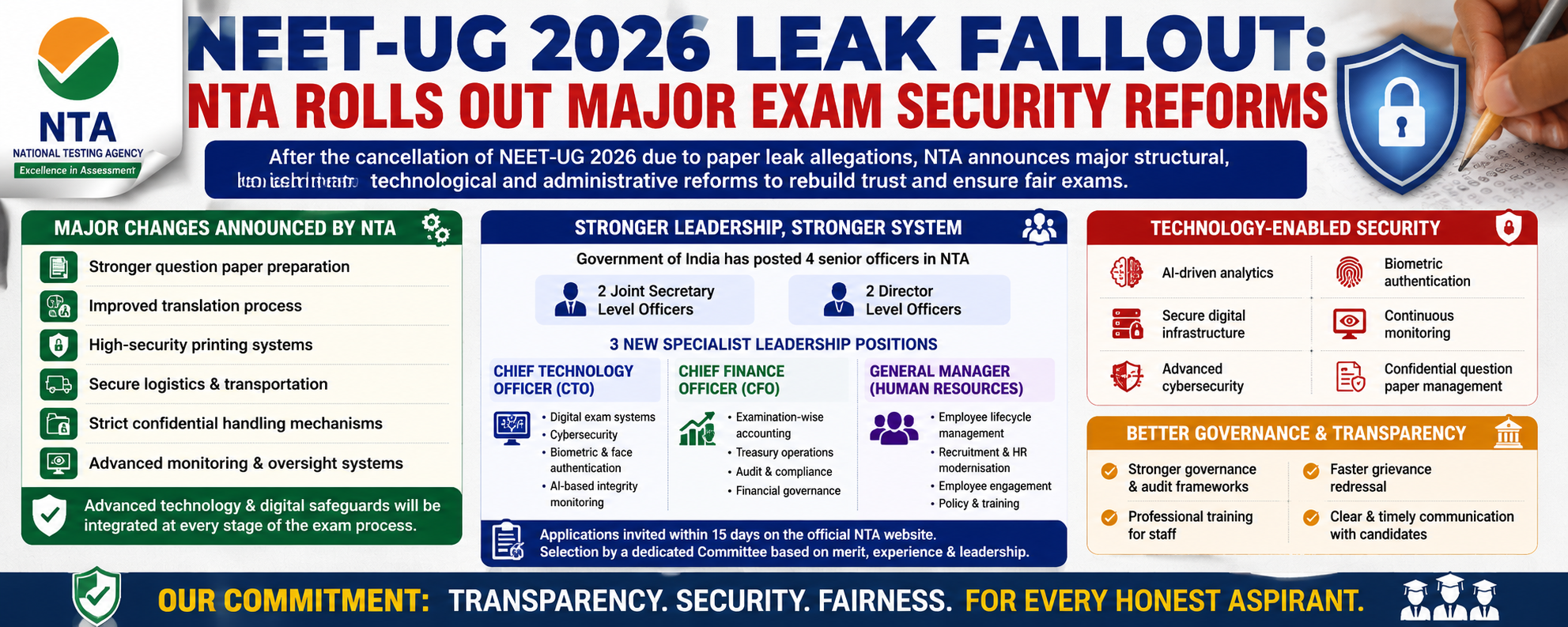
NTA ಪ್ರಕಟಣೆಯ ಪ್ರಕಾರ, ಪ್ರಶ್ನೆಪತ್ರಿಕೆ ತಯಾರಿ, ಭಾಷಾಂತರ, ಮುದ್ರಣ, ಸಾಗಣೆ, ಗೌಪ್ಯ ನಿರ್ವಹಣೆ, ಮೇಲ್ವಿಚಾರಣೆ ಹಾಗೂ ಆಡಳಿತ ವ್ಯವಸ್ಥೆಗಳನ್ನು ಬಲಪಡಿಸುವತ್ತ ವಿಶೇಷ ಗಮನ ಹರಿಸಲಾಗುತ್ತದೆ.

ಪರೀಕ್ಷಾ ಪ್ರಕ್ರಿಯೆಯಲ್ಲಿ ಪ್ರಶ್ನೆಪತ್ರಿಕೆ ಸೋರಿಕೆ, ತಿದ್ದುಪಡಿ ಅಥವಾ ಅನಧಿಕೃತ ಪ್ರವೇಶದ ಅಪಾಯ ಕಡಿಮೆ ಮಾಡಲು ಅತ್ಯಾಧುನಿಕ ತಂತ್ರಜ್ಞಾನ ಮತ್ತು ಡಿಜಿಟಲ್ ಸುರಕ್ಷತಾ ಕ್ರಮಗಳನ್ನು ಅಳವಡಿಸಲಾಗುತ್ತದೆ.

NTAಗೆ ಹಿರಿಯ ಅಧಿಕಾರಿಗಳ ನೇಮಕ

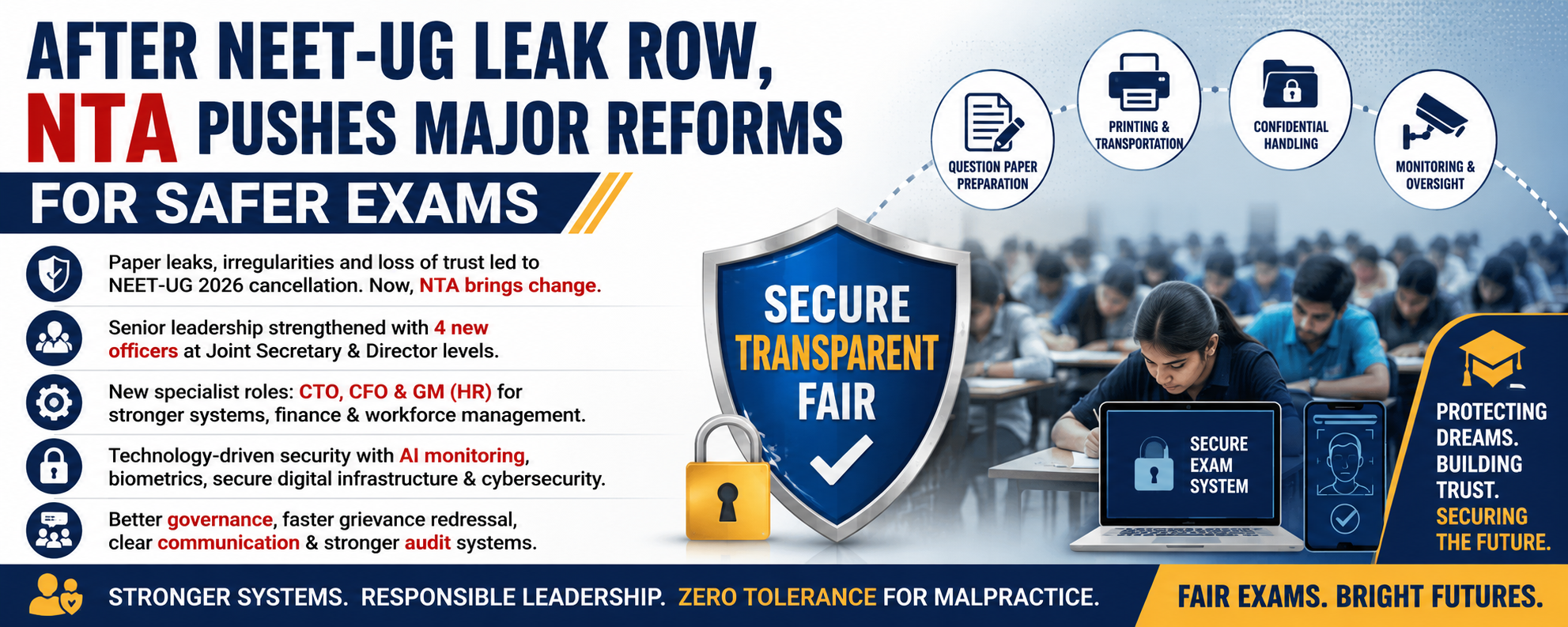
ಸುಧಾರಣೆಗಳ ಭಾಗವಾಗಿ NTAಗೆ ನಾಲ್ವರು ಹಿರಿಯ ಅಧಿಕಾರಿಗಳನ್ನು ನೇಮಿಸಲಾಗಿದೆ. ಇದರಲ್ಲಿ ಇಬ್ಬರು ಜಂಟಿ ಕಾರ್ಯದರ್ಶಿ ಮಟ್ಟದ ಅಧಿಕಾರಿಗಳು ಹಾಗೂ ಇಬ್ಬರು ನಿರ್ದೇಶಕ ಮಟ್ಟದ ಅಧಿಕಾರಿಗಳು ಸೇರಿದ್ದಾರೆ.

ರಾಧಾಕೃಷ್ಣನ್ ಸಮಿತಿಯ ಶಿಫಾರಸುಗಳಂತೆ, ಜಂಟಿ ಕಾರ್ಯದರ್ಶಿ ಮಟ್ಟದ ಅಧಿಕಾರಿಗಳು ಹೆಚ್ಚುವರಿ ಮಹಾನಿರ್ದೇಶಕರಾಗಿ ಕಾರ್ಯನಿರ್ವಹಿಸಲಿದ್ದಾರೆ. ಅವರ ಆಡಳಿತ ಅನುಭವವು ಕಾರ್ಯಕ್ಷಮತೆ ಮತ್ತು ಹೊಣೆಗಾರಿಕೆಯನ್ನು ಹೆಚ್ಚಿಸುವ ನಿರೀಕ್ಷೆಯಿದೆ.

ಹೊಸ ತಜ್ಞ ಹುದ್ದೆಗಳು

NTA ಮೂರು ಪ್ರಮುಖ ತಜ್ಞ ಹುದ್ದೆಗಳಿಗೆ ಅರ್ಜಿಗಳನ್ನು ಆಹ್ವಾನಿಸಿದೆ:

  • ಮುಖ್ಯ ತಂತ್ರಜ್ಞಾನ ಅಧಿಕಾರಿ (Chief Technology Officer)
  • ಮುಖ್ಯ ಹಣಕಾಸು ಅಧಿಕಾರಿ (Chief Finance Officer)
  • ಮಾನವ ಸಂಪನ್ಮೂಲ ಪ್ರಧಾನ ವ್ಯವಸ್ಥಾಪಕ (General Manager – Human Resources)

ಮುಖ್ಯ ತಂತ್ರಜ್ಞಾನ ಅಧಿಕಾರಿ ಡಿಜಿಟಲ್ ಪರೀಕ್ಷಾ ವ್ಯವಸ್ಥೆ, ಸೈಬರ್ ಸುರಕ್ಷತೆ, ಬಯೋಮೆಟ್ರಿಕ್ ದೃಢೀಕರಣ, ಮುಖ ಗುರುತಿಸುವಿಕೆ ಮತ್ತು AI ಆಧಾರಿತ ಮೇಲ್ವಿಚಾರಣೆಯ ಜವಾಬ್ದಾರಿ ವಹಿಸಲಿದ್ದಾರೆ.

ತಂತ್ರಜ್ಞಾನ ಆಧಾರಿತ ಸುರಕ್ಷತೆ

ರಾಷ್ಟ್ರೀಯ ಪರೀಕ್ಷೆಗಳಲ್ಲಿ AI ಆಧಾರಿತ ವಿಶ್ಲೇಷಣೆ, ಬಯೋಮೆಟ್ರಿಕ್ ದೃಢೀಕರಣ, ಸುರಕ್ಷಿತ ಡಿಜಿಟಲ್ ಮೂಲಸೌಕರ್ಯ, ನಿರಂತರ ಮೇಲ್ವಿಚಾರಣೆ ಮತ್ತು ಬಲವಾದ ಸೈಬರ್ ಸುರಕ್ಷತಾ ವ್ಯವಸ್ಥೆಗಳನ್ನು ಬಳಸಲು ಯೋಜಿಸಲಾಗಿದೆ.

ಇದರಿಂದ ಪರೀಕ್ಷಾ ಪ್ರಕ್ರಿಯೆ ಇನ್ನಷ್ಟು ಸುರಕ್ಷಿತ, ಪಾರದರ್ಶಕ ಮತ್ತು ಜವಾಬ್ದಾರಿಯುತವಾಗುವ ನಿರೀಕ್ಷೆಯಿದೆ.

ಉತ್ತಮ ಆಡಳಿತ ಮತ್ತು ವಿದ್ಯಾರ್ಥಿ ಸಂಪರ್ಕ

NTA ಉತ್ತಮ ಆಡಳಿತ, ವೇಗವಾದ ದೂರು ಪರಿಹಾರ ವ್ಯವಸ್ಥೆ, ಸಿಬ್ಬಂದಿಗೆ ವೃತ್ತಿಪರ ತರಬೇತಿ ಹಾಗೂ ವಿದ್ಯಾರ್ಥಿಗಳೊಂದಿಗೆ ಸ್ಪಷ್ಟ ಸಂವಹನ ವ್ಯವಸ್ಥೆಯನ್ನು ಒದಗಿಸುವ ಭರವಸೆ ನೀಡಿದೆ.

ಹೆಚ್ಚಿನ ಒತ್ತಡದ ಪರೀಕ್ಷಾ ಸಂದರ್ಭಗಳಲ್ಲಿ ತಡವಾದ ಪ್ರಕಟಣೆಗಳು ಮತ್ತು ತಪ್ಪು ಮಾಹಿತಿಯಿಂದ ವಿದ್ಯಾರ್ಥಿಗಳು ಗೊಂದಲಕ್ಕೊಳಗಾಗುವುದನ್ನು ಕಡಿಮೆ ಮಾಡಲು ಇದು ಸಹಾಯಕವಾಗಲಿದೆ.

ಈ ಸುಧಾರಣೆಗಳ ಮಹತ್ವ

NEET-UG 2026 ಪ್ರಶ್ನೆಪತ್ರಿಕೆ ಸೋರಿಕೆ ಪ್ರಕರಣವು ಭಾರತದ ಪರೀಕ್ಷಾ ವ್ಯವಸ್ಥೆಗೆ ತಾತ್ಕಾಲಿಕ ಪರಿಹಾರವಲ್ಲ, ಬದಲಾಗಿ ಆಳವಾದ ಸುಧಾರಣೆ ಅಗತ್ಯವಿದೆ ಎಂಬುದನ್ನು ತೋರಿಸಿದೆ.

ವಿದ್ಯಾರ್ಥಿಗಳಿಗೆ NEET ಕೇವಲ ಒಂದು ಪರೀಕ್ಷೆಯಲ್ಲ. ಅದು ಅವರ ಹಲವು ವರ್ಷಗಳ ಪರಿಶ್ರಮ, ಕುಟುಂಬದ ತ್ಯಾಗ ಮತ್ತು ವೈದ್ಯರಾಗುವ ಕನಸಿನ ಪ್ರತೀಕವಾಗಿದೆ.

ಸಮಾರೋಪ

NEET-UG 2026 ಪ್ರಶ್ನೆಪತ್ರಿಕೆ ಸೋರಿಕೆ ಪ್ರಕರಣದ ಬಳಿಕ ಘೋಷಿಸಲಾದ NTA ಸುಧಾರಣೆಗಳು ರಾಷ್ಟ್ರೀಯ ಮಟ್ಟದ ಪರೀಕ್ಷೆಗಳ ಮೇಲಿನ ವಿಶ್ವಾಸ ಮರುಸ್ಥಾಪಿಸಲು ಮಹತ್ವದ ಹೆಜ್ಜೆಯಾಗಿದೆ. ಆದರೆ ಈ ಸುಧಾರಣೆಗಳ ನಿಜವಾದ ಯಶಸ್ಸು ಅವುಗಳ ಪರಿಣಾಮಕಾರಿ ಅನುಷ್ಠಾನದಲ್ಲಿದೆ.

ವಿದ್ಯಾರ್ಥಿಗಳು ಮತ್ತು ಪೋಷಕರು ಈಗ ಈ ಬದಲಾವಣೆಗಳು ಭವಿಷ್ಯದ ಪರೀಕ್ಷೆಗಳನ್ನು ನಿಜವಾಗಿಯೂ ಸುರಕ್ಷಿತ, ಪಾರದರ್ಶಕ ಮತ್ತು ನ್ಯಾಯಸಮ್ಮತವಾಗಿಸುತ್ತವೆಯೇ ಎಂಬುದನ್ನು ಗಮನದಿಂದ ನೋಡಲಿದ್ದಾರೆ.

After NEET-UG Leak Row, NTA Pushes Major Reforms for Safer Exams

After the cancellation of NEET-UG 2026 due to the paper leak controversy, the National Testing Agency has announced a series of major reforms to strengthen India’s national-level examination system. The move comes after serious concerns were raised by students, parents and education experts regarding the safety, transparency and credibility of the examination process.

NEET-UG 2026 was conducted on May 3 but was later cancelled following allegations of question paper leaks and irregularities across multiple states. More than 22 lakh students were affected by the decision, creating anxiety and uncertainty among medical aspirants across the country.

To prevent such incidents in future, the Government of India formed a high-level expert committee to review the examination system and suggest stronger safeguards. Based on the recommendations, NTA has now started implementing structural, technological and administrative changes.

Major Areas of Reform

According to the NTA statement, the reforms will focus on strengthening key stages of the examination process, including question paper preparation, translation, printing, transportation, confidential handling, monitoring and oversight.

The agency has said that advanced technology and digital safeguards will be added at different levels to reduce the risk of paper leaks, tampering and unauthorised access.

Senior Officers Posted in NTA

As part of the reform process, four senior officers have been posted to the NTA to improve leadership and administrative capacity. These include two Joint Secretary-level officers and two Director-level officers.

Following the Radhakrishnan Committee recommendations, the Joint Secretary-level officers will function as Additional Director Generals in the agency. Their administrative experience is expected to improve coordination, accountability and operational efficiency.

New Specialist Positions

NTA has also invited applications for three important specialist posts:

Chief Technology Officer, Chief Finance Officer and General Manager for Human Resources.

The Chief Technology Officer will handle digital examination systems, candidate portals, cybersecurity, confidential question paper management, biometric verification, face authentication and AI-based integrity monitoring.

The Chief Finance Officer will supervise examination-wise accounts, audit systems, treasury operations and financial governance.

The General Manager for Human Resources will manage regular, deputation-based and contractual staff, along with recruitment, employee policy, training and workforce modernisation.

Technology-Enabled Security

The reforms will also bring stronger use of technology in national examinations. NTA is expected to use AI-driven analytics, biometric authentication, secure digital infrastructure, continuous monitoring and improved cybersecurity systems.

These steps are aimed at making the examination process more secure, traceable and accountable.

Better Governance and Candidate Communication

NTA has also promised stronger governance, better audit mechanisms, professional training of staff, faster grievance redressal and improved communication with candidates.

This is important because students often face confusion due to delayed notices, unclear updates and misinformation during high-pressure examination periods.

Why These Reforms Matter

The NEET-UG 2026 paper leak controversy has shown that India’s examination system needs deep reform, not temporary fixes. For students, NEET is not just an exam. It represents years of preparation, family sacrifice and the dream of becoming a doctor.

A secure and transparent exam system is necessary to protect honest students and restore public trust.

Conclusion

The NTA reforms announced after the NEET-UG 2026 paper leak are a major step towards rebuilding confidence in national-level examinations. However, the real test will be in implementation.

Students and parents will now closely watch whether these reforms lead to stronger security, better transparency, faster communication and fair conduct of future examinations.

The message is clear: national exams must be protected with strong systems, responsible leadership and zero tolerance for malpractice

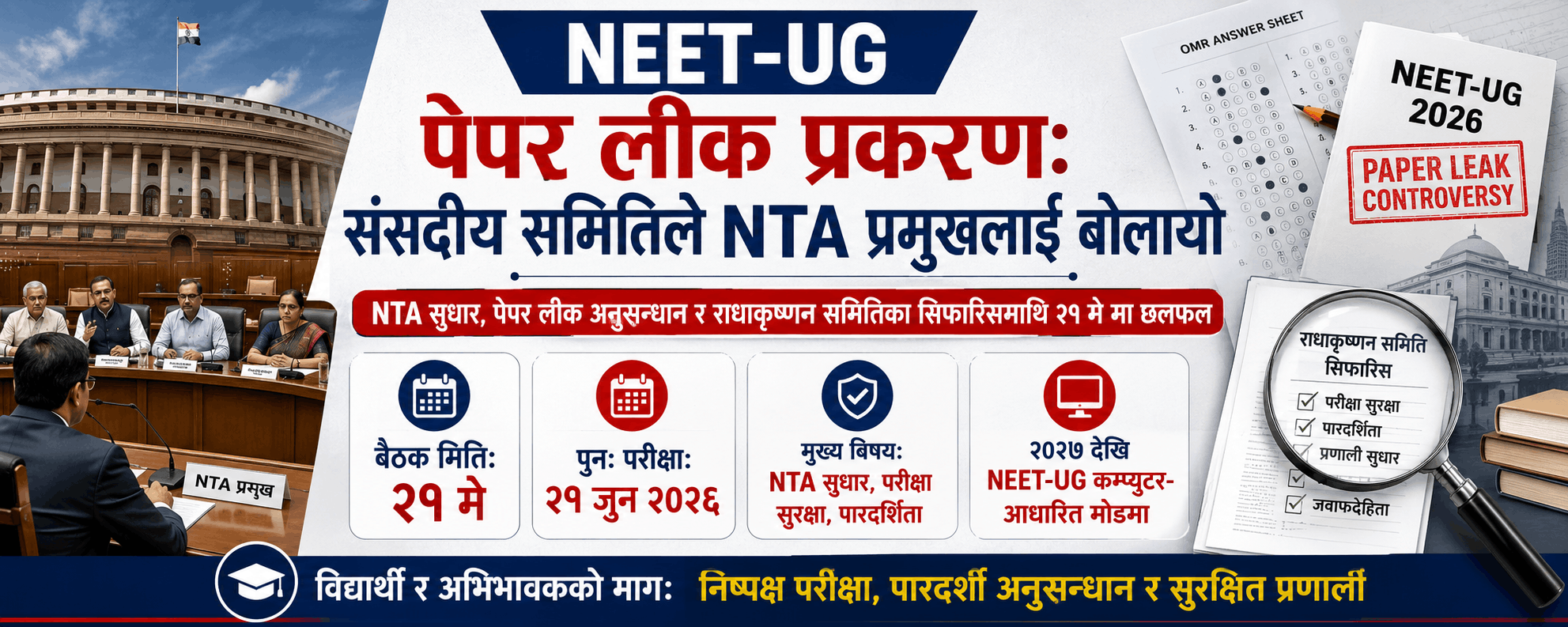
NEET-UG पेपर लीक प्रकरण: संसदीय समितिले NTA प्रमुखलाई बोलायो

NEET-UG 2026 पेपर लीक विवाद अब संसदीय समितिसम्म पुगेको छ। राष्ट्रिय परीक्षा एजेन्सी अर्थात् NTA को कार्यप्रणाली, परीक्षा सुधार र पेपर लीक प्रकरणको अनुसन्धानबारे छलफल गर्न संसदीय स्थायी समितिले NTA अध्यक्ष प्रदीप कुमार जोशी र शिक्षा मन्त्रालयका वरिष्ठ अधिकारीहरूलाई बोलाएको छ।

यो बैठक २१ मे मा प्रस्तावित छ, जहाँ NEET-UG 2026 पेपर लीक प्रकरण, NTA सुधार र के. राधाकृष्णन समिति का सिफारिसहरूको कार्यान्वयनबारे छलफल हुनेछ।

कुन अधिकारीहरूलाई बोलाइएको छ?

संसदीय स्थायी समितिले शिक्षा मन्त्रालयअन्तर्गत उच्च शिक्षा विभागका सचिव विनीत जोशी र NTA अध्यक्ष प्रदीप कुमार जोशी लाई छलफलका लागि बोलाएको छ।

यो समितिको अध्यक्षता कांग्रेस नेता दिग्विजय सिंह ले गरिरहेका छन्।

बैठकको मुख्य एजेन्डा

समितिले मुख्य रूपमा यी विषयहरूमा छलफल गर्नेछ:

NEET-UG 2026 पेपर लीक प्रकरणको वर्तमान अवस्था

NTA सुधारको प्रगति

के. राधाकृष्णन समितिका सिफारिसहरूको कार्यान्वयन

परीक्षा प्रणालीको पारदर्शिता र सुरक्षा

भविष्यमा यस्ता घटना रोक्ने रणनीति

यो बैठक किन महत्त्वपूर्ण छ?

NEET-UG 2026 परीक्षा ३ मे मा सञ्चालन गरिएको थियो, तर पेपर लीक र अनियमितताको आरोपपछि परीक्षा रद्द गरिएको थियो। करिब २३ लाख उम्मेदवारहरूले यस परीक्षाका लागि दर्ता गरेका थिए।

NTA का अनुसार, परीक्षापछि ७ मे साँझ कथित गडबडीबारे जानकारी प्राप्त भएको थियो। त्यसपछि विषय गम्भीर बनेको र अन्ततः परीक्षा रद्द गर्ने निर्णय गरिएको थियो।

अब NEET-UG 2026 को पुनः परीक्षा २१ जुन मा सञ्चालन गरिनेछ।

2027 देखि NEET अनलाइन मोडमा

शिक्षामन्त्री धर्मेन्द्र प्रधान ले हालै घोषणा गरेका छन् कि NEET-UG लाई आगामी वर्ष अर्थात् 2027 देखि कम्प्युटर आधारित परीक्षा मोड मा लगिनेछ। यसको उद्देश्य पेपर लीकजस्ता घटनाहरू रोक्नु र परीक्षा प्रणालीलाई अझ सुरक्षित तथा पारदर्शी बनाउनु हो।

NTA सुधारमाथि ठूलो प्रश्न

पेपर लीक विवादपछि NTA को आन्तरिक व्यवस्था, कर्मचारी अभाव, आउटसोर्सिङमा निर्भरता र जवाफदेहितामाथि गम्भीर प्रश्न उठेका छन्।

के. राधाकृष्णन समितिले पहिले नै NTA लाई मजबुत बनाउने, स्थायी कर्मचारी नियुक्त गर्ने, निगरानी सुधार गर्ने र परीक्षा सुरक्षा प्रणालीलाई स्तरोन्नति गर्ने सिफारिस गरेको थियो। अब संसदीय समिति यी सुधारहरूमा कति प्रगति भयो भन्ने हेर्न चाहन्छ।

AI र शिक्षाबारे पनि छलफल

NEET र NTA सम्बन्धी मुद्दाबाहेक समितिले शिक्षामा कृत्रिम बुद्धिमत्ता अर्थात् AI को प्रभाव र विद्यार्थीहरूको रोजगारी क्षमता बढाउने रणनीतिबारे पनि छलफल गर्नेछ। यसका लागि Anthropic India, Pratham, IIT Kanpur, Infosys र IIT Madras का प्रतिनिधिहरूलाई पनि बोलाइएको छ।

निष्कर्ष

NEET-UG 2026 पेपर लीक प्रकरण अब केवल परीक्षा सम्बन्धी विवाद मात्र रहेन। यो देशको परीक्षा प्रणालीको विश्वसनीयता, विद्यार्थीहरूको विश्वास र संस्थागत जवाफदेहितासँग जोडिएको ठूलो विषय बनेको छ।

संसदीय समितिले NTA प्रमुख र शिक्षा मन्त्रालयका अधिकारीहरूलाई बोलाउनु परीक्षा सुधारबारे गम्भीर छलफल आवश्यक भएको संकेत हो।

विद्यार्थी र अभिभावकहरूको सबैभन्दा ठूलो माग यही हो कि परीक्षा निष्पक्ष होस्, अनुसन्धान पारदर्शी होस्, र भविष्यमा कुनै मेहनती विद्यार्थीको सपना पेपर लीक वा प्रणालीको कमजोरीका कारण नटुटोस्।

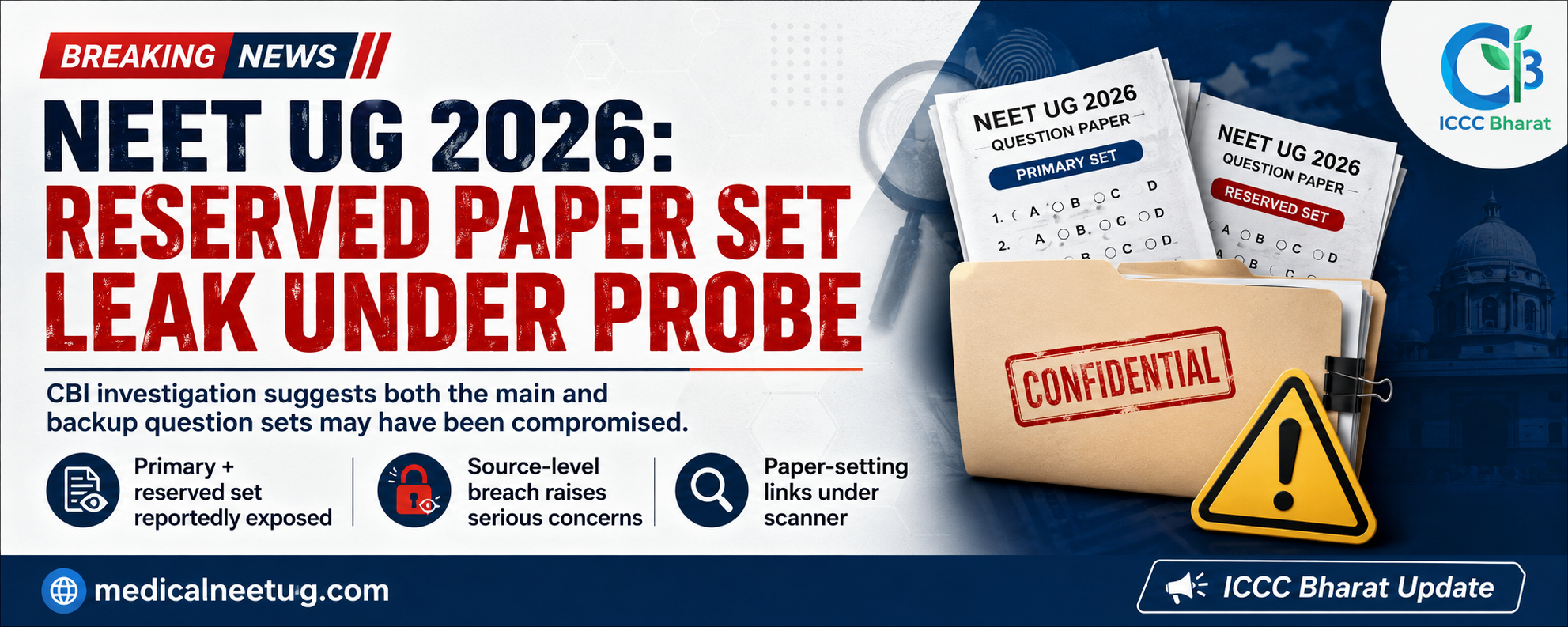
NEET UG 2026 Reserved Paper Set Leak: How the Backup Question Paper Was Allegedly Compromised

The NEET UG 2026 paper leak investigation has moved into a more alarming phase after reports suggested that even the reserved question paper set may have been compromised. This development has raised serious questions about the depth of the breach, the security of the paper-setting process, and the internal safeguards of the National Testing Agency.

A reserved paper set is supposed to function as an emergency backup. It is a separate question paper prepared alongside the main paper and kept confidential for use only if the primary paper is compromised, lost, damaged, or affected by logistical failure.

However, if both the main and reserved sets are compromised, the issue is no longer just a distribution-level lapse. It becomes a source-level breach — meaning the leak may have happened before printing, transport, or exam-centre handling.

What Is a Reserved Paper Set?

A reserved paper set is a secondary version of the examination paper. It is normally created as a contingency mechanism.

Its purpose is to protect the examination process in case:

  • the main paper is leaked,
  • question papers are lost during transit,
  • printing or packaging errors occur,
  • exam-centre logistics fail,
  • or any emergency affects the original paper.

In a secure system, the reserved set should remain untouched unless officially activated.

But in the NEET UG 2026 probe, reports claim that the breach may have affected both the primary and backup question pools because the alleged leak originated from the paper-setting stage itself.

Why This Is a Serious Development

If only the printed question paper is leaked during transport or at an exam centre, authorities can sometimes activate the reserved set and continue the examination.

But if the reserved set is also leaked, the system loses its emergency shield.

This means:

  • the backup mechanism fails,
  • the examination integrity collapses,
  • the re-exam becomes unavoidable,
  • and the credibility of the paper-setting process comes under scrutiny.

This is why the alleged leak of the reserved set is more serious than an ordinary paper leak.

How Was the Paper Allegedly Leaked?

According to reports, the Central Bureau of Investigation is examining whether the leak originated from inside the paper-setting committee linked to NTA.

The investigation reportedly points to two separate sets of leaked material — one handwritten and one typed. These question sets allegedly moved through a chain of insiders, recruiters, middlemen, and candidates before the May 3 examination.

The CBI has arrested retired chemistry professor P. V. Kulkarni, who was reportedly associated with the NTA panel involved in setting the question paper. Reports also state that Pune-based teacher Manisha Gurunath Mandhare, allegedly linked to the Biology paper-setting process, has been arrested in the case.

Alleged Role of Paper-Setting Experts

Reports suggest that the CBI is now closely examining people connected with the question paper preparation chain, including subject experts and paper setters. The agency has reportedly sought details from NTA about those who had access to the question paper before it was sealed.

The arrest of people allegedly linked to the paper-setting process makes this case particularly sensitive. If the allegation is proved, it would indicate that the leak did not happen only at the transportation or examination-centre stage, but much earlier — during the creation and handling of the question pool.

Main Paper vs Reserved Paper: What Happens If Both Are Leaked?

Normally, if the main paper is compromised, authorities may use the reserved set. But when both papers are suspected to be compromised, the examination cannot proceed safely.

In such a scenario, the possible consequences are:

  • cancellation of the examination,
  • fresh paper preparation,
  • re-examination,
  • investigation into insiders,
  • audit of the entire paper-setting chain,
  • review of paper security protocols,
  • and possible reform of the examination model.

This is exactly why the NEET UG 2026 controversy has become a national-level issue.

CBI Probe Expands

The CBI investigation has reportedly expanded to examine whether the alleged leak was part of a larger conspiracy involving insiders, coaching links, candidates, and middlemen. Reports have said that the entire paper-setting group may now be under scrutiny, and more arrests may follow depending on evidence.

The probe is also looking into:

  • digital evidence,
  • WhatsApp and Telegram circulation,
  • handwritten notes,
  • printed copies,
  • financial transactions,
  • coaching-centre links,
  • and possible internal access routes.

Why the Reserved Set Leak Matters for Exam Reforms

The alleged compromise of a reserved paper set exposes a major weakness in the examination architecture. A backup paper is useful only when its secrecy is stronger than the main paper.

If the same access chain can expose both the main and reserved sets, the system needs structural reform.

This may increase pressure for:

  • digital question paper locking,
  • stricter access control,
  • independent audit trails,
  • stronger background verification of experts,
  • reduced human access to full question papers,
  • encrypted transmission,
  • and computer-based testing.

The Bigger Question: Was This a Systemic Failure?

This case is no longer only about who circulated the paper. The bigger question is whether the system had adequate safeguards to prevent insiders from accessing, copying, dictating, or transmitting confidential questions.

If the paper-setting committee itself becomes vulnerable, the entire exam chain becomes fragile.

For a national examination like NEET UG, where more than 20 lakh students compete for medical seats, even a small breach can damage public confidence. A source-level leak can destroy the credibility of the entire examination.

Conclusion

The alleged leak of the NEET UG 2026 reserved question paper set is a deeply serious development. A reserved paper is supposed to be the final safeguard of the examination system. If that too was compromised, it indicates a breach at the most sensitive level of exam preparation.

The CBI investigation will now be crucial in determining how the questions moved out, who had access, whether insiders were involved, and how far the leaked material travelled.

For students and parents, the most important advice remains clear: avoid rumours, follow official updates, and focus on the re-examination. For the examination system, however, this case may become a turning point for major reforms in security, accountability, and transparency.