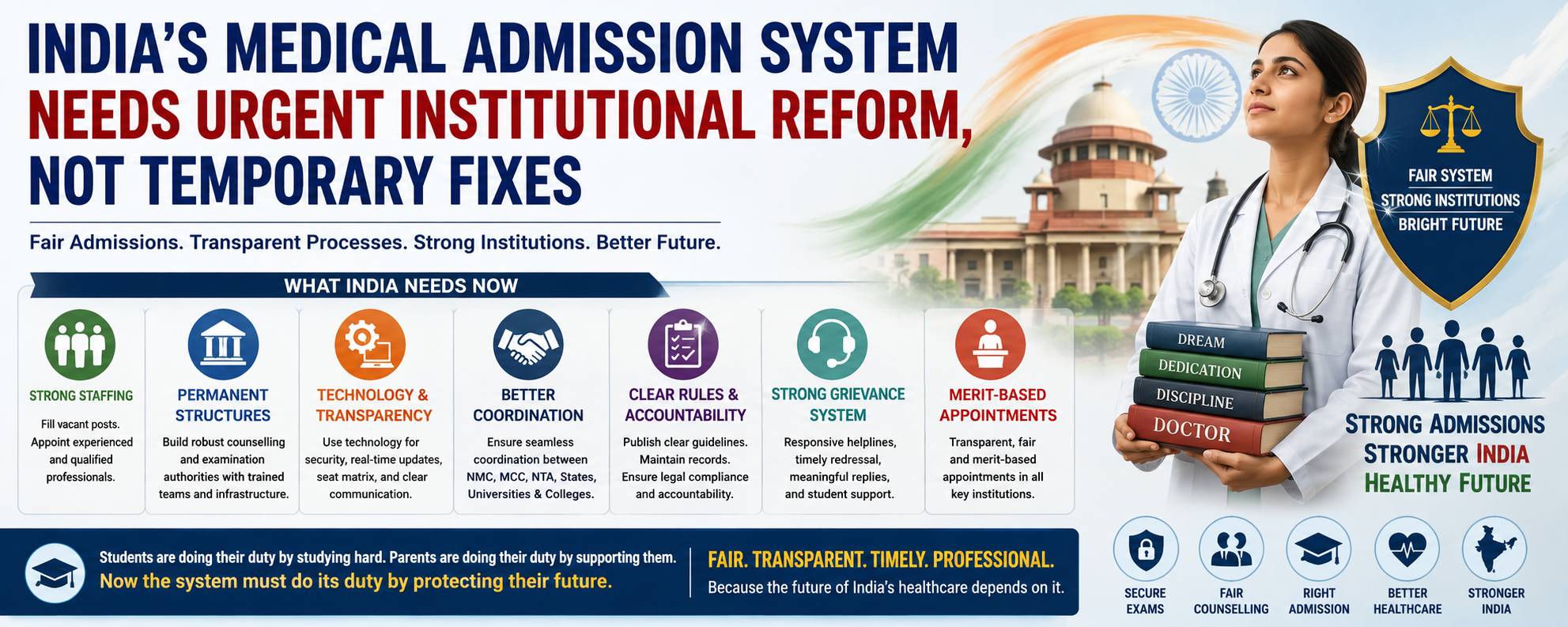
ಭಾರತದ ವೈದ್ಯಕೀಯ ಪ್ರವೇಶ ವ್ಯವಸ್ಥೆಗೆ ತಾತ್ಕಾಲಿಕ ಪರಿಹಾರಗಳಲ್ಲ, ತುರ್ತು ಸಾಂಸ್ಥಿಕ ಸುಧಾರಣೆ ಅಗತ್ಯ

ಭಾರತದ ವೈದ್ಯಕೀಯ ಪ್ರವೇಶ ವ್ಯವಸ್ಥೆ ದೇಶದ ಅತ್ಯಂತ ಸೂಕ್ಷ್ಮ ಮತ್ತು ಒತ್ತಡಪೂರ್ಣ ಶಿಕ್ಷಣ ವ್ಯವಸ್ಥೆಗಳಲ್ಲಿ ಒಂದಾಗಿದೆ. ಪ್ರವೇಶ ಪರೀಕ್ಷೆಯಿಂದ ಆರಂಭಿಸಿ ಕೌನ್ಸೆಲಿಂಗ್, ಸೀಟ್ ಹಂಚಿಕೆ, ಸೀಟ್ ಮ್ಯಾಟ್ರಿಕ್ಸ್ ಪ್ರಕಟಣೆ, ವರ್ಗ ಪರಿಶೀಲನೆ, NRI ದಾಖಲೆಗಳು ಮತ್ತು ಅಂತಿಮ ಪ್ರವೇಶದವರೆಗೆ ಪ್ರತಿಯೊಂದು ಹಂತವೂ ಲಕ್ಷಾಂತರ ವಿದ್ಯಾರ್ಥಿಗಳ ಹಾಗೂ ಕುಟುಂಬಗಳ ಭವಿಷ್ಯವನ್ನು ನಿರ್ಧರಿಸುತ್ತದೆ.

ಇತ್ತೀಚಿನ ಪರೀಕ್ಷೆ ಹಾಗೂ ಕೌನ್ಸೆಲಿಂಗ್ ವಿವಾದಗಳನ್ನು ಪ್ರತ್ಯೇಕ ಘಟನೆಗಳಂತೆ ನೋಡಬಾರದು. ಅವು ವ್ಯವಸ್ಥೆಯಲ್ಲಿರುವ ಆಳವಾದ ಸಾಂಸ್ಥಿಕ ದುರ್ಬಲತೆಗಳಿಗೆ ಎಚ್ಚರಿಕೆಯ ಸಂಕೇತಗಳಾಗಿವೆ.

ವೈದ್ಯಕೀಯ ಪ್ರವೇಶ ವ್ಯವಸ್ಥೆಯಲ್ಲಿ ಪರೀಕ್ಷಾ ಸಂಸ್ಥೆಗಳು, ಕೌನ್ಸೆಲಿಂಗ್ ಅಧಿಕಾರಿಗಳು, ನಿಯಂತ್ರಣ ಸಂಸ್ಥೆಗಳು, ರಾಜ್ಯ ಕೌನ್ಸೆಲಿಂಗ್ ಮಂಡಳಿಗಳು, ವಿಶ್ವವಿದ್ಯಾಲಯಗಳು ಮತ್ತು ಸರ್ಕಾರಿ ಇಲಾಖೆಗಳು ಕಾರ್ಯನಿರ್ವಹಿಸುತ್ತವೆ. ಆದರೆ ಅನೇಕ ಕಡೆಗಳಲ್ಲಿ ಸಿಬ್ಬಂದಿ ಕೊರತೆ, ಖಾಲಿ ಹಿರಿಯ ಹುದ್ದೆಗಳು, ದುರ್ಬಲ ಸಮನ್ವಯ ಮತ್ತು ತಾಂತ್ರಿಕ ಬೆಂಬಲದ ಕೊರತೆ ಕಾಣಿಸುತ್ತಿದೆ.

ಇದು ಕೇವಲ ಆಡಳಿತಾತ್ಮಕ ಸಮಸ್ಯೆಯಲ್ಲ; ಇದು ರಾಷ್ಟ್ರೀಯ ಚಿಂತೆಯ ವಿಷಯವಾಗಿದೆ.

ಖಾಲಿ ಹುದ್ದೆಗಳು ಮತ್ತು ಸಿಬ್ಬಂದಿ ಕೊರತೆ ವಿಶ್ವಾಸವನ್ನು ಕುಗ್ಗಿಸುತ್ತಿವೆ

ಲಕ್ಷಾಂತರ ವಿದ್ಯಾರ್ಥಿಗಳ ಪರೀಕ್ಷೆ ಮತ್ತು ಕೌನ್ಸೆಲಿಂಗ್ ನೋಡಿಕೊಳ್ಳುವ ಸಂಸ್ಥೆಗಳು ಸಾಕಷ್ಟು ಸಿಬ್ಬಂದಿಯಿಲ್ಲದೆ ಸಮರ್ಪಕವಾಗಿ ಕಾರ್ಯನಿರ್ವಹಿಸಲು ಸಾಧ್ಯವಿಲ್ಲ. ಪ್ರಮುಖ ಹುದ್ದೆಗಳು ಖಾಲಿಯಾಗಿದ್ದರೆ ಅಥವಾ ತಾತ್ಕಾಲಿಕ ವ್ಯವಸ್ಥೆಗಳ ಮೇಲೆ ಅವಲಂಬನೆ ಹೆಚ್ಚಾದರೆ ತಪ್ಪುಗಳ ಸಾಧ್ಯತೆ ಹೆಚ್ಚುತ್ತದೆ.

ವೈದ್ಯಕೀಯ ಪ್ರವೇಶ ಪ್ರಕ್ರಿಯೆ ನಿರ್ವಹಿಸುವ ಅಧಿಕಾರಿಗಳಿಗೆ ಮೀಸಲಾತಿ ನಿಯಮಗಳು, ಅಲ್ಪಸಂಖ್ಯಾತ ಕೋಟಾ, NRI ಕೋಟಾ, ನಿವಾಸ ನಿಯಮಗಳು, ಸೀಟ್ ಮ್ಯಾಟ್ರಿಕ್ಸ್ ತಯಾರಿ, ಶುಲ್ಕ ರಚನೆ, ನ್ಯಾಯಾಲಯದ ಆದೇಶಗಳು ಮತ್ತು ಕೌನ್ಸೆಲಿಂಗ್ ಸಾಫ್ಟ್‌ವೇರ್ ಬಗ್ಗೆ ಅನುಭವ ಇರಬೇಕು.

ಅನುಭವದ ಕೊರತೆಯಿಂದ ವಿದ್ಯಾರ್ಥಿಗಳು ಮತ್ತು ಪೋಷಕರಲ್ಲಿ ಗೊಂದಲ ಹಾಗೂ ಆತಂಕ ಹೆಚ್ಚುತ್ತದೆ.

ಕೌನ್ಸೆಲಿಂಗ್ ವ್ಯವಸ್ಥೆಗೆ ಶಾಶ್ವತ ಬಲವಾದ ಮೂಲಸೌಕರ್ಯ ಅಗತ್ಯ

ವೈದ್ಯಕೀಯ ಕೌನ್ಸೆಲಿಂಗ್ ಒಂದು ಸಾಮಾನ್ಯ ಕಚೇರಿ ಕಾರ್ಯವಲ್ಲ. ಇದು ಭವಿಷ್ಯದ ವೈದ್ಯರು, ದಂತವೈದ್ಯರು ಮತ್ತು ಆರೋಗ್ಯ ತಜ್ಞರ ಬದುಕನ್ನು ನಿರ್ಧರಿಸುತ್ತದೆ.

ಕೌನ್ಸೆಲಿಂಗ್ ಸಂಸ್ಥೆಗಳಲ್ಲಿ ಶಾಶ್ವತ ಕಚೇರಿಗಳು, ತರಬೇತಿ ಪಡೆದ ಸಿಬ್ಬಂದಿ, ಕಾನೂನು ತಜ್ಞರು, ತಾಂತ್ರಿಕ ತಂಡಗಳು ಮತ್ತು ದೂರು ಪರಿಹಾರ ಅಧಿಕಾರಿಗಳು ಇರಬೇಕು.

ಪ್ರಸ್ತುತ ವಿದ್ಯಾರ್ಥಿಗಳು ಎದುರಿಸುತ್ತಿರುವ ಕೆಲವು ಸಮಸ್ಯೆಗಳು:

  • ಸ್ಪಷ್ಟವಲ್ಲದ ಸೀಟ್ ಮ್ಯಾಟ್ರಿಕ್ಸ್ ನವೀಕರಣಗಳು
  • ಕಾಲೇಜುಗಳ ತಡ ಸೇರ್ಪಡೆ ಅಥವಾ ಹಿಂಪಡೆಯುವಿಕೆ
  • NRI ದಾಖಲೆಗಳ ಗೊಂದಲ
  • ಪೋರ್ಟಲ್ ದೋಷಗಳು
  • ವರ್ಗ ಹಾಗೂ ರೋಸ್ಟರ್ ವಿವಾದಗಳು
  • ಸಹಾಯವಾಣಿ ಪ್ರತಿಕ್ರಿಯೆಯ ಕೊರತೆ
  • ತಡವಾದ ಸೀಟ್ ಹಂಚಿಕೆ
  • ಮರುಮರು ನಡೆಯುವ ಕಾನೂನು ವಿವಾದಗಳು

ಇವು ವ್ಯವಸ್ಥೆಯ ಆಡಳಿತ ಸಾಮರ್ಥ್ಯವನ್ನು ಬಲಪಡಿಸುವ ಅಗತ್ಯವಿದೆ ಎಂಬುದನ್ನು ತೋರಿಸುತ್ತವೆ.

ಸಮನ್ವಯದ ಕೊರತೆ ಗೊಂದಲಕ್ಕೆ ಕಾರಣವಾಗುತ್ತಿದೆ

ಕೇಂದ್ರ ಹಾಗೂ ರಾಜ್ಯ ಸಂಸ್ಥೆಗಳ ನಡುವಿನ ಸಮನ್ವಯದ ಕೊರತೆ ದೊಡ್ಡ ಸಮಸ್ಯೆಯಾಗಿದೆ.

ಒಂದು ಸಂಸ್ಥೆ ವೇಳಾಪಟ್ಟಿ ಪ್ರಕಟಿಸಿದರೆ ಮತ್ತೊಂದು ಅನುಮೋದನೆಯಲ್ಲಿ ವಿಳಂಬ ಮಾಡುವುದು ಅಥವಾ ಮೂರನೇ ಸಂಸ್ಥೆ ಸೀಟ್ ಮ್ಯಾಟ್ರಿಕ್ಸ್ ಬದಲಾಯಿಸುವುದು ವಿದ್ಯಾರ್ಥಿಗಳಿಗೆ ಗೊಂದಲ ಉಂಟುಮಾಡುತ್ತದೆ.

ಹೊಸ ಕಾಲೇಜುಗಳ ಸೇರ್ಪಡೆ, ಶುಲ್ಕ ರಚನೆ ಮತ್ತು ನ್ಯಾಯಾಲಯದ ಆದೇಶಗಳಂತಹ ವಿಷಯಗಳು ಸಮಸ್ಯೆಯನ್ನು ಇನ್ನಷ್ಟು ಗಂಭೀರಗೊಳಿಸುತ್ತವೆ.

ನೇಮಕಾತಿಗಳು ಪಾರದರ್ಶಕ ಹಾಗೂ ಅರ್ಹತೆಯ ಆಧಾರದ ಮೇಲೆ ಇರಬೇಕು

ಭಾರತದಲ್ಲಿ ಪ್ರತಿಭಾವಂತ ಜನರ ಕೊರತೆ ಇಲ್ಲ. ವೈದ್ಯರು, ಆಡಳಿತಾಧಿಕಾರಿಗಳು, ಕಾನೂನು ತಜ್ಞರು ಹಾಗೂ ಶಿಕ್ಷಣ ಕ್ಷೇತ್ರದ ಪರಿಣಿತರು ಸಾಕಷ್ಟು ಇದ್ದಾರೆ.

ಮುಖ್ಯ ಸಾರ್ವಜನಿಕ ಸಂಸ್ಥೆಗಳು ವೈಯಕ್ತಿಕ ಪ್ರಭಾವ ಅಥವಾ ಅನೌಪಚಾರಿಕ ಸಂಪರ್ಕಗಳ ಮೇಲೆ ಅವಲಂಬಿಸಬಾರದು. ನೇಮಕಾತಿಗಳು ಸಾಮರ್ಥ್ಯ, ಪ್ರಾಮಾಣಿಕತೆ ಮತ್ತು ಅನುಭವದ ಆಧಾರದ ಮೇಲೆ ನಡೆಯಬೇಕು.

ಪ್ರಶ್ನೆಪತ್ರಿಕೆ ಸೋರಿಕೆ ಕೇವಲ ಒಂದು ಲಕ್ಷಣ

ಪ್ರಶ್ನೆಪತ್ರಿಕೆ ಸೋರಿಕೆ ಗಂಭೀರ ವಿಷಯವಾದರೂ ಅದು ದೊಡ್ಡ ಸಮಸ್ಯೆಯ ಒಂದು ಭಾಗ ಮಾತ್ರ.

ಪರೀಕ್ಷಾ ಸಂಸ್ಥೆಗಳಲ್ಲಿ ಸಿಬ್ಬಂದಿ ಕೊರತೆ, ಭದ್ರತಾ ವ್ಯವಸ್ಥೆಯ ದುರ್ಬಲತೆ ಮತ್ತು ಸ್ಪಷ್ಟ ಜವಾಬ್ದಾರಿತನದ ಕೊರತೆ ಇದ್ದರೆ ಇಂತಹ ಘಟನೆಗಳು ಮರುಕಳಿಸಬಹುದು.

ವಿದ್ಯಾರ್ಥಿಗಳು ಮತ್ತು ಪೋಷಕರು ಬೆಲೆ ತೆರುತ್ತಿದ್ದಾರೆ

ವೈದ್ಯಕೀಯ ಪ್ರವೇಶಕ್ಕಾಗಿ ವಿದ್ಯಾರ್ಥಿಗಳು ಹಲವು ವರ್ಷಗಳ ಪರಿಶ್ರಮ ಮತ್ತು ಕುಟುಂಬದ ನಿರೀಕ್ಷೆಗಳೊಂದಿಗೆ ತಯಾರಿ ನಡೆಸುತ್ತಾರೆ.

ಪೋಷಕರು ಕೋಚಿಂಗ್, ವಸತಿ, ಪ್ರಯಾಣ ಹಾಗೂ ದಾಖಲೆಗಳಿಗೆ ದೊಡ್ಡ ಮೊತ್ತದ ಹಣ ಖರ್ಚು ಮಾಡುತ್ತಾರೆ. ಅನೇಕ ಕುಟುಂಬಗಳು ಸಾಲ ಪಡೆಯುತ್ತವೆ.

ವ್ಯವಸ್ಥೆ ವಿಫಲವಾದಾಗ ವಿದ್ಯಾರ್ಥಿಗಳು ವಿಶ್ವಾಸ ಕಳೆದುಕೊಳ್ಳುತ್ತಾರೆ, ಪೋಷಕರು ನಂಬಿಕೆ ಕಳೆದುಕೊಳ್ಳುತ್ತಾರೆ ಮತ್ತು ದೇಶ ಭವಿಷ್ಯದ ಆರೋಗ್ಯ ತಜ್ಞರನ್ನು ಕಳೆದುಕೊಳ್ಳುತ್ತದೆ.

ಸರ್ಕಾರ ಗಂಭೀರ ಕ್ರಮ ಕೈಗೊಳ್ಳಬೇಕು

ತಾತ್ಕಾಲಿಕ ಪರಿಹಾರಗಳು ಅಥವಾ ಕೊನೆಯ ಕ್ಷಣದ ಸ್ಪಷ್ಟೀಕರಣಗಳು ಸಾಕಾಗುವುದಿಲ್ಲ.

ಸರ್ಕಾರ ಈ ಕ್ರಮಗಳನ್ನು ಕೈಗೊಳ್ಳಬೇಕು:

  • ಖಾಲಿ ಹುದ್ದೆಗಳನ್ನು ತಕ್ಷಣ ಭರ್ತಿ ಮಾಡುವುದು
  • ಅನುಭವ ಹೊಂದಿದ ಅಧಿಕಾರಿಗಳನ್ನು ನೇಮಕ ಮಾಡುವುದು
  • ಶಾಶ್ವತ ತಾಂತ್ರಿಕ ತಂಡಗಳನ್ನು ರಚಿಸುವುದು
  • ಕೌನ್ಸೆಲಿಂಗ್ ಮೂಲಸೌಕರ್ಯವನ್ನು ಬಲಪಡಿಸುವುದು
  • ಸೀಟ್ ಮ್ಯಾಟ್ರಿಕ್ಸ್ ಪರಿಶೀಲನೆ ನಡೆಸುವುದು
  • ಸಹಾಯವಾಣಿ ಹಾಗೂ ದೂರು ವ್ಯವಸ್ಥೆ ಸುಧಾರಿಸುವುದು
  • ಎಲ್ಲಾ ಸಂಸ್ಥೆಗಳ ನಡುವೆ ತಕ್ಷಣದ ಸಮನ್ವಯ ಸಾಧಿಸುವುದು
  • ಸ್ಪಷ್ಟ ಹಾಗೂ ಕಾನೂನುಬದ್ಧ ಅಧಿಸೂಚನೆಗಳನ್ನು ಪ್ರಕಟಿಸುವುದು

ತೀರ್ಮಾನ

ವೈದ್ಯಕೀಯ ಪ್ರವೇಶ ವ್ಯವಸ್ಥೆಯ ಸಮಸ್ಯೆ ಕೇವಲ ಪ್ರಶ್ನೆಪತ್ರಿಕೆ ಸೋರಿಕೆ ಅಥವಾ ಕೌನ್ಸೆಲಿಂಗ್ ವಿಳಂಬದ ಬಗ್ಗೆ ಅಲ್ಲ. ಇದು ಸಂಸ್ಥೆಗಳ ಮೇಲಿನ ವಿಶ್ವಾಸದ ಪ್ರಶ್ನೆಯಾಗಿದೆ.

ಭಾರತಕ್ಕೆ ಮೇಲ್ಮಟ್ಟದ ಸುಧಾರಣೆಗಳ ಅಗತ್ಯವಿಲ್ಲ; ಆಳವಾದ ರಚನಾತ್ಮಕ ಸುಧಾರಣೆ ಅಗತ್ಯ.

ವಿದ್ಯಾರ್ಥಿಗಳು ತಮ್ಮ ಕರ್ತವ್ಯವನ್ನು ಮಾಡುತ್ತಿದ್ದಾರೆ — ಅವರು ಕಠಿಣವಾಗಿ ಓದುತ್ತಿದ್ದಾರೆ. ಪೋಷಕರು ತಮ್ಮ ಕರ್ತವ್ಯವನ್ನು ಮಾಡುತ್ತಿದ್ದಾರೆ — ಅವರು ಬೆಂಬಲಿಸುತ್ತಿದ್ದಾರೆ. ಈಗ ವ್ಯವಸ್ಥೆಯು ತನ್ನ ಕರ್ತವ್ಯವನ್ನು ಮಾಡಿ ಅವರ ಭವಿಷ್ಯವನ್ನು ರಕ್ಷಿಸಬೇಕು.

ಭಾರತದ ಆರೋಗ್ಯ ವ್ಯವಸ್ಥೆಯ ಭವಿಷ್ಯಕ್ಕಾಗಿ ವೈದ್ಯಕೀಯ ಪ್ರವೇಶ ವ್ಯವಸ್ಥೆ ನ್ಯಾಯಸಮ್ಮತ, ಪಾರದರ್ಶಕ ಮತ್ತು ವೃತ್ತಿಪರವಾಗಿ ನಿರ್ವಹಿಸಲ್ಪಡಬೇಕು.
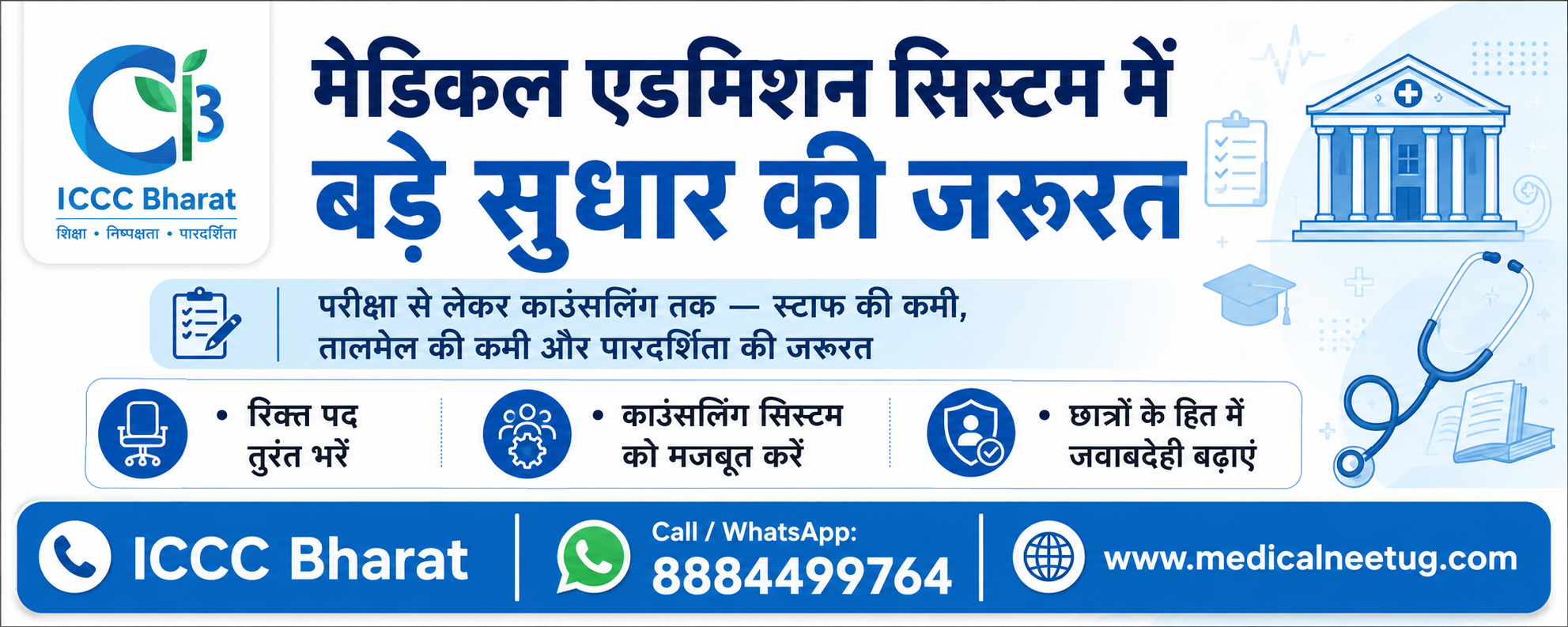
मेडिकल प्रवेश व्यवस्था में सुधार की जरूरत: परीक्षा से काउंसलिंग तक जवाबदेही जरूरी

भारत की मेडिकल प्रवेश व्यवस्था आज एक गंभीर मोड़ पर खड़ी है। NEET परीक्षा से लेकर काउंसलिंग, सीट मैट्रिक्स, allotment, NRI दस्तावेज, पोर्टल व्यवस्था और राज्य स्तरीय प्रवेश प्रक्रिया तक, कई जगहों पर ऐसी समस्याएं बार-बार सामने आती हैं जिनसे छात्रों और अभिभावकों का भरोसा कमजोर होता है।

यह मुद्दा केवल किसी एक संस्था या किसी एक परीक्षा तक सीमित नहीं है। समस्या व्यापक है। परीक्षा कराने वाली एजेंसियों से लेकर काउंसलिंग संचालित करने वाली समितियों और मेडिकल शिक्षा से जुड़े नियामक तंत्र तक, कई स्तरों पर खाली पद, स्टाफ की कमी, अनुभव की कमी और कमजोर समन्वय जैसी चुनौतियां दिखाई देती हैं।

छात्रों का भविष्य प्रशासनिक कमजोरी पर निर्भर नहीं होना चाहिए

मेडिकल प्रवेश कोई सामान्य प्रक्रिया नहीं है। यह लाखों छात्रों के करियर, परिवारों की आर्थिक क्षमता और देश के स्वास्थ्य भविष्य से जुड़ा विषय है।

एक छात्र कई वर्षों तक तैयारी करता है। माता-पिता अपनी बचत लगाते हैं। कुछ छात्र हॉस्टल, कोचिंग, यात्रा और मानसिक दबाव का सामना करते हैं। ऐसे में अगर परीक्षा, result, seat matrix, counselling portal या allotment में बार-बार confusion आता है, तो सबसे ज्यादा नुकसान ईमानदार छात्रों को होता है।

छात्रों का भविष्य किसी विभागीय कमी, कमजोर staffing या coordination failure की वजह से प्रभावित नहीं होना चाहिए।

परीक्षा से काउंसलिंग तक मजबूत मानव संसाधन जरूरी

NTA, NBE, MCC, NMC से जुड़े तंत्र, राज्य काउंसलिंग प्राधिकरण और मेडिकल विश्वविद्यालय — सभी पर आज workload बहुत अधिक बढ़ चुका है। मेडिकल कॉलेजों की संख्या बढ़ी है, deemed universities बढ़ी हैं, private colleges बढ़े हैं, NRI/management/minority/quota rules जटिल हुए हैं और छात्रों की संख्या भी बहुत अधिक हो चुकी है।

ऐसे में पुराने ढांचे और सीमित स्टाफ के भरोसे इतनी बड़ी व्यवस्था चलाना व्यावहारिक नहीं है।

जब संस्थाओं में पर्याप्त trained staff नहीं होते, तो समस्याएं बढ़ती हैं:

सीट मैट्रिक्स में देरी
पोर्टल में तकनीकी भ्रम
NRI दस्तावेजों पर अस्पष्ट जवाब
reservation roster में confusion
allotment पर विवाद
students’ grievances का सही समाधान न होना
राज्य और केंद्र के बीच coordination gap
काउंसलिंग schedule में बार-बार बदलाव

इन समस्याओं को केवल “technical issue” कहकर नहीं टाला जा सकता। यह governance और accountability का मामला है।

दिल्ली में संस्थाएं, लेकिन समन्वय कमजोर

देश की कई केंद्रीय मेडिकल शिक्षा और परीक्षा-संबंधित संस्थाएं दिल्ली से संचालित होती हैं। फिर भी कई बार ऐसा लगता है कि परीक्षा एजेंसी, काउंसलिंग समिति, नियामक निकाय और मंत्रालयों के बीच real-time coordination मजबूत नहीं है।

कभी new college approval देर से आता है।
कभी seat matrix late update होती है।
कभी counselling dates और court matters overlap करते हैं।
कभी states और MCC schedules में practical conflict दिखाई देता है।
कभी students को clear जवाब नहीं मिलता।

जब संस्थाएं एक ही राष्ट्रीय उद्देश्य के लिए काम कर रही हैं, तो उन्हें अलग-अलग island की तरह नहीं चलना चाहिए। एक integrated command system, clear responsibility chart और public communication mechanism जरूरी है।

नियुक्तियां योग्यता और अनुभव के आधार पर होनी चाहिए

भारत में योग्य लोगों की कमी नहीं है। हमारे देश में अनुभवी doctors, administrators, IT experts, legal experts, medical education consultants, policy professionals और sincere officers मौजूद हैं।

फिर सवाल उठता है: महत्वपूर्ण पद लंबे समय तक खाली क्यों रहते हैं?
क्यों कई जगह temporary या outsourced arrangements पर निर्भरता बनी रहती है?
क्यों experienced professionals को structured तरीके से शामिल नहीं किया जाता?

सरकार को यह सुनिश्चित करना चाहिए कि सभी महत्वपूर्ण पद पारदर्शी, merit-based और time-bound process के माध्यम से भरे जाएं।

यह धारणा नहीं बननी चाहिए कि नियुक्तियां केवल lobbying, personal approach या internal convenience के आधार पर होती हैं। ऐसी धारणा भी संस्थाओं की विश्वसनीयता को नुकसान पहुंचाती है।

ईमानदार और अनुभवी लोगों को सिस्टम में जगह मिलनी चाहिए

कई बार सक्षम लोग इसलिए सिस्टम में नहीं आते क्योंकि उन्हें लगता है कि merit से ज्यादा networking काम करती है। कुछ लोग इसलिए दूर रहते हैं क्योंकि वे किसी lobby या pressure system का हिस्सा नहीं बनना चाहते।

अगर देश को सच में शिक्षा और परीक्षा व्यवस्था सुधारनी है, तो ऐसे professionals को सम्मानपूर्वक invite करना होगा, उनकी expertise का उपयोग करना होगा और उन्हें decision-making में वास्तविक भूमिका देनी होगी।

ईमानदार अधिकारियों और knowledgeable professionals को केवल सलाहकार बनाकर नहीं, बल्कि जिम्मेदार भूमिका देकर system strengthen करना होगा।

पेपर लीक केवल एक लक्षण है, बीमारी गहरी है

पेपर लीक या परीक्षा विवाद केवल सतह पर दिखने वाली समस्या है। असली बीमारी गहरी है:

कमजोर protocol
मानव संसाधन की कमी
technology पर अधूरा control
outsourcing पर अत्यधिक निर्भरता
जवाबदेही की कमी
slow grievance redressal
institutions के बीच poor coordination
policy और ground implementation में gap

अगर इन मूल कारणों पर काम नहीं किया गया, तो केवल एक परीक्षा सुधारने से समस्या खत्म नहीं होगी।

राज्य काउंसलिंग में भी सुधार जरूरी

कई state counselling authorities हर साल विवादों में रहती हैं। कहीं seat matrix issue आता है, कहीं category eligibility clarity नहीं होती, कहीं NRI documents को लेकर confusion होता है, कहीं minority quota या roster point पर सवाल उठते हैं।

राज्य काउंसलिंग committees को भी trained manpower, legal cell, IT support, admission experts और grievance desk की जरूरत है।

एक state counselling authority को केवल notice upload करने वाली agency की तरह नहीं, बल्कि student-support system की तरह काम करना चाहिए।

केंद्र सरकार को गंभीरता से सुधार करना होगा

यह विषय केवल किसी agency की आलोचना का नहीं है। यह national interest का मुद्दा है।

भारत विकसित देश बनने की दिशा में आगे बढ़ना चाहता है। लेकिन अगर देश के सबसे मेहनती students — doctors, engineers, researchers और healthcare professionals बनने वाले युवा — कमजोर administrative systems के बीच संघर्ष करेंगे, तो भविष्य की गुणवत्ता प्रभावित होगी।

केंद्र सरकार को चाहिए कि वह medical admission ecosystem का complete administrative audit करे।

इसमें शामिल होना चाहिए:

NTA, NBE, MCC, NMC और state counselling bodies का manpower audit
खाली पदों की सूची और समयबद्ध भर्ती
exam और counselling protocols का review
seat matrix publication की fixed timeline
allotment process की independent audit
NRI/minority/category rules पर uniform clarity
state और central agencies के बीच coordination cell
student grievance redressal portal with tracking number
official reply की accountability
technical failure पर responsibility fixing

कानूनी और संवैधानिक दृष्टि से भी जरूरी

मेडिकल admission system Article 14 और Article 21 से जुड़े fairness, equality और career opportunity के सवालों को प्रभावित करता है। जब छात्र समान परीक्षा और समान काउंसलिंग प्रक्रिया में भाग लेते हैं, तो व्यवस्था पारदर्शी, गैर-भेदभावपूर्ण और जवाबदेह होनी चाहिए।

अगर सीटें खाली रह जाती हैं, seat matrix देर से आती है, rules अस्पष्ट रहते हैं या students को सही समय पर सही information नहीं मिलती, तो यह केवल administrative lapse नहीं बल्कि students’ legitimate expectation का भी सवाल बन जाता है।

इसलिए सुधार केवल policy choice नहीं, बल्कि public duty है।

निष्कर्ष

भारत की मेडिकल प्रवेश व्यवस्था को अब cosmetic सुधार नहीं, बल्कि गहरे structural reform की जरूरत है।

पेपर लीक, सीट मैट्रिक्स विवाद, NRI document confusion, portal issues, counselling delays और allotment controversies — ये सभी संकेत हैं कि सिस्टम पर workload बढ़ चुका है और पुराना ढांचा पर्याप्त नहीं है।

सरकार को तुरंत योग्य लोगों की नियुक्ति, मजबूत staffing, बेहतर technology, legal clarity और institutional coordination पर काम करना चाहिए।

भारत में प्रतिभा की कमी नहीं है। कमी है सही लोगों को सही जिम्मेदारी देने की।

छात्रों ने मेहनत में कमी नहीं की है। अब सिस्टम को ईमानदारी, दक्षता और जवाबदेही दिखानी होगी। देश का भविष्य कमजोर प्रशासनिक ढांचे के भरोसे नहीं छोड़ा जा सकता

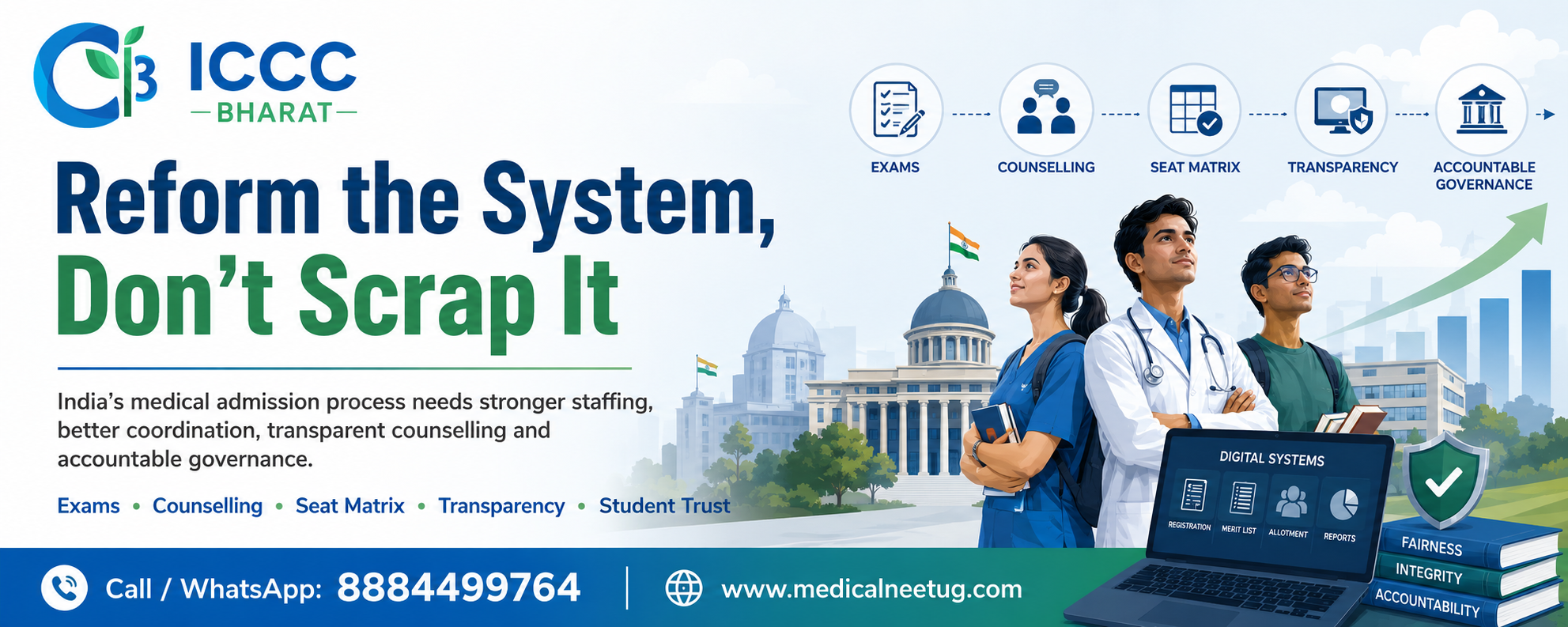
India’s Medical Admission System Needs Urgent Institutional Reform, Not Temporary Fixes

India’s medical admission system is one of the most sensitive and high-pressure education systems in the country. From entrance examinations to counselling, allotment, seat matrix publication, category verification, NRI documentation, roster implementation and final admission, every step affects the future of lakhs of students and families.

The recent controversies around examinations and counselling should not be seen as isolated incidents. They are warning signs of a deeper institutional weakness.

Across the medical admission ecosystem, several bodies are involved — examination agencies, counselling authorities, regulatory institutions, state counselling boards, universities and government departments. But in many places, the system appears to be functioning with staff shortages, vacant senior positions, weak coordination and inadequate technical support.

This is not merely an administrative issue. It is a national concern.

Vacant Posts and Weak Staffing Are Damaging Trust

When an agency handles high-stakes examinations or counselling for lakhs of students, it cannot function properly with insufficient manpower. If key posts remain vacant, if trained staff are missing, or if temporary arrangements are used repeatedly, mistakes become more likely.

Medical admissions require experienced officers who understand reservation rules, minority quota, NRI quota, domicile rules, seat matrix preparation, fee structures, legal orders, court directions and counselling software.

If the people managing the process lack adequate experience or support, students suffer.

Every wrong seat matrix, delayed notification, confusing circular or poor helpline response creates panic among students and parents.

Counselling Authorities Need Strong Permanent Structures

Medical counselling is not a routine clerical process. It decides the careers of future doctors, dentists and healthcare professionals.

Authorities such as national and state counselling bodies must have permanent offices, trained staff, legal experts, technical teams, admission policy experts and grievance redressal officers.

At present, students often face problems such as:

unclear seat matrix updates,
late addition or withdrawal of colleges,
confusion in NRI documentation,
portal errors,
category and roster disputes,
poor communication from helplines,
delayed allotments,
and repeated counselling-related litigation.

These issues show that the system needs better planning and stronger administrative capacity.

Lack of Coordination Creates Confusion

One of the biggest problems is lack of coordination between central and state authorities.

The Ministry of Health and Family Welfare, NMC, MCC, NTA, universities and state counselling authorities must work in a coordinated manner. If one body releases a schedule, another delays approval, and a third changes the seat matrix, students are left confused.

This becomes more serious when new colleges are added late, permissions are delayed, fee structures are unclear, or court orders affect seat availability.

Students should not suffer because institutions are not communicating properly with each other.

Appointments Must Be Transparent and Merit-Based

India has no shortage of capable people. Across the country, there are experienced doctors, administrators, legal experts, education professionals, technologists and admission specialists who understand the system deeply.

The concern is whether such people are being identified and appointed through transparent, merit-based processes.

Important public institutions should not depend on lobbying, personal influence or informal networks. Appointments in examination and counselling bodies must be based on competence, integrity, experience and proven track record.

A country of more than 140 crore people cannot say that it lacks qualified professionals for key education posts.

Paper Leak Is Only One Symptom

The NEET paper leak controversy is a serious matter, but it is only one visible example of a larger problem.

If examination bodies are understaffed, if security systems are weak, if confidential processes are not monitored properly, and if accountability is unclear, then such incidents become possible.

Similarly, if counselling systems lack staff, legal clarity and technical strength, then seat wastage, wrong allotments and repeated disputes will continue.

The issue is not only about one exam or one counselling round. The issue is the credibility of India’s medical education system.

Students and Parents Are Paying the Price

A student preparing for NEET does not only study for one exam. The student carries years of sacrifice, family expectations and emotional pressure.

Parents spend huge amounts on coaching, hostel, travel, documentation and counselling. Many families take loans or use their life savings for medical education.

When the system fails, the student loses confidence. The parent loses trust. The nation loses future healthcare professionals.

No student should lose an opportunity because of poor administration, vacant posts or delayed decision-making.

The Government Must Act Seriously

The central government has a responsibility to strengthen the entire medical admission system. Temporary fixes, committee announcements and last-minute clarifications are not enough.

The government must create a long-term reform plan with clear deadlines and public accountability.

Important steps should include:

filling vacant posts immediately,
appointing experienced and qualified professionals,
creating permanent technical teams,
strengthening counselling infrastructure,
auditing seat matrix preparation,
improving helpline and grievance systems,
ensuring real-time coordination between NMC, MCC, NTA, universities and states,
making all notices clear and legally consistent,
and publishing transparent timelines for every admission stage.

Legal and Administrative Accountability Is Essential

Medical admission processes are frequently affected by court cases because students and parents often feel that their concerns are not resolved at the administrative level.

If grievance systems are strong, many legal disputes can be avoided.

Every authority must maintain proper records, follow published rules, respond to complaints meaningfully and act within legally valid frameworks. Replies should not be mechanical or vague. Students deserve reasoned answers.

Accountability should not begin only after controversy. It must be built into the system from the beginning.

Reform Is Necessary for India’s Future

India wants to become a global leader in education, healthcare and human resources. But that future cannot be built if bright students are handled by weak systems.

Medical admissions decide who will become tomorrow’s doctors, surgeons, dentists, specialists and healthcare leaders. This process must be protected with the highest level of seriousness.

A strong India needs a strong examination system.
A strong healthcare system needs fair medical admissions.
A fair admission system needs competent people, transparent rules and accountable institutions.

Conclusion

The crisis in medical admissions is not just about paper leaks, vacant seats or counselling delays. It is about institutional trust.

India does not need cosmetic reform. It needs deep structural reform.

The government must strengthen examination bodies, counselling authorities and regulatory systems with experienced staff, permanent infrastructure, transparent appointments and technology-driven accountability.

Students are doing their duty by studying hard. Parents are doing their duty by supporting them. Now the system must do its duty by protecting their future.

Medical admissions must be fair, transparent, timely and professionally managed — because the future of India’s healthcare depends on it

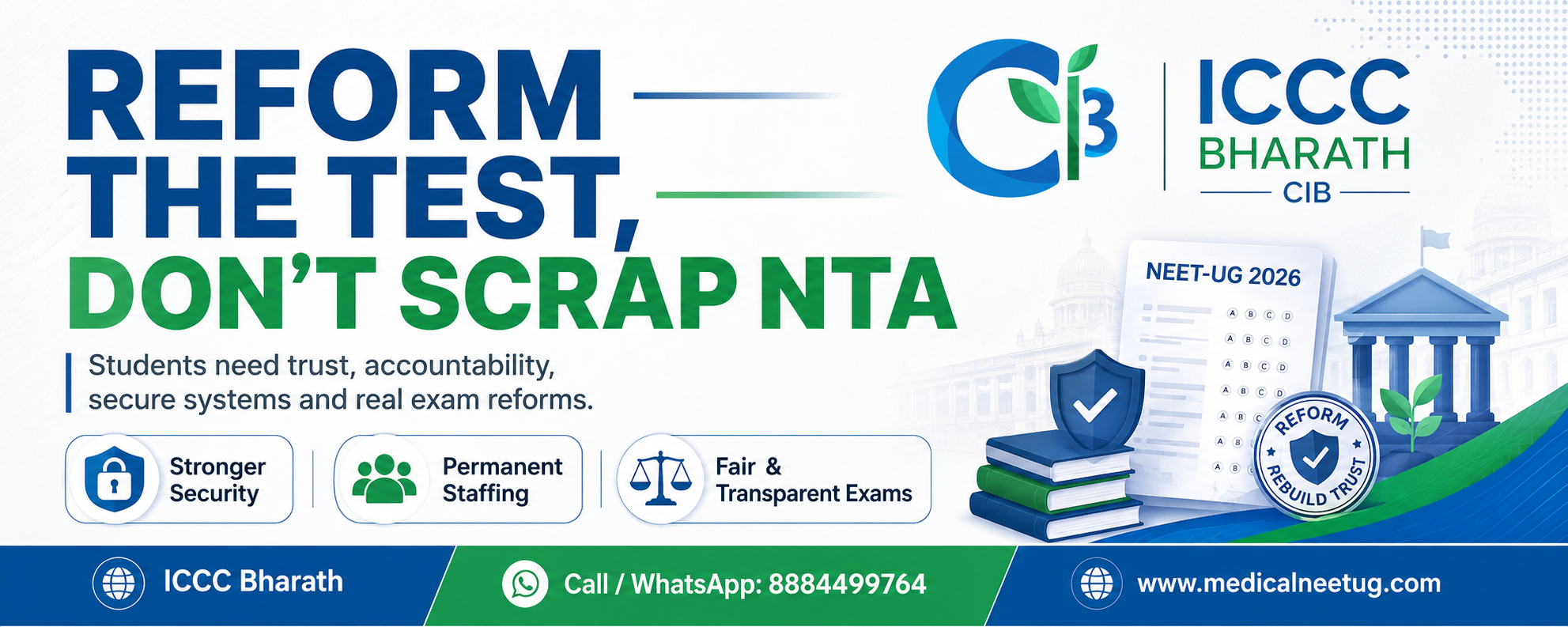
Reform the Exam System, Don’t Scrap NTA

The NEET-UG 2026 paper leak controversy has once again shaken the confidence of students and parents across India. For lakhs of families, NEET is not just an entrance exam. It is years of sacrifice, coaching fees, hostel life, sleepless nights, emotional pressure and one dream — to become a doctor.

When such an exam is cancelled due to paper leak allegations, the pain is not only academic. It is emotional, financial and psychological. Students who prepared honestly feel punished for no mistake of theirs. Parents feel helpless. The system loses trust.

But at this point, the question should not only be whether NTA should be scrapped. The bigger question is: How do we reform the examination system so deeply that students never face this trauma again?

NTA Handles a Huge Examination Ecosystem

The National Testing Agency does not conduct only one exam. It manages several major national-level examinations, including NEET-UG, JEE Main, CUET, UGC-NET and other specialised tests for ministries, regulators and institutions.

This means NTA handles lakhs and even crores of test events every year across multiple languages, thousands of centres, rural and urban regions, and different academic streams.

Such a large testing ecosystem cannot be run casually. It requires permanent leadership, trained manpower, strong technology, clear protocols, real-time monitoring and strict accountability.

NEET-UG 2026 Exposed the Weakest Link

NEET-UG is still conducted in pen-and-paper mode. At this scale, a physical paper system becomes highly vulnerable.

The question paper has to be prepared, translated, printed, packed, stored, transported, opened and distributed at thousands of centres. Every physical step becomes a possible weak point.

For honest students, even one weak link can destroy months of preparation.

This is why reform is urgent. The system cannot depend only on trust. It must be protected by technology, law, accountability and professional management.

CBT Can Reduce Some Risks

Computer-Based Tests are not risk-free, but they reduce many dangers linked to physical paper movement.

In CBT mode, question papers can be delivered through encrypted systems. Access can be controlled. Sessions can be monitored digitally. Audit trails can be maintained. If a problem happens in one centre or one shift, that session can be isolated and corrected without cancelling the entire examination for lakhs of students.

This is one reason why NEET-UG should gradually move towards a secure CBT or hybrid model, with proper infrastructure and support for rural students.

But CBT alone is not enough. Technology must come with honest governance.

The Real Problem Is Weak Structure and Accountability

The NEET crisis is not only about a paper leak. It also exposes deeper administrative problems.

If an agency is conducting exams for more than one crore test events in a year, it cannot run with vacant posts, temporary arrangements, outsourced dependency and unclear responsibility.

Reports of senior vacancies and lack of permanent manpower inside NTA raise serious concerns. A national testing body must have competent people in technology, cybersecurity, logistics, examination law, data management, audit, finance and grievance redressal.

Appointments should not be influenced by lobbying or convenience. They must be based on proven experience, integrity and capability.

India has enough talented professionals. The problem is not lack of people. The problem is lack of transparent selection and serious institutional planning.

Reform Should Be Serious, Not Cosmetic

After every controversy, committees are formed, reports are written and promises are made. But students need more than statements.

India needs real reform:

Clear responsibility at every level
Permanent and qualified manpower
Strict exam security protocols
Digital tracking of question paper movement
Encrypted paper transmission systems
Biometric and face authentication
AI-based anomaly detection
Independent audit of exam processes
Strong cybercrime coordination
Faster grievance redressal
Public accountability after every failure

The Radhakrishnan Committee recommendations should not remain on paper. They must be implemented with deadlines, monitoring and public reporting.

Do Not Punish Honest Students Again and Again

The worst part of any paper leak is that honest students suffer the most.

A student may have travelled hundreds of kilometres. A family may have spent money on coaching, rent, food, exam travel and emotional support. Many students are repeaters who have already given one or two years of their life to this exam.

When the system fails, their pain cannot be dismissed as a technical issue.

Students need assurance that their hard work matters more than money, contacts or manipulation.

Reform NTA, Strengthen It, Make It Accountable

Scrapping an institution may sound attractive during anger, but the real need is to rebuild it with stronger legal and administrative foundations.

NTA should be made more accountable, more transparent and more professional. If needed, it should be given statutory backing through Parliament, with clear responsibility, audit power and public reporting.

The agency must not become a body that conducts exams but avoids accountability when things go wrong.

A national testing agency must be independent, competent and answerable.

Conclusion

The NEET-UG 2026 crisis is a painful reminder that India’s examination system needs urgent reform. But reform should be thoughtful, practical and student-centric.

The goal should not be only to blame NTA or defend NTA. The goal should be to build an examination system that students can trust.

India’s students deserve fair exams. Parents deserve peace of mind. Honest preparation deserves protection.

Reform the test. Strengthen the system. Fix accountability. Protect students.

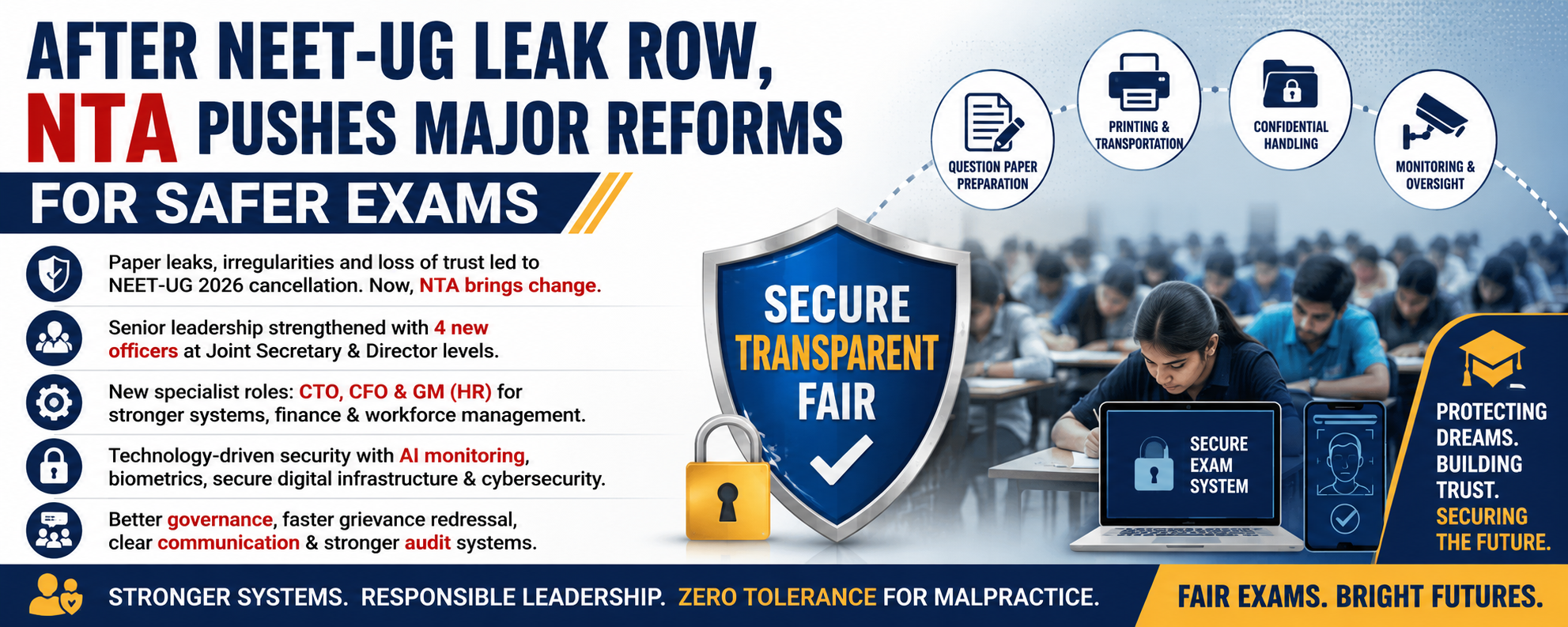
NEET-UG ಪ್ರಶ್ನೆಪತ್ರಿಕೆ ಸೋರಿಕೆ ವಿವಾದದ ಬಳಿಕ ಸುರಕ್ಷಿತ ಪರೀಕ್ಷೆಗಾಗಿ NTA ಪ್ರಮುಖ ಸುಧಾರಣೆಗಳನ್ನು ಘೋಷಿಸಿದೆ

NEET-UG 2026 ಪ್ರಶ್ನೆಪತ್ರಿಕೆ ಸೋರಿಕೆ ವಿವಾದದ ಹಿನ್ನೆಲೆದಲ್ಲಿ ರಾಷ್ಟ್ರೀಯ ಪರೀಕ್ಷಾ ಸಂಸ್ಥೆ (NTA) ದೇಶದ ರಾಷ್ಟ್ರೀಯ ಮಟ್ಟದ ಪರೀಕ್ಷಾ ವ್ಯವಸ್ಥೆಯನ್ನು ಇನ್ನಷ್ಟು ಸುರಕ್ಷಿತ ಮತ್ತು ಪಾರದರ್ಶಕವಾಗಿಸಲು ಹಲವು ಪ್ರಮುಖ ಸುಧಾರಣೆಗಳನ್ನು ಘೋಷಿಸಿದೆ. ವಿದ್ಯಾರ್ಥಿಗಳು, ಪೋಷಕರು ಹಾಗೂ ಶಿಕ್ಷಣ ತಜ್ಞರು ವ್ಯಕ್ತಪಡಿಸಿದ ಪರೀಕ್ಷೆಯ ಸುರಕ್ಷತೆ, ವಿಶ್ವಾಸಾರ್ಹತೆ ಮತ್ತು ಪಾರದರ್ಶಕತೆ ಕುರಿತ ಆತಂಕಗಳ ನಂತರ ಈ ಕ್ರಮ ಕೈಗೊಳ್ಳಲಾಗಿದೆ.

NEET-UG 2026 ಮೇ 3ರಂದು ನಡೆದಿತ್ತು. ಆದರೆ ಹಲವು ರಾಜ್ಯಗಳಲ್ಲಿ ಪ್ರಶ್ನೆಪತ್ರಿಕೆ ಸೋರಿಕೆ ಮತ್ತು ಅಕ್ರಮಗಳ ಆರೋಪಗಳು ಕೇಳಿಬಂದ ಹಿನ್ನೆಲೆಯಲ್ಲಿ ಪರೀಕ್ಷೆಯನ್ನು ರದ್ದುಪಡಿಸಲಾಯಿತು. ಈ ನಿರ್ಧಾರದಿಂದ ದೇಶದಾದ್ಯಂತ ಸುಮಾರು 22 ಲಕ್ಷಕ್ಕೂ ಹೆಚ್ಚು ವಿದ್ಯಾರ್ಥಿಗಳು ಪರಿಣಾಮಕ್ಕೆ ಒಳಗಾದರು.

ಭವಿಷ್ಯದಲ್ಲಿ ಇಂತಹ ಘಟನೆಗಳು ಮರುಕಳಿಸದಂತೆ ತಡೆಯಲು ಕೇಂದ್ರ ಸರ್ಕಾರ ಉನ್ನತ ಮಟ್ಟದ ತಜ್ಞರ ಸಮಿತಿಯನ್ನು ರಚಿಸಿತು. ಸಮಿತಿಯ ಶಿಫಾರಸುಗಳ ಆಧಾರದ ಮೇಲೆ NTA ಈಗ ತಾಂತ್ರಿಕ, ಆಡಳಿತಾತ್ಮಕ ಮತ್ತು ರಚನಾತ್ಮಕ ಬದಲಾವಣೆಗಳನ್ನು ಜಾರಿಗೆ ತರುತ್ತಿದೆ.

ಪ್ರಮುಖ ಸುಧಾರಣೆಗಳ ಕ್ಷೇತ್ರಗಳು

NTA ಪ್ರಕಟಣೆಯ ಪ್ರಕಾರ, ಪ್ರಶ್ನೆಪತ್ರಿಕೆ ತಯಾರಿ, ಭಾಷಾಂತರ, ಮುದ್ರಣ, ಸಾಗಣೆ, ಗೌಪ್ಯ ನಿರ್ವಹಣೆ, ಮೇಲ್ವಿಚಾರಣೆ ಹಾಗೂ ಆಡಳಿತ ವ್ಯವಸ್ಥೆಗಳನ್ನು ಬಲಪಡಿಸುವತ್ತ ವಿಶೇಷ ಗಮನ ಹರಿಸಲಾಗುತ್ತದೆ.

ಪರೀಕ್ಷಾ ಪ್ರಕ್ರಿಯೆಯಲ್ಲಿ ಪ್ರಶ್ನೆಪತ್ರಿಕೆ ಸೋರಿಕೆ, ತಿದ್ದುಪಡಿ ಅಥವಾ ಅನಧಿಕೃತ ಪ್ರವೇಶದ ಅಪಾಯ ಕಡಿಮೆ ಮಾಡಲು ಅತ್ಯಾಧುನಿಕ ತಂತ್ರಜ್ಞಾನ ಮತ್ತು ಡಿಜಿಟಲ್ ಸುರಕ್ಷತಾ ಕ್ರಮಗಳನ್ನು ಅಳವಡಿಸಲಾಗುತ್ತದೆ.

NTAಗೆ ಹಿರಿಯ ಅಧಿಕಾರಿಗಳ ನೇಮಕ

ಸುಧಾರಣೆಗಳ ಭಾಗವಾಗಿ NTAಗೆ ನಾಲ್ವರು ಹಿರಿಯ ಅಧಿಕಾರಿಗಳನ್ನು ನೇಮಿಸಲಾಗಿದೆ. ಇದರಲ್ಲಿ ಇಬ್ಬರು ಜಂಟಿ ಕಾರ್ಯದರ್ಶಿ ಮಟ್ಟದ ಅಧಿಕಾರಿಗಳು ಹಾಗೂ ಇಬ್ಬರು ನಿರ್ದೇಶಕ ಮಟ್ಟದ ಅಧಿಕಾರಿಗಳು ಸೇರಿದ್ದಾರೆ.

ರಾಧಾಕೃಷ್ಣನ್ ಸಮಿತಿಯ ಶಿಫಾರಸುಗಳಂತೆ, ಜಂಟಿ ಕಾರ್ಯದರ್ಶಿ ಮಟ್ಟದ ಅಧಿಕಾರಿಗಳು ಹೆಚ್ಚುವರಿ ಮಹಾನಿರ್ದೇಶಕರಾಗಿ ಕಾರ್ಯನಿರ್ವಹಿಸಲಿದ್ದಾರೆ. ಅವರ ಆಡಳಿತ ಅನುಭವವು ಕಾರ್ಯಕ್ಷಮತೆ ಮತ್ತು ಹೊಣೆಗಾರಿಕೆಯನ್ನು ಹೆಚ್ಚಿಸುವ ನಿರೀಕ್ಷೆಯಿದೆ.

ಹೊಸ ತಜ್ಞ ಹುದ್ದೆಗಳು

NTA ಮೂರು ಪ್ರಮುಖ ತಜ್ಞ ಹುದ್ದೆಗಳಿಗೆ ಅರ್ಜಿಗಳನ್ನು ಆಹ್ವಾನಿಸಿದೆ:

  • ಮುಖ್ಯ ತಂತ್ರಜ್ಞಾನ ಅಧಿಕಾರಿ (Chief Technology Officer)
  • ಮುಖ್ಯ ಹಣಕಾಸು ಅಧಿಕಾರಿ (Chief Finance Officer)
  • ಮಾನವ ಸಂಪನ್ಮೂಲ ಪ್ರಧಾನ ವ್ಯವಸ್ಥಾಪಕ (General Manager – Human Resources)

ಮುಖ್ಯ ತಂತ್ರಜ್ಞಾನ ಅಧಿಕಾರಿ ಡಿಜಿಟಲ್ ಪರೀಕ್ಷಾ ವ್ಯವಸ್ಥೆ, ಸೈಬರ್ ಸುರಕ್ಷತೆ, ಬಯೋಮೆಟ್ರಿಕ್ ದೃಢೀಕರಣ, ಮುಖ ಗುರುತಿಸುವಿಕೆ ಮತ್ತು AI ಆಧಾರಿತ ಮೇಲ್ವಿಚಾರಣೆಯ ಜವಾಬ್ದಾರಿ ವಹಿಸಲಿದ್ದಾರೆ.

ತಂತ್ರಜ್ಞಾನ ಆಧಾರಿತ ಸುರಕ್ಷತೆ

ರಾಷ್ಟ್ರೀಯ ಪರೀಕ್ಷೆಗಳಲ್ಲಿ AI ಆಧಾರಿತ ವಿಶ್ಲೇಷಣೆ, ಬಯೋಮೆಟ್ರಿಕ್ ದೃಢೀಕರಣ, ಸುರಕ್ಷಿತ ಡಿಜಿಟಲ್ ಮೂಲಸೌಕರ್ಯ, ನಿರಂತರ ಮೇಲ್ವಿಚಾರಣೆ ಮತ್ತು ಬಲವಾದ ಸೈಬರ್ ಸುರಕ್ಷತಾ ವ್ಯವಸ್ಥೆಗಳನ್ನು ಬಳಸಲು ಯೋಜಿಸಲಾಗಿದೆ.

ಇದರಿಂದ ಪರೀಕ್ಷಾ ಪ್ರಕ್ರಿಯೆ ಇನ್ನಷ್ಟು ಸುರಕ್ಷಿತ, ಪಾರದರ್ಶಕ ಮತ್ತು ಜವಾಬ್ದಾರಿಯುತವಾಗುವ ನಿರೀಕ್ಷೆಯಿದೆ.

ಉತ್ತಮ ಆಡಳಿತ ಮತ್ತು ವಿದ್ಯಾರ್ಥಿ ಸಂಪರ್ಕ

NTA ಉತ್ತಮ ಆಡಳಿತ, ವೇಗವಾದ ದೂರು ಪರಿಹಾರ ವ್ಯವಸ್ಥೆ, ಸಿಬ್ಬಂದಿಗೆ ವೃತ್ತಿಪರ ತರಬೇತಿ ಹಾಗೂ ವಿದ್ಯಾರ್ಥಿಗಳೊಂದಿಗೆ ಸ್ಪಷ್ಟ ಸಂವಹನ ವ್ಯವಸ್ಥೆಯನ್ನು ಒದಗಿಸುವ ಭರವಸೆ ನೀಡಿದೆ.

ಹೆಚ್ಚಿನ ಒತ್ತಡದ ಪರೀಕ್ಷಾ ಸಂದರ್ಭಗಳಲ್ಲಿ ತಡವಾದ ಪ್ರಕಟಣೆಗಳು ಮತ್ತು ತಪ್ಪು ಮಾಹಿತಿಯಿಂದ ವಿದ್ಯಾರ್ಥಿಗಳು ಗೊಂದಲಕ್ಕೊಳಗಾಗುವುದನ್ನು ಕಡಿಮೆ ಮಾಡಲು ಇದು ಸಹಾಯಕವಾಗಲಿದೆ.

ಈ ಸುಧಾರಣೆಗಳ ಮಹತ್ವ

NEET-UG 2026 ಪ್ರಶ್ನೆಪತ್ರಿಕೆ ಸೋರಿಕೆ ಪ್ರಕರಣವು ಭಾರತದ ಪರೀಕ್ಷಾ ವ್ಯವಸ್ಥೆಗೆ ತಾತ್ಕಾಲಿಕ ಪರಿಹಾರವಲ್ಲ, ಬದಲಾಗಿ ಆಳವಾದ ಸುಧಾರಣೆ ಅಗತ್ಯವಿದೆ ಎಂಬುದನ್ನು ತೋರಿಸಿದೆ.

ವಿದ್ಯಾರ್ಥಿಗಳಿಗೆ NEET ಕೇವಲ ಒಂದು ಪರೀಕ್ಷೆಯಲ್ಲ. ಅದು ಅವರ ಹಲವು ವರ್ಷಗಳ ಪರಿಶ್ರಮ, ಕುಟುಂಬದ ತ್ಯಾಗ ಮತ್ತು ವೈದ್ಯರಾಗುವ ಕನಸಿನ ಪ್ರತೀಕವಾಗಿದೆ.

ಸಮಾರೋಪ

NEET-UG 2026 ಪ್ರಶ್ನೆಪತ್ರಿಕೆ ಸೋರಿಕೆ ಪ್ರಕರಣದ ಬಳಿಕ ಘೋಷಿಸಲಾದ NTA ಸುಧಾರಣೆಗಳು ರಾಷ್ಟ್ರೀಯ ಮಟ್ಟದ ಪರೀಕ್ಷೆಗಳ ಮೇಲಿನ ವಿಶ್ವಾಸ ಮರುಸ್ಥಾಪಿಸಲು ಮಹತ್ವದ ಹೆಜ್ಜೆಯಾಗಿದೆ. ಆದರೆ ಈ ಸುಧಾರಣೆಗಳ ನಿಜವಾದ ಯಶಸ್ಸು ಅವುಗಳ ಪರಿಣಾಮಕಾರಿ ಅನುಷ್ಠಾನದಲ್ಲಿದೆ.

ವಿದ್ಯಾರ್ಥಿಗಳು ಮತ್ತು ಪೋಷಕರು ಈಗ ಈ ಬದಲಾವಣೆಗಳು ಭವಿಷ್ಯದ ಪರೀಕ್ಷೆಗಳನ್ನು ನಿಜವಾಗಿಯೂ ಸುರಕ್ಷಿತ, ಪಾರದರ್ಶಕ ಮತ್ತು ನ್ಯಾಯಸಮ್ಮತವಾಗಿಸುತ್ತವೆಯೇ ಎಂಬುದನ್ನು ಗಮನದಿಂದ ನೋಡಲಿದ್ದಾರೆ.

NEET-UG पेपर लीक विवाद के बीच NTA में नई नियुक्तियां

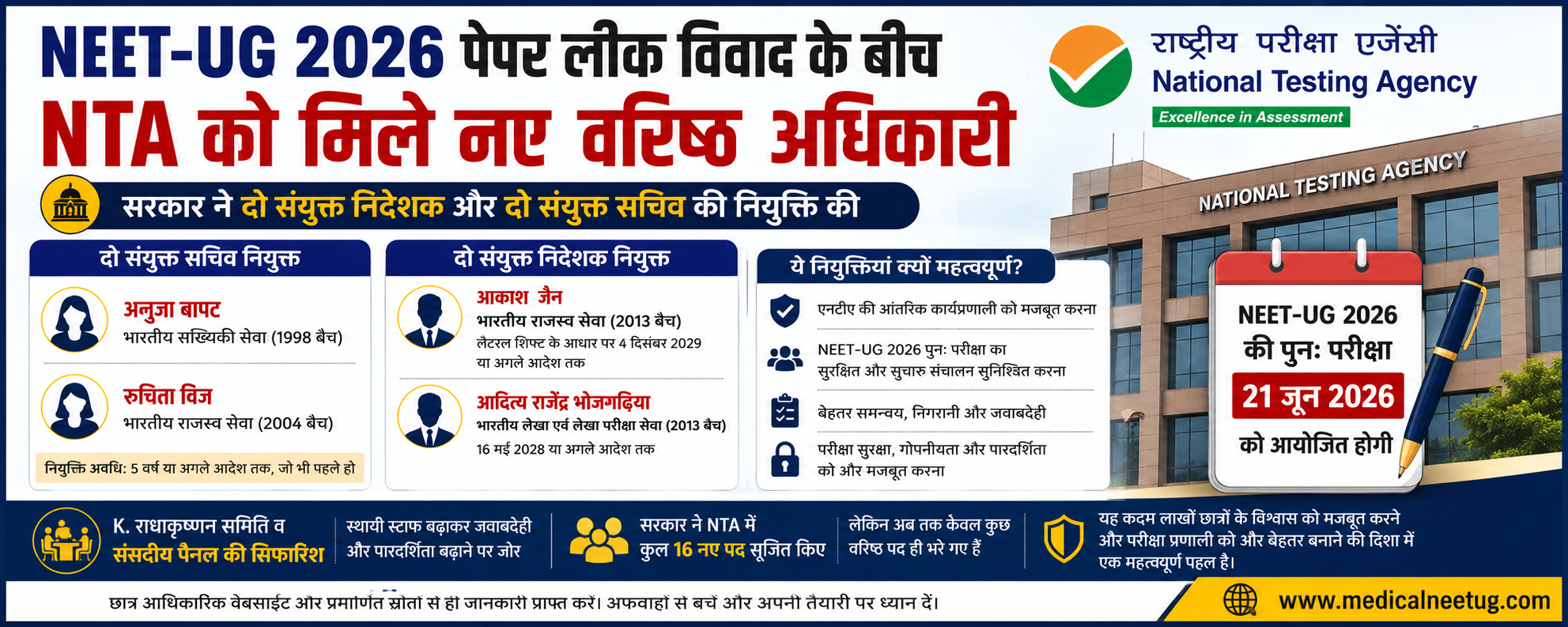
NEET-UG 2026 पेपर लीक विवाद और परीक्षा रद्द होने के बाद केंद्र सरकार ने राष्ट्रीय परीक्षा एजेंसी यानी NTA को मजबूत करने की दिशा में बड़ा कदम उठाया है। सरकार ने NTA में दो संयुक्त सचिव और दो संयुक्त निदेशक नियुक्त किए हैं।

यह नियुक्तियां ऐसे समय में की गई हैं जब NEET-UG 2026 की दोबारा परीक्षा 21 जून को आयोजित की जानी है। माना जा रहा है कि इन नियुक्तियों का उद्देश्य री-एग्जाम को अधिक सुचारू, सुरक्षित और पारदर्शी तरीके से आयोजित कराना है।

NTA को मजबूत करने की कोशिश

NEET-UG 2026 की परीक्षा 3 मई को आयोजित हुई थी, लेकिन पेपर लीक आरोपों के बाद परीक्षा रद्द कर दी गई। इसके बाद NTA की कार्यप्रणाली, पारदर्शिता और आंतरिक व्यवस्था पर कई सवाल उठे।

सरकार द्वारा वरिष्ठ अधिकारियों की नियुक्ति को NTA की प्रशासनिक क्षमता बढ़ाने और परीक्षा संचालन में जवाबदेही तय करने की दिशा में महत्वपूर्ण कदम माना जा रहा है।

दो संयुक्त सचिव नियुक्त

सरकार ने भारतीय सांख्यिकी सेवा की 1998 बैच की अधिकारी अनुजा बापट और भारतीय राजस्व सेवा की 2004 बैच की अधिकारी रुचिता विज को NTA में संयुक्त सचिव नियुक्त किया है।

इनकी नियुक्ति पांच वर्ष के लिए या अगले आदेश तक, जो पहले हो, की गई है।

दो संयुक्त निदेशक भी नियुक्त

इसके अलावा NTA में दो संयुक्त निदेशक भी नियुक्त किए गए हैं।

आकाश जैन, 2013 बैच के भारतीय राजस्व सेवा अधिकारी, को संयुक्त निदेशक बनाया गया है। उनकी नियुक्ति 4 दिसंबर 2029 तक या अगले आदेश तक प्रभावी रहेगी।

आदित्य राजेंद्र भोजगढिया, 2013 बैच के भारतीय लेखा एवं लेखा परीक्षा सेवा अधिकारी, को भी संयुक्त निदेशक नियुक्त किया गया है। उनका कार्यकाल 16 मई 2028 तक या अगले आदेश तक रहेगा।

खाली पदों को अपग्रेड किया गया

जानकारी के अनुसार, उप सचिव / निदेशक स्तर के दो खाली पदों को प्रारंभिक रूप से दो वर्षों के लिए अपग्रेड किया गया है ताकि इन नियुक्तियों को प्रभावी बनाया जा सके।

राधाकृष्णन समिति की सिफारिश महत्वपूर्ण

NEET-UG पेपर लीक विवाद के बाद NTA की आंतरिक संरचना पर पहले भी सवाल उठे थे। के. राधाकृष्णन की अध्यक्षता वाली सात सदस्यीय समिति ने NTA में स्थायी कर्मचारियों की नियुक्ति की सिफारिश की थी, ताकि परीक्षा प्रक्रिया में अधिक जवाबदेही लाई जा सके।

दिसंबर 2025 में एक संसदीय समिति ने भी NTA को आंतरिक रूप से मजबूत करने की आवश्यकता पर जोर दिया था।

16 नए पद बनाए गए थे

इन सिफारिशों के बाद सरकार ने NTA में 16 नए पद सृजित किए थे। हालांकि, अब तक केवल कुछ पदों पर ही नियुक्तियां हुई हैं। वर्तमान नियुक्तियों को उसी सुधार प्रक्रिया का हिस्सा माना जा रहा है।

निष्कर्ष

NEET-UG 2026 पेपर लीक विवाद ने देश की परीक्षा प्रणाली की विश्वसनीयता पर गंभीर सवाल खड़े किए हैं। ऐसे समय में NTA में वरिष्ठ अधिकारियों की नियुक्ति एक महत्वपूर्ण प्रशासनिक कदम है।

अब सबसे बड़ी चुनौती 21 जून को होने वाली NEET-UG री-एग्जाम को निष्पक्ष, सुरक्षित और बिना किसी विवाद के संपन्न कराना है। छात्रों और अभिभावकों की निगाहें अब NTA और सरकार की अगली कार्रवाई पर टिकी हैं।

NTA Gets New Senior Officers Amid NEET-UG 2026 Paper Leak Row

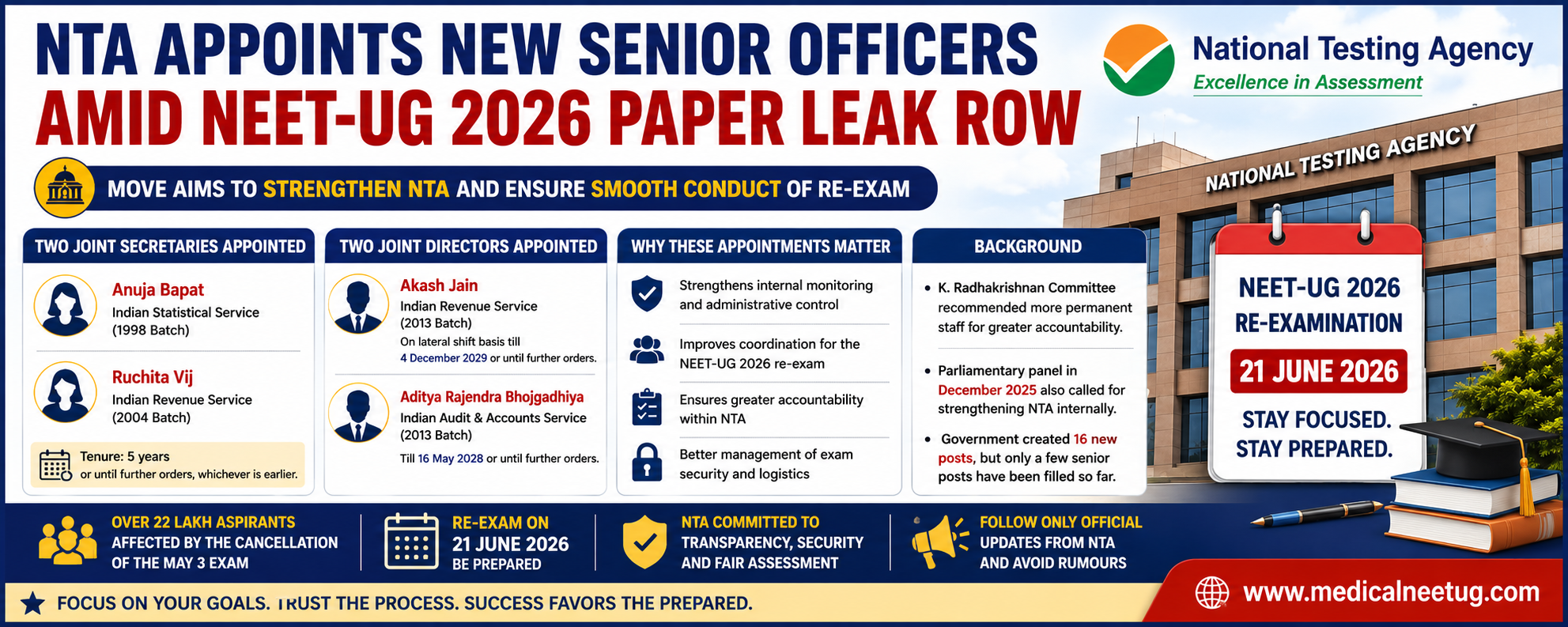
In the aftermath of the NEET-UG 2026 paper leak controversy and the cancellation of the May 3 examination, the government has appointed new senior officers to the National Testing Agency with immediate effect.

The move comes at a crucial time, as the NEET-UG 2026 re-examination is scheduled to be held on June 21. The appointments are expected to strengthen the internal functioning of NTA and support the smooth conduct of the upcoming re-exam.

Two Joint Secretaries Appointed

As per the orders issued by the Department of Personnel and Training, the Appointments Committee of the Cabinet has approved the appointment of two Joint Secretaries in NTA.

The newly appointed Joint Secretaries are:

  • Anuja Bapat, Indian Statistical Service officer of the 1998 batch
  • Ruchita Vij, Indian Revenue Service officer of the 2004 batch

Their appointments will be for a tenure of five years or until further orders, whichever is earlier.

Two Joint Directors Also Appointed

The government has also appointed two Joint Directors to NTA.

The newly appointed Joint Directors are:

  • Akash Jain, 2013-batch IRS officer
  • Aditya Rajendra Bhojgadhiya, 2013-batch Indian Audit and Accounts Service officer

Akash Jain has been appointed on a lateral shift basis until December 4, 2029, or until further orders. Aditya Rajendra Bhojgadhiya has been appointed until May 16, 2028.

Why These Appointments Matter

The timing of these appointments is important because NTA is currently under heavy scrutiny after the NEET-UG 2026 paper leak allegations. The May 3 exam was cancelled, and more than 22 lakh students are now preparing for the re-examination.

The addition of senior officers is expected to help in:

  • Better internal monitoring
  • Stronger administrative control
  • Improved coordination for the re-exam
  • Greater accountability within NTA
  • Better management of exam security and logistics

Background: Recommendations to Strengthen NTA

The seven-member committee headed by K. Radhakrishnan, which examined issues related to earlier NEET paper leak concerns, had recommended that NTA should have more permanent staff to improve accountability.

A parliamentary panel had also suggested strengthening the organisation internally. Following these recommendations, the government created 16 new posts in NTA. However, so far, only a few senior posts have been filled.

Re-Exam on June 21

The NEET-UG 2026 re-examination will be conducted on June 21, 2026. The new appointments appear to be part of the government’s efforts to ensure that the re-exam is conducted in a more secure and organised manner.

Students are advised to follow only official NTA updates regarding admit cards, exam city details, and exam instructions.

Conclusion

The appointment of two Joint Directors and two Joint Secretaries to NTA is a significant administrative step amid the NEET-UG 2026 controversy. With the re-exam scheduled for June 21, strengthening the agency’s internal structure has become extremely important.

For students and parents, the priority now should be to stay calm, avoid rumours, and focus on preparation while waiting for official updates from NTA.