NTA Staff Shortage Is Only One Symptom: India Needs Urgent Reform in Medical Examination and Counselling Bodies

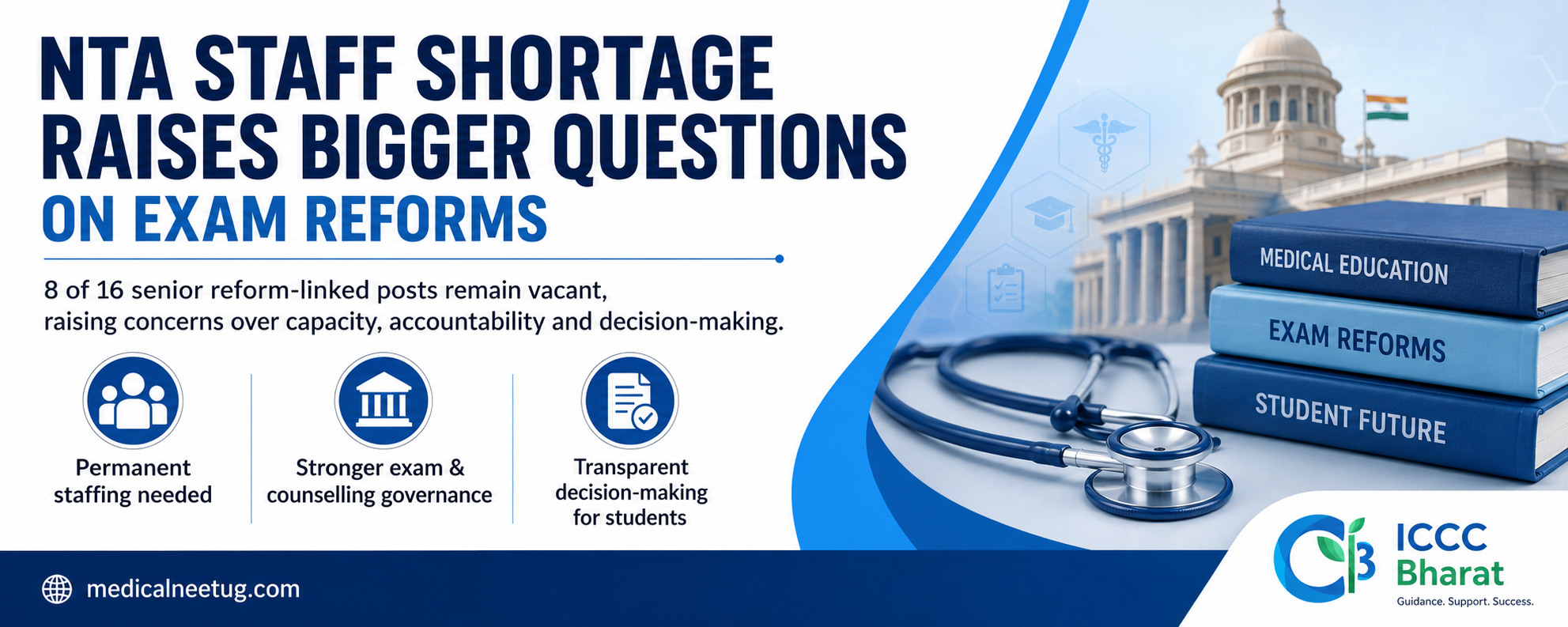
The ongoing NEET paper leak controversy has once again exposed a serious problem inside India’s examination system. Reports suggest that even after reforms were recommended, several senior posts inside the National Testing Agency remain vacant. This raises a very important question: how can an agency responsible for lakhs of students conduct high-stakes examinations without enough permanent, experienced and accountable officers?

But this problem is not limited to NTA alone.

The same weakness can be seen in several important medical education and admission bodies. Whether it is NTA, NBE, NMC, MCC or other counselling-related authorities, the larger problem is the same: shortage of permanent staff, weak institutional structure, lack of accountability, delayed decision-making and absence of experienced professionals in key positions.

The Problem Is Not Only Paper Leak

A paper leak is only the visible part of a deeper crisis. The real issue is structural failure.

When senior posts remain vacant, when important departments depend heavily on contractual or temporary staff, when the same limited group of people handle multiple responsibilities, and when there is no strong decision-making system, mistakes become unavoidable.

Students suffer because:

  • exam schedules become uncertain,
  • counselling gets delayed,
  • seat matrices are uploaded with confusion,
  • grievances are not answered properly,
  • important decisions are postponed,
  • seats remain vacant,
  • and students lose trust in the system.

Medical Counselling Also Needs Reform

Every year, medical counselling faces serious problems. Students and parents struggle with unclear rules, late updates, confusing seat matrices, sudden changes, poor communication and delayed responses.

MCC and state counselling systems must become more transparent and professionally managed. When thousands of MBBS, MD, MS, BDS and other medical seats are at stake, there must be a proper permanent structure, trained manpower and accountable officers.

India cannot afford a system where students keep sending complaints and receive only standard replies without real resolution.

Vacant Seats Are Not Only Because of High Fees

Many officials often say that seats remain vacant only because medical college fees are high. But this is not the full truth.

High fees are one problem, but poor counselling management is also a major reason.

If seat matrices are unclear, if counselling rounds are not planned properly, if decision-makers delay action, if vacant seats are not handled in time, and if student grievances are ignored, then seats will naturally remain vacant.

When thousands of PG seats remain vacant, it is not just a financial issue. It is also an administrative failure.

India Has Enough Talent — But Is It Being Used?

India has experienced doctors, medical education experts, administrators, counsellors, legal experts, data analysts and examination professionals across the country. The question is: why are such people not being brought into the system?

Appointments should not depend on lobbying, influence or repeated internal circulation of the same people. Key positions must be filled based on:

  • track record,
  • experience,
  • honesty,
  • subject knowledge,
  • administrative ability,
  • technology understanding,
  • and commitment to students.

A country of 140 crore people cannot say that it does not have competent professionals to manage national examinations and medical counselling.

Honest Officers Must Be Protected

Another major concern is that honest and capable people often do not want to enter such systems because the structure is weak, political pressure is high and accountability is selective.

If honest officers are discouraged and only convenient people remain in positions, the system will continue to weaken.

India needs a structure where good people are invited, respected, protected and allowed to work independently.

What Reforms Are Needed?

The government must urgently consider major reforms in medical examination and counselling bodies.

There should be permanent senior-level appointments in NTA, NBE, NMC, MCC and related bodies.

There should be independent audit of examination and counselling processes.

Seat matrix publication must be transparent, verified and time-bound.

Counselling software, data handling and grievance redressal must be professional.

Every important decision must have a responsible officer.

Student complaints should not be closed with routine replies.

Vacant seats must be reviewed in real time.

Medical fee approvals and seat matrix permissions must be strictly monitored.

There should be a national-level reform committee with experienced doctors, administrators, legal experts, counselling experts and technology professionals.

Government Must Act Before the System Collapses

The current situation is a warning. Students are losing faith. Parents are frustrated. Courts are repeatedly being approached. Seats are being wasted. Exams are being questioned. Counselling credibility is being damaged.

This is not the time for cosmetic changes. This is the time for hard decisions.

The government must stop treating each controversy as an isolated event. NEET paper leak, vacant PG seats, counselling confusion, fee issues, seat matrix errors and delayed responses are all connected to one bigger problem: weak governance in medical education administration.

Final Opinion

India’s medical education system needs urgent structural reform.

NTA’s staff shortage is only one part of the story. The same problem exists in examination bodies, counselling bodies and regulatory systems. Without permanent staff, competent leadership, transparent appointments and real accountability, students will continue to suffer.

Medical admission is not a small administrative process. It decides the future of lakhs of students and the future of healthcare in India.

The government must act now — not after another scam, not after another court case, not after another batch of seats goes vacant.

India needs strong institutions, honest decision-makers and transparent counselling systems. Without that, no reform will be complete.

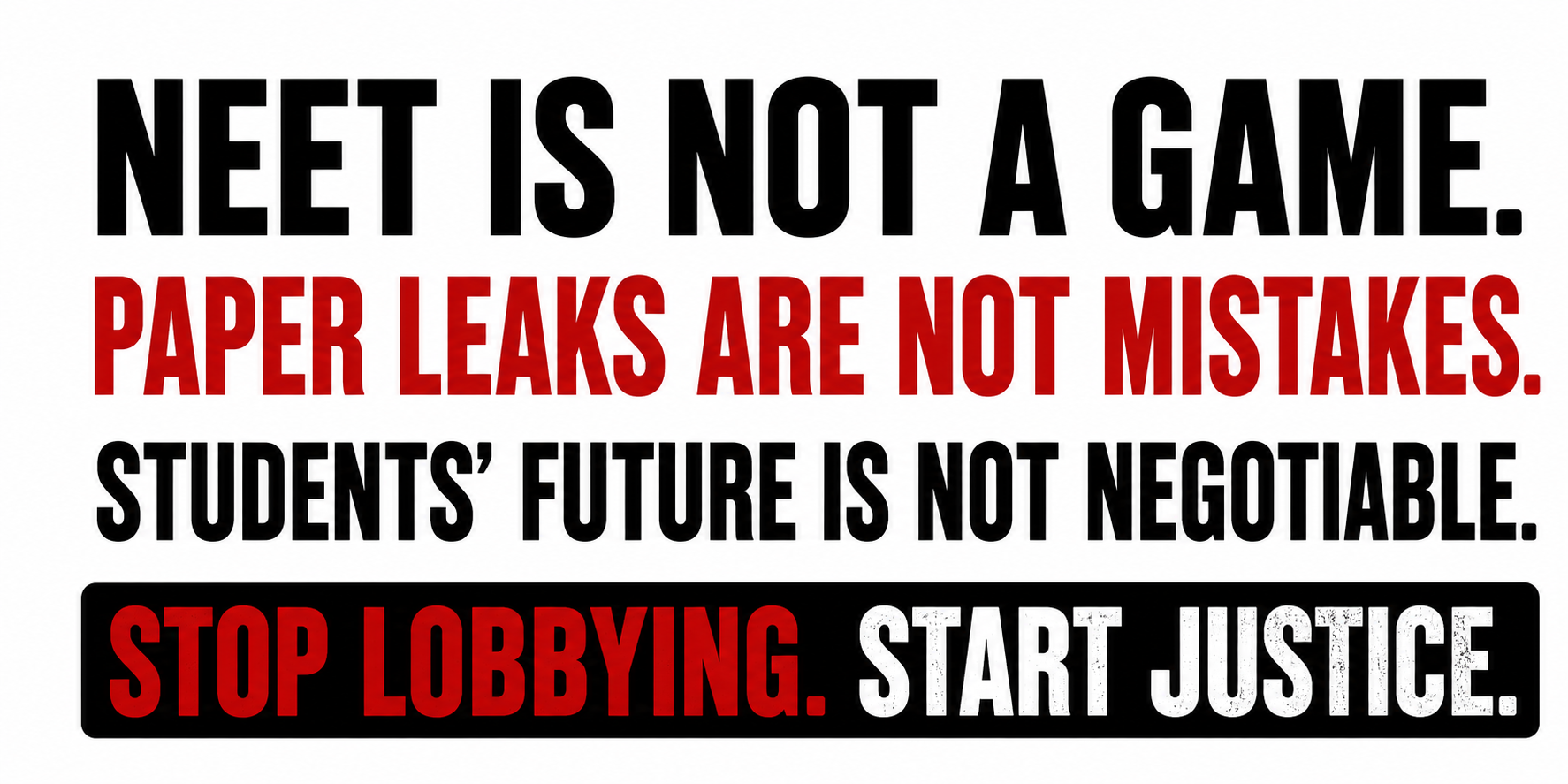
NEET-UG Crisis: India Must Stop Lobby-Driven Appointments and Fix Exam Governance Now

The cancellation of NEET-UG 2026 has once again exposed a painful truth: India’s medical entrance system is not suffering only because of paper leaks. It is suffering because of weak governance, poor accountability, delayed reforms, and the appointment of people who may not understand the seriousness of national-level medical admissions.

NTA Director General Abhishek Singh has reportedly said that the NEET-UG process was found to be compromised and that the agency had to take a tough decision in the larger interest of students. He also said the system could not allow “scamsters” or miscreants to operate even in an isolated manner.

This statement must not be treated as routine damage control. It is a warning bell.

NEET-UG is not a small school test. It decides the careers of lakhs of students. Many candidates come from poor and middle-class families. Parents sell land, take loans, leave comfort, and sacrifice years of life for one dream: to see their child become a doctor. When a paper leak, manipulation, or sabotage attempt happens, it is not merely an examination irregularity. It is an attack on merit, public trust, national interest, and the future of hardworking students.

The issue is bigger than NTA alone. The entire chain — NTA, MCC, NMC, Health Ministry, counselling authorities, examination vendors, and policy decision-makers — must be reviewed. The country cannot run such a sensitive system through casual decisions, weak supervision, or lobby-based appointments. India needs capable, experienced, honest, and technically sound people in these institutions.

The Supreme Court had already dealt with the NEET-UG 2024 controversy. At that time, the Court refused to cancel the 2024 exam because there was insufficient material to prove a systemic leak, but it also pushed for reforms and expert review of the examination system. Later, the Centre informed the Supreme Court that it had accepted the expert panel’s recommendations, except the immediate shift to online NEET, citing infrastructure challenges for over 26 lakh students.

That means the warning was already there.

A high-level expert report had also suggested stronger monitoring, periodic appraisal, and mission-mode implementation of reforms for NTA. The report recommended a steering committee to monitor NTA’s performance, ensure compliance within timelines, guide bottlenecks, and submit monthly updates to the Ministry of Education.

Then the hard question is this: If reforms were already discussed, recommended, and accepted, why are students still paying the price?

The Government of India must stop treating this as a one-time crisis. It must clean the system from the top. If capable people are removed and weak or lobby-backed people are appointed, the result will be exactly what the country is seeing today — confusion, cancellation, mistrust, litigation, protests, and lakhs of students left in uncertainty.

The same seriousness is needed in counselling also. MCC and state counselling bodies handle the future of students after the exam. Any delay, wrong seat matrix, unclear rule, poor communication, or careless scheduling can destroy a student’s opportunity. Examination and counselling cannot be run by people who do not understand the ground reality of students, states, categories, quotas, seat matrix, and medical admission complexity.

This is no longer only about conducting NEET. This is about protecting India’s medical education system.

Strong Suggestions to the Government

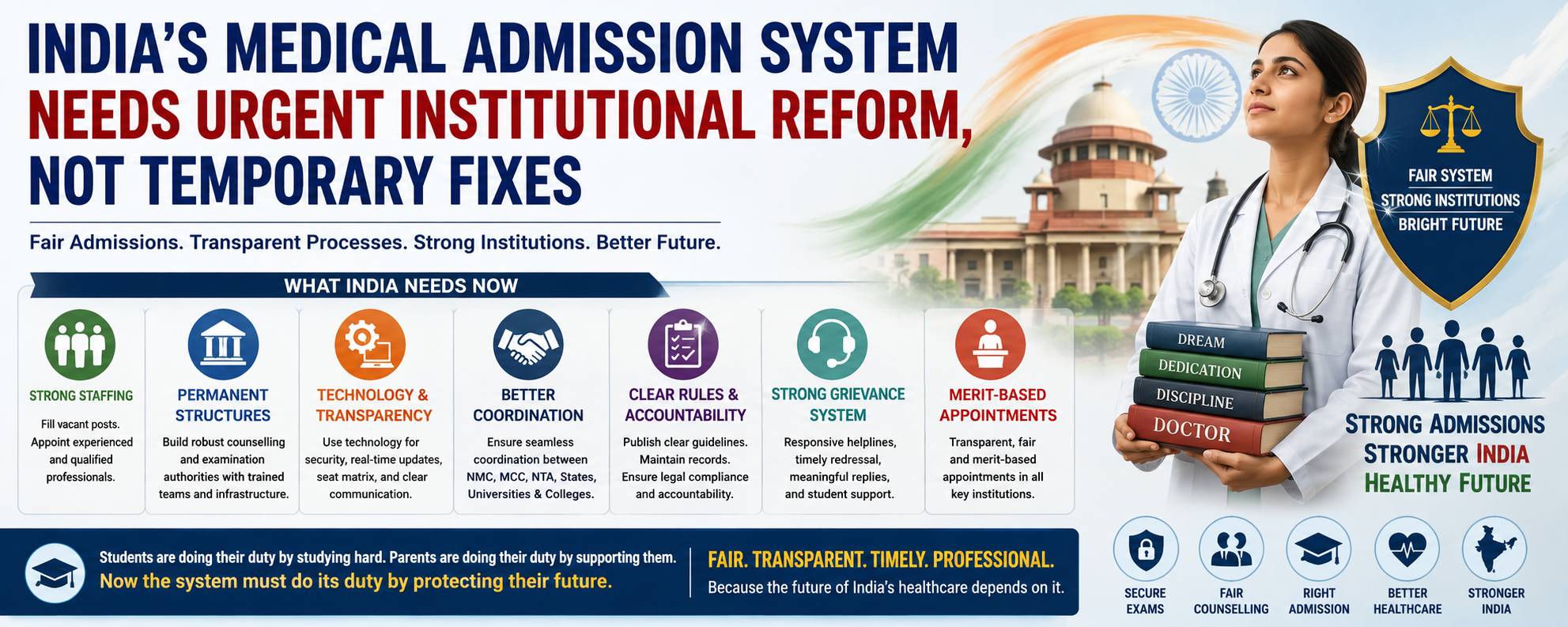
The Government must immediately bring experienced, independent, and technically qualified people into NTA, MCC, NMC, NBEMS, and all related examination and counselling bodies.

All sensitive appointments must be transparent, merit-based, and free from internal lobbying.

Paper movement, exam-centre selection, digital security, vendor management, and question-paper access must be audited by independent agencies.

The Radhakrishnan committee recommendations and Supreme Court-monitored reform concerns must be implemented with public timelines, not kept only on paper.

The Government must create a national-level exam security protocol because paper leaks and organized manipulation are a direct threat to national credibility.

Students should not suffer again because of administrative failure.

Hard Closing Line

India does not need excuses after every paper leak. India needs clean exams, clean counselling, clean appointments, and clean accountability. NEET-UG is the dream of lakhs of students — it cannot be left in the hands of weak systems, lobbying networks, or incapable decision-makers.

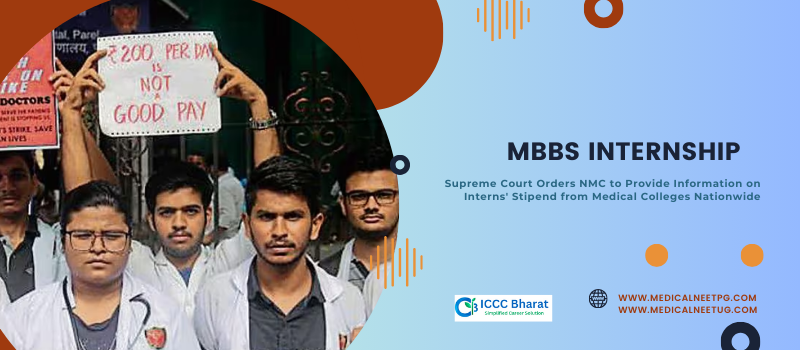
“Supreme Court Orders NMC to Provide Stipend Details for MBBS Interns Across All States”

“In a significant development concerning the payment of stipends to doctors during their MBBS internships, the Supreme Court on April 1 issued a decisive directive to the National Medical Commission (NMC), urging them to furnish detailed information on the stipend status across medical colleges in all states.

The Court highlighted the NMC’s failure to provide comprehensive data on all medical colleges nationwide, noting the non-compliance of an earlier directive issued on September 15, 2023. This directive had requested the NMC to present a tabulated chart addressing whether 70% of medical colleges fail to pay any stipend to interns or pay an amount below the minimum stipulated amount. Additionally, it sought clarification on the measures being taken by the NMC to enforce stipend payment norms.

Expressing dissatisfaction with the incomplete details provided by the NMC, a bench comprising Justices Sudhanshu Dhulia and Prasanna B Varale instructed the commission to rectify this within four weeks.

During previous hearings, the bench expressed concerns over medical colleges inadequately compensating interns despite charging substantial fees. Justice Dhulia criticized the colleges for their stance, emphasizing that if they charge exorbitant fees, they should also fulfill their obligation to pay stipends.

Advocate Tanvi Dubey, representing the petitioners, highlighted that even Foreign Medical Graduates (FMGs) were not receiving stipends. The Court, expressing discontent, observed that FMGs should not be treated differently.

Case Title: Abhishek Yadav and others v. Army College of Medical Sciences | W.P.(C) No. 730/2022

The Court has scheduled the matter for a final hearing on May 6, 2024, after considering the submissions.”

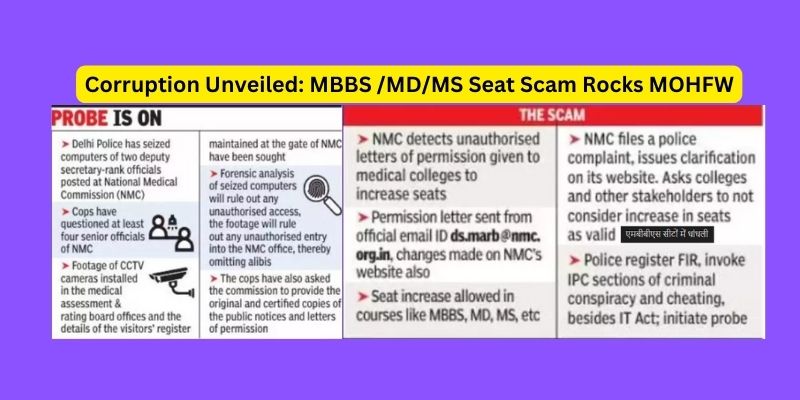
Complaints of Irregularities in MBBS and MD/MS Seats Allocation in Delhi

Authorities have been alerted to irregularities in the allocation of MBBS and MD/MS seats in Delhi, leading to a significant investigation. The Delhi Police have confiscated computers belonging to two senior officials at the National Medical Commission (NMC) as part of this investigation. Additionally, police have questioned several senior officials from medical colleges.Times of India had exposed large-scale irregularities in this matter. Now, Delhi Police have also confirmed the validity of these reports.

According to a senior police officer, inspections were conducted at the office of the Medical Assessment And Rating Board (MARB) at NMC’s Dwarka premises. This move aims to aid in preventing unauthorized access to the premises during the period when permissions were being granted to increase seats in medical colleges. In Dwarka, police confiscated computers used by Sameer Sinha (former Deputy Secretary, MARB-NMC) and Prabhat Kumar (former Under Secretary). Both officials were interrogated, during which they denied sending any emails. It is believed that besides the footage, Delhi Police have also requested original and certified copies of the public notices and permission letters issued by NMC. This comparison will be made with the individuals who received them.

The Investigation and Possible Expansions:

Police are investigating the involvement of several senior officials at NMC and 4-5 medical colleges. An officer disclosed that increases in seat allocations were made for MBBS, MD, and MS programs. One college was granted permission to increase MS seats in Ophthalmology from 5 to 10, MD seats in General Medicine from 7 to 24, and MS seats in ENT from 1 to 4. Police have not yet revealed the exact number of seats fraudulently increased in various colleges. Last August, discrepancies were discovered in permission letters, leading to an investigation by NMC and subsequent complaints filed with the police.

Under the IPC, complaints were lodged for criminal conspiracy and fraud, along with Section 66C of the IT Act. The primary complaint was filed by A.K. Singh, former Deputy Secretary, MARB-NMC. In his complaint, Singh stated that various medical colleges were issued fake permission letters through the official email ID (ds.marb@nmc.org.in). Internal investigations have refuted claims of sending such emails or issuing unauthorized permission letters. Another officer allegedly increased seat allocations for several colleges via NMC’s website. Last year in August, NMC issued a notice declaring these permission letters invalid. These letters were not issued by the members/chairman and were deemed fraudulent. The police are nearing the conclusion of their investigation and anticipate arrests soon. Police Commissioner Sanjay Arora is closely monitoring the case.