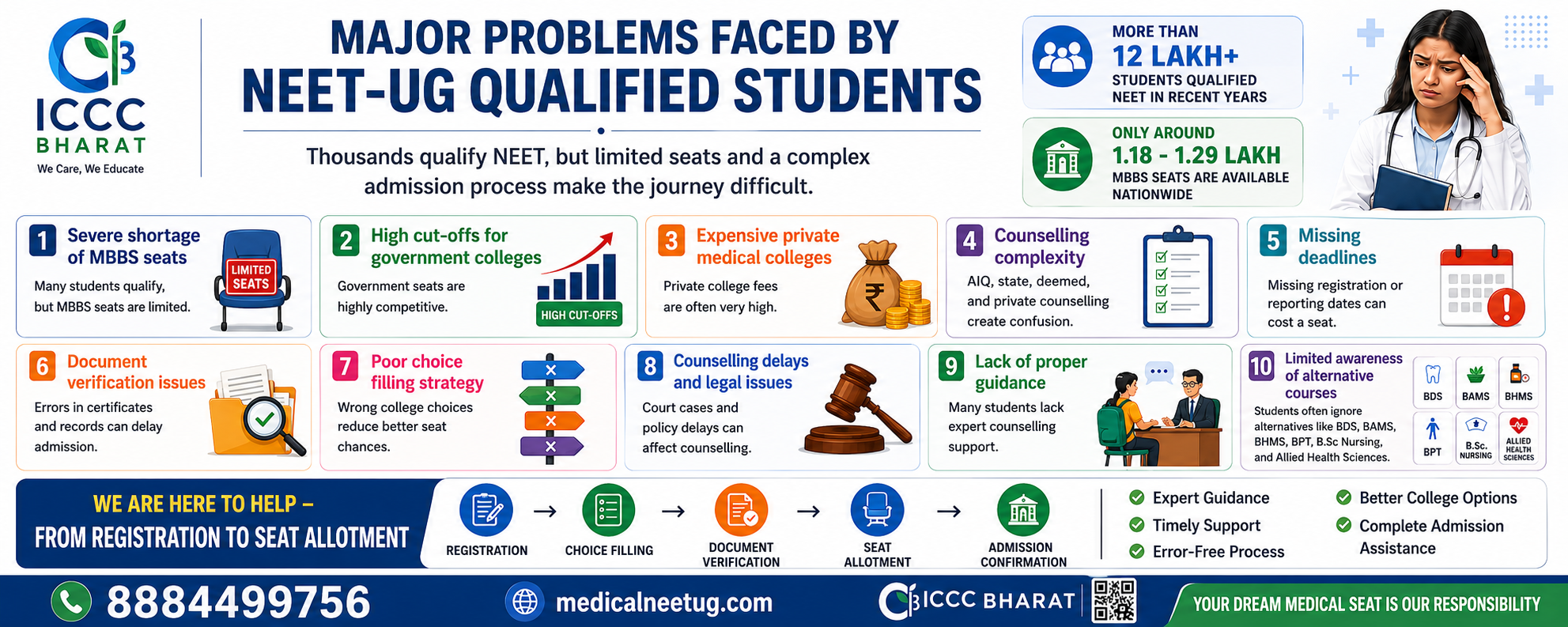
Major Problems Faced by NEET-UG Qualified Students

NEET-UG is one of the most competitive entrance examinations in India. Every year, lakhs of students work hard, qualify NEET, and dream of becoming doctors. However, qualifying NEET is only the first step. The real challenge begins after the result, when students and parents start the admission process.

Many NEET-UG qualified students face confusion, pressure, financial challenges, counselling complexity, and lack of proper guidance. Even after qualifying the exam, getting the right medical seat in the right college is not easy.

1. Severe Shortage of MBBS Seats

One of the biggest problems faced by NEET-UG qualified students is the limited number of MBBS seats. Every year, a large number of students qualify NEET, but the number of available MBBS seats is much lower.

This creates heavy competition for every seat. Students with good scores may also face difficulty in getting admission, especially in preferred colleges or states.

Because of this shortage, many students are forced to explore private colleges, deemed universities, management quota seats, or alternative medical courses.

2. High Cut-Offs for Government Medical Colleges

Government medical colleges are the first choice for most students because of their low fees, good clinical exposure, and strong reputation.

However, the cut-offs for government medical colleges remain very high. Even students with good NEET scores may miss government MBBS seats because of intense competition.

In many states, the closing ranks for government colleges are very competitive. This creates pressure on students and parents during counselling.

3. Expensive Private Medical Colleges

Private medical colleges are an option for students who do not get government seats. However, the fee structure in many private and deemed medical colleges can be very high.

For many families, private MBBS fees become a major financial challenge. Apart from tuition fees, students may also need to consider hostel fees, university charges, security deposits, bond conditions, and other expenses.

Therefore, proper fee analysis is very important before selecting any private medical college.

4. Complex Counselling Process

NEET-UG admission is not based only on marks. Students have to participate in multiple counselling processes depending on their eligibility and preference.

Major counselling routes include:

  • All India Quota counselling
  • State quota counselling
  • Deemed university counselling
  • Private college counselling
  • Management quota counselling
  • NRI quota counselling

Each counselling has different rules, eligibility criteria, documents, deadlines, and fee structures. Many students and parents get confused during this process.

A small mistake in counselling can lead to losing a good seat opportunity.

5. Missing Important Deadlines

NEET counselling has several important stages such as registration, fee payment, document upload, choice filling, choice locking, allotment result, reporting, and admission confirmation.

Some students miss important deadlines due to lack of awareness or confusion. Missing even one deadline can result in losing admission chances.

That is why students must follow official counselling notifications carefully and maintain a proper admission calendar.

6. Document Verification Issues

Document verification is an important part of the admission process. Many students face problems because of incomplete, incorrect, or delayed documents.

Common document-related issues include:

  • Domicile certificate problems
  • Category certificate issues
  • Income certificate errors
  • Minority certificate requirements
  • Identity proof mismatch
  • Academic certificate mistakes
  • NRI document confusion

If documents are not proper, students may face admission delays or even rejection.

7. Poor Choice Filling Strategy

Choice filling is one of the most important steps in NEET counselling. Many students make mistakes while entering college preferences.

Common choice filling mistakes include choosing unrealistic colleges, ignoring state counselling options, not researching fees, not checking bond rules, and not understanding college quality.

A poor choice filling strategy can lead to missing better colleges or getting a seat in an unsuitable college.

Smart choice filling should be based on rank, category, budget, previous cut-offs, college quality, location, fee structure, and future goals.

8. Counselling Delays and Legal Issues

Sometimes, NEET counselling may be affected by court cases, approval delays, seat matrix changes, or policy updates. These delays create uncertainty and stress for students.

Students may have to wait for updated seat matrix details, revised schedules, or new counselling notifications. This makes the admission journey more stressful.

In such situations, students should stay calm and depend only on official updates.

9. Lack of Proper Guidance

Many students, especially from rural areas or first-generation learner families, do not have access to professional counselling support.

Without proper guidance, students may make mistakes in registration, document preparation, counselling selection, choice filling, or reporting.

Proper counselling guidance helps students understand realistic options and avoid costly admission mistakes.

10. Limited Awareness of Alternative Courses

Many students focus only on MBBS. But if they do not get an MBBS seat, they may lose one academic year while preparing again for NEET.

Students should also be aware of other healthcare career options such as:

  • BDS
  • BAMS
  • BHMS
  • BPT
  • B.Sc Nursing
  • Allied Health Sciences

These courses also offer good career opportunities in the healthcare sector. Choosing the right alternative course can save time and create a strong career path.

From Registration to Seat Allotment – Proper Guidance Matters

NEET-UG counselling is a step-by-step process. Students need support from registration to seat allotment and admission confirmation.

Important stages include:

  • Registration
  • Choice filling
  • Document verification
  • Seat allotment
  • Reporting
  • Admission confirmation

With expert guidance, students can avoid errors, understand better college options, complete the process on time, and make informed decisions.

How ICCC Bharat Helps NEET-UG Students

ICCC Bharat supports students and parents throughout the NEET-UG admission journey. From counselling guidance to college selection, students receive assistance based on rank, category, budget, state eligibility, and career goals.

ICCC Bharat helps students with:

  • Expert guidance
  • Timely counselling support
  • Error-free admission process
  • Better college options
  • Complete admission assistance

Conclusion

Qualifying NEET-UG is a great achievement, but getting the right medical seat requires proper planning. Students must understand seat availability, cut-offs, fee structure, counselling rules, documents, and choice filling strategy.

A wrong decision can affect both career and finances. Therefore, students should take informed steps and seek expert guidance when needed.

Your dream medical seat is possible with the right planning, right counselling, and right admission strategy.

ICCC Bharat
Your Dream Medical Seat Is Our Responsibility
ಭಾರತದ ವೈದ್ಯಕೀಯ ಪ್ರವೇಶ ವ್ಯವಸ್ಥೆಗೆ ತಾತ್ಕಾಲಿಕ ಪರಿಹಾರಗಳಲ್ಲ, ತುರ್ತು ಸಾಂಸ್ಥಿಕ ಸುಧಾರಣೆ ಅಗತ್ಯ

ಭಾರತದ ವೈದ್ಯಕೀಯ ಪ್ರವೇಶ ವ್ಯವಸ್ಥೆ ದೇಶದ ಅತ್ಯಂತ ಸೂಕ್ಷ್ಮ ಮತ್ತು ಒತ್ತಡಪೂರ್ಣ ಶಿಕ್ಷಣ ವ್ಯವಸ್ಥೆಗಳಲ್ಲಿ ಒಂದಾಗಿದೆ. ಪ್ರವೇಶ ಪರೀಕ್ಷೆಯಿಂದ ಆರಂಭಿಸಿ ಕೌನ್ಸೆಲಿಂಗ್, ಸೀಟ್ ಹಂಚಿಕೆ, ಸೀಟ್ ಮ್ಯಾಟ್ರಿಕ್ಸ್ ಪ್ರಕಟಣೆ, ವರ್ಗ ಪರಿಶೀಲನೆ, NRI ದಾಖಲೆಗಳು ಮತ್ತು ಅಂತಿಮ ಪ್ರವೇಶದವರೆಗೆ ಪ್ರತಿಯೊಂದು ಹಂತವೂ ಲಕ್ಷಾಂತರ ವಿದ್ಯಾರ್ಥಿಗಳ ಹಾಗೂ ಕುಟುಂಬಗಳ ಭವಿಷ್ಯವನ್ನು ನಿರ್ಧರಿಸುತ್ತದೆ.

ಇತ್ತೀಚಿನ ಪರೀಕ್ಷೆ ಹಾಗೂ ಕೌನ್ಸೆಲಿಂಗ್ ವಿವಾದಗಳನ್ನು ಪ್ರತ್ಯೇಕ ಘಟನೆಗಳಂತೆ ನೋಡಬಾರದು. ಅವು ವ್ಯವಸ್ಥೆಯಲ್ಲಿರುವ ಆಳವಾದ ಸಾಂಸ್ಥಿಕ ದುರ್ಬಲತೆಗಳಿಗೆ ಎಚ್ಚರಿಕೆಯ ಸಂಕೇತಗಳಾಗಿವೆ.

ವೈದ್ಯಕೀಯ ಪ್ರವೇಶ ವ್ಯವಸ್ಥೆಯಲ್ಲಿ ಪರೀಕ್ಷಾ ಸಂಸ್ಥೆಗಳು, ಕೌನ್ಸೆಲಿಂಗ್ ಅಧಿಕಾರಿಗಳು, ನಿಯಂತ್ರಣ ಸಂಸ್ಥೆಗಳು, ರಾಜ್ಯ ಕೌನ್ಸೆಲಿಂಗ್ ಮಂಡಳಿಗಳು, ವಿಶ್ವವಿದ್ಯಾಲಯಗಳು ಮತ್ತು ಸರ್ಕಾರಿ ಇಲಾಖೆಗಳು ಕಾರ್ಯನಿರ್ವಹಿಸುತ್ತವೆ. ಆದರೆ ಅನೇಕ ಕಡೆಗಳಲ್ಲಿ ಸಿಬ್ಬಂದಿ ಕೊರತೆ, ಖಾಲಿ ಹಿರಿಯ ಹುದ್ದೆಗಳು, ದುರ್ಬಲ ಸಮನ್ವಯ ಮತ್ತು ತಾಂತ್ರಿಕ ಬೆಂಬಲದ ಕೊರತೆ ಕಾಣಿಸುತ್ತಿದೆ.

ಇದು ಕೇವಲ ಆಡಳಿತಾತ್ಮಕ ಸಮಸ್ಯೆಯಲ್ಲ; ಇದು ರಾಷ್ಟ್ರೀಯ ಚಿಂತೆಯ ವಿಷಯವಾಗಿದೆ.

ಖಾಲಿ ಹುದ್ದೆಗಳು ಮತ್ತು ಸಿಬ್ಬಂದಿ ಕೊರತೆ ವಿಶ್ವಾಸವನ್ನು ಕುಗ್ಗಿಸುತ್ತಿವೆ

ಲಕ್ಷಾಂತರ ವಿದ್ಯಾರ್ಥಿಗಳ ಪರೀಕ್ಷೆ ಮತ್ತು ಕೌನ್ಸೆಲಿಂಗ್ ನೋಡಿಕೊಳ್ಳುವ ಸಂಸ್ಥೆಗಳು ಸಾಕಷ್ಟು ಸಿಬ್ಬಂದಿಯಿಲ್ಲದೆ ಸಮರ್ಪಕವಾಗಿ ಕಾರ್ಯನಿರ್ವಹಿಸಲು ಸಾಧ್ಯವಿಲ್ಲ. ಪ್ರಮುಖ ಹುದ್ದೆಗಳು ಖಾಲಿಯಾಗಿದ್ದರೆ ಅಥವಾ ತಾತ್ಕಾಲಿಕ ವ್ಯವಸ್ಥೆಗಳ ಮೇಲೆ ಅವಲಂಬನೆ ಹೆಚ್ಚಾದರೆ ತಪ್ಪುಗಳ ಸಾಧ್ಯತೆ ಹೆಚ್ಚುತ್ತದೆ.

ವೈದ್ಯಕೀಯ ಪ್ರವೇಶ ಪ್ರಕ್ರಿಯೆ ನಿರ್ವಹಿಸುವ ಅಧಿಕಾರಿಗಳಿಗೆ ಮೀಸಲಾತಿ ನಿಯಮಗಳು, ಅಲ್ಪಸಂಖ್ಯಾತ ಕೋಟಾ, NRI ಕೋಟಾ, ನಿವಾಸ ನಿಯಮಗಳು, ಸೀಟ್ ಮ್ಯಾಟ್ರಿಕ್ಸ್ ತಯಾರಿ, ಶುಲ್ಕ ರಚನೆ, ನ್ಯಾಯಾಲಯದ ಆದೇಶಗಳು ಮತ್ತು ಕೌನ್ಸೆಲಿಂಗ್ ಸಾಫ್ಟ್‌ವೇರ್ ಬಗ್ಗೆ ಅನುಭವ ಇರಬೇಕು.

ಅನುಭವದ ಕೊರತೆಯಿಂದ ವಿದ್ಯಾರ್ಥಿಗಳು ಮತ್ತು ಪೋಷಕರಲ್ಲಿ ಗೊಂದಲ ಹಾಗೂ ಆತಂಕ ಹೆಚ್ಚುತ್ತದೆ.

ಕೌನ್ಸೆಲಿಂಗ್ ವ್ಯವಸ್ಥೆಗೆ ಶಾಶ್ವತ ಬಲವಾದ ಮೂಲಸೌಕರ್ಯ ಅಗತ್ಯ

ವೈದ್ಯಕೀಯ ಕೌನ್ಸೆಲಿಂಗ್ ಒಂದು ಸಾಮಾನ್ಯ ಕಚೇರಿ ಕಾರ್ಯವಲ್ಲ. ಇದು ಭವಿಷ್ಯದ ವೈದ್ಯರು, ದಂತವೈದ್ಯರು ಮತ್ತು ಆರೋಗ್ಯ ತಜ್ಞರ ಬದುಕನ್ನು ನಿರ್ಧರಿಸುತ್ತದೆ.

ಕೌನ್ಸೆಲಿಂಗ್ ಸಂಸ್ಥೆಗಳಲ್ಲಿ ಶಾಶ್ವತ ಕಚೇರಿಗಳು, ತರಬೇತಿ ಪಡೆದ ಸಿಬ್ಬಂದಿ, ಕಾನೂನು ತಜ್ಞರು, ತಾಂತ್ರಿಕ ತಂಡಗಳು ಮತ್ತು ದೂರು ಪರಿಹಾರ ಅಧಿಕಾರಿಗಳು ಇರಬೇಕು.

ಪ್ರಸ್ತುತ ವಿದ್ಯಾರ್ಥಿಗಳು ಎದುರಿಸುತ್ತಿರುವ ಕೆಲವು ಸಮಸ್ಯೆಗಳು:

  • ಸ್ಪಷ್ಟವಲ್ಲದ ಸೀಟ್ ಮ್ಯಾಟ್ರಿಕ್ಸ್ ನವೀಕರಣಗಳು
  • ಕಾಲೇಜುಗಳ ತಡ ಸೇರ್ಪಡೆ ಅಥವಾ ಹಿಂಪಡೆಯುವಿಕೆ
  • NRI ದಾಖಲೆಗಳ ಗೊಂದಲ
  • ಪೋರ್ಟಲ್ ದೋಷಗಳು
  • ವರ್ಗ ಹಾಗೂ ರೋಸ್ಟರ್ ವಿವಾದಗಳು
  • ಸಹಾಯವಾಣಿ ಪ್ರತಿಕ್ರಿಯೆಯ ಕೊರತೆ
  • ತಡವಾದ ಸೀಟ್ ಹಂಚಿಕೆ
  • ಮರುಮರು ನಡೆಯುವ ಕಾನೂನು ವಿವಾದಗಳು

ಇವು ವ್ಯವಸ್ಥೆಯ ಆಡಳಿತ ಸಾಮರ್ಥ್ಯವನ್ನು ಬಲಪಡಿಸುವ ಅಗತ್ಯವಿದೆ ಎಂಬುದನ್ನು ತೋರಿಸುತ್ತವೆ.

ಸಮನ್ವಯದ ಕೊರತೆ ಗೊಂದಲಕ್ಕೆ ಕಾರಣವಾಗುತ್ತಿದೆ

ಕೇಂದ್ರ ಹಾಗೂ ರಾಜ್ಯ ಸಂಸ್ಥೆಗಳ ನಡುವಿನ ಸಮನ್ವಯದ ಕೊರತೆ ದೊಡ್ಡ ಸಮಸ್ಯೆಯಾಗಿದೆ.

ಒಂದು ಸಂಸ್ಥೆ ವೇಳಾಪಟ್ಟಿ ಪ್ರಕಟಿಸಿದರೆ ಮತ್ತೊಂದು ಅನುಮೋದನೆಯಲ್ಲಿ ವಿಳಂಬ ಮಾಡುವುದು ಅಥವಾ ಮೂರನೇ ಸಂಸ್ಥೆ ಸೀಟ್ ಮ್ಯಾಟ್ರಿಕ್ಸ್ ಬದಲಾಯಿಸುವುದು ವಿದ್ಯಾರ್ಥಿಗಳಿಗೆ ಗೊಂದಲ ಉಂಟುಮಾಡುತ್ತದೆ.

ಹೊಸ ಕಾಲೇಜುಗಳ ಸೇರ್ಪಡೆ, ಶುಲ್ಕ ರಚನೆ ಮತ್ತು ನ್ಯಾಯಾಲಯದ ಆದೇಶಗಳಂತಹ ವಿಷಯಗಳು ಸಮಸ್ಯೆಯನ್ನು ಇನ್ನಷ್ಟು ಗಂಭೀರಗೊಳಿಸುತ್ತವೆ.

ನೇಮಕಾತಿಗಳು ಪಾರದರ್ಶಕ ಹಾಗೂ ಅರ್ಹತೆಯ ಆಧಾರದ ಮೇಲೆ ಇರಬೇಕು

ಭಾರತದಲ್ಲಿ ಪ್ರತಿಭಾವಂತ ಜನರ ಕೊರತೆ ಇಲ್ಲ. ವೈದ್ಯರು, ಆಡಳಿತಾಧಿಕಾರಿಗಳು, ಕಾನೂನು ತಜ್ಞರು ಹಾಗೂ ಶಿಕ್ಷಣ ಕ್ಷೇತ್ರದ ಪರಿಣಿತರು ಸಾಕಷ್ಟು ಇದ್ದಾರೆ.

ಮುಖ್ಯ ಸಾರ್ವಜನಿಕ ಸಂಸ್ಥೆಗಳು ವೈಯಕ್ತಿಕ ಪ್ರಭಾವ ಅಥವಾ ಅನೌಪಚಾರಿಕ ಸಂಪರ್ಕಗಳ ಮೇಲೆ ಅವಲಂಬಿಸಬಾರದು. ನೇಮಕಾತಿಗಳು ಸಾಮರ್ಥ್ಯ, ಪ್ರಾಮಾಣಿಕತೆ ಮತ್ತು ಅನುಭವದ ಆಧಾರದ ಮೇಲೆ ನಡೆಯಬೇಕು.

ಪ್ರಶ್ನೆಪತ್ರಿಕೆ ಸೋರಿಕೆ ಕೇವಲ ಒಂದು ಲಕ್ಷಣ

ಪ್ರಶ್ನೆಪತ್ರಿಕೆ ಸೋರಿಕೆ ಗಂಭೀರ ವಿಷಯವಾದರೂ ಅದು ದೊಡ್ಡ ಸಮಸ್ಯೆಯ ಒಂದು ಭಾಗ ಮಾತ್ರ.

ಪರೀಕ್ಷಾ ಸಂಸ್ಥೆಗಳಲ್ಲಿ ಸಿಬ್ಬಂದಿ ಕೊರತೆ, ಭದ್ರತಾ ವ್ಯವಸ್ಥೆಯ ದುರ್ಬಲತೆ ಮತ್ತು ಸ್ಪಷ್ಟ ಜವಾಬ್ದಾರಿತನದ ಕೊರತೆ ಇದ್ದರೆ ಇಂತಹ ಘಟನೆಗಳು ಮರುಕಳಿಸಬಹುದು.

ವಿದ್ಯಾರ್ಥಿಗಳು ಮತ್ತು ಪೋಷಕರು ಬೆಲೆ ತೆರುತ್ತಿದ್ದಾರೆ

ವೈದ್ಯಕೀಯ ಪ್ರವೇಶಕ್ಕಾಗಿ ವಿದ್ಯಾರ್ಥಿಗಳು ಹಲವು ವರ್ಷಗಳ ಪರಿಶ್ರಮ ಮತ್ತು ಕುಟುಂಬದ ನಿರೀಕ್ಷೆಗಳೊಂದಿಗೆ ತಯಾರಿ ನಡೆಸುತ್ತಾರೆ.

ಪೋಷಕರು ಕೋಚಿಂಗ್, ವಸತಿ, ಪ್ರಯಾಣ ಹಾಗೂ ದಾಖಲೆಗಳಿಗೆ ದೊಡ್ಡ ಮೊತ್ತದ ಹಣ ಖರ್ಚು ಮಾಡುತ್ತಾರೆ. ಅನೇಕ ಕುಟುಂಬಗಳು ಸಾಲ ಪಡೆಯುತ್ತವೆ.

ವ್ಯವಸ್ಥೆ ವಿಫಲವಾದಾಗ ವಿದ್ಯಾರ್ಥಿಗಳು ವಿಶ್ವಾಸ ಕಳೆದುಕೊಳ್ಳುತ್ತಾರೆ, ಪೋಷಕರು ನಂಬಿಕೆ ಕಳೆದುಕೊಳ್ಳುತ್ತಾರೆ ಮತ್ತು ದೇಶ ಭವಿಷ್ಯದ ಆರೋಗ್ಯ ತಜ್ಞರನ್ನು ಕಳೆದುಕೊಳ್ಳುತ್ತದೆ.

ಸರ್ಕಾರ ಗಂಭೀರ ಕ್ರಮ ಕೈಗೊಳ್ಳಬೇಕು

ತಾತ್ಕಾಲಿಕ ಪರಿಹಾರಗಳು ಅಥವಾ ಕೊನೆಯ ಕ್ಷಣದ ಸ್ಪಷ್ಟೀಕರಣಗಳು ಸಾಕಾಗುವುದಿಲ್ಲ.

ಸರ್ಕಾರ ಈ ಕ್ರಮಗಳನ್ನು ಕೈಗೊಳ್ಳಬೇಕು:

  • ಖಾಲಿ ಹುದ್ದೆಗಳನ್ನು ತಕ್ಷಣ ಭರ್ತಿ ಮಾಡುವುದು
  • ಅನುಭವ ಹೊಂದಿದ ಅಧಿಕಾರಿಗಳನ್ನು ನೇಮಕ ಮಾಡುವುದು
  • ಶಾಶ್ವತ ತಾಂತ್ರಿಕ ತಂಡಗಳನ್ನು ರಚಿಸುವುದು
  • ಕೌನ್ಸೆಲಿಂಗ್ ಮೂಲಸೌಕರ್ಯವನ್ನು ಬಲಪಡಿಸುವುದು
  • ಸೀಟ್ ಮ್ಯಾಟ್ರಿಕ್ಸ್ ಪರಿಶೀಲನೆ ನಡೆಸುವುದು
  • ಸಹಾಯವಾಣಿ ಹಾಗೂ ದೂರು ವ್ಯವಸ್ಥೆ ಸುಧಾರಿಸುವುದು
  • ಎಲ್ಲಾ ಸಂಸ್ಥೆಗಳ ನಡುವೆ ತಕ್ಷಣದ ಸಮನ್ವಯ ಸಾಧಿಸುವುದು
  • ಸ್ಪಷ್ಟ ಹಾಗೂ ಕಾನೂನುಬದ್ಧ ಅಧಿಸೂಚನೆಗಳನ್ನು ಪ್ರಕಟಿಸುವುದು

ತೀರ್ಮಾನ

ವೈದ್ಯಕೀಯ ಪ್ರವೇಶ ವ್ಯವಸ್ಥೆಯ ಸಮಸ್ಯೆ ಕೇವಲ ಪ್ರಶ್ನೆಪತ್ರಿಕೆ ಸೋರಿಕೆ ಅಥವಾ ಕೌನ್ಸೆಲಿಂಗ್ ವಿಳಂಬದ ಬಗ್ಗೆ ಅಲ್ಲ. ಇದು ಸಂಸ್ಥೆಗಳ ಮೇಲಿನ ವಿಶ್ವಾಸದ ಪ್ರಶ್ನೆಯಾಗಿದೆ.

ಭಾರತಕ್ಕೆ ಮೇಲ್ಮಟ್ಟದ ಸುಧಾರಣೆಗಳ ಅಗತ್ಯವಿಲ್ಲ; ಆಳವಾದ ರಚನಾತ್ಮಕ ಸುಧಾರಣೆ ಅಗತ್ಯ.

ವಿದ್ಯಾರ್ಥಿಗಳು ತಮ್ಮ ಕರ್ತವ್ಯವನ್ನು ಮಾಡುತ್ತಿದ್ದಾರೆ — ಅವರು ಕಠಿಣವಾಗಿ ಓದುತ್ತಿದ್ದಾರೆ. ಪೋಷಕರು ತಮ್ಮ ಕರ್ತವ್ಯವನ್ನು ಮಾಡುತ್ತಿದ್ದಾರೆ — ಅವರು ಬೆಂಬಲಿಸುತ್ತಿದ್ದಾರೆ. ಈಗ ವ್ಯವಸ್ಥೆಯು ತನ್ನ ಕರ್ತವ್ಯವನ್ನು ಮಾಡಿ ಅವರ ಭವಿಷ್ಯವನ್ನು ರಕ್ಷಿಸಬೇಕು.

ಭಾರತದ ಆರೋಗ್ಯ ವ್ಯವಸ್ಥೆಯ ಭವಿಷ್ಯಕ್ಕಾಗಿ ವೈದ್ಯಕೀಯ ಪ್ರವೇಶ ವ್ಯವಸ್ಥೆ ನ್ಯಾಯಸಮ್ಮತ, ಪಾರದರ್ಶಕ ಮತ್ತು ವೃತ್ತಿಪರವಾಗಿ ನಿರ್ವಹಿಸಲ್ಪಡಬೇಕು.

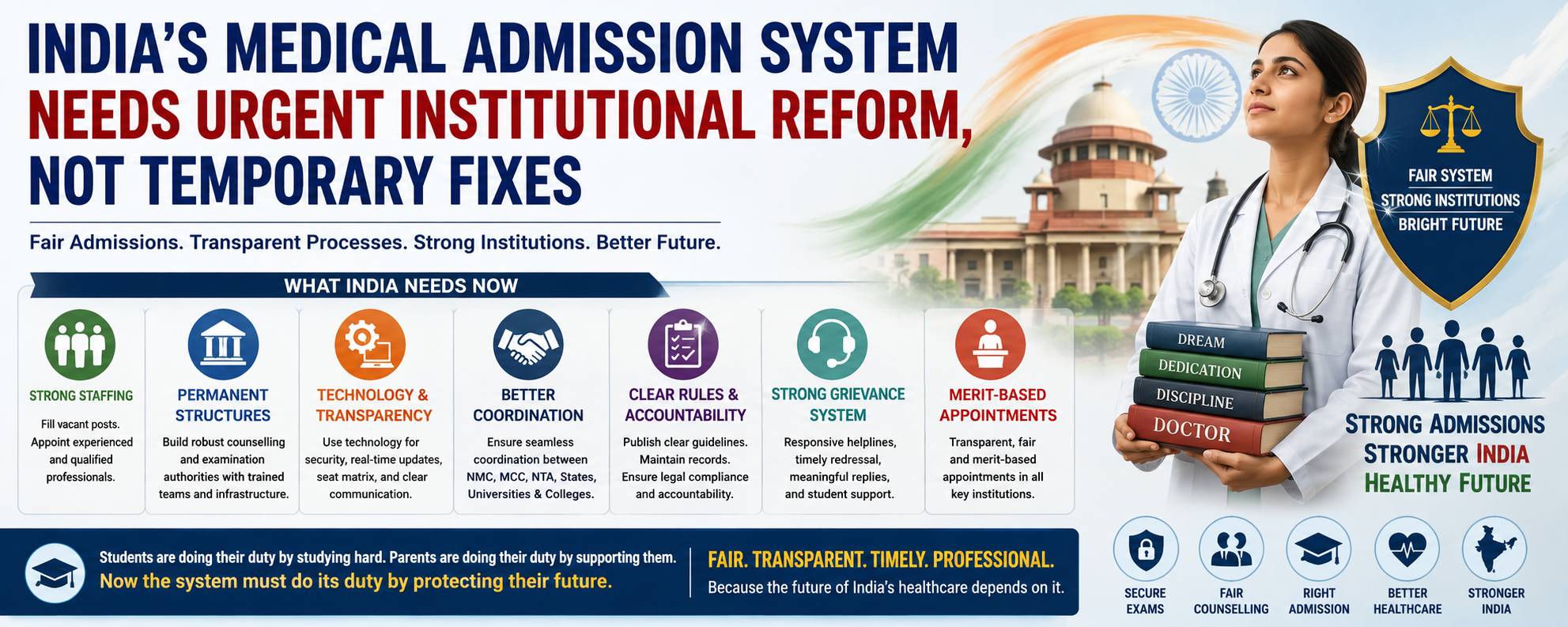
India’s Medical Admission System Needs Urgent Institutional Reform, Not Temporary Fixes

India’s medical admission system is one of the most sensitive and high-pressure education systems in the country. From entrance examinations to counselling, allotment, seat matrix publication, category verification, NRI documentation, roster implementation and final admission, every step affects the future of lakhs of students and families.

The recent controversies around examinations and counselling should not be seen as isolated incidents. They are warning signs of a deeper institutional weakness.

Across the medical admission ecosystem, several bodies are involved — examination agencies, counselling authorities, regulatory institutions, state counselling boards, universities and government departments. But in many places, the system appears to be functioning with staff shortages, vacant senior positions, weak coordination and inadequate technical support.

This is not merely an administrative issue. It is a national concern.

Vacant Posts and Weak Staffing Are Damaging Trust

When an agency handles high-stakes examinations or counselling for lakhs of students, it cannot function properly with insufficient manpower. If key posts remain vacant, if trained staff are missing, or if temporary arrangements are used repeatedly, mistakes become more likely.

Medical admissions require experienced officers who understand reservation rules, minority quota, NRI quota, domicile rules, seat matrix preparation, fee structures, legal orders, court directions and counselling software.

If the people managing the process lack adequate experience or support, students suffer.

Every wrong seat matrix, delayed notification, confusing circular or poor helpline response creates panic among students and parents.

Counselling Authorities Need Strong Permanent Structures

Medical counselling is not a routine clerical process. It decides the careers of future doctors, dentists and healthcare professionals.

Authorities such as national and state counselling bodies must have permanent offices, trained staff, legal experts, technical teams, admission policy experts and grievance redressal officers.

At present, students often face problems such as:

unclear seat matrix updates,
late addition or withdrawal of colleges,
confusion in NRI documentation,
portal errors,
category and roster disputes,
poor communication from helplines,
delayed allotments,
and repeated counselling-related litigation.

These issues show that the system needs better planning and stronger administrative capacity.

Lack of Coordination Creates Confusion

One of the biggest problems is lack of coordination between central and state authorities.

The Ministry of Health and Family Welfare, NMC, MCC, NTA, universities and state counselling authorities must work in a coordinated manner. If one body releases a schedule, another delays approval, and a third changes the seat matrix, students are left confused.

This becomes more serious when new colleges are added late, permissions are delayed, fee structures are unclear, or court orders affect seat availability.

Students should not suffer because institutions are not communicating properly with each other.

Appointments Must Be Transparent and Merit-Based

India has no shortage of capable people. Across the country, there are experienced doctors, administrators, legal experts, education professionals, technologists and admission specialists who understand the system deeply.

The concern is whether such people are being identified and appointed through transparent, merit-based processes.

Important public institutions should not depend on lobbying, personal influence or informal networks. Appointments in examination and counselling bodies must be based on competence, integrity, experience and proven track record.

A country of more than 140 crore people cannot say that it lacks qualified professionals for key education posts.

Paper Leak Is Only One Symptom

The NEET paper leak controversy is a serious matter, but it is only one visible example of a larger problem.

If examination bodies are understaffed, if security systems are weak, if confidential processes are not monitored properly, and if accountability is unclear, then such incidents become possible.

Similarly, if counselling systems lack staff, legal clarity and technical strength, then seat wastage, wrong allotments and repeated disputes will continue.

The issue is not only about one exam or one counselling round. The issue is the credibility of India’s medical education system.

Students and Parents Are Paying the Price

A student preparing for NEET does not only study for one exam. The student carries years of sacrifice, family expectations and emotional pressure.

Parents spend huge amounts on coaching, hostel, travel, documentation and counselling. Many families take loans or use their life savings for medical education.

When the system fails, the student loses confidence. The parent loses trust. The nation loses future healthcare professionals.

No student should lose an opportunity because of poor administration, vacant posts or delayed decision-making.

The Government Must Act Seriously

The central government has a responsibility to strengthen the entire medical admission system. Temporary fixes, committee announcements and last-minute clarifications are not enough.

The government must create a long-term reform plan with clear deadlines and public accountability.

Important steps should include:

filling vacant posts immediately,
appointing experienced and qualified professionals,
creating permanent technical teams,
strengthening counselling infrastructure,
auditing seat matrix preparation,
improving helpline and grievance systems,
ensuring real-time coordination between NMC, MCC, NTA, universities and states,
making all notices clear and legally consistent,
and publishing transparent timelines for every admission stage.

Legal and Administrative Accountability Is Essential

Medical admission processes are frequently affected by court cases because students and parents often feel that their concerns are not resolved at the administrative level.

If grievance systems are strong, many legal disputes can be avoided.

Every authority must maintain proper records, follow published rules, respond to complaints meaningfully and act within legally valid frameworks. Replies should not be mechanical or vague. Students deserve reasoned answers.

Accountability should not begin only after controversy. It must be built into the system from the beginning.

Reform Is Necessary for India’s Future

India wants to become a global leader in education, healthcare and human resources. But that future cannot be built if bright students are handled by weak systems.

Medical admissions decide who will become tomorrow’s doctors, surgeons, dentists, specialists and healthcare leaders. This process must be protected with the highest level of seriousness.

A strong India needs a strong examination system.
A strong healthcare system needs fair medical admissions.
A fair admission system needs competent people, transparent rules and accountable institutions.

Conclusion

The crisis in medical admissions is not just about paper leaks, vacant seats or counselling delays. It is about institutional trust.

India does not need cosmetic reform. It needs deep structural reform.

The government must strengthen examination bodies, counselling authorities and regulatory systems with experienced staff, permanent infrastructure, transparent appointments and technology-driven accountability.

Students are doing their duty by studying hard. Parents are doing their duty by supporting them. Now the system must do its duty by protecting their future.

Medical admissions must be fair, transparent, timely and professionally managed — because the future of India’s healthcare depends on it