Choosing the Right Nursing College in Karnataka: Why Your Career Matters More Than Just Fees

In recent years, nursing has become one of the most demanded and respected healthcare professions in India and abroad. With growing opportunities in hospitals, research centers, public health sectors, and international healthcare systems, thousands of students are now choosing B.Sc. Nursing as a long-term career option.

However, one of the biggest concerns for students and parents today is understanding the fee structure and choosing the right nursing college in Karnataka.

Many students ask:

  • Which nursing college is best in Karnataka?
  • What is the average package for B.Sc. Nursing?
  • Is it worth investing ₹6–15 lakhs in nursing education?
  • How do we identify a good nursing institution?

These are very important questions because nursing is not just about obtaining a degree — it is about building a strong professional future.

Nursing is No Longer Just a Basic Degree

Today’s nursing profession is highly competitive and continuously evolving. Many students who complete:

  • B.Sc. Nursing
  • Post Basic B.Sc. Nursing

often continue with:

  • M.Sc. Nursing
  • Specialized Clinical Training
  • International Certifications
  • Advanced Healthcare Courses

This means students need a strong academic foundation from the beginning itself. The quality of the nursing college directly affects:

  • Clinical knowledge
  • Practical skills
  • Communication abilities
  • Career opportunities
  • International placements
  • Confidence in patient care

Choosing the wrong institution can negatively affect the student’s entire academic and professional journey.

Karnataka – One of India’s Leading States for Nursing Education

Karnataka has become one of the most preferred destinations for nursing education because the state has a long history of quality healthcare education and hospital-based training systems.

Most nursing colleges in Karnataka are attached to:

  • Multi-specialty hospitals
  • Medical colleges
  • Teaching hospitals
  • Healthcare universities

This gives students strong exposure to:

  • Real patient care
  • ICU and critical care training
  • Advanced nursing labs
  • Modern simulation centers
  • Internship opportunities
  • Practical hospital management systems

Many nursing colleges in Karnataka have been functioning for decades and maintain good academic records, experienced faculty, and structured clinical training.

Not Every Nursing College is the Same

One of the biggest mistakes students and parents make is choosing colleges only based on low fees or marketing promises.

In reality, Karnataka has:

  • Excellent nursing colleges
  • Average nursing colleges
  • Poorly managed institutions with limited infrastructure

Some institutions may lack:

  • Proper hospital attachments
  • Qualified faculty
  • Clinical exposure
  • Hostel facilities
  • Laboratory infrastructure
  • Updated curriculum and training methods

Unfortunately, many students realize these issues only after taking admission.

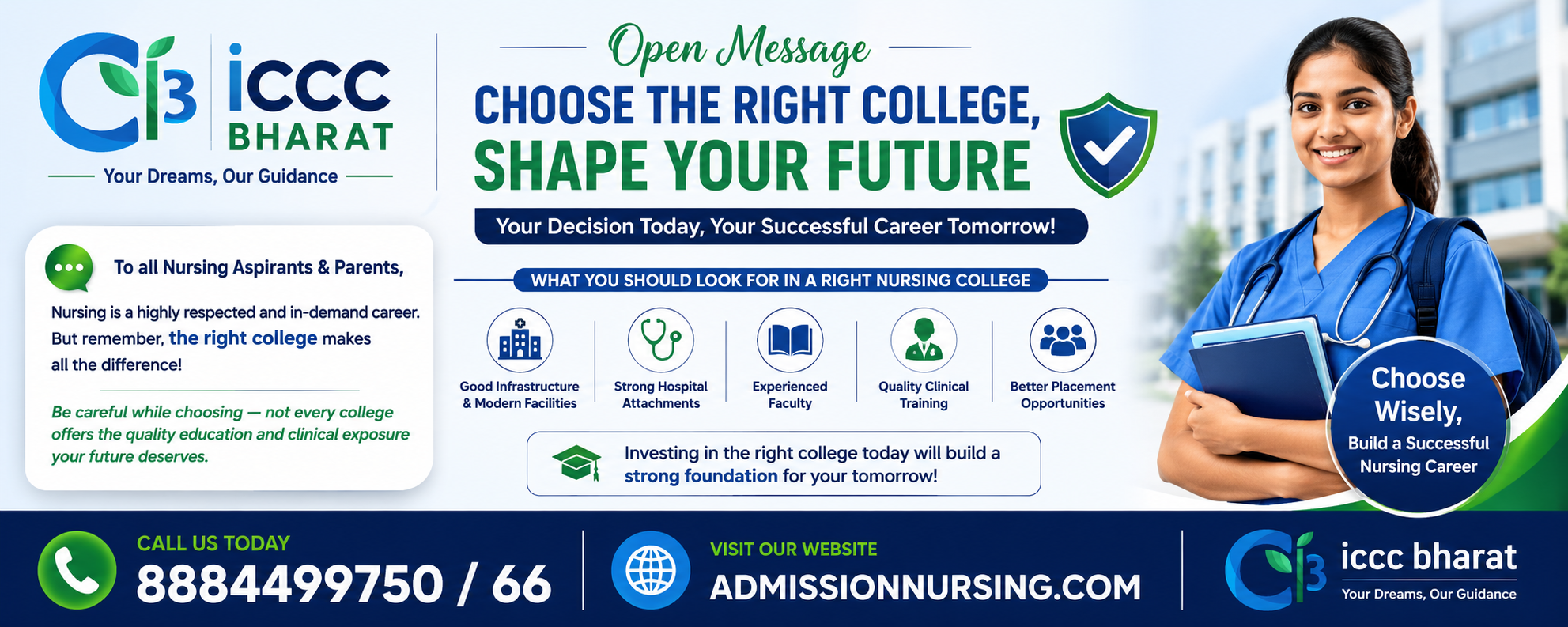
That is why students must carefully verify:
✅ Infrastructure quality
✅ Hospital attachments
✅ Clinical exposure
✅ Faculty experience
✅ Hostel & safety facilities
✅ Internship opportunities
✅ Academic performance
✅ Placement support
✅ Recognition & approvals

Understanding Nursing Fee Structures in Karnataka

The fee structure for nursing colleges in Karnataka usually depends on:

  • College reputation
  • Hospital exposure
  • Infrastructure
  • University type
  • Hostel facilities
  • Location
  • Placement opportunities

Approximate Fee Ranges:

  • Average colleges: ₹6–8 lakhs package
  • Good colleges: ₹10–12 lakhs package
  • Premium institutions: ₹12–15 lakhs or more

Generally, these packages include:

  • Tuition fees
  • Hostel accommodation
  • Food & lodging
  • Examination fees
  • Clinical training expenses

Parents should understand that investing in a quality institution is more important than simply choosing the lowest fee option.

Why Students Prefer Karnataka for Nursing

Karnataka attracts students from:

  • Kerala
  • Tamil Nadu
  • Andhra Pradesh
  • Telangana
  • North Indian states
  • International communities

because the state offers:

  • Better hospital exposure
  • English-medium education
  • Strong academic systems
  • Better placement opportunities
  • International career pathways
  • Multi-cultural campus environments

Today, almost every major medical college in Karnataka has an attached nursing institution, especially under:

  • Deemed Universities
  • Private Universities
  • Medical College Campuses

This creates strong career opportunities for students both in India and abroad.

Career Opportunities After Nursing

Nursing is one of the few professions where demand continues to increase globally.

After completing B.Sc. Nursing or M.Sc. Nursing, students can work in:

  • Corporate hospitals
  • Government healthcare sectors
  • International hospitals
  • Research organizations
  • ICU & emergency care
  • Public health sectors
  • Teaching institutions
  • Telemedicine & digital healthcare

Countries such as:

  • USA
  • UK
  • Canada
  • Australia
  • Germany
  • Gulf countries

continue to recruit Indian nurses due to their clinical expertise and work ethic.

Final Advice to Students & Parents

Choosing a nursing college is not just about getting admission — it is about securing your future career.

Whether the investment is ₹6 lakhs or ₹15 lakhs, the most important thing is:

  • Quality education
  • Clinical exposure
  • Professional development
  • Long-term career growth

A good nursing college can transform a student’s future, while the wrong choice can affect confidence, skills, and career opportunities.

So before taking admission:
✔ Visit the college
✔ Verify hospital attachments
✔ Check infrastructure & labs
✔ Speak with existing students
✔ Understand placement opportunities
✔ Analyze the overall academic environment

Because ultimately, your career matters more than just the fee structure.

BAMS Admission in Maharashtra 2026: Eligibility, Counselling Process, Top Colleges & Admission Steps

Maharashtra is one of the most preferred destinations for BAMS (Bachelor of Ayurvedic Medicine and Surgery) admissions in India. With reputed Ayurveda colleges, strong clinical exposure, modern infrastructure, and growing demand for holistic healthcare, thousands of NEET aspirants choose Maharashtra every year for Ayurveda education.

The future of Ayurveda in India is rapidly expanding with opportunities in clinical practice, wellness industries, Panchakarma centres, medical tourism, research, hospital administration, and integrative healthcare systems. BAMS is now becoming one of the strongest alternatives for students aspiring to become doctors through NEET UG.

Eligibility Criteria for BAMS Admission in Maharashtra 2026

Candidates seeking admission to BAMS colleges in Maharashtra must fulfill the following eligibility criteria:

  • The candidate must be at least 17 years old.
  • The candidate must qualify NEET UG 2026.
  • Candidates should have completed 10+2 with Physics, Chemistry, Biology, and English as core subjects.
  • Minimum qualifying marks in PCB:
    • General Category: 50%
    • General PH Category: 45%
    • SC/ST/OBC Category: 40%

NEET UG is mandatory for admission into all Ayurveda colleges in Maharashtra.

Admission Process for BAMS in Maharashtra

Admission to BAMS colleges in Maharashtra is conducted through the Maharashtra State Common Entrance Test Cell (MAHACET) counselling process.

Step-by-Step Admission Process

Step 1: Online Registration

Visit the official MAHACET counselling portal and complete the online registration process using your NEET UG details.

Step 2: Fill Application Form

Login to the candidate portal and upload the required documents such as:

  • NEET scorecard
  • Passport-size photograph
  • Signature
  • Educational certificates

Fill the college and course preferences carefully before the deadline.

Step 3: Payment of Counselling Fee

Pay the required counselling fee online through:

  • Debit Card
  • Credit Card
  • Net Banking
  • UPI (if available)

Keep the transaction receipt safely for future reference.

Step 4: Choice Filling and Locking

Select your preferred BAMS colleges and lock your choices within the stipulated counselling schedule.

Step 5: Document Verification

Candidates must attend document verification at designated centres or allocated colleges with original documents including:

  • NEET Scorecard
  • 10th & 12th Marks Cards
  • Transfer Certificate
  • Caste Certificate (if applicable)
  • Domicile Certificate
  • Identity Proof

Step 6: Seat Allotment

Seats are allotted based on:

  • NEET UG Rank
  • Category
  • Reservation Criteria
  • College Preferences
  • Seat Availability

Step 7: Reporting to Allotted College

Candidates allotted a BAMS seat must report to the respective college within the given timeline.

Step 8: Fee Payment and Admission Confirmation

Complete admission formalities by:

  • Depositing tuition fees
  • Submitting original documents
  • Obtaining admission confirmation letter

Step 9: Start Attending Classes

After successful verification and fee payment, students can begin their academic session.

Counselling Rounds for BAMS Admission

The Maharashtra BAMS counselling process generally includes:

  • Round 1 Counselling
  • Round 2 Counselling
  • Mop-Up Round
  • Stray Vacancy Round (if applicable)

Students who do not secure seats in earlier rounds can participate in subsequent rounds based on seat availability.

Top Private BAMS Colleges in Maharashtra

Maharashtra has several reputed private Ayurveda colleges affiliated with MUHS Nashik and participating through MAHACET counselling.

Some of the top private BAMS colleges include:

  • Sumatibhai Shah Ayurved Mahavidyalaya, Pune
  • CSMSS Ayurved Mahavidyalaya & Rugnalaya, Aurangabad
  • Shree Saptashrungi Ayurved Mahavidyalaya, Nashik
  • PDEA’s College of Ayurveda & Research Center, Akurdi, Pune
  • Dr. G.D. Pol Foundation’s Y.M.T. Ayurvedic Medical College, Kharghar, Mumbai
  • S.N.K.D.C. Trust’s Nalasopara Ayurved Medical College, Nalasopara
  • BSDT’s Ayurved Mahavidyalay, Wagholi, Pune
  • Maharashtra Arogya Mandal’s Sumatibhai Shah Ayurved Mahavidyalaya, Pune
  • Datta Meghe Ayurvedic Medical College, Nagpur
  • Bhausaheb Mulak Ayurved Mahavidyalaya, Nagpur
  • Pravara Medical Trust’s Ayurved Mahavidyalaya, Shevgaon
  • Shri Vivekanand Nursing Home Trust’s Ayurved Mahavidyalaya, Rahuri
  • Annasaheb Dange Ayurved Medical College, Ashta

These colleges are known for:

  • Clinical exposure
  • Panchakarma training
  • Experienced faculty
  • Hospital attachment
  • Research opportunities
  • Strong academic infrastructure

BAMS Fees in Maharashtra

The tuition fee for private BAMS colleges in Maharashtra generally ranges between:

  • ₹1.5 lakh to ₹2.5 lakh per year for regular counselling seats.

Management quota package fees may range approximately between:

  • ₹20 lakh to ₹40 lakh depending on:
    • College reputation
    • Infrastructure
    • Clinical exposure
    • Location
    • Demand during counselling

Career Scope After BAMS

The future scope after BAMS is growing significantly in India and abroad. Students can build careers in:

  • Clinical Practice
  • Ayurveda Hospitals
  • Panchakarma Centres
  • Wellness Industry
  • Research & Development
  • Medical Tourism
  • Teaching & Academics
  • Pharmaceutical Companies
  • Government Healthcare Services
  • Integrative Medicine Centres

With the growing acceptance of holistic and preventive healthcare, Ayurveda professionals are expected to play a major role in future healthcare systems.

Why Choose Maharashtra for BAMS?

Maharashtra is considered one of the best states for Ayurveda education because of:

  • Large number of reputed colleges
  • Better clinical exposure
  • Strong patient flow in Ayurveda hospitals
  • Quality education
  • Research opportunities
  • Growing healthcare infrastructure
  • Better career opportunities

Conclusion

BAMS in Maharashtra offers an excellent opportunity for NEET aspirants looking for a rewarding medical career in Ayurveda and holistic healthcare. With increasing global demand for Ayurveda, expanding career opportunities, and growing integration into mainstream healthcare, BAMS is emerging as one of the strongest professional healthcare courses in India.

Students should stay updated with MAHACET counselling schedules, cutoff trends, and admission procedures to maximize their chances of securing seats in top Ayurveda colleges.

Top B.Sc. Nursing Colleges in Karnataka Under Deemed & Private Universities

Karnataka has become one of the most preferred destinations in India for B.Sc. Nursing education due to its high-quality medical infrastructure, reputed universities, modern teaching methodologies, and excellent clinical exposure. The state is home to several top-ranked Deemed Universities, private universities, and nursing colleges attached to multi-specialty teaching hospitals.

Students seeking admission to B.Sc. Nursing programs in Karnataka can secure seats either through entrance examinations or through direct university admission and management quota options.

Why Karnataka is a Preferred Destination for Nursing Education?

One of the major advantages of studying nursing in Karnataka is the availability of colleges attached to large medical campuses and teaching hospitals. This provides students with:

  • Excellent clinical exposure
  • Hands-on practical training
  • Advanced simulation laboratory experience
  • Internship opportunities in multi-specialty hospitals
  • Better placement support in India and abroad
  • Research and higher education opportunities

The state also offers a multicultural learning environment with students from across India and international countries.

Top B.Sc. Nursing Colleges in Karnataka

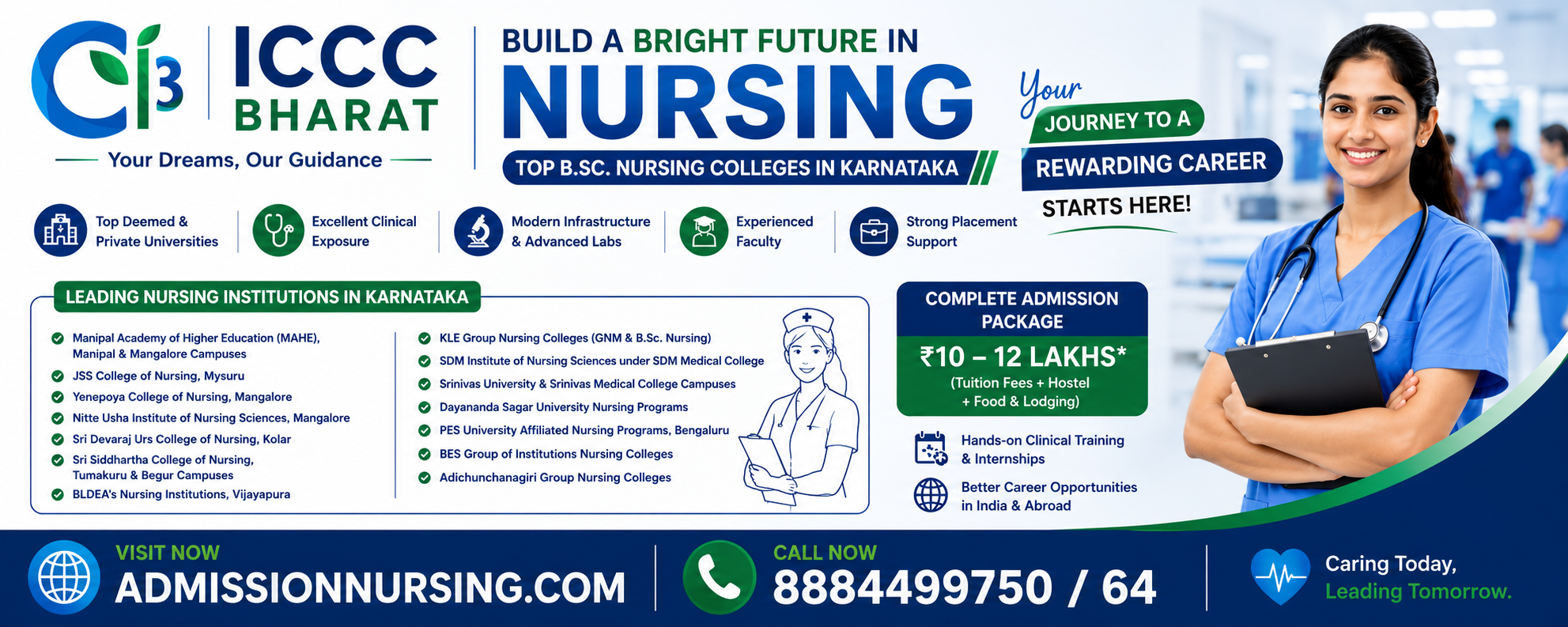
Some of the leading nursing institutions in Karnataka include:

Deemed Universities

  • Manipal Academy of Higher Education (MAHE), Manipal & Mangalore Campuses
  • JSS College of Nursing, Mysuru
  • Yenepoya College of Nursing, Mangalore
  • Nitte Usha Institute of Nursing Sciences, Mangalore
  • Sri Devaraj Urs College of Nursing, Kolar
  • Sri Siddhartha College of Nursing, Tumakuru & Begur Campuses
  • BLDEA’s Nursing Institutions, Vijayapura
  • KLE Group Nursing Colleges

Private Universities & Medical Campus Nursing Colleges

  • SDM Institute of Nursing Sciences under SDM Medical College Campus
  • Srinivas University & Srinivas Medical College Campuses
  • Dayananda Sagar University Nursing Programs
  • PES University Affiliated Nursing Programs, Bengaluru
  • BES Group of Institutions Nursing Colleges
  • Adichunchanagiri Group Nursing Colleges attached to medical campuses

Course Fees & Admission Packages

Several reputed nursing colleges in Karnataka offer complete admission packages approximately ranging between ₹10–12 lakhs for the entire B.Sc. Nursing course duration. These packages generally include:

  • Tuition fees
  • Hostel accommodation
  • Food & lodging facilities
  • Clinical training support

Compared to many other states, Karnataka offers excellent value in terms of education quality, infrastructure, and placement opportunities.

Career Opportunities After B.Sc. Nursing

Students graduating from Karnataka nursing colleges can explore opportunities in:

  • Corporate hospitals
  • Government healthcare sectors
  • International hospitals
  • Critical care & ICU departments
  • Research & academics
  • Public health organizations
  • Telemedicine & healthcare technology sectors

Indian nurses are also in high demand globally in countries such as the USA, UK, Canada, Australia, and Gulf countries.

Conclusion

With world-class universities, strong hospital exposure, modern infrastructure, and excellent career opportunities, Karnataka continues to remain one of the top destinations for B.Sc. Nursing education in India. Whether through entrance exams or direct admissions, students have multiple pathways to build a successful healthcare career in the state.


NEET में कम अंक आने का मतलब MBBS सपना खत्म नहीं! सही काउंसलिंग और सही जानकारी बदल सकती है आपकी जिंदगी

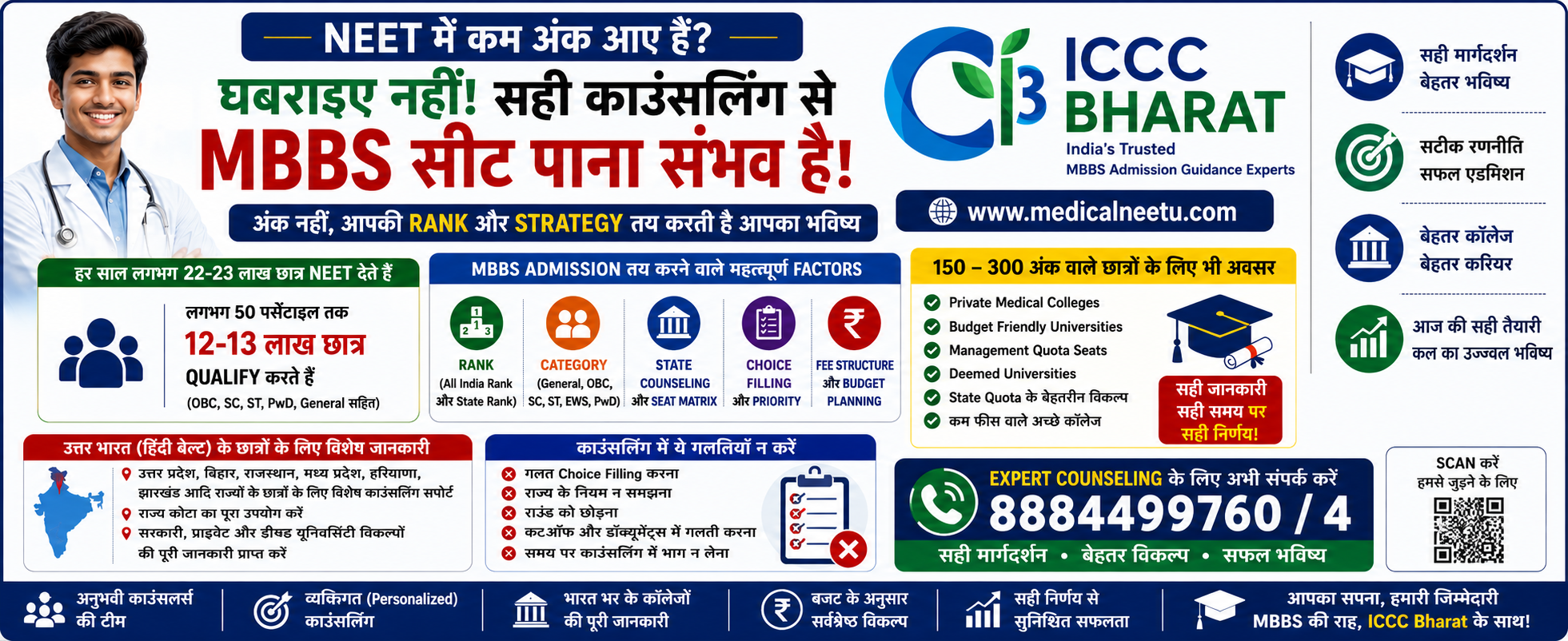
उत्तर प्रदेश, बिहार, राजस्थान, मध्य प्रदेश, हरियाणा और झारखंड जैसे राज्यों में हर साल लाखों छात्र NEET परीक्षा देते हैं। परीक्षा के बाद सबसे ज्यादा तनाव उन्हीं छात्रों में होता है जिनके 150–300 अंक आते हैं।

बहुत से छात्र और माता-पिता यह मान लेते हैं कि:

“अब MBBS नहीं मिलेगा…”

लेकिन सच्चाई इससे बिल्कुल अलग है।

आज के समय में MBBS Admission केवल अंकों से तय नहीं होता।
असल खेल होता है:

  • Rank का,
  • Category का,
  • State Counseling का,
  • Budget Planning का,
  • और सबसे महत्वपूर्ण सही Counseling Strategy का।

केवल अंक नहीं, आपकी Rank तय करती है भविष्य

NEET एक Competitive Exam है।

हर साल:

  • पेपर का स्तर बदलता है,
  • छात्रों की संख्या बदलती है,
  • Cutoff बदलता है,
  • और उसी के अनुसार Rank भी बदलती है।

इसलिए:

“कम अंक” का मतलब हमेशा “खराब Rank” नहीं होता।

कई बार कठिन पेपर में कम अंक पर भी अच्छी Rank मिल जाती है।


हिंदी बेल्ट में Competition सबसे ज्यादा

उत्तर प्रदेश, बिहार और राजस्थान जैसे राज्यों से लाखों छात्र NEET देते हैं।
लेकिन सरकारी MBBS सीटें सीमित हैं।

यही कारण है कि:

  • बहुत से छात्र Private Colleges,
  • Management Quota,
  • Deemed Universities,
  • और दूसरे राज्यों की Counseling

की तरफ जाते हैं।


कई छात्र जानकारी की कमी से सीट खो देते हैं

हर साल हजारों छात्र केवल इसलिए MBBS सीट नहीं ले पाते क्योंकि:

  • उन्हें Counseling Process समझ नहीं आती,
  • सही Choice Filling नहीं कर पाते,
  • State Quota Rules नहीं जानते,
  • या गलत लोगों की सलाह में आ जाते हैं।

बाद में वही छात्र कहते हैं:

“काश सही समय पर सही Guidance मिली होती…”


Central OBC और State OBC का अंतर समझना जरूरी

यह NEET Counseling का सबसे बड़ा Confusion होता है।

बहुत से छात्र:

  • अपने राज्य में OBC होते हैं,
  • लेकिन Central OBC List में नहीं आते।

इसका असर पड़ता है:

  • All India Counseling,
  • Reservation Benefits,
  • और Category Rank

पर।

इसलिए Counseling से पहले:
✅ Category Certificate
✅ State Eligibility
✅ Reservation Rules

को समझना बहुत जरूरी है।


150–300 अंक वालों के लिए आज भी मौके हैं

यदि आपके:

  • 150 अंक,
  • 200 अंक,
  • 250 अंक,
  • या 300 अंक

आए हैं, तो घबराने की जरूरत नहीं है।

आज भी भारत में कई विकल्प उपलब्ध हैं:

  • Private Medical Colleges
  • Budget-Friendly Universities
  • Management Quota Seats
  • दूसरे राज्यों के Counseling Options

कई बार सही Guidance से छात्र कम फीस वाले कॉलेज भी प्राप्त कर लेते हैं।


जल्दी निर्णय लेना जरूरी है

बहुत से अच्छे और कम फीस वाले विकल्प:

  • First Round,
  • और Second Round

में ही भर जाते हैं।

जो छात्र देर करते हैं, उन्हें बाद में:

  • ज्यादा फीस,
  • Donation,
  • या Limited Options

का सामना करना पड़ता है।


सही Counseling ही असली हथियार है

आज के समय में केवल NEET Qualify करना काफी नहीं है।

जरूरी है:
✅ सही College Selection
✅ सही Choice Filling
✅ सही Budget Planning
✅ सही State Analysis
✅ सही Counseling Guidance

क्योंकि:

“आपके अंक आपको Qualified बनाते हैं, लेकिन सही Counseling आपको MBBS सीट दिलाती है।”


निष्कर्ष

यदि आपके कम अंक आए हैं तो निराश मत होइए।

भारत में MBBS Admission System बहुत बड़ा और जटिल है। सही जानकारी और सही रणनीति से आज भी हजारों छात्र MBBS सीट प्राप्त कर रहे हैं।

याद रखिए:

“कई बार ज्यादा अंक वाले छात्र भी सीट खो देते हैं,
और कम अंक वाले छात्र सही Counseling से डॉक्टर बन जाते हैं।”

इसलिए जल्दबाजी में फैसला न लें।
अपनी Rank, Category, Budget और Counseling Options को अच्छे से समझकर आगे बढ़ें।

क्योंकि:

“NEET केवल परीक्षा नहीं है…
यह सही रणनीति और सही मार्गदर्शन का खेल है।”

NTA Releases NEET UG 2026 Provisional Answer Key: Important Update for Medical Aspirants

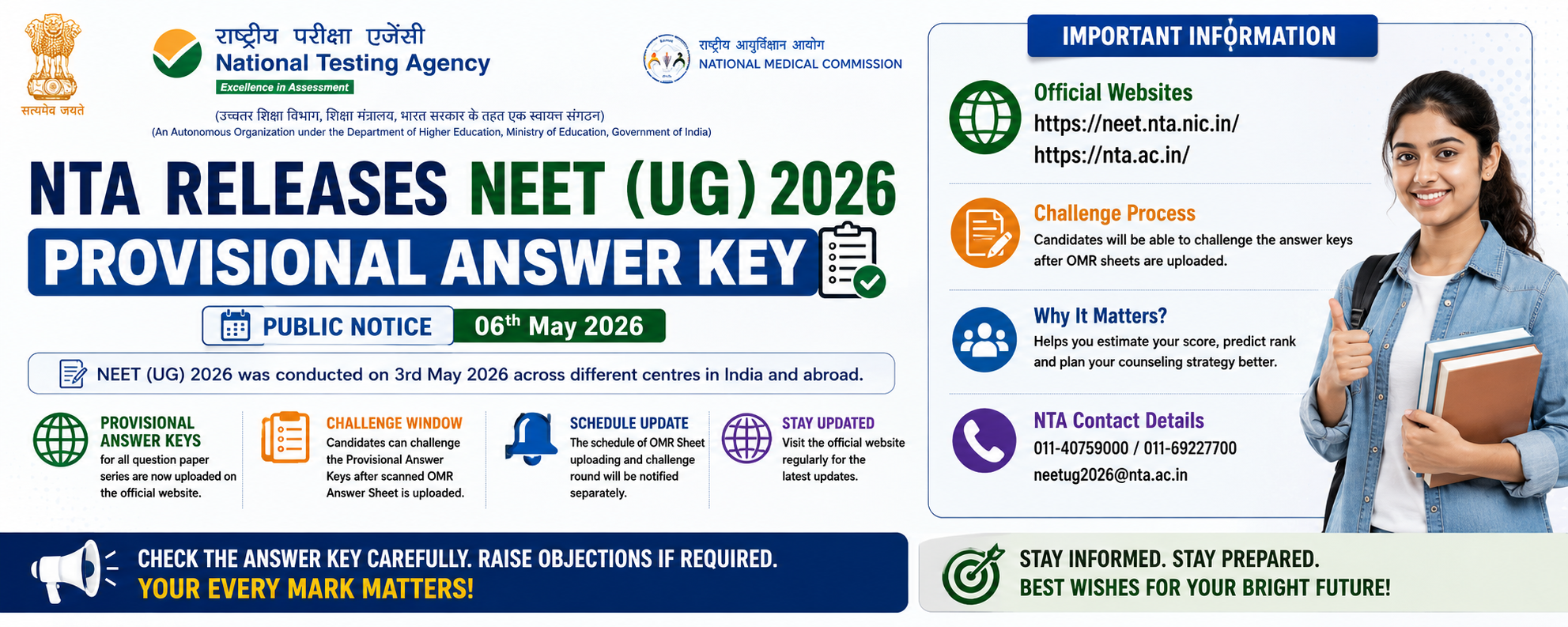
The National Testing Agency (NTA) has officially released the Provisional Answer Keys for the National Eligibility cum Entrance Test (NEET UG) 2026 conducted on 3rd May 2026 across India and abroad.

The public notice, dated 06th May 2026, confirms that the provisional answer keys for all paper series have now been uploaded on the official NEET website.

This is one of the most important stages for NEET aspirants as it allows students to:

  • Verify their responses
  • Estimate expected scores
  • Analyze cutoff possibilities
  • Prepare for counseling strategy

Official Notice Highlights

According to NTA:

  • NEET UG 2026 was conducted successfully on 3rd May 2026.
  • Provisional answer keys for all paper sets are now available online.
  • Candidates will soon be able to challenge the answer keys after the scanned OMR answer sheets are uploaded.
  • The detailed schedule for OMR uploads and answer key challenge submissions will be announced separately.

What Students Should Do Now

1. Check the Official Answer Key

Students should carefully compare their responses with the official provisional answer key to estimate probable marks.

2. Wait for OMR Upload

NTA will soon upload scanned OMR answer sheets. Candidates should verify:

  • Marked responses
  • Question accuracy
  • Possible discrepancies

3. Challenge Incorrect Answers (If Needed)

If students identify any incorrect answer in the provisional key, they can submit objections within the prescribed timeline after OMR upload.

4. Start Counseling Preparation Early

Even before results are officially declared, students should begin:

  • College research
  • State quota analysis
  • Management quota planning
  • Budget evaluation
  • Counseling strategy preparation

Why This Stage is Extremely Important

Many students focus only on marks, but counseling preparation starts immediately after answer key analysis.

Understanding expected rank trends early helps students:

  • Avoid panic
  • Identify realistic college options
  • Plan state counseling participation
  • Explore management quota opportunities
  • Make smarter decisions during choice filling

Official Websites

Students are advised to regularly visit:

for the latest updates regarding:

  • OMR sheet uploads
  • Challenge process
  • Final answer key
  • NEET UG 2026 results
  • Counseling schedules

Final Thoughts

The release of the provisional answer key marks the beginning of the next crucial phase of NEET UG 2026 — result prediction and counseling preparation.

Students should remain calm, analyze their probable scores carefully, and begin preparing a proper counseling strategy instead of waiting until results are announced.

In today’s highly competitive environment, the right counseling strategy can make a major difference in securing the best possible MBBS seat.

4 States Account for 41% of NEET UG 2026 Aspirants: What It Means for Medical Admissions

The NEET UG 2026 examination has once again demonstrated how heavily concentrated India’s medical aspirants are in a handful of states. According to state-wise data released by the National Testing Agency (NTA), four states — Uttar Pradesh, Maharashtra, Rajasthan, and Bihar — together accounted for nearly 41% of the total NEET UG 2026 registrations.

Out of approximately 22.7 lakh candidates registered for NEET UG 2026, nearly 9.4 lakh students came from these four states alone. This highlights the increasing pressure on medical admissions and counseling systems, especially in high-population states where competition is extremely intense.

State-Wise NEET UG 2026 Participation

Top Contributing States

  • Uttar Pradesh – Around 3.6 lakh candidates
  • Maharashtra – Around 2.2 lakh candidates
  • Rajasthan – Around 2 lakh candidates
  • Bihar – Around 1.5 lakh candidates

Together, these states dominate the national NEET landscape and significantly influence cutoff trends, counseling competition, and seat allocation dynamics.

Other states with major participation include:

  • Karnataka – 1.5 lakh
  • Tamil Nadu – 1.4 lakh
  • Madhya Pradesh – 1.2 lakh
  • Kerala – 1.1 lakh
  • West Bengal – 1 lakh

The top nine states together contributed more than 17 lakh NEET aspirants, accounting for almost three-fourths of India’s total candidate pool.

What This Means for MBBS Admissions

1. Increased Competition in Government Colleges

States with higher candidate density naturally witness tougher competition for government MBBS seats. Even small mark differences can create large rank variations due to the huge number of aspirants.

2. Higher Pressure on State Quotas

Students from high-volume states face intense competition under state counseling quotas. This pushes many candidates toward:

  • Private medical colleges
  • Deemed universities
  • Management quota seats
  • Other state counseling opportunities

3. Rising Demand for Management Quota Seats

As government seats become harder to secure, students scoring between 150–450 marks increasingly explore management quota options across:

  • Karnataka
  • Telangana
  • Andhra Pradesh
  • Tamil Nadu
  • Maharashtra

The demand for budget-friendly MBBS packages is expected to rise significantly during counseling rounds.

Attendance Trends Remained High

Despite the scale of the examination, NEET UG 2026 recorded an impressive attendance rate of 96.9%.

Highest Attendance States

  • Gujarat – 98.1%
  • Puducherry – 98%
  • Rajasthan – 97.9%

Among larger states:

  • Uttar Pradesh – 97.5%
  • Maharashtra – 97.4%

States with comparatively lower attendance included:

  • Kerala – 94.4%
  • Assam – 95.1%
  • Tamil Nadu – 95.9%

Counseling Strategy Becomes More Important Than Ever

With lakhs of students competing for limited seats, counseling strategy is now equally important as NEET marks.

Students and parents must carefully analyze:

  • State-wise cutoff trends
  • Fee structures
  • Seat matrix changes
  • Round-wise seat availability
  • Management quota opportunities
  • Choice filling strategy

Many students lose good MBBS opportunities not because of low marks, but because of incorrect counseling decisions.

Conclusion

The NEET UG 2026 data clearly shows that medical admission competition in India is becoming increasingly concentrated in a few major states. As aspirant numbers continue to rise, smart counseling, proper planning, and early decision-making will play a major role in securing the best possible MBBS seat.

Students should focus not only on marks and rank, but also on understanding the counseling ecosystem, quota systems, and budget-friendly admission pathways available across India.

The Future of Nursing in India: A Profession Transforming Healthcare

The future of nursing in India is entering a revolutionary phase, driven by technological advancement, global healthcare demand, specialization, and the growing need for quality patient care. Once considered limited to bedside care, nursing today is evolving into one of the most respected, stable, and globally recognized healthcare professions.

India is currently facing a projected shortage of more than 2 million nurses, creating massive opportunities for students pursuing B.Sc. Nursing and related healthcare programs. With increasing healthcare awareness, expansion of hospitals, medical tourism, telemedicine, and an aging population, the demand for skilled nurses is expected to rise dramatically over the next decade.

Rise of Specialized Nursing Careers

Modern healthcare requires highly trained nurses in specialized departments. Areas such as:

  • Critical Care Nursing
  • Oncology Nursing
  • Neonatal & Pediatric Care
  • Emergency & Trauma Care
  • Cardiac Nursing
  • Operation Theatre Technology
  • Community Health Nursing

are witnessing tremendous growth in India and abroad.

The role of Nurse Practitioners and Advanced Practice Nurses is also gaining importance, allowing nurses to take leadership roles in patient management and healthcare delivery.

Technology is Reshaping Nursing

Technology is rapidly transforming the nursing profession. Hospitals and healthcare institutions are increasingly using:

  • Artificial Intelligence (AI)
  • Electronic Health Records (EHRs)
  • Smart Patient Monitoring Systems
  • Telemedicine Platforms
  • Digital Health Applications

This has created a new generation of “informatics nurses” who combine healthcare knowledge with digital technology expertise.

Telemedicine alone is growing at nearly 25% annually, opening new opportunities for nurses to work remotely, assist in virtual consultations, and manage patient care digitally.

Global Demand for Indian Nurses

Indian nurses are highly respected worldwide due to their clinical skills, adaptability, and dedication. Countries such as:

  • USA
  • United Kingdom
  • Canada
  • Australia
  • Germany
  • Gulf Countries

continue to recruit thousands of Indian nurses every year.

With international exposure, nurses can access:

  • Higher salaries
  • Better career growth
  • Advanced education opportunities
  • Permanent residency pathways in many countries

Growing Domestic Opportunities

India’s healthcare sector is expanding rapidly with:

  • Multi-specialty hospitals
  • Corporate healthcare chains
  • Rural healthcare programs
  • Government health missions
  • Rehabilitation centers
  • Elderly care facilities

The aging population has significantly increased the demand for geriatric and community health nurses. Government programs under the National Health Mission are also creating large-scale opportunities in rural and semi-urban healthcare sectors.

Salary & Career Growth

Nursing has become one of the most secure healthcare careers in India.

Average Salary Trends:

  • Freshers: ₹3–5 LPA
  • Experienced/Specialized Nurses: ₹8–12 LPA or more
  • International Placements: Significantly higher packages

Apart from hospitals, nurses today can work in:

  • Research
  • Medical coding
  • Healthcare administration
  • Academics
  • Public health
  • Telehealth services
  • Clinical training institutes

Challenges in the Profession

Despite the bright future, the profession also faces challenges such as:

  • Workforce burnout
  • Long working hours
  • Staff shortages
  • Need for better infrastructure
  • Education quality gaps

Improving working conditions, upgrading nursing education, and strengthening professional recognition will play a major role in shaping the future of the profession.

Conclusion

The nursing profession in India is no longer limited to traditional caregiving roles. It is transforming into a dynamic, technology-driven, leadership-oriented healthcare career with immense global opportunities.

For students looking for a stable, respected, and future-ready profession, nursing offers:
✅ Job security
✅ Global career opportunities
✅ Excellent salary growth
✅ Professional respect
✅ Opportunities in leadership & research

The future of nursing in India is not just promising — it is powerful, progressive, and essential for the future of healthcare itself.