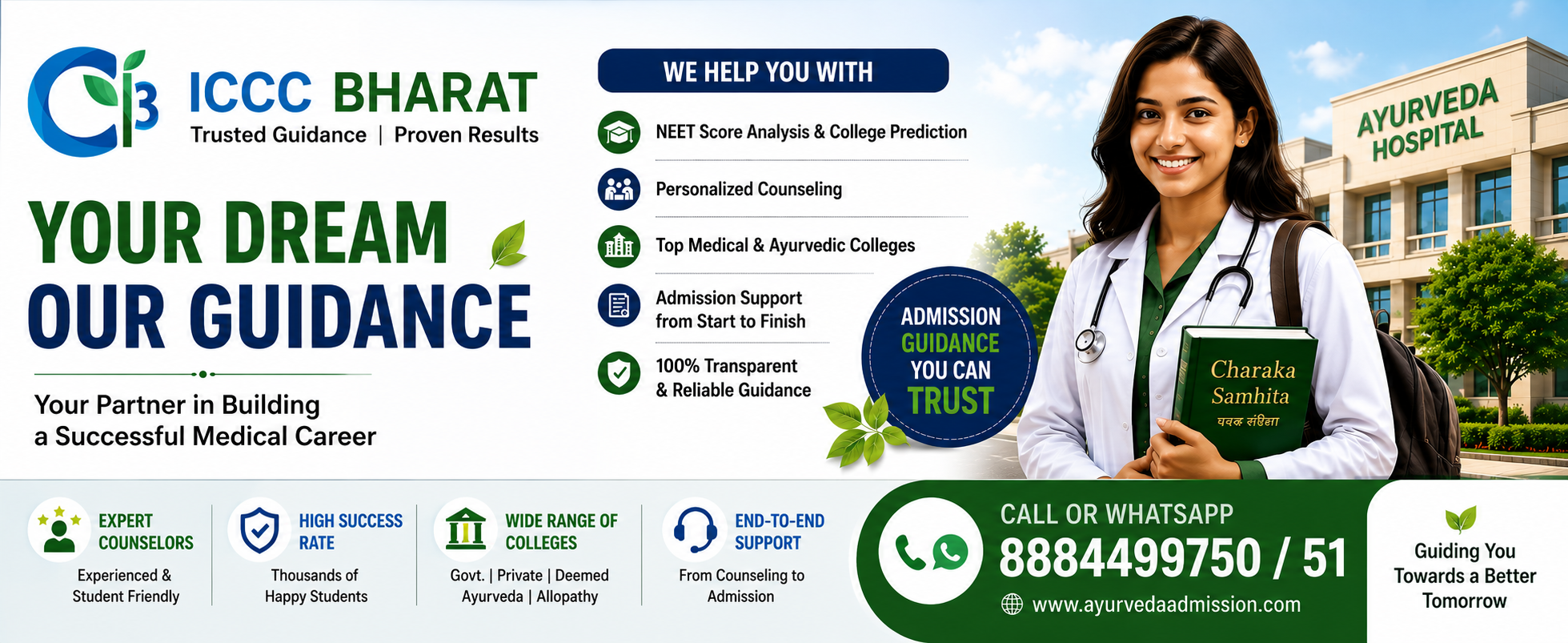
BAMS Admission in Maharashtra 2026: Eligibility, Counselling Process, Top Colleges & Admission Steps

Maharashtra is one of the most preferred destinations for BAMS (Bachelor of Ayurvedic Medicine and Surgery) admissions in India. With reputed Ayurveda colleges, strong clinical exposure, modern infrastructure, and growing demand for holistic healthcare, thousands of NEET aspirants choose Maharashtra every year for Ayurveda education.

The future of Ayurveda in India is rapidly expanding with opportunities in clinical practice, wellness industries, Panchakarma centres, medical tourism, research, hospital administration, and integrative healthcare systems. BAMS is now becoming one of the strongest alternatives for students aspiring to become doctors through NEET UG.

Eligibility Criteria for BAMS Admission in Maharashtra 2026

Candidates seeking admission to BAMS colleges in Maharashtra must fulfill the following eligibility criteria:

  • The candidate must be at least 17 years old.
  • The candidate must qualify NEET UG 2026.
  • Candidates should have completed 10+2 with Physics, Chemistry, Biology, and English as core subjects.
  • Minimum qualifying marks in PCB:
    • General Category: 50%
    • General PH Category: 45%
    • SC/ST/OBC Category: 40%

NEET UG is mandatory for admission into all Ayurveda colleges in Maharashtra.

Admission Process for BAMS in Maharashtra

Admission to BAMS colleges in Maharashtra is conducted through the Maharashtra State Common Entrance Test Cell (MAHACET) counselling process.

Step-by-Step Admission Process

Step 1: Online Registration

Visit the official MAHACET counselling portal and complete the online registration process using your NEET UG details.

Step 2: Fill Application Form

Login to the candidate portal and upload the required documents such as:

  • NEET scorecard
  • Passport-size photograph
  • Signature
  • Educational certificates

Fill the college and course preferences carefully before the deadline.

Step 3: Payment of Counselling Fee

Pay the required counselling fee online through:

  • Debit Card
  • Credit Card
  • Net Banking
  • UPI (if available)

Keep the transaction receipt safely for future reference.

Step 4: Choice Filling and Locking

Select your preferred BAMS colleges and lock your choices within the stipulated counselling schedule.

Step 5: Document Verification

Candidates must attend document verification at designated centres or allocated colleges with original documents including:

  • NEET Scorecard
  • 10th & 12th Marks Cards
  • Transfer Certificate
  • Caste Certificate (if applicable)
  • Domicile Certificate
  • Identity Proof

Step 6: Seat Allotment

Seats are allotted based on:

  • NEET UG Rank
  • Category
  • Reservation Criteria
  • College Preferences
  • Seat Availability

Step 7: Reporting to Allotted College

Candidates allotted a BAMS seat must report to the respective college within the given timeline.

Step 8: Fee Payment and Admission Confirmation

Complete admission formalities by:

  • Depositing tuition fees
  • Submitting original documents
  • Obtaining admission confirmation letter

Step 9: Start Attending Classes

After successful verification and fee payment, students can begin their academic session.

Counselling Rounds for BAMS Admission

The Maharashtra BAMS counselling process generally includes:

  • Round 1 Counselling
  • Round 2 Counselling
  • Mop-Up Round
  • Stray Vacancy Round (if applicable)

Students who do not secure seats in earlier rounds can participate in subsequent rounds based on seat availability.

Top Private BAMS Colleges in Maharashtra

Maharashtra has several reputed private Ayurveda colleges affiliated with MUHS Nashik and participating through MAHACET counselling.

Some of the top private BAMS colleges include:

  • Sumatibhai Shah Ayurved Mahavidyalaya, Pune
  • CSMSS Ayurved Mahavidyalaya & Rugnalaya, Aurangabad
  • Shree Saptashrungi Ayurved Mahavidyalaya, Nashik
  • PDEA’s College of Ayurveda & Research Center, Akurdi, Pune
  • Dr. G.D. Pol Foundation’s Y.M.T. Ayurvedic Medical College, Kharghar, Mumbai
  • S.N.K.D.C. Trust’s Nalasopara Ayurved Medical College, Nalasopara
  • BSDT’s Ayurved Mahavidyalay, Wagholi, Pune
  • Maharashtra Arogya Mandal’s Sumatibhai Shah Ayurved Mahavidyalaya, Pune
  • Datta Meghe Ayurvedic Medical College, Nagpur
  • Bhausaheb Mulak Ayurved Mahavidyalaya, Nagpur
  • Pravara Medical Trust’s Ayurved Mahavidyalaya, Shevgaon
  • Shri Vivekanand Nursing Home Trust’s Ayurved Mahavidyalaya, Rahuri
  • Annasaheb Dange Ayurved Medical College, Ashta

These colleges are known for:

  • Clinical exposure
  • Panchakarma training
  • Experienced faculty
  • Hospital attachment
  • Research opportunities
  • Strong academic infrastructure

BAMS Fees in Maharashtra

The tuition fee for private BAMS colleges in Maharashtra generally ranges between:

  • ₹1.5 lakh to ₹2.5 lakh per year for regular counselling seats.

Management quota package fees may range approximately between:

  • ₹20 lakh to ₹40 lakh depending on:
    • College reputation
    • Infrastructure
    • Clinical exposure
    • Location
    • Demand during counselling

Career Scope After BAMS

The future scope after BAMS is growing significantly in India and abroad. Students can build careers in:

  • Clinical Practice
  • Ayurveda Hospitals
  • Panchakarma Centres
  • Wellness Industry
  • Research & Development
  • Medical Tourism
  • Teaching & Academics
  • Pharmaceutical Companies
  • Government Healthcare Services
  • Integrative Medicine Centres

With the growing acceptance of holistic and preventive healthcare, Ayurveda professionals are expected to play a major role in future healthcare systems.

Why Choose Maharashtra for BAMS?

Maharashtra is considered one of the best states for Ayurveda education because of:

  • Large number of reputed colleges
  • Better clinical exposure
  • Strong patient flow in Ayurveda hospitals
  • Quality education
  • Research opportunities
  • Growing healthcare infrastructure
  • Better career opportunities

Conclusion

BAMS in Maharashtra offers an excellent opportunity for NEET aspirants looking for a rewarding medical career in Ayurveda and holistic healthcare. With increasing global demand for Ayurveda, expanding career opportunities, and growing integration into mainstream healthcare, BAMS is emerging as one of the strongest professional healthcare courses in India.

Students should stay updated with MAHACET counselling schedules, cutoff trends, and admission procedures to maximize their chances of securing seats in top Ayurveda colleges.
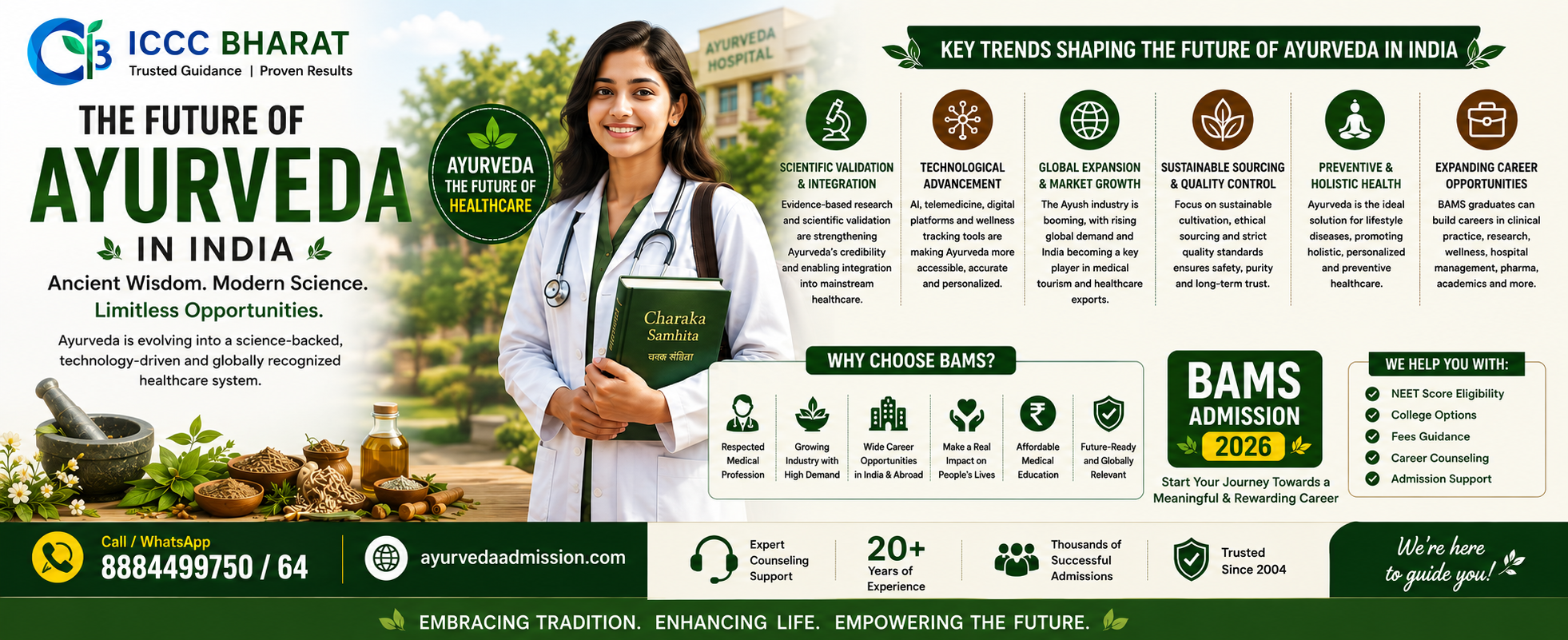
The Future of Ayurveda in India: From Ancient Wisdom to Modern Healthcare Revolution

Ayurveda, one of the world’s oldest systems of medicine, is no longer confined to traditional practices and herbal remedies alone. Today, Ayurveda is rapidly transforming into a science-backed, technology-driven, and globally recognized healthcare system. With increasing awareness about holistic wellness, preventive healthcare, and lifestyle management, the future of Ayurveda in India appears more promising than ever before.

India is witnessing a major shift in healthcare preferences. People are increasingly looking beyond symptom-based treatment and focusing on long-term wellness, immunity, mental health, and preventive care. This changing mindset has created a huge demand for Ayurveda and integrative medicine. As a result, the Ayurveda industry is growing at an unprecedented pace and is expected to become one of the strongest pillars of India’s healthcare and wellness economy.

Ayurveda Moving Towards Scientific Validation

One of the biggest transformations in Ayurveda is the growing emphasis on scientific research and evidence-based validation. The Ministry of Ayush and several research institutions are actively promoting clinical studies, standardization, and scientific documentation of Ayurvedic treatments and medicines.

This shift is helping Ayurveda gain credibility among both medical professionals and the public. Modern hospitals and healthcare centers are increasingly integrating Ayurvedic therapies into mainstream healthcare systems, especially in areas such as lifestyle diseases, chronic illnesses, stress management, and rehabilitation.

The future of Ayurveda lies in this balanced integration of traditional wisdom with modern scientific approaches.

Technology and Digital Integration in Ayurveda

Technology is playing a major role in reshaping the Ayurveda sector. Digital healthcare platforms, telemedicine consultations, artificial intelligence (AI), and wellness-tracking applications are making Ayurvedic healthcare more accessible and personalized.

AI-based health analysis, virtual consultations, online wellness coaching, and digital prescription systems are helping Ayurveda reach patients not only across India but around the world. Startups and wellness companies are also investing heavily in Ayurvedic technology platforms, opening new opportunities for innovation and employment.

The combination of Ayurveda and modern technology is expected to create a smarter, data-driven healthcare ecosystem in the coming years.

Global Expansion and Medical Tourism

Ayurveda has become one of India’s strongest soft-power healthcare exports. Countries across Europe, the Middle East, the United States, and Southeast Asia are showing increasing interest in Ayurvedic medicines, therapies, yoga, and Panchakarma treatments.

India is becoming a major destination for wellness tourism and holistic healthcare. International patients are visiting India for detoxification therapies, stress management, chronic disease care, and rejuvenation programs. This global demand is creating significant growth opportunities for Ayurvedic hospitals, wellness resorts, pharmaceutical companies, and trained professionals.

The Indian Ayush market is projected to grow exponentially in the next decade, making Ayurveda one of the fastest-growing healthcare industries in the country.

Focus on Preventive and Holistic Healthcare

Modern healthcare systems are increasingly recognizing the importance of prevention rather than only treatment. Ayurveda’s core philosophy aligns perfectly with this concept. Ayurveda focuses on balancing the body, mind, and lifestyle to prevent diseases before they occur.

With the rise of diabetes, obesity, hypertension, stress disorders, and other lifestyle diseases, Ayurveda is emerging as a valuable solution for long-term wellness and personalized healthcare management.

This preventive approach is expected to make Ayurveda an important component of future public healthcare systems.

Sustainable Sourcing and Quality Control

As demand for Ayurvedic products increases globally, there is also a growing focus on sustainable cultivation of medicinal plants and strict quality control standards. Government bodies and private organizations are working toward improving cultivation practices, supply chain management, and product standardization.

Ensuring safety, purity, and efficacy of Ayurvedic medicines will be crucial for the long-term credibility and expansion of the industry.

Expanding Career Opportunities for BAMS Graduates

The future is also highly promising for students pursuing BAMS (Bachelor of Ayurvedic Medicine and Surgery). Earlier, career opportunities for Ayurveda graduates were limited mainly to private clinics. Today, the scope has expanded significantly.

BAMS graduates now have opportunities in:

  • Clinical practice
  • Panchakarma centers
  • Wellness and spa industries
  • Hospital administration
  • Medical tourism
  • Clinical research
  • Pharmaceutical companies
  • Healthcare startups
  • Public health programs
  • Teaching and academics
  • Integrative hospitals

The growing wellness industry and increasing acceptance of Ayurveda globally are creating stable and rewarding career paths for Ayurvedic professionals.

Challenges Ahead

Despite the rapid growth, Ayurveda still faces certain challenges, including regulatory issues, standardization, scientific validation, and public misconceptions. However, sustained investment in research, innovation, education, and technology is gradually overcoming these barriers.

The future success of Ayurveda will depend on maintaining authenticity while adapting to modern healthcare expectations.

Conclusion

Ayurveda in India is entering a new era. What was once considered purely traditional medicine is now evolving into a scientifically validated, technology-enabled, globally respected healthcare system. Supported by government initiatives, rising public awareness, digital transformation, and international demand, Ayurveda is poised to become a major force in preventive and holistic healthcare.

For students, healthcare professionals, and entrepreneurs, Ayurveda represents not only a cultural heritage but also a powerful future opportunity. As India moves toward integrated healthcare systems, Ayurveda is set to play a vital role in shaping the future of wellness and medicine both nationally and globally.