NEET-UG 2026 Re-Exam on June 21: Education Minister Reviews Preparations, Calls for Foolproof Conduct

Union Education Minister Dharmendra Pradhan chaired a high-level review meeting on preparations for the NEET-UG 2026 re-examination, which is scheduled to be conducted on June 21, Sunday.

The meeting was held at a crucial time, as the earlier NEET-UG 2026 examination conducted on May 3 was cancelled following allegations of irregularities and paper leak. More than 22 lakh students had appeared for the exam, making the re-exam a matter of national importance.

Minister Stresses Zero Loopholes

During the review meeting, the Education Minister directed officials to ensure that the re-examination is conducted in a completely secure, transparent and foolproof manner.

He emphasised that all lapses and loopholes noticed in the earlier examination process must be identified and eliminated before the re-test.

The message was clear: this time, there should be no compromise on examination integrity.

Strict Security and Monitoring at Exam Centres

The Minister instructed officials to strengthen monitoring systems at examination centres. He also asked authorities to coordinate with District Magistrates and Superintendents of Police across states to ensure smooth and secure arrangements.

This coordination is expected to help in:

  • stronger centre-level supervision
  • strict security checks
  • better crowd management
  • quick response to suspicious activity
  • smooth conduct of the examination

Student Facilities Also Discussed

Apart from security, the Minister also focused on student convenience. Officials have been asked to ensure basic facilities at examination centres, including drinking water, transportation support and other essential arrangements.

This is important because many students will again have to travel for the re-exam after already appearing once on May 3.

Important Points for Students

The NEET-UG 2026 re-exam will be held on June 21, 2026.

The exam timing will be 2:00 PM to 5:15 PM, including 15 minutes for examination formalities.

The exam will continue in pen-and-paper mode.

It will be conducted in 13 languages: Assamese, Bengali, English, Gujarati, Hindi, Kannada, Malayalam, Marathi, Odia, Punjabi, Tamil, Telugu and Urdu.

Candidates can update their present address and first two preferred exam cities through the official NEET/NTA portal till May 21.

No correction will be allowed except present address and exam city preference.

Candidates who do not change their city preference will retain their earlier selected cities.

No additional fee will be charged for the re-examination.

City intimation slips and admit cards are expected to be released later on the official website, tentatively by June 14.

The result declaration date will be announced later.

NEET to Move to CBT Mode from Next Year

NTA has also announced that from next year, NEET-UG will be conducted in Computer-Based Test mode. This move is expected to improve examination security and reduce risks linked to physical question paper handling.

However, the shift to CBT will require strong digital infrastructure, proper planning and fair access for rural and economically weaker students.

Strong Line for Students

Students should remember: this re-exam is not a punishment for honest candidates; it is a second chance to protect merit, fairness and the value of hard work.

At this stage, students must avoid panic and focus on revision, mock tests, NCERT concepts and time management.

Final Advice

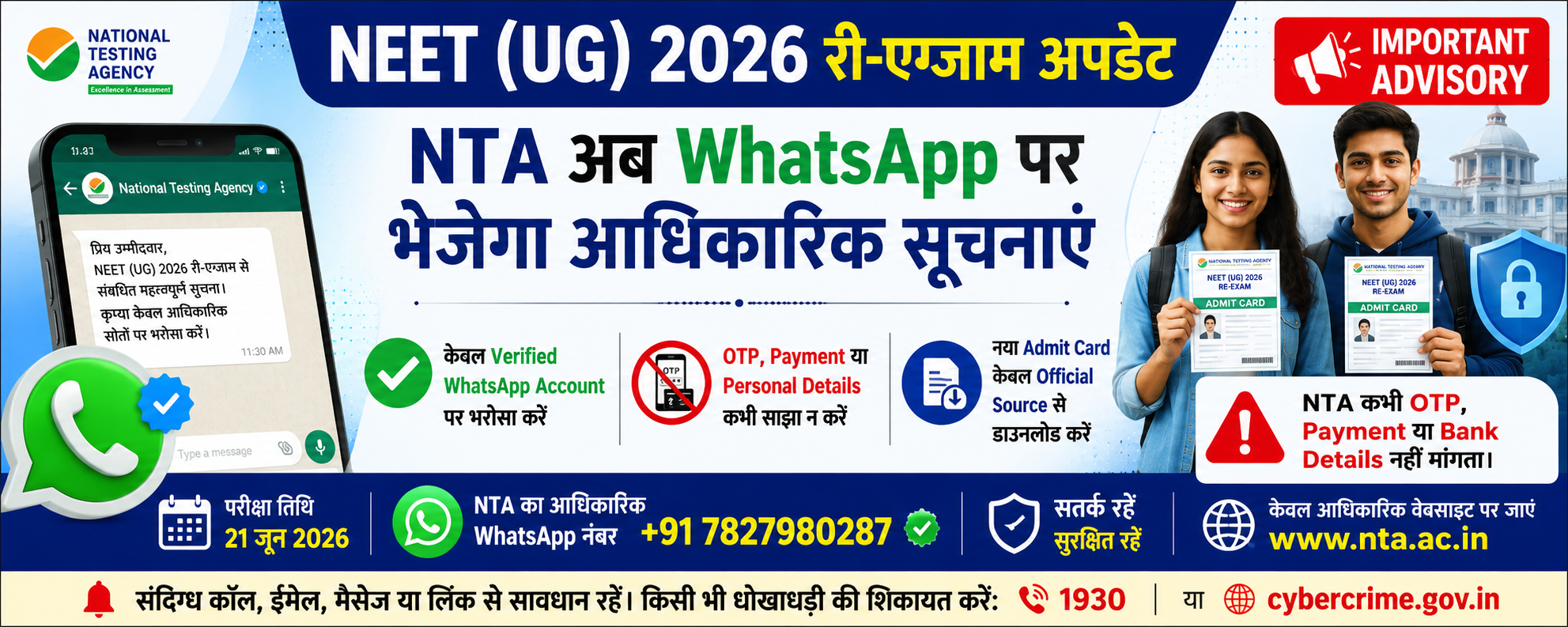
Students and parents should rely only on official NTA communication channels. Social media rumours, fake admit card updates and unofficial exam-related messages should be ignored.

For clarification, candidates can contact the official helpline numbers:

011-40759000 / 011-69227700
Email: neetug2026@nta.ac.in

Conclusion

The NEET-UG 2026 re-exam is now a test not only for students but also for the examination system. After the paper leak controversy, the government and NTA are under pressure to conduct the exam with absolute transparency, accountability and security.

For students, the best strategy is simple: stay calm, trust only official updates and prepare with full discipline for June 21

NEET-UG पेपर लीक प्रकरण: संसदीय समितिले NTA प्रमुखलाई बोलायो

NEET-UG 2026 पेपर लीक विवाद अब संसदीय समितिसम्म पुगेको छ। राष्ट्रिय परीक्षा एजेन्सी अर्थात् NTA को कार्यप्रणाली, परीक्षा सुधार र पेपर लीक प्रकरणको अनुसन्धानबारे छलफल गर्न संसदीय स्थायी समितिले NTA अध्यक्ष प्रदीप कुमार जोशी र शिक्षा मन्त्रालयका वरिष्ठ अधिकारीहरूलाई बोलाएको छ।

यो बैठक २१ मे मा प्रस्तावित छ, जहाँ NEET-UG 2026 पेपर लीक प्रकरण, NTA सुधार र के. राधाकृष्णन समिति का सिफारिसहरूको कार्यान्वयनबारे छलफल हुनेछ।

कुन अधिकारीहरूलाई बोलाइएको छ?

संसदीय स्थायी समितिले शिक्षा मन्त्रालयअन्तर्गत उच्च शिक्षा विभागका सचिव विनीत जोशी र NTA अध्यक्ष प्रदीप कुमार जोशी लाई छलफलका लागि बोलाएको छ।

यो समितिको अध्यक्षता कांग्रेस नेता दिग्विजय सिंह ले गरिरहेका छन्।

बैठकको मुख्य एजेन्डा

समितिले मुख्य रूपमा यी विषयहरूमा छलफल गर्नेछ:

NEET-UG 2026 पेपर लीक प्रकरणको वर्तमान अवस्था

NTA सुधारको प्रगति

के. राधाकृष्णन समितिका सिफारिसहरूको कार्यान्वयन

परीक्षा प्रणालीको पारदर्शिता र सुरक्षा

भविष्यमा यस्ता घटना रोक्ने रणनीति

यो बैठक किन महत्त्वपूर्ण छ?

NEET-UG 2026 परीक्षा ३ मे मा सञ्चालन गरिएको थियो, तर पेपर लीक र अनियमितताको आरोपपछि परीक्षा रद्द गरिएको थियो। करिब २३ लाख उम्मेदवारहरूले यस परीक्षाका लागि दर्ता गरेका थिए।

NTA का अनुसार, परीक्षापछि ७ मे साँझ कथित गडबडीबारे जानकारी प्राप्त भएको थियो। त्यसपछि विषय गम्भीर बनेको र अन्ततः परीक्षा रद्द गर्ने निर्णय गरिएको थियो।

अब NEET-UG 2026 को पुनः परीक्षा २१ जुन मा सञ्चालन गरिनेछ।

2027 देखि NEET अनलाइन मोडमा

शिक्षामन्त्री धर्मेन्द्र प्रधान ले हालै घोषणा गरेका छन् कि NEET-UG लाई आगामी वर्ष अर्थात् 2027 देखि कम्प्युटर आधारित परीक्षा मोड मा लगिनेछ। यसको उद्देश्य पेपर लीकजस्ता घटनाहरू रोक्नु र परीक्षा प्रणालीलाई अझ सुरक्षित तथा पारदर्शी बनाउनु हो।

NTA सुधारमाथि ठूलो प्रश्न

पेपर लीक विवादपछि NTA को आन्तरिक व्यवस्था, कर्मचारी अभाव, आउटसोर्सिङमा निर्भरता र जवाफदेहितामाथि गम्भीर प्रश्न उठेका छन्।

के. राधाकृष्णन समितिले पहिले नै NTA लाई मजबुत बनाउने, स्थायी कर्मचारी नियुक्त गर्ने, निगरानी सुधार गर्ने र परीक्षा सुरक्षा प्रणालीलाई स्तरोन्नति गर्ने सिफारिस गरेको थियो। अब संसदीय समिति यी सुधारहरूमा कति प्रगति भयो भन्ने हेर्न चाहन्छ।

AI र शिक्षाबारे पनि छलफल

NEET र NTA सम्बन्धी मुद्दाबाहेक समितिले शिक्षामा कृत्रिम बुद्धिमत्ता अर्थात् AI को प्रभाव र विद्यार्थीहरूको रोजगारी क्षमता बढाउने रणनीतिबारे पनि छलफल गर्नेछ। यसका लागि Anthropic India, Pratham, IIT Kanpur, Infosys र IIT Madras का प्रतिनिधिहरूलाई पनि बोलाइएको छ।

निष्कर्ष

NEET-UG 2026 पेपर लीक प्रकरण अब केवल परीक्षा सम्बन्धी विवाद मात्र रहेन। यो देशको परीक्षा प्रणालीको विश्वसनीयता, विद्यार्थीहरूको विश्वास र संस्थागत जवाफदेहितासँग जोडिएको ठूलो विषय बनेको छ।

संसदीय समितिले NTA प्रमुख र शिक्षा मन्त्रालयका अधिकारीहरूलाई बोलाउनु परीक्षा सुधारबारे गम्भीर छलफल आवश्यक भएको संकेत हो।

विद्यार्थी र अभिभावकहरूको सबैभन्दा ठूलो माग यही हो कि परीक्षा निष्पक्ष होस्, अनुसन्धान पारदर्शी होस्, र भविष्यमा कुनै मेहनती विद्यार्थीको सपना पेपर लीक वा प्रणालीको कमजोरीका कारण नटुटोस्।

NEET-UG 2026 पेपर लिक अनुसन्धान: लिक भएको प्रश्नपत्र कथित रूपमा ₹२०–३० लाखमा बिक्री

NEET-UG 2026 प्रश्नपत्र लिक प्रकरणको प्रारम्भिक अनुसन्धानले लिक भएको प्रश्नपत्र ₹२० लाखदेखि ₹३० लाखसम्ममा बिक्री गरिएको हुन सक्ने संकेत गरेको छ।

अनुसन्धान अब लातुरभन्दा बाहिर विस्तार हुँदै नान्देडसम्म पुगेको छ। हालै अनुसन्धान टोलीले एक व्यवसायीको घरमा खोजी अभियान सञ्चालन गरेको बताइएको छ। अनुसन्धानकर्ताहरूका अनुसार बिचौलियामार्फत लिक भएको प्रश्नपत्र खरिद गरिएको हुन सक्ने आशंका गरिएको छ।

NEET-UG 2026 परीक्षा सम्पन्न भएको केही दिनमै यो विवाद सार्वजनिक भएको थियो। प्रश्नपत्र लिक र परीक्षा निष्पक्षतामाथि प्रश्न उठेपछि राष्ट्रिय परीक्षा एजेन्सी (NTA) ले परीक्षा रद्द गरेको थियो, जसले भारतभरका २२ लाखभन्दा बढी मेडिकल अभिलाषी विद्यार्थीहरूलाई प्रभावित गरेको थियो।

हाल अनुसन्धान पैसाको लेनदेन (Money Trail), बिचौलिया समूह, लाभ लिएका उम्मेदवारहरू तथा यस घटनामा संलग्न हुन सक्ने ठूलो नेटवर्क तर्फ केन्द्रित गरिएको छ।

ब्युटिसियन NEET-UG पेपर लिक अनुसन्धानमा मुख्य कडीको रूपमा देखिइन्

NEET-UG प्रश्नपत्र लिक प्रकरणले फेरि नयाँ मोड लिएको छ। CBI अनुसन्धान अनुसार पुणेकी एक ब्युटिसियनले विद्यार्थीहरूलाई लिक भएको प्रश्नपत्रसँग जोड्ने महत्त्वपूर्ण भूमिका खेलेको आशंका गरिएको छ।

रिपोर्टहरूका अनुसार ४६ वर्षीया Manisha Waghmare, जो पुणेस्थित ब्युटिसियन हुन्, यस प्रकरणमा “साझा कडी (Common Link)” का रूपमा देखिएकी छन्। उनी विभिन्न विद्यार्थी र अभिभावकहरूसँग परिचित थिइन्, किनभने केही व्यक्तिहरू उनीमार्फत ट्युसन शिक्षकहरूको सिफारिस खोज्ने गर्थे।

अनुसन्धानकर्ताहरूका अनुसार उनले यिनै सम्पर्कहरू प्रयोग गरेर प्रश्नपत्र किन्न इच्छुक विद्यार्थीहरू पहिचान गरेको आशंका गरिएको छ।

यसैबीच, CBI ले ५७ वर्षीया Manisha Mandhare लाई पनि पक्राउ गरिसकेको छ, जो कथित रूपमा NEET-UG 2026 को NTA प्रश्नपत्र निर्माण समितिको सदस्य थिइन्। अनुसन्धान अनुसार उनलाई Botany र Zoology विषयका प्रश्नपत्रहरूमा पहुँच थियो र उनले आर्थिक लाभका लागि केही विद्यार्थीहरूलाई प्रश्नपत्र उपलब्ध गराएको आरोप लगाइएको छ।

अनुसन्धानमा Mandhare, Waghmare तथा सेवानिवृत्त शिक्षक P.V. Kulkarni मिलेर प्रश्नपत्र बेच्ने योजना बनाएको आशंका गरिएको छ। रिपोर्टअनुसार प्रत्येक विद्यार्थीबाट करिब १० लाख रुपैयाँ मागिएको थियो र प्राप्त रकम आपसमा बाँड्ने योजना पनि बनाइएको थियो।

लिक भएको प्रश्नपत्र विभिन्न व्यक्तिहरूमार्फत अन्य शहरका विद्यार्थीहरूसम्म पुर्‍याइएको बताइएको छ। CBI को विश्वास अनुसार यो सामान्य वा सानो घटना नभई संगठित प्रश्नपत्र लिक सञ्जाल को हिस्सा हुन सक्छ।

एजेन्सीले अदालतलाई अनुसन्धान अझ प्रारम्भिक चरणमै रहेको बताउँदै आगामी दिनमा थप व्यक्तिहरूको पहिचान र गिरफ्तारी हुन सक्ने जनाएको छ।

यस घटनाले पुनः परीक्षा सुरक्षा, विद्यार्थीहरूको विश्वास तथा लाखौं NEET परीक्षार्थीहरूको भविष्यबारे गम्भीर प्रश्न उठाएको छ। विद्यार्थी तथा अभिभावकलाई अफवाहबाट टाढा रहन, आधिकारिक जानकारीको प्रतीक्षा गर्न तथा प्रश्नपत्र वा छोटो बाटो उपलब्ध गराउने दाबी गर्ने व्यक्तिहरूमाथि विश्वास नगर्न सुझाव दिइएको छ।

NEET-UG पेपर लिक: CBI ले महाराष्ट्रको कोचिङ सेन्टरमा छापा, अनुसन्धान थप तीव्र

लातुर, महाराष्ट्र — मे १८, २०२६ — केन्द्रीय अनुसन्धान ब्युरो (CBI) ले NEET-UG 2026 प्रश्नपत्र लिक प्रकरणको अनुसन्धानलाई थप तीव्र बनाउँदै आइतबार महाराष्ट्रको लातुरस्थित Renukai Chemistry Classes (RCC) को मुख्य कार्यालयमा विस्तृत छापा मारेको छ। यो कदम भारतको मेडिकल शिक्षा प्रणालीलाई प्रभावित गरेको यस विवादमा मुख्य दोषीहरूसम्म पुग्ने दिशामा महत्त्वपूर्ण मानिएको छ।

छापा अभियान
CBI अधिकारीहरू दिउँसो RCC को कार्यालयमा पुगेका थिए र कागजात, डिजिटल उपकरण तथा सञ्चार रेकर्डहरूको विस्तृत जाँच गरेका थिए। यो छापा RCC का संस्थापक Shivraj Motegaonkar सँग गरिएको करिब ८ घण्टाको सोधपुछपछि गरिएको हो।

स्रोतहरूका अनुसार केही स्थानीय चिकित्सकहरू प्रश्नपत्रको लिक गरिएको प्रति खरिद गर्ने नेटवर्कसँग जोडिएको हुनसक्ने आशंका गरिएको छ।

CBI टोली विगत चार दिनदेखि लातुरमा सक्रिय रहेको छ, जसले अनुसन्धानको गम्भीरता देखाउँछ। एजेन्सीले यसअघि नै FIR दर्ता गरी प्रश्नपत्र लिकको स्रोत र वितरण सञ्जाल पत्ता लगाउन विभिन्न टोली गठन गरिसकेको छ।

वृहत्तर सन्दर्भ
मे ३ मा सञ्चालन गरिएको NEET-UG 2026 परीक्षा पछि व्यापक अनियमितताको प्रमाण फेला परेपछि परीक्षा रद्द गरिएको थियो। NTA द्वारा सञ्चालन गरिएको यो परीक्षा भारतका ५५१ शहर र १४ अन्तर्राष्ट्रिय केन्द्रहरूमा सम्पन्न भएको थियो, जहाँ करिब २३ लाख विद्यार्थी सहभागी भएका थिए।

NTA अधिकारीहरूका अनुसार प्रश्नपत्र लिकसम्बन्धी जानकारी मे ७ मा प्राप्त भएको थियो, जसपछि विषयलाई थप अनुसन्धानका लागि सम्बन्धित निकायमा पठाइएको थियो।

गिरफ्तारी र अनुसन्धान विस्तार
CBI ले महाराष्ट्रबाट केही व्यक्तिहरूलाई पक्राउ गरिसकेको छ, जसमा Manisha Gurunath Mandhare, पुणेस्थित जीवविज्ञान अध्यापिका र NTA प्रश्नपत्र निर्माण समितिकी सदस्य पनि समावेश छ।

यसले लिक बाहिरी हस्तक्षेपबाट नभई प्रश्नपत्र निर्माण प्रक्रियाभित्रबाटै भएको हुनसक्ने आशंका थप बलियो बनाएको छ।

NEET-UG प्रणालीमा प्रभाव
यो घटनाले भारतको परीक्षा प्रणालीभित्र रहेका कमजोरीहरू उजागर गरेको छ, जहाँ उच्च सुरक्षा व्यवस्थासमेत आन्तरिक मिलेमतो रोक्न असफल भएको देखिन्छ।

अब जुन २१ को पुनः परीक्षा नजिकिँदै गर्दा NTA माथि निष्पक्षता र विश्वास पुनःस्थापना गर्ने ठूलो जिम्मेवारी रहेको छ। CBI अनुसन्धानको अन्तिम नतिजाले भविष्यमा भारतको परीक्षा सुरक्षा संरचनामा ठूला परिवर्तन ल्याउन सक्ने सम्भावना देखिएको छ।

NEET-UG को रिजर्भ प्रश्नपत्र सेट पनि लिक: CBI ले गहिरो स्तरको सुरक्षा कमजोरी खुलासा गर्‍यो

नयाँ दिल्ली, मे १७, २०२६ — NEET-UG 2026 विवादले अझ गम्भीर मोड लिएको छ। केन्द्रीय अनुसन्धान ब्युरो (CBI) को अनुसन्धानले मुख्य प्रश्नपत्र मात्र होइन, आपतकालीन अवस्थामा प्रयोग गरिने “रिजर्भ सेट” पनि गैरकानुनी रूपमा लिक भएको खुलासा गरेको छ। यस घटनाले राष्ट्रिय परीक्षा एजेन्सी (NTA) को प्रश्नपत्र निर्माण प्रणालीमै गम्भीर कमजोरी रहेको संकेत गरेको छ, जसले भारतको सबैभन्दा महत्वपूर्ण मेडिकल प्रवेश परीक्षाको विश्वसनीयतामाथि ठूलो प्रश्न खडा गरेको छ।

रिजर्भ प्रश्नपत्र सेट भनेको के हो?

रिजर्भ प्रश्नपत्र सेट मुख्य प्रश्नपत्रसँगै तयार गरिने छुट्टै प्रश्नहरूको समूह हो। यसलाई अत्यन्त कडा सुरक्षा व्यवस्थाअन्तर्गत सुरक्षित राखिन्छ र मुख्य प्रश्नपत्रमा समस्या वा लिक भएमा मात्र प्रयोग गरिन्छ। यस्तो सुरक्षित राखिएको सेट नै लिक हुनु परीक्षा प्रणालीको सुरक्षामा अत्यन्त गम्भीर असफलता मानिन्छ।

लिक कसरी भयो?

CBI को अनुसन्धान अनुसार लिकको सुरुवात NTA को प्रश्नपत्र निर्माण समिति भित्रबाट भएको देखिएको छ। अनुसन्धानले दुई फरक संस्करण—एउटा हस्तलिखित र अर्को डिजिटल टाइप गरिएको—आन्तरिक व्यक्तिहरू मार्फत बाहिर पुर्‍याइएको जनाएको छ।

News18 HindiTimes of India का रिपोर्टअनुसार यो सामान्य त्रुटि नभई योजनाबद्ध रूपमा गरिएको गतिविधि थियो।

को-को संलग्न थिए?

CBI ले NTA प्यानलका दुई विशेषज्ञलाई पक्राउ गरेको छ:

P. V. Kulkarni – सेवानिवृत्त रसायनशास्त्र प्राध्यापक
Manisha Gurunath Mandhare – वरिष्ठ वनस्पति विज्ञान शिक्षिका

अनुसन्धान अनुसार उनीहरूले आफ्नो विशेष पहुँचको दुरुपयोग गर्दै आर्थिक लाभका लागि गोप्य प्रश्नपत्र बाहिर पठाएको आरोप छ। अधिकारीहरूले यसलाई “राष्ट्रिय स्तरको शैक्षिक विश्वासमाथिको ठूलो धोका” भनेका छन्।

यस्तो अवस्थामा के हुन्छ?

यदि मुख्य र रिजर्भ दुवै प्रश्नपत्र लिक भएमा NTA ले सम्पूर्ण परीक्षा प्रक्रिया रद्द गरी नयाँ प्रश्नपत्र तयार गर्नुपर्छ। यसमा समावेश हुन सक्छ:

• नयाँ प्रश्नपत्र निर्माण समिति गठन
• इन्क्रिप्टेड डिजिटल प्रणालीको प्रयोग
• स्वतन्त्र पर्यवेक्षकद्वारा निगरानी गरिने बहु-स्तरीय अडिट प्रणाली
• न्यायिक निगरानीमा पुनः परीक्षा सञ्चालन

जुन २१ तारिखको पुनः परीक्षा अहिले NTA को विश्वसनीयता पुनर्स्थापना गर्ने महत्त्वपूर्ण परीक्षा बन्न सक्ने देखिएको छ।

ठूलो सन्देश

यस घटनाले भारतको परीक्षा प्रणालीका सुरक्षा संयन्त्रहरू समेत कमजोर हुन सक्ने देखाएको छ। यसले पारदर्शी, सुरक्षित र आधुनिक प्रविधिमा आधारित प्रणालीको आवश्यकता स्पष्ट बनाएको छ, अन्यथा योग्यता र निष्पक्ष प्रतिस्पर्धामाथिको विश्वास गम्भीर रूपमा प्रभावित हुन सक्छ।

NEET UG 2026 ಮರುಪರೀಕ್ಷೆ: ಮೇ 21 ಕೇಂದ್ರ ಬದಲಾವಣೆ ಅಂತಿಮ ದಿನಾಂಕದ ಮೊದಲು ಈ ತಪ್ಪುಗಳನ್ನು ತಪ್ಪಿಸಿ

ರಾಷ್ಟ್ರೀಯ ಪರೀಕ್ಷಾ ಸಂಸ್ಥೆ (NTA) NEET UG 2026 ಮರುಪರೀಕ್ಷೆಗೆ ಹಾಜರಾಗುವ ಅಭ್ಯರ್ಥಿಗಳಿಗೆ ಸೀಮಿತ ತಿದ್ದುಪಡಿ ವಿಂಡೋವನ್ನು ತೆರೆಯಲಾಗಿದೆ. ವಿದ್ಯಾರ್ಥಿಗಳು ತಮ್ಮ ಪ್ರಸ್ತುತ ವಿಳಾಸ ಹಾಗೂ ಪರೀಕ್ಷಾ ನಗರ ಆಯ್ಕೆಯನ್ನು ಜೂನ್ 21, 2026ರಂದು ನಡೆಯುವ ಮರುಪರೀಕ್ಷೆಗೆ ಮುನ್ನ ನವೀಕರಿಸಬಹುದು.

NTA ಪ್ರಕಟಣೆಯ ಪ್ರಕಾರ, ತಿದ್ದುಪಡಿ ವಿಂಡೋ ಮೇ 15 ರಿಂದ ಮೇ 21, 2026ರವರೆಗೆ ರಾತ್ರಿ 11:50ರವರೆಗೆ ಲಭ್ಯವಿರುತ್ತದೆ. ಮರುಪರೀಕ್ಷೆ ಮಧ್ಯಾಹ್ನ 2:00ರಿಂದ ಸಂಜೆ 5:15ರವರೆಗೆ ಪೆನ್-ಆಂಡ್-ಪೇಪರ್ ಮಾದರಿಯಲ್ಲಿ ನಡೆಯಲಿದೆ.

ಮೊದಲ ಪರೀಕ್ಷೆಯ ನಂತರ ಸ್ಥಳ ಬದಲಾಯಿಸಿದವರು, ತಮ್ಮ ಊರಿಗೆ ಮರಳಿರುವವರು ಅಥವಾ ಅನುಕೂಲಕರ ಪರೀಕ್ಷಾ ನಗರ ಆಯ್ಕೆ ಮಾಡಲು ಬಯಸುವವರಿಗೆ ಈ ಅವಕಾಶ ಬಹಳ ಮುಖ್ಯವಾಗಿದೆ.

ಏನು ಬದಲಾಯಿಸಬಹುದು?

NTA ಸ್ಪಷ್ಟಪಡಿಸಿರುವಂತೆ, ಅಭ್ಯರ್ಥಿಗಳು ಕೆಲವು ನಿರ್ದಿಷ್ಟ ವಿವರಗಳನ್ನು ಮಾತ್ರ ಬದಲಾಯಿಸಬಹುದು.

ಬದಲಾಯಿಸಬಹುದಾದ ವಿವರಗಳು

  • ಪ್ರಸ್ತುತ ವಿಳಾಸ
  • ಮೊದಲ ಆದ್ಯತೆಯ ಪರೀಕ್ಷಾ ನಗರ
  • ಎರಡನೇ ಆದ್ಯತೆಯ ಪರೀಕ್ಷಾ ನಗರ
  • ಪ್ರಸ್ತುತ ಸ್ಥಳದ ಆಧಾರದ ಮೇಲೆ ನಗರ ಆಯ್ಕೆ
  • ವಿಳಾಸಕ್ಕೆ ಸಂಬಂಧಿಸಿದ ನಗರ ವಿವರ

ಬದಲಾಯಿಸಲು ಅನುಮತಿ ಇಲ್ಲದ ವಿವರಗಳು:

  • ಹೆಸರು
  • ವರ್ಗ (Category)
  • ಜನ್ಮ ದಿನಾಂಕ
  • ಮೊಬೈಲ್ ಸಂಖ್ಯೆ / ಇಮೇಲ್
  • ಇತರೆ ಅರ್ಜಿ ವಿವರಗಳು

ಇದು ಪೂರ್ಣ ತಿದ್ದುಪಡಿ ವಿಂಡೋ ಅಲ್ಲ. ಎಲ್ಲಾ ಮಾಹಿತಿಯನ್ನು ತಿದ್ದುಪಡಿ ಮಾಡಬಹುದು ಎಂದು ವಿದ್ಯಾರ್ಥಿಗಳು ನಿರೀಕ್ಷಿಸಬಾರದು.

ಪ್ರಮುಖ ವೇಳಾಪಟ್ಟಿ

ಚಟುವಟಿಕೆವಿವರ
ತಿದ್ದುಪಡಿ ವಿಂಡೋ ಆರಂಭಮೇ 15, 2026
ಕೊನೆಯ ದಿನಾಂಕಮೇ 21, 2026
ಕೊನೆಯ ಸಮಯರಾತ್ರಿ 11:50
ಮರುಪರೀಕ್ಷೆ ದಿನಾಂಕಜೂನ್ 21, 2026
ಪರೀಕ್ಷಾ ಸಮಯಮಧ್ಯಾಹ್ನ 2:00 – ಸಂಜೆ 5:15
ಪರೀಕ್ಷಾ ವಿಧಾನಪೆನ್ ಮತ್ತು ಪೇಪರ್
ತಿದ್ದುಪಡಿ ಶುಲ್ಕಇಲ್ಲ

ವಿದ್ಯಾರ್ಥಿಗಳು ತಪ್ಪಿಸಬೇಕಾದ ಸಾಮಾನ್ಯ ತಪ್ಪುಗಳು

1. ಕೊನೆಯ ದಿನದವರೆಗೆ ಕಾಯುವುದು

ಮೇ 21ರ ರಾತ್ರಿ ತನಕ ಕಾಯಬೇಡಿ. ಸರ್ವರ್ ಸಮಸ್ಯೆಗಳು, ಲಾಗಿನ್ ತೊಂದರೆ, ಇಂಟರ್ನೆಟ್ ವೈಫಲ್ಯ ಅಥವಾ OTP ವಿಳಂಬದಿಂದ ಅನಗತ್ಯ ಒತ್ತಡ ಉಂಟಾಗಬಹುದು.

2. ಪ್ರಯಾಣ ಯೋಜನೆ ಮಾಡದೆ ನಗರ ಆಯ್ಕೆ ಮಾಡುವುದು

ಪರೀಕ್ಷೆಯ ದಿನಕ್ಕೆ ಮುಂಚಿತವಾಗಿ ಸುಲಭವಾಗಿ ತಲುಪಬಹುದಾದ ನಗರವನ್ನು ಆಯ್ಕೆ ಮಾಡಿ. ಪ್ರಯಾಣದ ದೂರ, ವಸತಿ, ಸಾರಿಗೆ ಮತ್ತು ವರದಿ ಸಮಯವನ್ನು ಪರಿಶೀಲಿಸಿ.

3. ತಪ್ಪಾದ ವಿಳಾಸ ನಮೂದಿಸುವುದು

ನಿಮ್ಮ ಪ್ರಸ್ತುತ ವಿಳಾಸ ಸರಿಯಾಗಿರಬೇಕು ಮತ್ತು ನೀವು ಈಗ ವಾಸಿಸುತ್ತಿರುವ ಸ್ಥಳಕ್ಕೆ ಹೊಂದಿಕೊಳ್ಳಬೇಕು. ತಪ್ಪಾದ ಪಿನ್ ಕೋಡ್, ಅಕ್ಷರದೋಷ ಅಥವಾ ಅಪೂರ್ಣ ವಿಳಾಸ ನೀಡುವುದನ್ನು ತಪ್ಪಿಸಿ.

4. ಎಲ್ಲಾ ವಿವರಗಳನ್ನು ಬದಲಾಯಿಸಬಹುದು ಎಂದು ಭಾವಿಸುವುದು

NTA ಕೇವಲ ಪ್ರಸ್ತುತ ವಿಳಾಸ ಮತ್ತು ಪರೀಕ್ಷಾ ನಗರ ಆಯ್ಕೆ ತಿದ್ದುಪಡಿಗೆ ಮಾತ್ರ ಅವಕಾಶ ನೀಡಿದೆ.

5. ಸಲ್ಲಿಕೆಯ ನಂತರ ದಾಖಲೆ ಉಳಿಸಿಕೊಳ್ಳದಿರುವುದು

ವಿವರಗಳನ್ನು ನವೀಕರಿಸಿದ ಬಳಿಕ ದೃಢೀಕರಣ ಪುಟದ ಸ್ಕ್ರೀನ್‌ಶಾಟ್ ಅಥವಾ ಪ್ರಿಂಟ್ ತೆಗೆದುಕೊಂಡು ಉಳಿಸಿಕೊಳ್ಳಿ.

6. ಅಧಿಕೃತ ವೆಬ್‌ಸೈಟ್ ನವೀಕರಣಗಳನ್ನು ನಿರ್ಲಕ್ಷಿಸುವುದು

ಸಿಟಿ ಇಂಟಿಮೇಶನ್ ಸ್ಲಿಪ್ ಮತ್ತು ಪ್ರವೇಶ ಪತ್ರದ ಮಾಹಿತಿ ನಂತರ ಪ್ರಕಟವಾಗುತ್ತದೆ. ವಿದ್ಯಾರ್ಥಿಗಳು ಅಧಿಕೃತ NTA/NEET ನವೀಕರಣಗಳನ್ನು ಮಾತ್ರ ಪರಿಶೀಲಿಸಬೇಕು.

ಯಾರು ಈ ಸೌಲಭ್ಯವನ್ನು ಬಳಸಬೇಕು?

ಈ ಸಂದರ್ಭಗಳಲ್ಲಿ ವಿದ್ಯಾರ್ಥಿಗಳು ತಮ್ಮ ಪರೀಕ್ಷಾ ನಗರ ಆಯ್ಕೆಯನ್ನು ಬದಲಾಯಿಸಬಹುದು:

  • ಮೊದಲ ಪರೀಕ್ಷೆಯ ನಂತರ ಬೇರೆ ನಗರಕ್ಕೆ ಸ್ಥಳಾಂತರಗೊಂಡಿದ್ದರೆ
  • ಮೂಲ ಪರೀಕ್ಷಾ ನಗರದಿಂದ ದೂರ ವಾಸಿಸುತ್ತಿದ್ದರೆ
  • ಹಳೆಯ ಕೇಂದ್ರಕ್ಕೆ ಪ್ರಯಾಣ ಕಷ್ಟವಾಗಿದ್ದರೆ
  • ಪ್ರಸ್ತುತ ವಿಳಾಸದ ಹತ್ತಿರ ಕೇಂದ್ರ ಆಯ್ಕೆ ಮಾಡಲು ಬಯಸಿದರೆ
  • ನೋಂದಣಿಯ ನಂತರ ವಿಳಾಸ ಬದಲಾಗಿದ್ದರೆ

ಈಗಿರುವ ನಗರ ಆಯ್ಕೆ ಸೂಕ್ತವಾಗಿದ್ದರೆ ಯಾವುದೇ ಕ್ರಮ ಕೈಗೊಳ್ಳಬೇಕಿಲ್ಲ. ಹಿಂದಿನ ಆಯ್ಕೆಯನ್ನು NTA ಮುಂದುವರಿಸುತ್ತದೆ.

ವಿದ್ಯಾರ್ಥಿಗಳಿಗೆ ಅಂತಿಮ ಸಲಹೆ

NEET UG 2026 ಮರುಪರೀಕ್ಷೆ ವಿದ್ಯಾರ್ಥಿಗಳಿಗೆ ಮಹತ್ವದ ಎರಡನೇ ಅವಕಾಶವಾಗಿದೆ. ನಗರ ತಿದ್ದುಪಡಿಯನ್ನು ಎಚ್ಚರಿಕೆಯಿಂದ ಪೂರ್ಣಗೊಳಿಸಿ, ಅನಗತ್ಯ ತಪ್ಪುಗಳನ್ನು ತಪ್ಪಿಸಿ ಮತ್ತು ಓದಿನತ್ತ ಗಮನ ಹರಿಸಿ.

ಕೊನೆಯ ದಿನಾಂಕ: ಮೇ 21, 2026 ರಾತ್ರಿ 11:50ರವರೆಗೆ
ಮರುಪರೀಕ್ಷೆ ದಿನಾಂಕ: ಜೂನ್ 21, 2026

ವಿದ್ಯಾರ್ಥಿಗಳು ವದಂತಿಗಳನ್ನು ನಂಬದೆ, ಅಧಿಕೃತ ಮಾಹಿತಿಗಳನ್ನು ಅನುಸರಿಸಿ ಆತ್ಮವಿಶ್ವಾಸದಿಂದ ತಯಾರಿ ಮುಂದುವರಿಸಬೇಕು.

NEET-UG 2026 ಸೋರಿಕೆ: ಪ್ರಶ್ನೆಪತ್ರಿಕೆ ₹20–30 ಲಕ್ಷಕ್ಕೆ ಮಾರಾಟ ಆರೋಪ

NEET-UG 2026 ಪ್ರಶ್ನೆಪತ್ರಿಕೆ ಸೋರಿಕೆ ಪ್ರಕರಣದ ಪ್ರಾಥಮಿಕ ತನಿಖಾ ಮಾಹಿತಿಯ ಪ್ರಕಾರ, ಸೋರಿಕೆಯಾದ ಪ್ರಶ್ನೆಪತ್ರಿಕೆಯನ್ನು ಸುಮಾರು ₹20 ಲಕ್ಷದಿಂದ ₹30 ಲಕ್ಷದವರೆಗೆ ದೊಡ್ಡ ಮೊತ್ತಕ್ಕೆ ಮಾರಾಟ ಮಾಡಿರುವ ಸಾಧ್ಯತೆಗಳಿವೆ ಎಂದು ವರದಿಯಾಗಿದೆ.

ತನಿಖೆಯ ವ್ಯಾಪ್ತಿ ಈಗ ಲಾತೂರ್ ಮೀರಿದ್ದು, ಇತ್ತೀಚೆಗೆ ನಾಂದೇಡ್ ಪ್ರದೇಶದಲ್ಲಿಯೂ ಶೋಧ ಕಾರ್ಯಾಚರಣೆ ನಡೆಸಲಾಗಿದೆ. ತನಿಖಾ ಅಧಿಕಾರಿಗಳು ಒಬ್ಬ ಉದ್ಯಮಿಯ ನಿವಾಸದಲ್ಲಿ ಶೋಧ ನಡೆಸಿದ್ದು, ಮಧ್ಯವರ್ತಿಗಳ ಮೂಲಕ ಸೋರಿಕೆಯಾದ ಪ್ರಶ್ನೆಪತ್ರಿಕೆಯನ್ನು ಖರೀದಿಸಿರುವ ಅನುಮಾನ ವ್ಯಕ್ತವಾಗಿದೆ.

NEET-UG 2026 ಪರೀಕ್ಷೆ ನಡೆದ ಕೆಲವೇ ದಿನಗಳಲ್ಲಿ ಈ ವಿವಾದ ತೀವ್ರಗೊಂಡಿತು. ಪ್ರಶ್ನೆಪತ್ರಿಕೆ ಸೋರಿಕೆ ಹಾಗೂ ಪರೀಕ್ಷೆಯ ಪಾರದರ್ಶಕತೆ ಕುರಿತ ಗಂಭೀರ ಆರೋಪಗಳ ಹಿನ್ನೆಲೆ, ರಾಷ್ಟ್ರೀಯ ಪರೀಕ್ಷಾ ಸಂಸ್ಥೆ (NTA) ಪರೀಕ್ಷೆಯನ್ನು ರದ್ದುಗೊಳಿಸಿತು. ಇದರ ಪರಿಣಾಮವಾಗಿ ದೇಶದಾದ್ಯಂತ 22 ಲಕ್ಷಕ್ಕೂ ಹೆಚ್ಚು ವೈದ್ಯಕೀಯ ಅಭ್ಯರ್ಥಿಗಳು ತೊಂದರೆ ಅನುಭವಿಸಿದರು.

ಪ್ರಸ್ತುತ ತನಿಖೆಯು ಹಣದ ಹರಿವು, ಮಧ್ಯವರ್ತಿಗಳ ಪಾತ್ರ, ಲಾಭ ಪಡೆದ ಅಭ್ಯರ್ಥಿಗಳು ಹಾಗೂ ಈ ಪ್ರಕರಣದ ಹಿಂದೆ ಇರಬಹುದಾದ ದೊಡ್ಡ ಜಾಲದ ಕುರಿತು ಕೇಂದ್ರೀಕರಿಸಿದೆ.

NEET-UG Paper Leak: Parliamentary Panel Summons NTA Chief, Review of Reforms and Accountability Begins

The NEET-UG 2026 paper leak controversy has now reached a serious parliamentary review stage. The Parliamentary Standing Committee on Education, Women, Children, Youth and Sports has summoned National Testing Agency Chairperson Pradeep Kumar Joshi and senior officials from the Education Ministry for deliberations on the alleged paper leak and the implementation of reforms in NTA.

The committee, headed by Congress leader Digvijaya Singh, is expected to seek the views of top officials on May 21. The officials summoned include Secretary, Department of Higher Education, Ministry of Education, Vineet Joshi, and NTA Chairperson Pradeep Kumar Joshi.

Why the Parliamentary Panel Has Stepped In

The NEET-UG 2026 examination held on May 3 was cancelled after allegations of paper leak and examination irregularities. According to reports, nearly 23 lakh candidates had registered for the test, making it one of India’s largest entrance examinations.

The NTA reportedly received information about alleged malpractice on the evening of May 7, four days after the exam. The examination was later cancelled, and the re-exam has been scheduled for June 21.

Now, the parliamentary panel will examine whether reforms recommended earlier were properly implemented and whether NTA had enough safeguards to prevent such a breach.

Review of K. Radhakrishnan Committee Recommendations

One of the key agenda points is the implementation of the K. Radhakrishnan Committee report on NTA reforms. The committee was formed after earlier examination controversies and had recommended stronger systems to improve the credibility, security and accountability of national-level testing.

Reports have raised concerns that many recommended reforms were still not fully implemented when the NEET-UG 2026 controversy occurred. This makes the parliamentary review important not only for fixing responsibility but also for preventing future examination failures.

Legal and Administrative Importance

This summons is not merely a routine meeting. It carries legal and administrative significance because the committee may seek explanations on:

  • why the leak was not prevented,
  • whether internal controls were adequate,
  • whether NTA followed recommended reforms,
  • whether there were lapses in paper security,
  • whether senior officials acted promptly after receiving alerts,
  • and what structural reforms are needed before future examinations.

The parliamentary panel can also record observations that may influence future policy, administrative accountability and examination reform.

Future Implications for NEET and NTA

The outcome of this review may have long-term implications for NEET and other national entrance examinations.

First, NTA may face stronger scrutiny over its internal structure, staffing pattern, outsourcing model and security mechanisms. If weaknesses are found, the agency may be pushed toward major restructuring.

Second, paper-setting, moderation, printing, digital storage, transport and exam centre protocols may be reviewed in detail. Every stage of the examination chain could come under stricter monitoring.

Third, the proposed shift of NEET-UG to computer-based mode from 2027 may receive greater urgency. Education Minister Dharmendra Pradhan has announced that NEET-UG will move to CBT mode from next year, but such a transition will require strong infrastructure, cybersecurity and fairness safeguards.

Fourth, students may see more transparency in exam-city allotment, admit card systems, question paper security and grievance redressal.

Why This Matters for Students

For students, this issue is not political. It is personal.

NEET is connected to years of preparation, family sacrifice and the dream of becoming a doctor. When a paper leak happens, it does not only cancel an exam. It breaks the confidence of honest students.

The parliamentary panel’s review should therefore focus on student protection, not only administrative explanation.

Students need:

  • a fair re-exam,
  • clear official communication,
  • timely admit cards,
  • safe exam centres,
  • strict action against guilty persons,
  • and a stronger system for future batches.

Larger Reform Question

The NEET-UG 2026 controversy has exposed a deeper question: Can India continue to conduct exams involving more than 20 lakh candidates without a fully secure, transparent and accountable institutional structure?

If the answer is no, then reforms must go beyond temporary damage control.

India needs a modern examination system with permanent expert staff, strong technology, independent audits, secure paper-setting mechanisms, cybersecurity protocols, transparent accountability and fast legal action against malpractice networks.

Conclusion

The parliamentary panel’s decision to summon the NTA chief and senior Education Ministry officials is a major development in the NEET-UG 2026 paper leak case.

This review must not become only a formal discussion. It should lead to real reform, clear accountability and stronger protection for students.

The future implication is clear: India’s examination system must move from reaction after failure to prevention before failure.

For lakhs of NEET aspirants, the message should be simple — their hard work must be protected by a system that is fair, secure and accountable.

How One Teacher Helped Expose the NEET-UG 2026 Paper Leak

The NEET-UG 2026 paper leak case has hurt lakhs of students and parents across India. Students who studied day and night, stayed away from home, spent years in coaching, and gave the exam with hope suddenly had to face uncertainty again.

But in the middle of this controversy, one teacher from Sikar, Rajasthan, showed courage and responsibility.

After the NEET-UG exam was held on May 3, a PDF started circulating among some students and coaching circles. At first, it looked like a normal “guess paper.” But when a chemistry teacher saw it, he felt something was wrong.

He started comparing the PDF with the actual NEET question paper. Slowly, he found that many questions were matching. He checked again and again. Then he called a biology teacher and both of them compared the questions through the night.

By midnight, they felt that this was not just a guess paper. It looked like the paper had been leaked.

The teacher did not ignore it. Around 12:30 AM on May 4, he went to the police station to file a complaint. He was told to come back with proper evidence. So he continued working. He collected screenshots, matched questions, prepared proof, and later informed NTA and investigating agencies.

This was not an easy step. Speaking against a possible paper leak means pressure, fear and responsibility. But the teacher said he could not stay silent because lakhs of hardworking students were involved.

For students, NEET is not just an exam. It is years of sacrifice. Parents spend their savings. Students leave their homes. Many give two or three years only for this one dream. When a paper leak happens, it breaks their confidence and faith in the system.

That is why this teacher’s step matters.

This case also reminds us that every coaching city or every student should not be blamed. Sikar has many hardworking students and sincere teachers. If some people did wrong, the investigation should identify them and punish them. But honest students and teachers should not be treated with suspicion.

The real issue is exam security. How did the paper reach outside? Who shared it? Who benefited? Who failed to protect the exam? These questions need honest answers.

The NEET-UG 2026 paper leak case is painful for students, but it also shows that one honest person can make a big difference. A teacher saw something wrong, checked the facts, collected proof and spoke up.

Now the system must do its duty.

The guilty should be punished. The exam process should be made stronger. Students should get justice. And most importantly, honest students should never feel that their hard work has less value than money or cheating.

NEET should test knowledge, not connections. It should reward hard work, not shortcuts.