NTA Releases NEET UG 2026 Provisional Answer Key: Important Update for Medical Aspirants

The National Testing Agency (NTA) has officially released the Provisional Answer Keys for the National Eligibility cum Entrance Test (NEET UG) 2026 conducted on 3rd May 2026 across India and abroad.

The public notice, dated 06th May 2026, confirms that the provisional answer keys for all paper series have now been uploaded on the official NEET website.

This is one of the most important stages for NEET aspirants as it allows students to:

  • Verify their responses
  • Estimate expected scores
  • Analyze cutoff possibilities
  • Prepare for counseling strategy

Official Notice Highlights

According to NTA:

  • NEET UG 2026 was conducted successfully on 3rd May 2026.
  • Provisional answer keys for all paper sets are now available online.
  • Candidates will soon be able to challenge the answer keys after the scanned OMR answer sheets are uploaded.
  • The detailed schedule for OMR uploads and answer key challenge submissions will be announced separately.

What Students Should Do Now

1. Check the Official Answer Key

Students should carefully compare their responses with the official provisional answer key to estimate probable marks.

2. Wait for OMR Upload

NTA will soon upload scanned OMR answer sheets. Candidates should verify:

  • Marked responses
  • Question accuracy
  • Possible discrepancies

3. Challenge Incorrect Answers (If Needed)

If students identify any incorrect answer in the provisional key, they can submit objections within the prescribed timeline after OMR upload.

4. Start Counseling Preparation Early

Even before results are officially declared, students should begin:

  • College research
  • State quota analysis
  • Management quota planning
  • Budget evaluation
  • Counseling strategy preparation

Why This Stage is Extremely Important

Many students focus only on marks, but counseling preparation starts immediately after answer key analysis.

Understanding expected rank trends early helps students:

  • Avoid panic
  • Identify realistic college options
  • Plan state counseling participation
  • Explore management quota opportunities
  • Make smarter decisions during choice filling

Official Websites

Students are advised to regularly visit:

for the latest updates regarding:

  • OMR sheet uploads
  • Challenge process
  • Final answer key
  • NEET UG 2026 results
  • Counseling schedules

Final Thoughts

The release of the provisional answer key marks the beginning of the next crucial phase of NEET UG 2026 — result prediction and counseling preparation.

Students should remain calm, analyze their probable scores carefully, and begin preparing a proper counseling strategy instead of waiting until results are announced.

In today’s highly competitive environment, the right counseling strategy can make a major difference in securing the best possible MBBS seat.

4 States Account for 41% of NEET UG 2026 Aspirants: What It Means for Medical Admissions

The NEET UG 2026 examination has once again demonstrated how heavily concentrated India’s medical aspirants are in a handful of states. According to state-wise data released by the National Testing Agency (NTA), four states — Uttar Pradesh, Maharashtra, Rajasthan, and Bihar — together accounted for nearly 41% of the total NEET UG 2026 registrations.

Out of approximately 22.7 lakh candidates registered for NEET UG 2026, nearly 9.4 lakh students came from these four states alone. This highlights the increasing pressure on medical admissions and counseling systems, especially in high-population states where competition is extremely intense.

State-Wise NEET UG 2026 Participation

Top Contributing States

  • Uttar Pradesh – Around 3.6 lakh candidates
  • Maharashtra – Around 2.2 lakh candidates
  • Rajasthan – Around 2 lakh candidates
  • Bihar – Around 1.5 lakh candidates

Together, these states dominate the national NEET landscape and significantly influence cutoff trends, counseling competition, and seat allocation dynamics.

Other states with major participation include:

  • Karnataka – 1.5 lakh
  • Tamil Nadu – 1.4 lakh
  • Madhya Pradesh – 1.2 lakh
  • Kerala – 1.1 lakh
  • West Bengal – 1 lakh

The top nine states together contributed more than 17 lakh NEET aspirants, accounting for almost three-fourths of India’s total candidate pool.

What This Means for MBBS Admissions

1. Increased Competition in Government Colleges

States with higher candidate density naturally witness tougher competition for government MBBS seats. Even small mark differences can create large rank variations due to the huge number of aspirants.

2. Higher Pressure on State Quotas

Students from high-volume states face intense competition under state counseling quotas. This pushes many candidates toward:

  • Private medical colleges
  • Deemed universities
  • Management quota seats
  • Other state counseling opportunities

3. Rising Demand for Management Quota Seats

As government seats become harder to secure, students scoring between 150–450 marks increasingly explore management quota options across:

  • Karnataka
  • Telangana
  • Andhra Pradesh
  • Tamil Nadu
  • Maharashtra

The demand for budget-friendly MBBS packages is expected to rise significantly during counseling rounds.

Attendance Trends Remained High

Despite the scale of the examination, NEET UG 2026 recorded an impressive attendance rate of 96.9%.

Highest Attendance States

  • Gujarat – 98.1%
  • Puducherry – 98%
  • Rajasthan – 97.9%

Among larger states:

  • Uttar Pradesh – 97.5%
  • Maharashtra – 97.4%

States with comparatively lower attendance included:

  • Kerala – 94.4%
  • Assam – 95.1%
  • Tamil Nadu – 95.9%

Counseling Strategy Becomes More Important Than Ever

With lakhs of students competing for limited seats, counseling strategy is now equally important as NEET marks.

Students and parents must carefully analyze:

  • State-wise cutoff trends
  • Fee structures
  • Seat matrix changes
  • Round-wise seat availability
  • Management quota opportunities
  • Choice filling strategy

Many students lose good MBBS opportunities not because of low marks, but because of incorrect counseling decisions.

Conclusion

The NEET UG 2026 data clearly shows that medical admission competition in India is becoming increasingly concentrated in a few major states. As aspirant numbers continue to rise, smart counseling, proper planning, and early decision-making will play a major role in securing the best possible MBBS seat.

Students should focus not only on marks and rank, but also on understanding the counseling ecosystem, quota systems, and budget-friendly admission pathways available across India.

The Future of Physiotherapy in India: A Booming Healthcare Career in 2026 and Beyond

Physiotherapy in India is rapidly evolving from a supportive healthcare role into one of the most promising and respected medical professions of the future. With rising awareness about rehabilitation, preventive healthcare, sports injuries, chronic pain management, and post-surgical recovery, the demand for qualified physiotherapists is increasing significantly across India and globally.

Today, physiotherapists are not just helping patients recover from injuries — they are becoming an essential part of holistic healthcare systems. From hospitals and sports organizations to home healthcare and digital rehabilitation startups, physiotherapy professionals are finding opportunities in every sector of healthcare.

Rapid Growth of the Physiotherapy Industry

The Indian physiotherapy market is expected to grow to nearly $1.9 billion by 2030, with an impressive CAGR of 8.85%. This growth is being driven by several major factors:

  • Aging population requiring rehabilitation and geriatric care
  • Increase in lifestyle diseases and chronic pain
  • Rising participation in sports and fitness activities
  • Growing awareness about non-invasive treatment options
  • Demand for rehabilitation after surgeries and accidents

As healthcare shifts toward recovery-focused and preventive care, physiotherapy is becoming one of the fastest-growing allied health professions in India.

Technology is Transforming Physiotherapy

The future of physiotherapy is strongly connected with technology. Digital musculoskeletal (MSK) healthcare is projected to grow at a CAGR of 23.5% between 2025 and 2032.

Modern physiotherapy now includes:

  • Tele-rehabilitation and virtual consultations
  • AI-driven posture and movement assessments
  • Smart rehabilitation devices
  • Wearable fitness and therapy trackers
  • Gamification in rehabilitation exercises

These advancements are making physiotherapy more accessible, efficient, and patient-friendly, especially in rural and home-care settings.

High-Demand Specialization Areas

Physiotherapy is no longer limited to general rehabilitation. Specialized fields are creating exciting career opportunities for students.

Sports Physiotherapy

With the growth of sports leagues, fitness culture, and professional athletics in India, sports physiotherapists are in high demand for injury prevention, rehabilitation, and performance enhancement.

Geriatric Physiotherapy

India’s aging population is increasing the need for physiotherapists specializing in elderly care, mobility support, and chronic condition management.

Neuro & ICU Rehabilitation

Patients recovering from strokes, neurological disorders, and intensive care treatments require advanced rehabilitation support, creating strong demand for trained physiotherapists.

Orthopedic & Musculoskeletal Rehabilitation

Back pain, posture issues, joint problems, and work-related injuries are becoming common among young professionals, increasing the need for physiotherapy services.

Professional Recognition & Career Status

One of the biggest developments for the profession is the implementation of the National Commission for Allied and Healthcare Professions (NCAHP) Act.

This has helped standardize physiotherapy education and improve the professional status of physiotherapists in India. BPT graduates are now recognized as specialized healthcare professionals and are permitted to use:

  • “Dr.” as a prefix
  • “PT” as a suffix

This recognition is improving awareness, trust, and opportunities in both public and private healthcare sectors.

Salary & Career Opportunities

Physiotherapy offers stable and growing income opportunities.

Average Salary in India

  • Entry-level: ₹2.4 – ₹3.6 LPA
  • Mid-level professionals: ₹5 – ₹8 LPA
  • Experienced specialists: ₹8+ LPA
  • Private practice & sports rehab: Higher earning potential

Career Paths

Physiotherapists can work in:

  • Multi-speciality hospitals
  • Rehabilitation centers
  • Sports organizations and fitness clubs
  • Home healthcare services
  • Digital health startups
  • Private clinics
  • International healthcare systems

Many physiotherapists are also becoming entrepreneurs by opening their own clinics and rehabilitation centers.

Challenges in the Profession

Despite its rapid growth, physiotherapy still faces some challenges:

  • Lack of awareness in smaller towns and rural areas
  • Salary concerns for fresh graduates
  • Need for better infrastructure and advanced training
  • Competition increasing in urban regions

However, with increasing healthcare awareness and government regulation, these challenges are expected to improve steadily.

Why Physiotherapy is the Future

Physiotherapy is no longer viewed as just an “assistant” healthcare profession. It is becoming a core pillar of preventive and rehabilitation healthcare.

As India moves toward:

  • Non-invasive treatment approaches
  • Preventive healthcare models
  • Digital health integration
  • Fitness and wellness awareness

…the role of physiotherapists will become even more important.

For students interested in healthcare careers without the intense competition of MBBS, physiotherapy offers:
✅ Strong career growth
✅ Respectable profession
✅ Global opportunities
✅ Expanding demand
✅ Meaningful patient impact

Conclusion

The future of physiotherapy in India looks extremely promising. With rapid technological advancements, increasing healthcare awareness, regulatory support, and growing demand for rehabilitation services, physiotherapy is set to become one of the most sought-after healthcare professions in the coming decade.

For students passionate about helping people recover, move better, and live healthier lives, physiotherapy is not just a course — it is a future-ready career with purpose, stability, and global scope.

The Future of Ayurveda in India: From Ancient Wisdom to Modern Healthcare Revolution

Ayurveda, one of the world’s oldest systems of medicine, is no longer confined to traditional practices and herbal remedies alone. Today, Ayurveda is rapidly transforming into a science-backed, technology-driven, and globally recognized healthcare system. With increasing awareness about holistic wellness, preventive healthcare, and lifestyle management, the future of Ayurveda in India appears more promising than ever before.

India is witnessing a major shift in healthcare preferences. People are increasingly looking beyond symptom-based treatment and focusing on long-term wellness, immunity, mental health, and preventive care. This changing mindset has created a huge demand for Ayurveda and integrative medicine. As a result, the Ayurveda industry is growing at an unprecedented pace and is expected to become one of the strongest pillars of India’s healthcare and wellness economy.

Ayurveda Moving Towards Scientific Validation

One of the biggest transformations in Ayurveda is the growing emphasis on scientific research and evidence-based validation. The Ministry of Ayush and several research institutions are actively promoting clinical studies, standardization, and scientific documentation of Ayurvedic treatments and medicines.

This shift is helping Ayurveda gain credibility among both medical professionals and the public. Modern hospitals and healthcare centers are increasingly integrating Ayurvedic therapies into mainstream healthcare systems, especially in areas such as lifestyle diseases, chronic illnesses, stress management, and rehabilitation.

The future of Ayurveda lies in this balanced integration of traditional wisdom with modern scientific approaches.

Technology and Digital Integration in Ayurveda

Technology is playing a major role in reshaping the Ayurveda sector. Digital healthcare platforms, telemedicine consultations, artificial intelligence (AI), and wellness-tracking applications are making Ayurvedic healthcare more accessible and personalized.

AI-based health analysis, virtual consultations, online wellness coaching, and digital prescription systems are helping Ayurveda reach patients not only across India but around the world. Startups and wellness companies are also investing heavily in Ayurvedic technology platforms, opening new opportunities for innovation and employment.

The combination of Ayurveda and modern technology is expected to create a smarter, data-driven healthcare ecosystem in the coming years.

Global Expansion and Medical Tourism

Ayurveda has become one of India’s strongest soft-power healthcare exports. Countries across Europe, the Middle East, the United States, and Southeast Asia are showing increasing interest in Ayurvedic medicines, therapies, yoga, and Panchakarma treatments.

India is becoming a major destination for wellness tourism and holistic healthcare. International patients are visiting India for detoxification therapies, stress management, chronic disease care, and rejuvenation programs. This global demand is creating significant growth opportunities for Ayurvedic hospitals, wellness resorts, pharmaceutical companies, and trained professionals.

The Indian Ayush market is projected to grow exponentially in the next decade, making Ayurveda one of the fastest-growing healthcare industries in the country.

Focus on Preventive and Holistic Healthcare

Modern healthcare systems are increasingly recognizing the importance of prevention rather than only treatment. Ayurveda’s core philosophy aligns perfectly with this concept. Ayurveda focuses on balancing the body, mind, and lifestyle to prevent diseases before they occur.

With the rise of diabetes, obesity, hypertension, stress disorders, and other lifestyle diseases, Ayurveda is emerging as a valuable solution for long-term wellness and personalized healthcare management.

This preventive approach is expected to make Ayurveda an important component of future public healthcare systems.

Sustainable Sourcing and Quality Control

As demand for Ayurvedic products increases globally, there is also a growing focus on sustainable cultivation of medicinal plants and strict quality control standards. Government bodies and private organizations are working toward improving cultivation practices, supply chain management, and product standardization.

Ensuring safety, purity, and efficacy of Ayurvedic medicines will be crucial for the long-term credibility and expansion of the industry.

Expanding Career Opportunities for BAMS Graduates

The future is also highly promising for students pursuing BAMS (Bachelor of Ayurvedic Medicine and Surgery). Earlier, career opportunities for Ayurveda graduates were limited mainly to private clinics. Today, the scope has expanded significantly.

BAMS graduates now have opportunities in:

  • Clinical practice
  • Panchakarma centers
  • Wellness and spa industries
  • Hospital administration
  • Medical tourism
  • Clinical research
  • Pharmaceutical companies
  • Healthcare startups
  • Public health programs
  • Teaching and academics
  • Integrative hospitals

The growing wellness industry and increasing acceptance of Ayurveda globally are creating stable and rewarding career paths for Ayurvedic professionals.

Challenges Ahead

Despite the rapid growth, Ayurveda still faces certain challenges, including regulatory issues, standardization, scientific validation, and public misconceptions. However, sustained investment in research, innovation, education, and technology is gradually overcoming these barriers.

The future success of Ayurveda will depend on maintaining authenticity while adapting to modern healthcare expectations.

Conclusion

Ayurveda in India is entering a new era. What was once considered purely traditional medicine is now evolving into a scientifically validated, technology-enabled, globally respected healthcare system. Supported by government initiatives, rising public awareness, digital transformation, and international demand, Ayurveda is poised to become a major force in preventive and holistic healthcare.

For students, healthcare professionals, and entrepreneurs, Ayurveda represents not only a cultural heritage but also a powerful future opportunity. As India moves toward integrated healthcare systems, Ayurveda is set to play a vital role in shaping the future of wellness and medicine both nationally and globally.

The Future of Nursing in India: A Profession Transforming Healthcare

The future of nursing in India is entering a revolutionary phase, driven by technological advancement, global healthcare demand, specialization, and the growing need for quality patient care. Once considered limited to bedside care, nursing today is evolving into one of the most respected, stable, and globally recognized healthcare professions.

India is currently facing a projected shortage of more than 2 million nurses, creating massive opportunities for students pursuing B.Sc. Nursing and related healthcare programs. With increasing healthcare awareness, expansion of hospitals, medical tourism, telemedicine, and an aging population, the demand for skilled nurses is expected to rise dramatically over the next decade.

Rise of Specialized Nursing Careers

Modern healthcare requires highly trained nurses in specialized departments. Areas such as:

  • Critical Care Nursing
  • Oncology Nursing
  • Neonatal & Pediatric Care
  • Emergency & Trauma Care
  • Cardiac Nursing
  • Operation Theatre Technology
  • Community Health Nursing

are witnessing tremendous growth in India and abroad.

The role of Nurse Practitioners and Advanced Practice Nurses is also gaining importance, allowing nurses to take leadership roles in patient management and healthcare delivery.

Technology is Reshaping Nursing

Technology is rapidly transforming the nursing profession. Hospitals and healthcare institutions are increasingly using:

  • Artificial Intelligence (AI)
  • Electronic Health Records (EHRs)
  • Smart Patient Monitoring Systems
  • Telemedicine Platforms
  • Digital Health Applications

This has created a new generation of “informatics nurses” who combine healthcare knowledge with digital technology expertise.

Telemedicine alone is growing at nearly 25% annually, opening new opportunities for nurses to work remotely, assist in virtual consultations, and manage patient care digitally.

Global Demand for Indian Nurses

Indian nurses are highly respected worldwide due to their clinical skills, adaptability, and dedication. Countries such as:

  • USA
  • United Kingdom
  • Canada
  • Australia
  • Germany
  • Gulf Countries

continue to recruit thousands of Indian nurses every year.

With international exposure, nurses can access:

  • Higher salaries
  • Better career growth
  • Advanced education opportunities
  • Permanent residency pathways in many countries

Growing Domestic Opportunities

India’s healthcare sector is expanding rapidly with:

  • Multi-specialty hospitals
  • Corporate healthcare chains
  • Rural healthcare programs
  • Government health missions
  • Rehabilitation centers
  • Elderly care facilities

The aging population has significantly increased the demand for geriatric and community health nurses. Government programs under the National Health Mission are also creating large-scale opportunities in rural and semi-urban healthcare sectors.

Salary & Career Growth

Nursing has become one of the most secure healthcare careers in India.

Average Salary Trends:

  • Freshers: ₹3–5 LPA
  • Experienced/Specialized Nurses: ₹8–12 LPA or more
  • International Placements: Significantly higher packages

Apart from hospitals, nurses today can work in:

  • Research
  • Medical coding
  • Healthcare administration
  • Academics
  • Public health
  • Telehealth services
  • Clinical training institutes

Challenges in the Profession

Despite the bright future, the profession also faces challenges such as:

  • Workforce burnout
  • Long working hours
  • Staff shortages
  • Need for better infrastructure
  • Education quality gaps

Improving working conditions, upgrading nursing education, and strengthening professional recognition will play a major role in shaping the future of the profession.

Conclusion

The nursing profession in India is no longer limited to traditional caregiving roles. It is transforming into a dynamic, technology-driven, leadership-oriented healthcare career with immense global opportunities.

For students looking for a stable, respected, and future-ready profession, nursing offers:
✅ Job security
✅ Global career opportunities
✅ Excellent salary growth
✅ Professional respect
✅ Opportunities in leadership & research

The future of nursing in India is not just promising — it is powerful, progressive, and essential for the future of healthcare itself.

NEET UG 2026 Exam Today: When to Expect Provisional Answer Key, Result Date & Next Steps

The National Testing Agency has successfully conducted the NEET UG 2026 exam, and now lakhs of aspirants across India are eagerly waiting for the provisional answer key, response sheet, and result date.

With over 22+ lakh candidates appearing, the post-exam phase becomes extremely crucial for score estimation, rank prediction, and admission planning.


NEET UG 2026 Exam Overview

  • Exam Name: NEET UG 2026
  • Conducting Body: National Testing Agency
  • Exam Date: 3 May 2026
  • Mode: Offline (Pen & Paper)
  • Courses Covered: MBBS, BDS, AYUSH, Nursing

NEET UG 2026 Provisional Answer Key Date (Expected)

Based on previous trends:

👉 Provisional Answer Key Release:
Last week of May to First week of June 2026

👉 Why this timeline?

  • NEET 2025 answer key: Early June
  • Typical gap: 15–25 days after exam

✔ So realistically, students should expect the answer key between May end and early June 2026


What Will Be Released Along with Answer Key?

Once published by National Testing Agency, candidates will get:

✔ Official Answer Key (All Codes)
✔ OMR Response Sheet
✔ Question Paper PDF

👉 This allows students to calculate expected scores accurately


How to Calculate NEET Score

  • ✅ Correct Answer: +4 marks
  • ❌ Wrong Answer: -1 mark
  • ⭕ Unattempted: 0

👉 Example:
150 correct & 30 wrong →
Score = (150×4) – (30×1) = 570 marks


Answer Key Challenge Process

After the release:

  • Students can challenge incorrect answers
  • Need to upload supporting proof
  • Pay a fee per question
  • Only valid objections are accepted

👉 Final result will be based on the revised answer key


Expected Result Date

👉 NEET UG 2026 Result:
Expected in June 2026 (2nd or 3rd week)

After results:

  • All India Rank (AIR) will be released
  • Cutoff marks will be declared
  • Counseling process will begin

What to Do After Exam (Important Strategy)

Most students make mistakes after the exam, not before it.

Start Now:

  • Estimate your score range
  • Check previous year cutoffs
  • Understand quota system (AIQ / State / Deemed)
  • Plan counseling strategy

Reality Check (Important Insight)

  • Every year, thousands of MBBS seats remain vacant
  • Many students lose seats due to poor counseling choices
  • Rank ≠ Guaranteed Seat

👉 Right guidance + strategy = Better college outcome

👉 Want to Know Your Chances Based on Your Marks?
📞 Call/WhatsApp: 8884499761/62/63
🌐 medicalneetug.com

NEET UG 2026 Dress Code: NTA Releases Guidelines Ahead Of May 3 Exam

As the NEET UG 2026 exam approaches, the National Testing Agency (NTA) has officially released the dress code guidelines to ensure a smooth and fair examination process. With the exam scheduled for May 3, 2026, candidates must strictly follow these rules to avoid last-minute issues at the exam center.

This article breaks down everything you need to know about the NEET 2026 dress code, prohibited items, and important instructions.


Why Dress Code Matters in NEET UG

The dress code is implemented to:

  • Prevent malpractice and unfair means
  • Speed up security checks
  • Ensure uniformity among candidates

Failure to comply may result in delays or even denial of entry, so it’s not something to take lightly.


NEET UG 2026 Dress Code for Male Candidates

Male candidates are advised to wear:

  • Light-colored, half-sleeve shirts or T-shirts
  • Simple trousers or pants
  • Slippers or sandals (no shoes)

Avoid:

  • Full-sleeve clothing
  • Heavy or layered garments
  • Accessories like belts with large buckles

NEET UG 2026 Dress Code for Female Candidates

Female candidates should follow these guidelines:

  • Light-colored clothes with half sleeves
  • Simple salwar suits or kurtis
  • Slippers or sandals (low heels only)

Avoid:

  • Embroidered or fancy dresses
  • Full sleeves or layered outfits
  • Dupattas with heavy designs (keep it simple)

Dress Code for Candidates Wearing Religious Attire

Candidates who wear religious attire (such as hijab, turban, etc.) are allowed, but:

  • They must report at least 1–2 hours early
  • Additional security checks will be conducted

Make sure to select this option while filling out your application form.


Items Strictly Prohibited in NEET 2026 Exam

Do NOT carry:

  • Electronic devices (phones, smartwatches, calculators)
  • Wallets, handbags, or pouches
  • Jewellery (rings, earrings, chains)
  • Sunglasses or caps
  • Closed footwear like shoes

Only essential items like:

  • Admit card
  • Valid ID proof
  • Passport-size photograph

are allowed.


Important Exam Day Tips

  • Reach the exam center at least 2 hours early
  • Wear simple clothing to avoid frisking delays
  • Follow instructions given by invigilators
  • Stay calm and focused

The NEET UG 2026 dress code is straightforward but crucial. Following these guidelines will help you avoid unnecessary stress on exam day and allow you to focus entirely on your performance.

Make sure you prepare your outfit one day in advance and double-check all instructions issued by the National Testing Agency.

UP CNET Application Form 2026 Started – Eligibility, Fees, Exam Date & Complete Guide (ABVMU Nursing Entrance)

📌 UP CNET Application Form 2026 – Complete Details

The UP CNET 2026 (Uttar Pradesh Common Nursing Entrance Test) application process has officially begun. Conducted by Atal Bihari Vajpayee Medical University (ABVMU), this exam is the gateway for admission into nursing courses across Uttar Pradesh.

👉 Candidates must complete their application before 20 May 2026 (11:59 PM).
👉 The entrance exam is scheduled for 06 June 2026.


🎓 Courses Offered Through UP CNET 2026

These courses are available in government and private nursing colleges across Uttar Pradesh.


🏥 What is UP CNET Exam?

UP CNET is a state-level entrance exam for nursing admissions. It is the single entrance test for all ABVMU-affiliated colleges, including top institutes like:

  • KGMU, Lucknow
  • SGPGIMS, Lucknow
  • RMLIMS, Lucknow

📊 UP CNET 2026 Overview

ParticularsDetails
Exam NameUP CNET 2026
Conducting BodyABVMU
Application ModeOnline
Exam ModeOffline (OMR)
Exam Date06 June 2026
Last Date to Apply20 May 2026
Duration140 Minutes
Questions120 MCQs

💰 Application Fee

  • UR/OBC: ₹3000
  • SC/ST/PwD: ₹2000

🎯 Eligibility Criteria

B.Sc Nursing:

  • 10+2 with PCB
  • Minimum 45% marks (40% for reserved categories)

Post Basic B.Sc Nursing:

  • 10+2 + GNM Certificate

M.Sc Nursing:

  • B.Sc / P.B.B.Sc Nursing with 55%

📝 Selection Process

✔ Entrance Exam
✔ Merit List
✔ Counseling
✔ Medical Fitness


📍 Exam Centres (Major Cities)

Agra, Lucknow, Kanpur, Varanasi, Meerut, Ghaziabad, Gorakhpur, Jhansi, Prayagraj and more.


🎫 Admit Card

The UP CNET 2026 admit card will be released on 30 May 2026.


⚡ Why UP CNET is Important?

  • Single entrance exam for all nursing colleges
  • Transparent & merit-based admission
  • Access to top government institutions

🚀 Expert Advice

Students should not delay application and must verify all documents carefully. Proper planning and counseling strategy can significantly improve admission chances.

NEET UG Cut-Off Analyzer 2025-26 – Smart Tool for Medical Admission Planning

In the highly competitive world of NEET UG counseling, making the right decision at the right time can define your entire medical career. With thousands of students competing for limited MBBS seats, understanding your real admission chances becomes crucial.

This is where the NEET UG Cut-Off Analyzer by MedicalNEETUG.com comes into play — a powerful and smart tool designed to help students analyze previous cut-off trends and make informed decisions.

🔍 What is NEET UG Cut-Off Analyzer?

The Cut-Off Analyzer is an advanced tool that allows students to:

✔ Evaluate admission chances based on previous year data
✔ Compare category-wise cut-offs
✔ Analyze government, private, and management quota trends
✔ Plan counseling strategy across multiple rounds

It acts like a prediction engine, helping you understand:
👉 Whether you have a chance or not
👉 Which colleges to target
👉 How safe or risky your choices should be

🌍 States Covered in the Analyzer

The tool provides detailed cut-off analysis across major states and quotas:

  • Bihar
  • Jammu & Kashmir
  • Madhya Pradesh
  • Kerala
  • West Bengal
  • Punjab
  • Chhattisgarh
  • Gujarat
  • Andhra Pradesh
  • Jharkhand
  • Assam
  • Haryana
  • Tamil Nadu
  • Uttar Pradesh
  • Karnataka
  • Maharashtra
  • MCC All India Quota

This wide coverage ensures students get PAN India insights for better planning.


⚡ Why This Tool is IMPORTANT

1. 🎯 Know Your Real Chances

Avoid assumptions. Understand clearly if you can secure an MBBS seat or not.

2. ⏳ Save Time & Avoid Mistakes

No more random college selection — plan strategically.

3. 💰 Smart Decision Making

Choose between MBBS, BDS, or other courses wisely based on probability.

4. 📈 Multi-Round Strategy Planning

Counseling happens in multiple rounds — this tool helps you adjust strategy accordingly.


⚠️ Real Problem Students Face

Many students:
❌ Overestimate their chances
❌ Miss better opportunities like BDS or good private colleges
❌ Lose seats due to poor planning

👉 With the Cut-Off Analyzer, you eliminate guesswork and move towards data-driven decisions.


🚀 Latest Update – 2025-26 Cut-Off Data Available

The latest 2025–26 cut-off analysis is now uploaded on MedicalNEETUG.com.

✔ Updated trends
✔ Accurate category-wise insights
✔ Improved prediction logic


💡 Final Thought

In NEET counseling, knowledge is power.

The difference between getting a seat and missing it often comes down to:
👉 Understanding your position
👉 Choosing the right college
👉 Playing safe when needed

The NEET UG Cut-Off Analyzer helps you do exactly that.

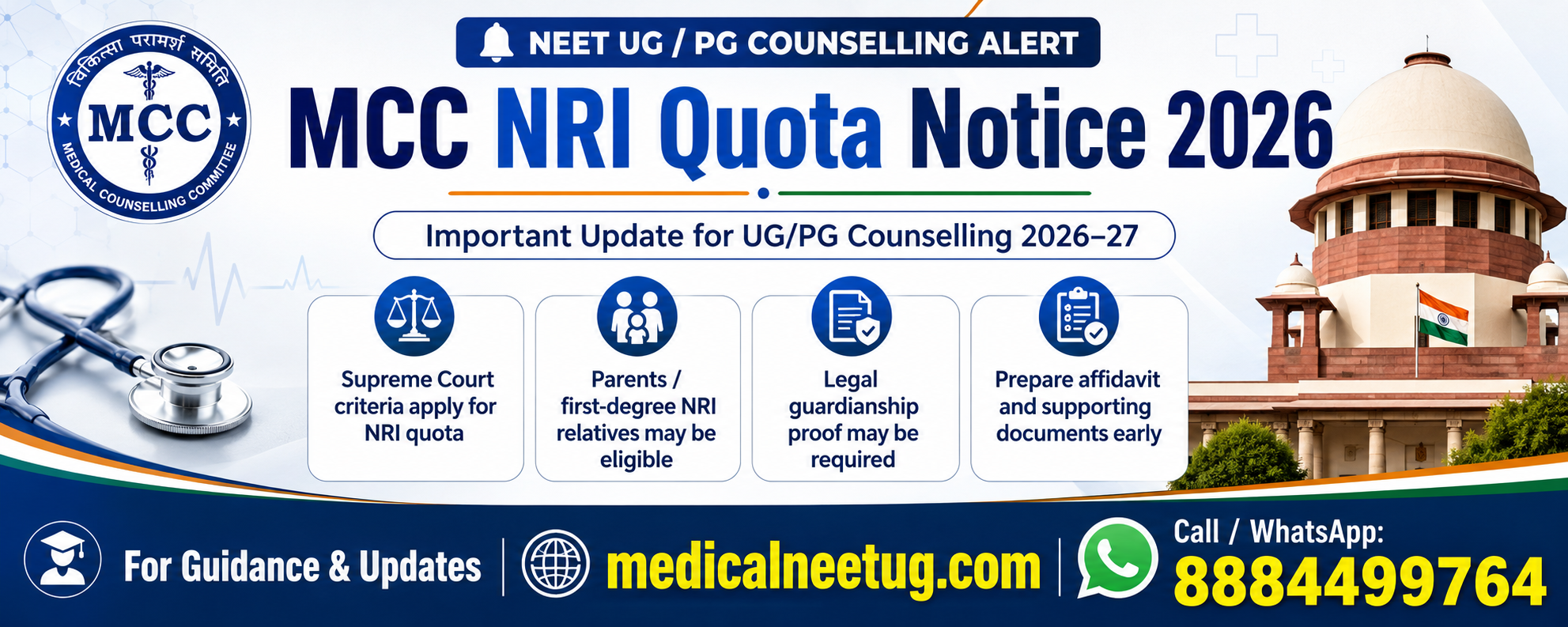
15% NRI Quota Proposed in Government Medical Colleges: Impact on NEET UG Admissions 2026

🏥 What is the Proposal?

The proposal suggests that 15% of seats in government medical colleges be reserved under the NRI quota. Until now, NRI quota was largely limited to private and deemed universities, with only a few additional seats in government colleges under special circumstances.

  • Earlier: NRI quota applied only to additional seats (approx. 450 seats)
  • Now: Proposal aims to extend it to all seats across government colleges
  • Total seats in Karnataka: ~4,200
  • Current All India Quota (AIQ): 15%

💰 Fee Structure Insights

The Directorate has recommended a uniform fee of ₹25 lakh per year for MBBS under the NRI quota.

  • MBBS: Standardized fee proposal
  • PG Courses: Differential fee structure suggested

This indicates a shift towards revenue-based sustainability for government medical institutions.


🎯 Why is This Being Proposed?

1. 📉 Funding Challenges

Government medical colleges are facing financial constraints, with heavy dependence on government grants.

2. 📈 Rising Operational Costs

With increasing infrastructure, faculty, and hospital expenses, existing funding is insufficient.

3. 💡 Revenue Generation Strategy

Introducing an NRI quota is seen as a viable solution to generate additional income without increasing general category fees.


⚖️ Impact on Students

✔️ Positive Effects:

  • More opportunities for NRI candidates
  • Increased funding may improve infrastructure & facilities
  • Potential for better clinical exposure

❌ Concerns:

  • Reduction in merit-based seats
  • Increased commercialization of education
  • Possible disadvantage to general category students

📊 What Happens Next?

  • The proposal is currently under review by the government
  • Finance department has raised cost-benefit concerns
  • Final decision is yet to be announced

🎓 What Should NEET Aspirants Do?

👉 Stay updated with counseling rules
👉 Keep documentation ready if applying under NRI quota
👉 Analyze seat matrix changes carefully
👉 Take expert guidance to avoid costly mistakes


🔍 Expert Insight (ICCC Bharat)

At ICCC Bharat, we believe this move can significantly impact cutoffs, seat distribution, and fee structures. Students must plan strategically and not rely only on rank.


🚀 Conclusion

The proposed 15% NRI quota in government medical colleges marks a major policy shift. While it aims to strengthen institutional finances, it also raises concerns about accessibility and fairness in medical admissions.

The final implementation will play a crucial role in shaping NEET UG 2026 counseling trends.