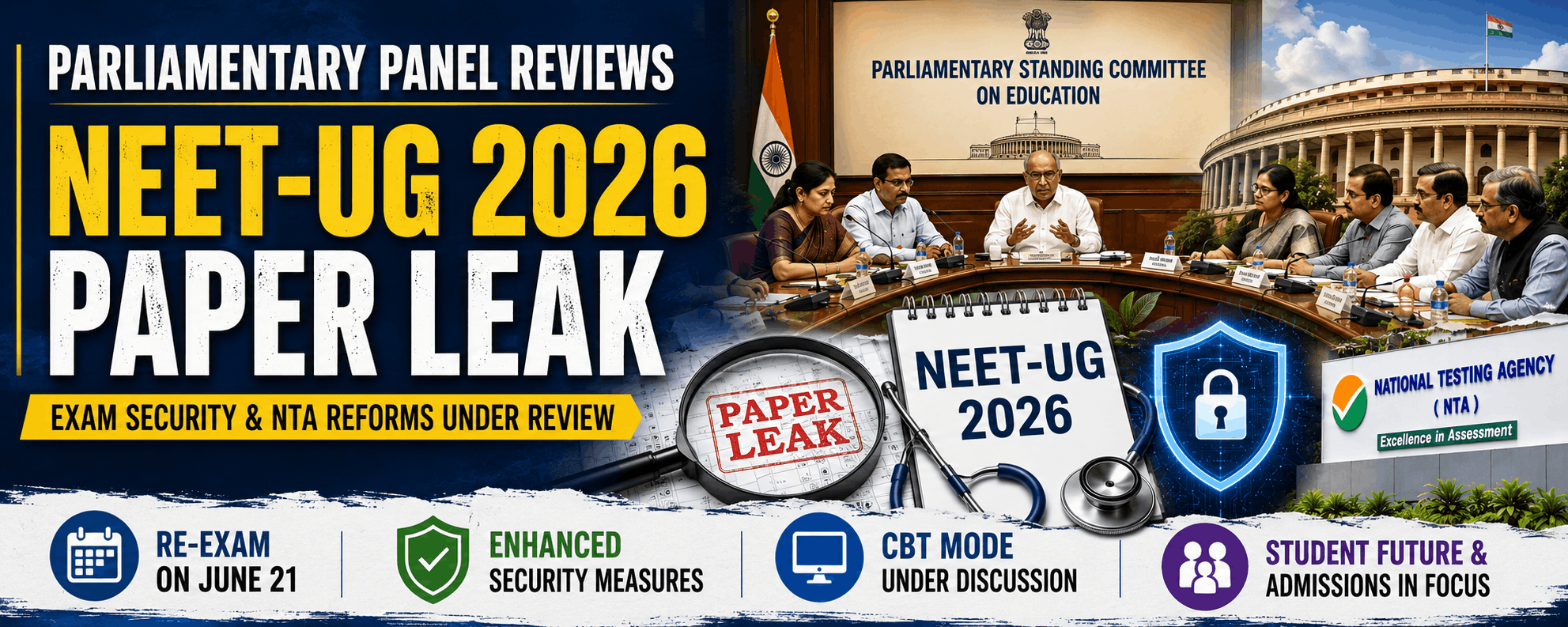
NEET Solver Gang Busted in Nalanda: This Is Not Cheating, This Is Organised Crime

The NEET-UG crisis has taken a more serious turn after Nalanda Police busted an alleged organised “solver gang” ahead of the now-cancelled NEET-UG 2026 examination.

According to reports, three individuals were arrested, including a second-year MBBS student, after police allegedly recovered cash, forged admit cards, and digital evidence from their possession. Rajgir DSP Sunil Kumar Singh said police were on high alert due to the scheduled NEET examination on May 3, 2026, and suspicious vehicles were stopped during checking. Police later found cash bundles, multiple admit cards, financial transaction records, and other material during mobile phone examination.

The arrested persons have been identified in reports as Awadhesh Kumar, Aman Kumar Singh, and Pankaj Kumar. Police said the alleged solvers could not reach the exam centres because of the alert operation, and the investigation is now focused on identifying the mastermind and the wider network behind the racket.

This is not a normal cheating case. This is a direct attack on the dreams of lakhs of students.

A solver gang means proxy candidates are allegedly arranged to write the examination on behalf of real candidates. If such gangs enter a national medical entrance exam, then the damage is not limited to one centre or one district. It destroys trust in the entire system.

NEET decides who will become a doctor. Poor and middle-class parents spend years of savings on coaching, travel, hostel, forms, counselling and preparation. Genuine students study day and night. But if organised gangs, fake admit cards, cash deals and proxy candidates are allowed to operate, then merit becomes meaningless.

This case also raises serious questions for the Government, NTA, exam vendors and security agencies. How are such gangs getting access to candidate details? How are forged admit cards being prepared? Who is connecting solvers with candidates? Who is collecting money? Who is protecting the network?

The answer cannot be only arresting three people. The entire chain must be exposed.

The Nalanda case has also surfaced at a time when NEET-UG 2026 has already been cancelled after paper leak and malpractice concerns. Reports indicate that the investigation has widened across multiple states, with agencies examining larger networks linked to exam malpractice.

Strong Message

NEET is not a playground for criminal gangs.
Medical seats are not for sale.
Students’ dreams are not a business model.
Paper leaks and solver gangs are not mistakes — they are organised attacks on national merit.

What the Government Must Do Now

The Government must order a full investigation into the Nalanda solver gang and its national links.

All accused, middlemen, candidates, financial handlers, digital operators and masterminds must be identified.

NTA must strengthen candidate verification, biometric checks, exam-centre surveillance and admit-card authentication.

Every suspicious transaction linked to solver gangs must be traced.

Counselling and admission must not allow any candidate who used unfair means to enter the medical system.

Hard Closing Line

India cannot produce honest doctors through a dishonest examination system. If solver gangs are not crushed now, the future of genuine NEET aspirants will be sacrificed to money, manipulation and mafia networks.

NEET-UG Crisis: India Must Stop Lobby-Driven Appointments and Fix Exam Governance Now

The cancellation of NEET-UG 2026 has once again exposed a painful truth: India’s medical entrance system is not suffering only because of paper leaks. It is suffering because of weak governance, poor accountability, delayed reforms, and the appointment of people who may not understand the seriousness of national-level medical admissions.

NTA Director General Abhishek Singh has reportedly said that the NEET-UG process was found to be compromised and that the agency had to take a tough decision in the larger interest of students. He also said the system could not allow “scamsters” or miscreants to operate even in an isolated manner.

This statement must not be treated as routine damage control. It is a warning bell.

NEET-UG is not a small school test. It decides the careers of lakhs of students. Many candidates come from poor and middle-class families. Parents sell land, take loans, leave comfort, and sacrifice years of life for one dream: to see their child become a doctor. When a paper leak, manipulation, or sabotage attempt happens, it is not merely an examination irregularity. It is an attack on merit, public trust, national interest, and the future of hardworking students.

The issue is bigger than NTA alone. The entire chain — NTA, MCC, NMC, Health Ministry, counselling authorities, examination vendors, and policy decision-makers — must be reviewed. The country cannot run such a sensitive system through casual decisions, weak supervision, or lobby-based appointments. India needs capable, experienced, honest, and technically sound people in these institutions.

The Supreme Court had already dealt with the NEET-UG 2024 controversy. At that time, the Court refused to cancel the 2024 exam because there was insufficient material to prove a systemic leak, but it also pushed for reforms and expert review of the examination system. Later, the Centre informed the Supreme Court that it had accepted the expert panel’s recommendations, except the immediate shift to online NEET, citing infrastructure challenges for over 26 lakh students.

That means the warning was already there.

A high-level expert report had also suggested stronger monitoring, periodic appraisal, and mission-mode implementation of reforms for NTA. The report recommended a steering committee to monitor NTA’s performance, ensure compliance within timelines, guide bottlenecks, and submit monthly updates to the Ministry of Education.

Then the hard question is this: If reforms were already discussed, recommended, and accepted, why are students still paying the price?

The Government of India must stop treating this as a one-time crisis. It must clean the system from the top. If capable people are removed and weak or lobby-backed people are appointed, the result will be exactly what the country is seeing today — confusion, cancellation, mistrust, litigation, protests, and lakhs of students left in uncertainty.

The same seriousness is needed in counselling also. MCC and state counselling bodies handle the future of students after the exam. Any delay, wrong seat matrix, unclear rule, poor communication, or careless scheduling can destroy a student’s opportunity. Examination and counselling cannot be run by people who do not understand the ground reality of students, states, categories, quotas, seat matrix, and medical admission complexity.

This is no longer only about conducting NEET. This is about protecting India’s medical education system.

Strong Suggestions to the Government

The Government must immediately bring experienced, independent, and technically qualified people into NTA, MCC, NMC, NBEMS, and all related examination and counselling bodies.

All sensitive appointments must be transparent, merit-based, and free from internal lobbying.

Paper movement, exam-centre selection, digital security, vendor management, and question-paper access must be audited by independent agencies.

The Radhakrishnan committee recommendations and Supreme Court-monitored reform concerns must be implemented with public timelines, not kept only on paper.

The Government must create a national-level exam security protocol because paper leaks and organized manipulation are a direct threat to national credibility.

Students should not suffer again because of administrative failure.

Hard Closing Line

India does not need excuses after every paper leak. India needs clean exams, clean counselling, clean appointments, and clean accountability. NEET-UG is the dream of lakhs of students — it cannot be left in the hands of weak systems, lobbying networks, or incapable decision-makers.

NTA DG Admits Sabotage Attempt Behind NEET-UG 2026 Cancellation

The cancellation of NEET-UG 2026 has exposed a serious threat to India’s medical entrance examination system.

NTA Director General Abhishek Singh said that certain individuals are deliberately trying to sabotage the NEET-UG exam process. According to him, the system must be strengthened immediately to identify loopholes and prevent such attacks in future.

He revealed that the issue came to light after a whistleblower message on May 7, claiming that some questions circulated on WhatsApp before the exam matched the actual paper. This triggered further investigation and raised concerns of a possible paper leak.

Singh said the May 3 exam was cancelled only to protect the interests of lakhs of sincere students who had worked hard for the examination. He also admitted that conducting a fresh exam will create huge logistical pressure for NTA, parents, and students.

He further stated that major reforms such as computer-based testing, multi-stage examination, limited attempts, and NTA-owned exam centres require decisions from the Health Ministry and NMC, as NTA only conducts the exam.

The message is clear: NEET-UG needs urgent reform, stronger security, and zero tolerance against exam mafia.

‘ಅವರ ಬ್ಲಫ್‌ ಅನ್ನು ಬಹಿರಂಗಪಡಿಸಲೇಬೇಕು’: NEET-UG ರದ್ದತಿ ಬಳಿಕ NTA ಮುಖ್ಯಸ್ಥರ ಹೇಳಿಕೆ

NEET-UG ಪರೀಕ್ಷೆ ರದ್ದಾದ ನಂತರ ರಾಷ್ಟ್ರೀಯ ಪರೀಕ್ಷಾ ಸಂಸ್ಥೆ (NTA) ಮಹತ್ವದ ಸ್ಪಷ್ಟನೆ ನೀಡಿದೆ. NTA ನಿರ್ದೇಶಕ ಜನರಲ್ ಅಭಿಷೇಕ್ ಸಿಂಗ್ ಅವರು, ಪರೀಕ್ಷಾ ಪ್ರಕ್ರಿಯೆ “ಕಲುಷಿತಗೊಂಡಿದೆ” ಎಂಬ ಮಾಹಿತಿ ದೊರೆತ ಹಿನ್ನೆಲೆಯಲ್ಲಿ ಪರೀಕ್ಷೆಯನ್ನು ರದ್ದುಪಡಿಸುವ ಕಠಿಣ ನಿರ್ಧಾರ ಕೈಗೊಳ್ಳಬೇಕಾಯಿತು ಎಂದು ತಿಳಿಸಿದ್ದಾರೆ.

ಅವರು ಹೇಳುವಂತೆ, ಪರೀಕ್ಷೆಯಲ್ಲಿ ಅಕ್ರಮ ನಡೆದಿದೆ ಎಂಬ ಆರೋಪ ಮಾತ್ರವಲ್ಲ, ಆ ಆರೋಪಕ್ಕೆ ಸಂಬಂಧಿಸಿದಂತೆ ಪ್ರಕ್ರಿಯೆಯ ವಿಶ್ವಾಸಾರ್ಹತೆಗೆ ಧಕ್ಕೆಯಾಗುವಂತಹ ಮಾಹಿತಿ ಕಂಡುಬಂದಿತ್ತು. ಅದಕ್ಕಾಗಿಯೇ ಇಷ್ಟು ದೊಡ್ಡ ನಿರ್ಧಾರ ತೆಗೆದುಕೊಳ್ಳಲಾಯಿತು.

ಅಭಿಷೇಕ್ ಸಿಂಗ್ ಅವರ ಪ್ರಮುಖ ಹೇಳಿಕೆ:

“ಅಕ್ರಮ ಮಾಡುವವರ ಬ್ಲಫ್‌ ಅನ್ನು ನಾವು ಬಹಿರಂಗಪಡಿಸಲೇಬೇಕು. ಇದು NTAಗೆ, ವಿದ್ಯಾರ್ಥಿಗಳಿಗೆ ಮತ್ತು ಪೋಷಕರಿಗೆ ಸುಲಭ ನಿರ್ಧಾರವಲ್ಲ. ಆದರೆ ಒಂದು ವಿಭಾಗದಲ್ಲಿ, ಒಂದು ವಿಷಯದಲ್ಲಿ, ಅಥವಾ ಸೀಮಿತ ಮಟ್ಟದಲ್ಲಾದರೂ ಇಂತಹ ಅಕ್ರಮಗಳಿಗೆ ಅವಕಾಶ ಕೊಟ್ಟರೆ, ಅದು ಸ್ವೀಕಾರಾರ್ಹವಲ್ಲ.”

NTA ಈ ಬಾರಿ ಯಾವುದೇ ಅಕ್ರಮದ ವಿರುದ್ಧ “Zero Tolerance” ನೀತಿಯನ್ನು ಅನುಸರಿಸುವುದಾಗಿ ಸ್ಪಷ್ಟಪಡಿಸಿದೆ. ಪರೀಕ್ಷಾ ವ್ಯವಸ್ಥೆಯ ಮೇಲೆ ವಿದ್ಯಾರ್ಥಿಗಳು ಮತ್ತು ಪೋಷಕರು ಇಟ್ಟಿರುವ ನಂಬಿಕೆಯನ್ನು ಕಾಪಾಡಲು ಮರುಪರೀಕ್ಷೆ ನಡೆಸುವುದು ಅನಿವಾರ್ಯವಾಯಿತು ಎಂದು ಸಂಸ್ಥೆ ತಿಳಿಸಿದೆ.

ಮೇ 7ರಂದು NTAಗೆ alleged malpractice ಬಗ್ಗೆ ಮಾಹಿತಿ ಲಭಿಸಿತ್ತು. ನಂತರ ವಿಷಯವನ್ನು ಕಾನೂನು ಜಾರಿ ಸಂಸ್ಥೆಗಳಿಗೆ ಹಸ್ತಾಂತರಿಸಲಾಯಿತು.

ರಾಜಸ್ಥಾನ Special Operations Group ತನಿಖೆಯ ಪ್ರಕಾರ, 410 ಪ್ರಶ್ನೆಗಳಿದ್ದ “guess paper” ಒಂದು ಪತ್ತೆಯಾಗಿದ್ದು, ಅದರಲ್ಲಿ ಸುಮಾರು 120 ಪ್ರಶ್ನೆಗಳು NEET-UG ಪರೀಕ್ಷೆಯಲ್ಲಿ ಬಂದಿವೆ ಎಂದು ಹೇಳಲಾಗಿದೆ. ಈ ಸಂಬಂಧ ತನಿಖೆ ಮುಂದುವರಿದಿದೆ.

ಈ ಹಿನ್ನೆಲೆಯಲ್ಲಿ NEET-UG ಪರೀಕ್ಷೆಯನ್ನು ರದ್ದುಪಡಿಸಿ, ಮರುಪರೀಕ್ಷೆ ನಡೆಸಲು NTA ನಿರ್ಧರಿಸಿದೆ. ಹೊಸ ಪರೀಕ್ಷಾ ದಿನಾಂಕಗಳನ್ನು ಮುಂದಿನ ದಿನಗಳಲ್ಲಿ ಅಧಿಕೃತವಾಗಿ ಪ್ರಕಟಿಸಲಾಗುತ್ತದೆ.

ವಿದ್ಯಾರ್ಥಿಗಳಿಗೆ ಮುಖ್ಯ ಸೂಚನೆ

ವಿದ್ಯಾರ್ಥಿಗಳು ಮತ್ತು ಪೋಷಕರು ಸಾಮಾಜಿಕ ಮಾಧ್ಯಮದ ವದಂತಿಗಳ ಮೇಲೆ ನಂಬಿಕೆ ಇಡದೆ, NTA ಅಧಿಕೃತ ಪ್ರಕಟಣೆಗಳನ್ನೇ ಅನುಸರಿಸಬೇಕು. ಮರುಪರೀಕ್ಷೆಯ ದಿನಾಂಕ, ಹೊಸ admit card ಹಾಗೂ ಮುಂದಿನ ಸೂಚನೆಗಳು ಅಧಿಕೃತ ವೆಬ್‌ಸೈಟ್‌ಗಳ ಮೂಲಕ ತಿಳಿಸಲಾಗುತ್ತದೆ.

NEET UG 2026 Exam Cancelled After Paper Leak Allegations; Re-Exam Dates to Be Announced

The National Testing Agency has cancelled the NEET UG 2026 examination conducted on May 3, 2026, following allegations of paper leak and examination irregularities. According to the official NEET website, NTA has issued a press release dated 12 May 2026 regarding the decision on the examination.

The decision comes after inputs examined by NTA in coordination with central agencies and findings shared by law enforcement agencies. The matter has also attracted national attention after the Rajasthan Police Special Operations Group began probing suspected irregularities connected to Sikar and other links.

Why Was NEET UG 2026 Cancelled?

As per the notice shared by NTA, the agency stated that the inputs and findings indicated that the examination process could not be allowed to stand. To maintain fairness, transparency, and credibility, NEET UG 2026 held on May 3 has been cancelled, and the exam will be conducted again.

The government has also decided to refer the matter to the Central Bureau of Investigation for a comprehensive inquiry into the allegations.

Rajasthan and Sikar Link Under Probe

The controversy gained momentum after reports emerged from Rajasthan, where the SOG was investigating allegations that a question bank or “guess paper” circulated before the examination had similarities with the actual NEET UG 2026 paper. Sikar has emerged as a major focus in the probe, with multiple individuals reportedly detained for questioning.

Investigators are examining the suspected network, source of circulation, and possible money trail linked to the alleged leak.

What Happens to Students Now?

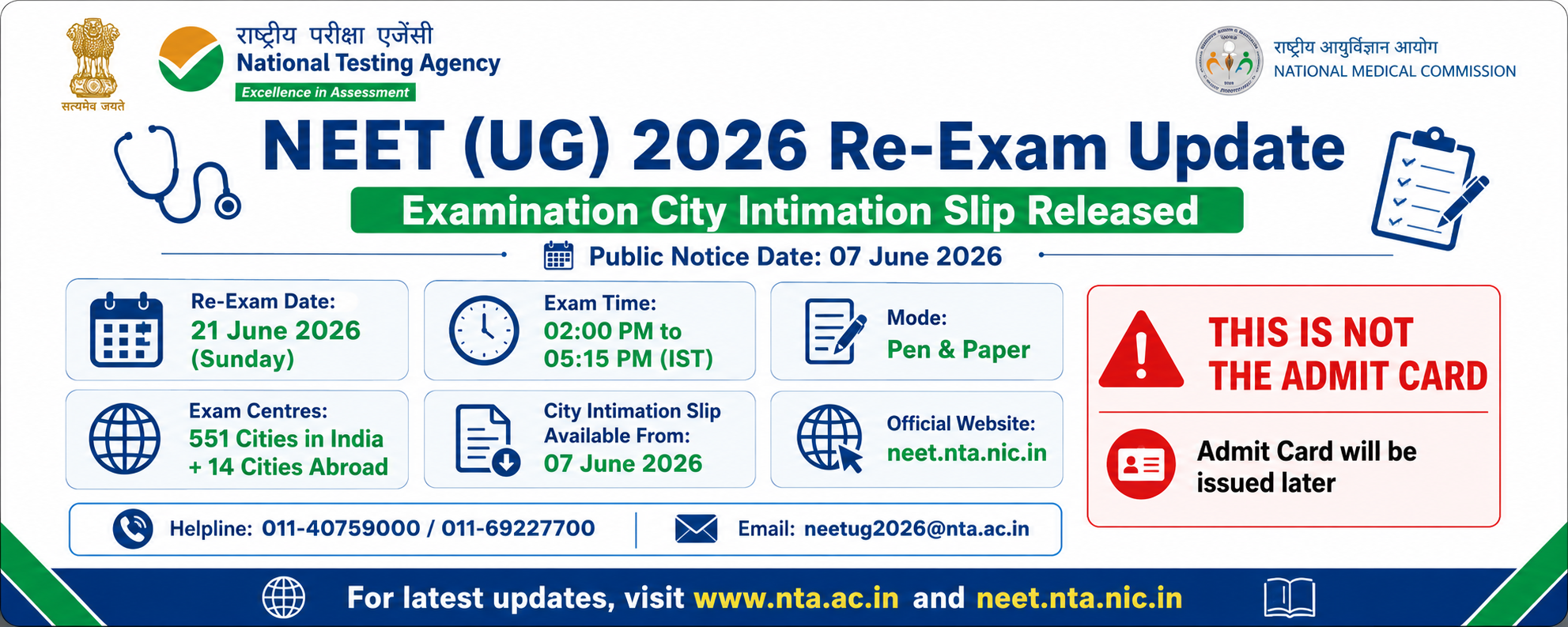
NTA has clarified that the re-conducted examination dates and the fresh admit card schedule will be announced separately through official channels. Candidates should regularly check:

  • NTA official website
  • NEET official website
  • Official public notices only

Students should avoid relying on social media rumors or unverified messages.

Will Students Need Fresh Registration?

According to the notice, the existing registration data, candidature, and examination centre choices from the May 2026 cycle will be carried forward for the re-conducted examination. No fresh registration will be required.

NTA has also stated that no additional examination fee will be charged, and any fees already paid will be carried forward for the re-exam.

A Difficult but Important Decision

The cancellation has created stress and inconvenience for nearly lakhs of aspirants and their families. However, NTA has stated that the decision was taken in the interest of students and to protect trust in the national examination system.

For students, this is an emotionally difficult moment. Many had already started calculating expected scores, ranks, and counseling possibilities. But now the focus must shift back to preparation, revision, and waiting for official re-exam dates.

Advice for NEET UG 2026 Aspirants

Students should not panic. Instead, they should:

  • Continue revision calmly
  • Preserve all NEET documents
  • Wait for official admit card updates
  • Avoid fake news and forwarded messages
  • Follow only NTA and NEET official websites
  • Use this extra time to strengthen weak topics

Conclusion

The cancellation of NEET UG 2026 is a major development in India’s medical entrance system. With the matter now referred for CBI investigation and re-exam dates expected soon, students must remain alert but calm.

The priority now should be clear: wait for official updates, avoid rumors, and restart focused preparation for the re-conducted NEET UG 2026 examination.

15 Detained in Alleged NEET UG 2026 Paper Leak Case; Sikar Emerges as Key Link in Rajasthan SOG Probe

The alleged NEET UG 2026 paper leak case has taken a serious turn after the Rajasthan Police Special Operations Group detained 15 people in connection with the matter. The investigation is now focusing on the suspected network, possible money trail, and the alleged circulation of questions before the examination.

NEET UG 2026 was conducted by the National Testing Agency on May 3 for admission to undergraduate medical courses including MBBS, BDS, AYUSH, and other medical-related programs across India.

However, allegations of irregularities and possible leakage of questions have created concern among students and parents, leading to a wider probe by the Rajasthan SOG.

Jaipur Man Identified as Alleged Mastermind

According to information emerging from the investigation, the SOG has detained a Jaipur-based person identified as Manish, who is being described as an alleged mastermind in the case.

Investigators are now trying to understand whether the alleged leak was limited to a small group or part of a larger organized network.

The role of middlemen, coaching-linked contacts, and financial transactions is also expected to be examined as part of the investigation.

Sikar Emerges as a Key Link

Sikar, one of Rajasthan’s major coaching hubs, has now emerged as an important point in the investigation.

Investigators suspect that a leaked question bank may have originated from Sikar district. The probe is reportedly examining the role of Rakesh Mandawaria, who runs SK Consultancy on Piprali Road in Sikar.

The agency is likely to investigate whether the alleged question bank was circulated among candidates, coaching-linked groups, or private networks before the examination.

Money Trail Under Investigation

The Rajasthan SOG is also probing the possible money trail connected to the alleged leak.

In such cases, investigators generally examine:

  • digital communication records
  • bank transactions
  • cash movement
  • coaching or consultancy links
  • candidate-level access
  • WhatsApp or Telegram circulation
  • role of middlemen

The detention of multiple people suggests that the investigation may expand further depending on digital and financial evidence.

Students and Parents Worried

The allegations have created anxiety among NEET UG aspirants and parents across India.

For lakhs of students who prepared honestly for the examination, such reports raise serious questions about fairness, transparency, and the credibility of the examination system.

Parents are also concerned because NEET is not just an entrance exam; it directly affects the future of medical aspirants and the financial planning of families.

Need for Transparency

The NEET UG examination is one of the most important entrance tests in India. Any allegation of paper leak or unfair advantage must be investigated quickly and transparently.

Students deserve clarity on:

  • whether the alleged leak was real
  • how many candidates were affected
  • whether the paper circulation happened before the exam
  • whether the exam process was compromised
  • what action will be taken against those involved

A transparent investigation is important to maintain trust in the examination system.

Conclusion

The detention of 15 people by Rajasthan SOG has intensified the alleged NEET UG 2026 paper leak investigation. With Sikar emerging as a key link and a Jaipur-based person identified as the alleged mastermind, the case may widen further in the coming days.

For now, students and parents should avoid panic and wait for official findings from the investigating agencies and concerned authorities.

At the same time, strict action against any proven malpractice is necessary to protect the integrity of NEET and the future of genuine medical aspirants.

Karnataka AYUSH Admission 2026: Complete Guide for BAMS, BHMS & BUMS Seats, Fees, Reservation & Top Colleges

Karnataka has emerged as one of the best destinations in India for AYUSH education, especially for courses like BAMS (Ayurveda), BHMS (Homeopathy), BUMS (Unani), and BNYS (Naturopathy & Yogic Sciences). Every year, thousands of NEET UG aspirants across India participate in Karnataka AYUSH counselling because of the state’s reputed colleges, advanced hospital infrastructure, transparent KEA counselling process, and excellent career opportunities.

With the growing demand for holistic healthcare, preventive medicine, Panchakarma, wellness industries, and integrative medicine, AYUSH courses are now becoming one of the strongest alternatives for students aspiring to build a medical career.


Total BAMS & BUMS Seats in Karnataka

The combined total number of BAMS and BUMS seats in Karnataka is approximately:

Total Seats: 7012

Seat Distribution

Seat CategoryApproximate Seats
Management / Other Quota Seats2612
NRI Quota Seats1319
Open Government Seats987
Remaining Govt & Reserved SeatsBalance Seats

These seats are distributed among:

  • Government Colleges
  • Private Aided Colleges
  • Private Unaided Colleges
  • AYUSH Institutions affiliated with RGUHS and other universities

BHMS (Homeopathy) Seats in Karnataka

Homeopathy is becoming increasingly popular among students because of its affordable fee structure, growing clinical opportunities, and increasing acceptance in holistic healthcare systems.

Total BHMS Seats in Karnataka: 1265

Seat Distribution

Seat TypeSeats
Management Quota (40%)466
NRI Quota (20%)233
Non-HK Government Quota277
HK (Hyderabad Karnataka) Quota296

Karnataka AYUSH Seat Sharing Pattern

Private AYUSH colleges in Karnataka generally follow the below seat-sharing structure:

Seat CategoryPercentage
Government Quota25%
Management Quota40%
NRI Quota20%
All India Quota15%

Government quota seats are further distributed based on Karnataka reservation policies.


Karnataka Reservation Statistics for AYUSH Courses

Government quota seats are divided among various reservation categories as per Karnataka Government rules.

Category-Wise Reservation

CategoryReservation Percentage
GM (General Merit)44%
SC (Scheduled Caste)17%
ST (Scheduled Tribe)7%
Category-I4%
Category-IIA15%
Category-IIB4%
Category-IIIA4%
Category-IIIB5%

Horizontal Reservations

Within every reservation category, additional reservations apply:

Reservation TypePercentage
Rural Quota (R)15%
Kannada Medium Quota (K)5%

These reservations apply within:

  • GM
  • SC
  • ST
  • Category-I
  • IIA
  • IIB
  • IIIA
  • IIIB

Students possessing:

  • Rural Certificates
  • Kannada Medium Study Certificates
  • HK Region Eligibility
  • Valid Reservation Documents

can significantly improve their chances of securing Government quota seats.


Fees Structure for AYUSH Courses in Karnataka

COURSECOLLEGE TYPEGovt Quota FeePrivate Quota FeeNRI Quota FeeOther State Quota Fee
BAMSGovernment CollegeRs. 25,000/-Rs. 25,000/-
Private CollegeRs. 60,000/-Rs. 5,00,000/-Rs. 60,000/-
Private Unaided CollegeRs. 75,000/-Rs. 4,00,000/-Rs. 6,00,000/-Rs. 2,50,000/-
BHMSGovernment CollegeRs. 25,000/-Rs. 25,000/-
Private College
Private Unaided CollegeRs. 75,000/-Rs. 2,50,000/-Rs. 2,50,000/-Rs. 2,25,000/-
BUMSGovernment CollegeRs. 25,000/-Rs. 25,000/-
Private College
Private Unaided CollegeRs. 75,000/-Rs. 2,50,000/-Rs. 2,50,000/-Rs. 2,00,000/-
BNYSGovernment CollegeRs. 25,000/-
Private College
Private Unaided CollegeRs. 60,000/-Rs. 1,83,750/-Rs. 1,83,750/-Rs. 7,00,000/-

Top Ayurveda Colleges in Karnataka

Karnataka is home to some of India’s best Ayurveda colleges with outstanding infrastructure, clinical exposure, experienced faculty, and strong hospital support.


1. SDM Ayurveda Institutions

SDM is considered one of the most prestigious Ayurveda education groups in India.

SDM Colleges Include:

  • SDM College of Ayurveda, Hassan
  • SDM Ayurveda College, Udupi
  • SDM Institute of Ayurveda & Hospital, Bengaluru

Key Highlights:

✔ Excellent patient flow
✔ Advanced Ayurveda hospitals
✔ Research-oriented education
✔ Strong clinical exposure
✔ Highly reputed faculty


2. Alva’s Ayurveda Medical College

Known for:

  • Strong academics
  • Integrated campus facilities
  • Clinical exposure
  • Cultural and extracurricular excellence

3. Sri Kalabyraveshwara Swamy Ayurvedic Medical College

A reputed Ayurveda institution known for:

  • Quality education
  • Good hospital attachment
  • Experienced faculty
  • Traditional Ayurveda learning

4. Adichunchanagiri Ayurveda Medical College

Popular for:

  • Large infrastructure
  • Modern facilities
  • Clinical training
  • Strong management support

5. Sri Sri College of Ayurvedic Sciences and Research

Recognized for:

  • International exposure
  • Holistic healthcare approach
  • Research-based education
  • Modern campus infrastructure

6. N.K. Jabshetty Ayurvedic Medical College

Known for:

  • Traditional Ayurveda education
  • Strong practical training
  • Experienced professors
  • Clinical opportunities

7. JSS Ayurveda Medical College

One of the most respected institutions in healthcare education.

Highlights:

✔ Advanced hospital facilities
✔ Research opportunities
✔ Strong academics
✔ Excellent patient exposure


Top BHMS (Homeopathy) Colleges in Karnataka

Karnataka is also one of the leading states for BHMS (Bachelor of Homeopathic Medicine and Surgery) education in India. The state has several reputed Homeopathy colleges known for excellent academics, hospital exposure, experienced faculty, and clinical training.

These colleges attract students from across India through KEA counselling because of their strong infrastructure and growing opportunities in the field of Homeopathy.


1. Father Muller Homoeopathic Medical College & Hospital

Father Muller is considered one of the most reputed Homeopathy institutions in India.

Highlights:

✔ Excellent hospital infrastructure
✔ Strong clinical exposure
✔ Highly experienced faculty
✔ Research-oriented academics
✔ Large patient inflow for practical learning

The institution is well known for disciplined academics and quality healthcare services.


2. Alva’s Homoeopathic Medical College

Alva’s has gained popularity because of its:

  • Integrated educational campus
  • Strong academic environment
  • Clinical exposure
  • Student support system
  • Cultural and extracurricular opportunities

The college provides good opportunities for practical learning and overall student development.


3. Bhagavan Buddha Homoeopathic Medical College

Bhagavan Buddha Homoeopathic Medical College is one of the recognized BHMS institutions in Karnataka.

Known For:

✔ Affordable education
✔ Good clinical training
✔ Practical-oriented teaching
✔ Homeopathy hospital attachment
✔ Student-friendly environment

The college is steadily gaining recognition among BHMS aspirants.


Why Karnataka is Preferred for AYUSH Courses

Students across India choose Karnataka because of:

✔ Large number of AYUSH colleges
✔ Better infrastructure
✔ Strong clinical exposure
✔ Transparent KEA counselling
✔ Government + Management + NRI quota availability
✔ Excellent faculty and hospitals
✔ Better career opportunities after graduation


Career Opportunities After BAMS, BHMS & BUMS

The AYUSH industry is growing rapidly due to increasing awareness about preventive and holistic healthcare.

Students can build careers in:

  • Clinical Practice
  • Ayurveda Hospitals
  • Panchakarma Centres
  • Wellness & Spa Industry
  • Homeopathy Clinics
  • Medical Tourism
  • Government Healthcare Services
  • Research & Development
  • Pharmaceutical Industry
  • Teaching & Academics
  • Hospital Administration
  • Integrative Medicine Centres

Importance of Understanding Seat Matrix & Reservation

Students should carefully analyze:

  • Reservation eligibility
  • HK quota eligibility
  • Rural quota eligibility
  • Kannada medium quota
  • Management vs Government seat costs
  • Previous year cutoffs

because Karnataka AYUSH counselling is highly structured and category-based.

Proper guidance can significantly improve the chances of securing seats in top colleges.


AYUSH Cutoff Analyser 2025-26

Students can now check AYUSH cutoffs for different states through the AYUSH Cutoff Analyser 2025-26.

Check cutoff details for:

  • Karnataka
  • Bihar
  • Madhya Pradesh
  • West Bengal
  • AACCC
  • Other state counselling cutoffs

Use the cutoff analyser to understand previous year trends, category-wise cutoffs, college-wise possibilities, and admission chances before choice filling.

👉 Check AYUSH Cutoff Analyser:
https://homeopathyadmission.com/analysers/cutoff

Students can also download free AYUSH eBooks for counselling guidance, college details, seat matrix, fees, and cutoff information.

👉 Download Free AYUSH eBooks:
https://homeopathyadmission.com/ebooks

KARNATAKA CUTOFF 2025-26

CategoryAIRCategoryAIR
1G3794753BK284395
1K3967723BR310876
1R331116GM315257
2AG370925GMK351197
2AK405766GMR350558
2AR394514SCG454329
2BG343589SCK505394
2BK367334SCR480112
2BR431513STG483940
3AG411479STK452028
3AK371474STR453537
3AR384429OPN645906
3BG331817OTH1318197

Conclusion

Karnataka has become one of the strongest destinations in India for AYUSH education. With over 7000+ BAMS & BUMS seats and more than 1200+ BHMS seats, students have excellent opportunities through Government, Management, NRI, and reservation quota systems.

Top institutions like SDM, JSS, Alva’s, Father Muller, Sri Sri, Adichunchanagiri, N.K. Jabshetty, Bhagavan Buddha, and Sri Kalabyraveshwara Swamy Ayurvedic Medical College offer excellent education, hospital exposure, and future career opportunities.

As Ayurveda, Homeopathy, and holistic medicine continue to grow globally, AYUSH courses are creating meaningful and future-ready healthcare careers for NEET aspirants across India.

B.Sc. Nursing Admission in Telangana 2026 – Complete Guide for Students

The demand for Nursing courses in Telangana is increasing rapidly year by year. Students from Telangana as well as many other states are now choosing Telangana for quality nursing education, better clinical exposure, affordable fee structures, and excellent hospital attachments.

For the academic year 2026, admissions to B.Sc. Nursing colleges in Telangana will mainly be conducted through Kaloji Narayana Rao University of Health Sciences (KNRUHS).


Admission Authority for B.Sc. Nursing in Telangana

Admissions are conducted by:

  • Kaloji Narayana Rao University of Health Sciences (KNRUHS)

The university manages:

  • Government Nursing College admissions
  • Competent Authority quota counseling in private colleges
  • Web options and seat allotment process

Entrance Exam Required

Students seeking admission under Government or Convener quota must qualify:

  • TG-EAPCET 2026 (Earlier known as EAMCET)

The TG-EAPCET rank is mandatory for:

  • Government colleges
  • 60% Convener quota seats in private nursing colleges

However, many private institutions also provide:

  • Management quota admissions
  • Direct admission opportunities as per university and Telangana Government rules

Eligibility Criteria for B.Sc. Nursing 2026

Age Limit

  • Minimum Age: 17 Years
  • Maximum Age: 35 Years

Educational Qualification

Students must complete:

  • 10+2 / Intermediate
    with:
  • Physics
  • Chemistry
  • Biology
  • English

Minimum Marks Required

  • General Category: 45%–50%
  • Reserved Categories: As per KNRUHS norms

Telangana Nursing Admission Process 2026

Step 1 – Appear for TG-EAPCET 2026

Students must qualify the entrance examination.

Step 2 – Online Registration

Candidates should register through the official KNRUHS portal after notification release.

Step 3 – Document Verification

Required certificates and documents are verified online/offline.

Step 4 – Web Counseling

Students exercise web options for preferred colleges.

Step 5 – Seat Allotment

Seats are allotted based on:

  • TG-EAPCET Rank
  • Category
  • Reservation
  • College preference
  • Availability of seats

Application Fee

Approximate counseling registration fee:

CategoryFee
OC / BC₹2,500
SC / ST₹2,000

Documents Required

Students generally require:

  • TG-EAPCET Hall Ticket
  • TG-EAPCET Rank Card
  • 10th Marks Memo
  • Intermediate Marks Memo
  • Transfer Certificate (TC)
  • Study Certificates (9th–12th)
  • Caste Certificate (if applicable)
  • EWS Certificate (if applicable)
  • Aadhaar Card
  • Passport-size photographs

Telangana Nursing Seat Distribution Structure

Government Nursing Colleges

  • 100% seats are filled by KNRUHS under Competent Authority quota.

Private Nursing Colleges

1. Competent Authority Quota

  • 60% seats are filled through KNRUHS counseling.

2. Management Quota

  • 40% seats are filled by private college managements as per Telangana Government and university norms.

Nursing Demand Increasing in Telangana

Over the past few years, Telangana has become one of the preferred destinations for nursing education in South India.

Reasons for Increasing Demand

✔ Better hospital exposure
✔ Affordable fee structure compared to other states
✔ Good infrastructure
✔ Clinical training opportunities
✔ Increasing international demand for nurses
✔ Better placements in hospitals and abroad


Fee Structure for Management Seats

In Telangana, management quota nursing seats are comparatively affordable when compared to many other states.

Approximate Package Range

College TypeApproximate Package
Good Nursing Colleges₹5–6 Lakhs
Top Premium Colleges₹8–10 Lakhs

This affordability is one of the major reasons why demand is increasing every year.


Top Nursing Colleges in Telangana

Some reputed nursing colleges in Telangana include:

  • Apollo College of Nursing
  • Kamineni College of Nursing
  • Mamata College of Nursing
  • Prathima College of Nursing
  • RVM Nursing College
  • Yashoda Laxmi College of Nursing
  • Bhaskar College of Nursing
  • Durgabai Deshmukh College of Nursing
  • Eshwaribai Memorial College of Nursing
  • St. Ann’s College of Nursing

Number of Nursing Colleges in Telangana

Currently Telangana has approximately:

  • 37 Government Nursing Colleges
  • 95 Private Nursing Colleges

This provides students with a wide range of options based on:

  • Budget
  • Location
  • Infrastructure
  • Clinical exposure
  • Hostel facilities
  • Hospital tie-ups

Why Students Prefer Telangana for Nursing?

Clinical Exposure

Many colleges are attached to multispecialty hospitals with excellent patient flow.

Affordable Packages

Management quota fees are lower compared to many neighboring states.

Better Career Opportunities

Students can pursue:

  • Higher education
  • Government jobs
  • International placements
  • Hospital administration
  • ICU specialization
  • Overseas nursing careers

Growing Healthcare Sector

The healthcare infrastructure in Telangana is expanding rapidly, creating better opportunities for trained nurses.


Final Words

B.Sc. Nursing is becoming one of the most promising healthcare careers in India. Telangana is emerging as a major hub for nursing education because of:

  • Affordable fee structures
  • Good colleges
  • Clinical exposure
  • Better placement opportunities
  • Increasing healthcare demand

Students planning for Nursing Admission 2026 should prepare early for TG-EAPCET counseling and shortlist colleges carefully based on:

  • Infrastructure
  • Hospital attachment
  • Clinical training
  • Fees
  • Recognition
  • Placement support

Choosing the right college today can build a successful healthcare career tomorrow.

Is BDS a Good Career Choice After NEET UG? A Practical Guide for Students and Parents

Every year after NEET UG, many students and parents ask the same question:

“Is BDS a good choice?”
“Is BDS a bad career?”
“Should I take BDS if I do not get MBBS?”
“What will happen after 5 years?”

The honest answer is this:

BDS is not a bad choice. But BDS is a good choice only for the right student, with the right mindset, right college, and right career planning.

BDS should not be taken only because MBBS was not available. Dentistry is a specialized, practical, skill-based healthcare profession. If a student has interest in patient care, hand skills, cosmetic work, clinical practice, and independent career growth, BDS can become a very strong career option.

But if a student is taking BDS only for the “Doctor” title, without interest in dentistry, then it may become difficult in the future.


BDS vs MBBS: What Is the Main Difference?

MBBS is broader. It deals with the entire human body, general medicine, surgery, emergency care, diagnostics, hospital duties, and later specialization through MD/MS.

BDS is more focused. It deals with dental health, oral diseases, oral surgery, prosthodontics, orthodontics, cosmetic dentistry, implants, root canal treatment, and smile correction.

MBBS gives broader medical career options.
BDS gives faster independence if the student develops strong clinical skills.

BDS vs MBBS: Clear Comparison

FactorMBBSBDS
Duration5.5 years including internship5 years including internship
FieldWhole body medicine and surgeryDental and oral healthcare
Career NatureHospital, specialization, emergency careClinic-based, procedure-based, skill-oriented
DifficultyVast syllabus and long trainingPrecision-based clinical work
PG PathMD/MS, highly competitiveMDS, competitive but comparatively focused
Starting IncomeUsually better than BDS initiallyLower in starting years
Private PracticeOften needs specialization and investmentCan begin earlier after gaining experience
LifestyleLong hours, emergencies, night dutiesMore predictable working hours
Growth StyleDegree + specialization drivenSkill + patient base + clinic reputation driven
Best ForStudents wanting broad medical authorityStudents wanting independence and hands-on practice

Is BDS Tough?

BDS is not as vast as MBBS, but it is not easy. It requires a different type of strength.

A BDS student must develop:

  • Steady hand skills
  • Precision
  • Patience
  • Clinical confidence
  • Good communication
  • Eye-hand coordination
  • Ability to manage patient pain and fear
  • Artistic sense for smile design and cosmetic work

In MBBS, knowledge load is very broad. In BDS, practical execution matters a lot. A dentist’s work is visible immediately to the patient. That is why skill quality becomes very important.


Future Scope of BDS

The future of dentistry is changing fast. Earlier, many people visited dentists only for pain, extraction, or emergency dental problems. Today, dental care has moved toward appearance, comfort, prevention, and lifestyle.

Major growth areas include:

  • Cosmetic dentistry
  • Smile designing
  • Teeth whitening
  • Veneers
  • Dental implants
  • Aligners
  • Braces
  • Root canal treatment
  • Pediatric dentistry
  • Laser dentistry
  • Digital dentistry
  • Geriatric dental care
  • Preventive oral health

With increasing awareness, urban and semi-urban families are spending more on dental care. Tier-2 and tier-3 cities also offer good opportunities because competition is comparatively lower than metro cities.


Earning Potential After BDS

Students must understand this clearly: BDS usually does not give very high income immediately after graduation.

A fresh graduate may start as an associate dentist with a modest salary. Initial income may depend on the city, clinic, patient flow, and the student’s clinical ability.

However, income can improve significantly with:

  • Experience
  • Specialized training
  • Better patient handling
  • Clinic ownership
  • Cosmetic procedures
  • Implant practice
  • Good location
  • Strong local reputation
  • Digital marketing and patient referrals

A successful dental clinic can generate strong income over time. But it requires patience, investment, ethics, and consistent service quality.


Career Options After BDS

BDS graduates have multiple career paths.

1. Associate Dentist

A fresh graduate can work under a senior dentist to improve clinical confidence and learn real patient management.

2. Own Dental Clinic

After gaining experience, many dentists start their own clinic. This is one of the biggest advantages of BDS because independence can come earlier compared to many other medical fields.

3. MDS Specialization

Students who want advanced expertise can pursue MDS in branches like Orthodontics, Endodontics, Oral Surgery, Prosthodontics, Periodontics, Pedodontics, and Public Health Dentistry.

4. Corporate Dental Chains

Dental chains and multi-specialty clinics are growing in cities. They offer structured work opportunities for young dentists.

5. Government Jobs

Dental surgeon posts are available in government departments, railways, defense, public health services, and state recruitment, though vacancies may be limited.

6. Army Dental Corps

This is a respected option for eligible dental graduates.

7. Academics and Teaching

After MDS, students can enter teaching, research, and dental college faculty roles.

8. Abroad Pathways

BDS graduates can explore opportunities abroad, but countries like the USA, UK, Australia, Canada, and Gulf nations require licensing exams and additional procedures.


Is MDS Necessary After BDS?

MDS is useful, but not compulsory for everyone.

You should consider MDS if you want:

  • Specialist identity
  • Academic career
  • Higher clinical expertise
  • Better hospital or institutional opportunities
  • Stronger brand value in private practice

But students can also grow without MDS if they build strong skills in:

  • Implants
  • Endodontics
  • Cosmetic dentistry
  • Aligners
  • Full-mouth rehabilitation
  • Pediatric dentistry
  • Digital dentistry

The key is not only the degree. The key is skill, practice, and patient trust.


Cost of MDS

Private MDS can be expensive, especially in clinical branches. Government MDS seats are affordable but highly competitive.

Before choosing BDS, students and parents should discuss:

  • Whether MDS is financially possible later
  • Whether the student wants private practice
  • Whether the family can support clinic setup
  • Whether the student is ready for skill-based growth
  • Whether the chosen BDS college has good clinical exposure

This planning is very important.


Advantages of BDS

BDS can be a strong choice because it offers:

  • Professional doctor identity
  • Earlier independent practice option
  • Better work-life balance
  • Fewer emergency duties
  • Scope for entrepreneurship
  • Growing cosmetic dentistry demand
  • Clinic-based income potential
  • Opportunity to build a personal brand
  • Good scope in semi-urban and tier-2 cities

For students who are practical, patient, business-minded, and interested in dental work, BDS can become a rewarding career.


Challenges of BDS

Students should also know the challenges before taking admission.

  • Starting salary may be low
  • Metro cities are competitive
  • Clinic setup requires investment
  • Patient flow takes time
  • Poor college selection can reduce confidence
  • MDS clinical branches can be costly
  • Abroad licensing is not easy
  • Success depends heavily on skill and reputation

BDS is not a shortcut. It is a career that grows slowly but strongly when planned properly.


Most Important Factor: College Selection

For BDS, college selection is extremely important. A good dental college should have strong clinical exposure.

Before taking admission, check:

  • Patient flow in dental OPD
  • Number of dental chairs
  • Quality of clinical departments
  • Internship exposure
  • Faculty strength
  • Labs and equipment
  • Hostel and total fee structure
  • Location of college
  • Alumni feedback
  • MDS departments
  • Practical training quality

A student who studies in a college with poor clinical exposure may complete the degree but lack confidence in real practice.


Who Should Choose BDS?

BDS is suitable for students who:

  • Have interest in dentistry
  • Like practical clinical work
  • Have patience and hand skills
  • Want a stable lifestyle
  • Are ready to build a clinic-based career
  • Can communicate well with patients
  • Are willing to upgrade skills regularly
  • Want faster independence than MBBS

Who Should Avoid BDS?

BDS may not be suitable for students who:

  • Want only MBBS and are not interested in dentistry
  • Expect very high income immediately
  • Dislike hand-based procedures
  • Are not ready for patient interaction
  • Do not want to invest time in skill building
  • Are choosing college only based on low fees
  • Have no plan after graduation

Final Opinion

BDS is not a bad course. It is a specialized healthcare profession with strong potential for students who understand its nature.

MBBS gives broader medical scope, higher social prestige, and more government/hospital-based opportunities. But it also involves longer training, higher stress, tough PG competition, and delayed settlement.

BDS gives narrower scope but faster independence, better lifestyle, and good earning potential through private practice and advanced dental skills.

The real question is not:

“Is BDS good or bad?”

The real question is:

“Is BDS suitable for my interest, personality, skills, patience, and financial planning?”

If the answer is yes, BDS can give respect, income, independence, and a stable future.

For NEET UG students, the best decision should be taken only after proper counseling, college comparison, fee analysis, and understanding long-term career goals.

Choosing the Right Nursing College in Karnataka: Why Your Career Matters More Than Just Fees

In recent years, nursing has become one of the most demanded and respected healthcare professions in India and abroad. With growing opportunities in hospitals, research centers, public health sectors, and international healthcare systems, thousands of students are now choosing B.Sc. Nursing as a long-term career option.

However, one of the biggest concerns for students and parents today is understanding the fee structure and choosing the right nursing college in Karnataka.

Many students ask:

  • Which nursing college is best in Karnataka?
  • What is the average package for B.Sc. Nursing?
  • Is it worth investing ₹6–15 lakhs in nursing education?
  • How do we identify a good nursing institution?

These are very important questions because nursing is not just about obtaining a degree — it is about building a strong professional future.

Nursing is No Longer Just a Basic Degree

Today’s nursing profession is highly competitive and continuously evolving. Many students who complete:

  • B.Sc. Nursing
  • Post Basic B.Sc. Nursing

often continue with:

  • M.Sc. Nursing
  • Specialized Clinical Training
  • International Certifications
  • Advanced Healthcare Courses

This means students need a strong academic foundation from the beginning itself. The quality of the nursing college directly affects:

  • Clinical knowledge
  • Practical skills
  • Communication abilities
  • Career opportunities
  • International placements
  • Confidence in patient care

Choosing the wrong institution can negatively affect the student’s entire academic and professional journey.

Karnataka – One of India’s Leading States for Nursing Education

Karnataka has become one of the most preferred destinations for nursing education because the state has a long history of quality healthcare education and hospital-based training systems.

Most nursing colleges in Karnataka are attached to:

  • Multi-specialty hospitals
  • Medical colleges
  • Teaching hospitals
  • Healthcare universities

This gives students strong exposure to:

  • Real patient care
  • ICU and critical care training
  • Advanced nursing labs
  • Modern simulation centers
  • Internship opportunities
  • Practical hospital management systems

Many nursing colleges in Karnataka have been functioning for decades and maintain good academic records, experienced faculty, and structured clinical training.

Not Every Nursing College is the Same

One of the biggest mistakes students and parents make is choosing colleges only based on low fees or marketing promises.

In reality, Karnataka has:

  • Excellent nursing colleges
  • Average nursing colleges
  • Poorly managed institutions with limited infrastructure

Some institutions may lack:

  • Proper hospital attachments
  • Qualified faculty
  • Clinical exposure
  • Hostel facilities
  • Laboratory infrastructure
  • Updated curriculum and training methods

Unfortunately, many students realize these issues only after taking admission.

That is why students must carefully verify:
✅ Infrastructure quality
✅ Hospital attachments
✅ Clinical exposure
✅ Faculty experience
✅ Hostel & safety facilities
✅ Internship opportunities
✅ Academic performance
✅ Placement support
✅ Recognition & approvals

Understanding Nursing Fee Structures in Karnataka

The fee structure for nursing colleges in Karnataka usually depends on:

  • College reputation
  • Hospital exposure
  • Infrastructure
  • University type
  • Hostel facilities
  • Location
  • Placement opportunities

Approximate Fee Ranges:

  • Average colleges: ₹6–8 lakhs package
  • Good colleges: ₹10–12 lakhs package
  • Premium institutions: ₹12–15 lakhs or more

Generally, these packages include:

  • Tuition fees
  • Hostel accommodation
  • Food & lodging
  • Examination fees
  • Clinical training expenses

Parents should understand that investing in a quality institution is more important than simply choosing the lowest fee option.

Why Students Prefer Karnataka for Nursing

Karnataka attracts students from:

  • Kerala
  • Tamil Nadu
  • Andhra Pradesh
  • Telangana
  • North Indian states
  • International communities

because the state offers:

  • Better hospital exposure
  • English-medium education
  • Strong academic systems
  • Better placement opportunities
  • International career pathways
  • Multi-cultural campus environments

Today, almost every major medical college in Karnataka has an attached nursing institution, especially under:

  • Deemed Universities
  • Private Universities
  • Medical College Campuses

This creates strong career opportunities for students both in India and abroad.

Career Opportunities After Nursing

Nursing is one of the few professions where demand continues to increase globally.

After completing B.Sc. Nursing or M.Sc. Nursing, students can work in:

  • Corporate hospitals
  • Government healthcare sectors
  • International hospitals
  • Research organizations
  • ICU & emergency care
  • Public health sectors
  • Teaching institutions
  • Telemedicine & digital healthcare

Countries such as:

  • USA
  • UK
  • Canada
  • Australia
  • Germany
  • Gulf countries

continue to recruit Indian nurses due to their clinical expertise and work ethic.

Final Advice to Students & Parents

Choosing a nursing college is not just about getting admission — it is about securing your future career.

Whether the investment is ₹6 lakhs or ₹15 lakhs, the most important thing is:

  • Quality education
  • Clinical exposure
  • Professional development
  • Long-term career growth

A good nursing college can transform a student’s future, while the wrong choice can affect confidence, skills, and career opportunities.

So before taking admission:
✔ Visit the college
✔ Verify hospital attachments
✔ Check infrastructure & labs
✔ Speak with existing students
✔ Understand placement opportunities
✔ Analyze the overall academic environment

Because ultimately, your career matters more than just the fee structure.