NEET (UG) 2025: Key Updates and Highlights

The National Testing Agency (NTA) has released an official public notice dated 16th January 2025, outlining the conduct of the National Eligibility cum Entrance Test (NEET-UG) for the year 2025. The examination continues to be a cornerstone in the process of admitting students to undergraduate medical and allied courses across India.

Key Highlights of the Notification:

  1. Uniform NEET-UG for All Medical Disciplines
    As per Section 14 of the National Medical Commission (NMC) Act, 2019, NEET-UG serves as a common and standardized entrance test for admission to undergraduate medical education in all institutions across India. Additionally, under the National Commission for Indian System of Medicine Act, 2020, NEET-UG is extended to disciplines such as:
    • BAMS (Bachelor of Ayurvedic Medicine and Surgery)
    • BUMS (Bachelor of Unani Medicine and Surgery)
    • BSMS (Bachelor of Siddha Medicine and Surgery)
    Furthermore, NEET-UG will also govern admissions to BHMS (Bachelor of Homeopathic Medicine and Surgery) under the National Commission for Homeopathy.
  2. Inclusion of B.Sc. Nursing Under NEET-UG
    Military Nursing Service (MNS) aspirants seeking admission to B.Sc. Nursing courses offered at Armed Forces Medical Service Hospitals will now require NEET-UG scores. These scores will serve as a basis for shortlisting candidates for the four-year nursing program.
  3. Exam Mode and Format
    The NEET-UG 2025 examination will be conducted in pen-and-paper mode (OMR-based) on a single day and single shift, ensuring consistency and fairness in the evaluation process.

Why NEET-UG is Crucial?

NEET-UG stands as a hallmark of transparency and merit-based selection in medical admissions. Its application to various allied fields ensures uniformity and creates a level playing field for aspirants nationwide. By streamlining the admission process under one examination, NEET-UG eliminates the complexity of multiple entrance tests.

Guidance for Aspirants:

Candidates aiming for NEET-UG 2025 are advised to:

This notice underscores NTA’s commitment to providing an efficient and comprehensive platform for medical and allied education admissions, aligning with the broader vision of the National Medical Commission.

Conclusion:

The NEET-UG 2025 notification highlights significant steps towards streamlining admissions across diverse medical and allied courses. It ensures a robust, fair, and unified platform for students aspiring to contribute to India’s healthcare ecosystem.

For regular updates and clarity on the admission process, aspirants must actively monitor the official communications and prepare diligently for the exam.

Revamping NEETUG: The Expert Panel that Could Reshape India’s Examination System

In a groundbreaking move poised to transform India’s most competitive entrance exam, the Central Government informed the Supreme Court on January 2 of its decision to adopt the recommendations of a seven-member expert panel. Led by former ISRO Chief K. Radhakrishnan, the committee undertook an extensive review of the National Testing Agency’s (NTA) operations following a challenging year for the National Eligibility cum Entrance Test – Undergraduate (NEET-UG).

A panel member shared insights into the exhaustive deliberations and the forward-looking recommendations aimed at addressing systemic weaknesses while ensuring student welfare.

Inside the Panel’s Deliberations

The expert panel’s approach was holistic, involving collaboration with intelligence agencies, state education departments, and other stakeholders to map vulnerabilities in the current system. According to Prof. Rao, the goal was not only to address past issues but also to develop a sustainable and transparent framework for the future.

“We studied every facet of the NTA’s operations, from structural frameworks to exam logistics and vendor management,” he explained. Over 30 to 35 full-day sittings, the committee consulted with students, parents, teachers, state bureaucrats, and educationists, gathering feedback from around 30,000 individuals through direct interactions and online platforms.

Learning from Global Best Practices

A standout recommendation from the panel was fostering international collaboration. Prof. Rao emphasized the need to adopt and adapt successful examination models from countries like the USA and China, which operate robust systems like the Gaokao, China’s national college entrance exam.

“India has the potential to not just learn from global practices but also to become a leader in conducting standardized tests for developing nations,” he remarked, highlighting India’s cost-effective solutions and resource pool.

Addressing Mental Health: A Game-Changing Proposal

Recognizing the immense pressure NEET imposes on students, the panel proposed significant reforms to make exams less stressful. Key recommendations include:

  1. Multiple Exam Sessions: Reducing the stakes of a single attempt by allowing students multiple opportunities annually.
  2. Video Tutorials: Familiarizing students with the examination format to reduce anxiety.
  3. Standardized Exam Centers: Ensuring uniformity across centers, so students know exactly what to expect.

“The process of the examination itself should not be stressful,” Prof. Rao asserted.

Checks and Balances: Ensuring Accountability

To ensure the recommendations are implemented effectively, the committee emphasized the need for robust accountability measures. Suggestions included:

  • Strengthening the NTA’s governing board.
  • Establishing clear roles and Standard Operating Procedures (SOPs) for all stakeholders.
  • Implementing a monitoring system to track adherence to the reforms.

The panel also incorporated specific timelines into their recommendations, ensuring progress could be measured and delays minimized.


A New Chapter for NEET

Reflecting on the controversies that marred NEET-UG 2024, Prof. Rao expressed optimism. “If implemented sincerely, the recommendations will address security breaches, logistical lapses, and other issues that plagued the system,” he said.

The committee’s vision extends beyond addressing immediate problems. By upholding the principles of fairness, transparency, and student welfare, the reforms aim to set a benchmark for high-stakes examinations globally.

As India embarks on this transformative journey, the future of NEET-UG and the aspirations of millions of students appear to be on a path toward clarity, integrity, and inclusivity.

NTA To Focus Exclusively on Higher Education Entrance Exams from 2025

New Delhi: In a significant shift for the country’s examination ecosystem, Union Education Minister Dharmendra Pradhan announced on Tuesday that the National Testing Agency (NTA) will no longer conduct recruitment examinations starting next year. Instead, the NTA will focus solely on higher education entrance tests, streamlining its core responsibilities and reinforcing the reliability of these critical evaluations.

“From 2025 onward, the NTA will be limited to conducting only entrance exams for higher education and will not conduct any recruitment exams,” said Minister Pradhan. The move follows recommendations from a high-level panel formed earlier this year, which was tasked with suggesting reforms to enhance the integrity and efficiency of the country’s examination framework.

The panel’s recommendations came in the wake of concerns over exam leaks and cancellations—most notably, the alleged leak of the National Eligibility cum Entrance Test (NEET). Against this backdrop, the restructuring of the NTA aims to restore public confidence in the testing process and ensure zero-error assessments.

As part of the reforms, the NTA will undergo a comprehensive organizational overhaul. According to the education minister, at least ten new posts will be created, and several procedural changes will be introduced to strengthen the agency’s internal operations. The Common University Entrance Test (CUET-UG), introduced as a single-window assessment for undergraduate admissions, will continue to be conducted once a year.

Additionally, discussions are underway with the Ministry of Health and Family Welfare to determine whether NEET—currently a pen-and-paper examination—should transition to a computer-based format. The education ministry is also exploring the integration of computer-adaptive testing and other technology-driven solutions to modernize the examination process, thereby reducing the scope of human error and misconduct.

Overall, these reforms signal a strategic pivot towards more secure, reliable, and future-ready testing systems that the government hopes will uphold academic standards and public trust in high-stakes examinations.

Karnataka High Court Orders 17 Private Medical Colleges to Surrender NRI Quota MBBS Seats

Bengaluru, August 13, 2024 — In a landmark decision, the Karnataka High Court has directed 17 private medical colleges in the state to surrender a significant portion of their MBBS seats from the NRI quota to the state government quota. This ruling comes as a result of a 2018 seat-blocking scandal, where these institutions were allegedly involved in illegal seat blocking activities.

The directive, issued by the Karnataka High Court on April 25, 2024, mandates that the colleges surrender a total of 212 MBBS seats to the state government for the current academic year. The decision follows disciplinary actions taken against these colleges, which included barring students from examinations by the Rajiv Gandhi University for securing seats through illegal means.

Transparency and Fairness Emphasized

The Directorate of Medical Education (DME) has been tasked with enforcing the court’s order. The DME has instructed the National Medical Commission (NMC) to ensure that these seats are excluded from the Medical Counselling Committee (MCC) counseling process and are instead added to the state government’s seat matrix.

Additionally, the DME has required the involved colleges to submit an undertaking that they will maintain transparency and fairness in their future admissions processes. This undertaking must include a commitment to base all admissions strictly on merit and to refrain from any seat-blocking or manipulative practices.

Consequences for Non-Compliance

The order also warns that failure to comply with these directives will result in punitive actions, including the potential for further reductions in the number of seats allocated to these colleges in the future.

This ruling is seen as a significant step towards ensuring a more equitable and transparent medical admission process in Karnataka. By shifting these NRI quota seats to the state government quota, the High Court aims to provide more opportunities for meritorious students who may have been disadvantaged by the earlier malpractices.

As the academic year progresses, the DME is expected to closely monitor the compliance of the colleges with these new directives, ensuring that the admissions process aligns with the highest standards of fairness and integrity.

For students and parents, this decision is a reminder of the importance of vigilance and adherence to legal processes in the highly competitive field of medical education. The Karnataka High Court’s ruling serves as a warning to institutions that malpractice will not be tolerated, and transparency is paramount in the allocation of educational opportunities.

KEAM 2024 Registration Deadline Today: Final Chance to Apply!

The Office of the Commissioner for Entrance Examinations (CEE), Kerala, announces today as the final day for registration for the Kerala Engineering Architecture and Medical (KEAM) Examination 2024. Originally scheduled to close on April 17, the deadline was extended to today, April 19, until 5 PM. This extension provides a last opportunity for applicants to submit their forms via the official portal: cee.kerala.gov.in.

While today marks the end of registration, candidates have until April 24, 2024, to upload or submit any supporting documents required for the application process. The KEAM 2024 exams are scheduled from June 1 to June 9, 2024, offering a gateway for students aspiring to enroll in various undergraduate professional courses. These courses span across engineering, architecture, pharmacy, medicine, and medical allied fields, aiming to equip students for the academic year 2024-2025 in Kerala’s prestigious institutions.

Applicants are urged to double-check their application forms for accuracy and completeness before submission, ensuring all requirements are met within the stipulated timelines. This process is crucial for those aiming to secure a spot in the competitive educational landscape of Kerala.

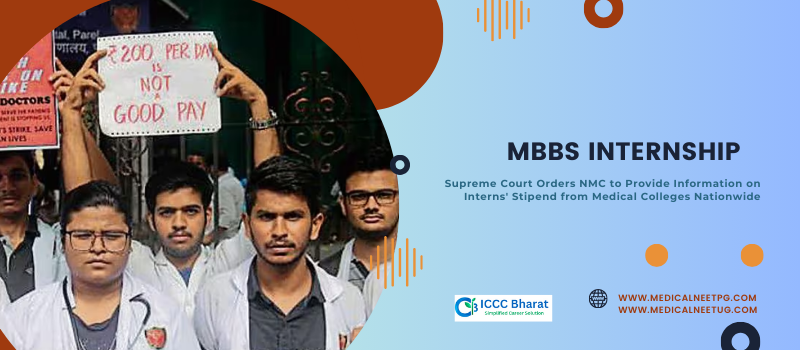
“Supreme Court Orders NMC to Provide Stipend Details for MBBS Interns Across All States”

“In a significant development concerning the payment of stipends to doctors during their MBBS internships, the Supreme Court on April 1 issued a decisive directive to the National Medical Commission (NMC), urging them to furnish detailed information on the stipend status across medical colleges in all states.

The Court highlighted the NMC’s failure to provide comprehensive data on all medical colleges nationwide, noting the non-compliance of an earlier directive issued on September 15, 2023. This directive had requested the NMC to present a tabulated chart addressing whether 70% of medical colleges fail to pay any stipend to interns or pay an amount below the minimum stipulated amount. Additionally, it sought clarification on the measures being taken by the NMC to enforce stipend payment norms.

Expressing dissatisfaction with the incomplete details provided by the NMC, a bench comprising Justices Sudhanshu Dhulia and Prasanna B Varale instructed the commission to rectify this within four weeks.

During previous hearings, the bench expressed concerns over medical colleges inadequately compensating interns despite charging substantial fees. Justice Dhulia criticized the colleges for their stance, emphasizing that if they charge exorbitant fees, they should also fulfill their obligation to pay stipends.

Advocate Tanvi Dubey, representing the petitioners, highlighted that even Foreign Medical Graduates (FMGs) were not receiving stipends. The Court, expressing discontent, observed that FMGs should not be treated differently.

Case Title: Abhishek Yadav and others v. Army College of Medical Sciences | W.P.(C) No. 730/2022

The Court has scheduled the matter for a final hearing on May 6, 2024, after considering the submissions.”

“JEE Main 2024 Admit Cards Released for April Session Paper 2 at jeemain.nta.ac.in”

The National Testing Agency (NTA) has officially released the JEE Main 2024 admit card for Paper 2, covering B. Arch and B. Planning, for the session 2 exams on April 3, 2024. Candidates who have successfully registered can visit the official website at jeemain.nta.ac.in to access their admit cards. To download the admit card, candidates will need to provide their application number and date of birth.

The NTA will conduct the JEE 2024 Session 2 exams for Paper 2A (B. Arch), Paper 2B (B. Planning), and the combined Paper 2A & 2B (B. Arch & B. Planning) on April 12, 2024. It’s essential for candidates to bring a printed copy of their admit card and a government-approved ID proof on the day of the exam.

How to Download the JEE Main 2024 Admit Card for April Session:

  1. Visit the official NTA website: jeemain.nta.ac.in.
  2. Navigate to the “Latest News” section on the homepage.
  3. Click on the link for “JEE Main 2024 Session 2 Paper 2 Admit Card”.
  4. Enter your application number and date of birth, then click “Submit”.
  5. Your admit card will appear on the screen. Check all the details carefully.
  6. Save and download the admit card to have it for the day of the exam.

For direct access to the JEE Main 2024 Session 2 Paper 2 B. Arch and B. Planning Admit Card, use the active link provided.

Should there be any issues downloading the admit card or discrepancies found within it, candidates are advised to contact the NTA help desk at 011-40759000 or via email at jeemain@nta.ac.in for assistance.

“NEIGRIHMS Shillong Opens B.Sc. Nursing Admissions for 2024-25 Through NEET-UG”

The North Eastern Indira Gandhi Regional Institute of Health & Medical Sciences (NEIGRIHMS) in Shillong has recently unveiled a pivotal change in its admission procedure for the B.Sc. Nursing course for the 2024-25 academic year. According to the latest notification from the institution, aspiring students looking to join the College of Nursing at NEIGRIHMS will now have to pass the National Eligibility cum Entrance Test for Undergraduate (NEET-UG), overseen by the National Testing Agency (NTA).

This development represents a significant shift from the institute’s prior policy. Until now, NEIGRIHMS conducted its own entrance exam to select candidates for its B.Sc. Nursing program. Moving forward, however, the selection process will rely exclusively on the candidates’ performance in the NEET-UG exam.

The decision to integrate the NEET-UG scores for B.Sc. Nursing admissions aligns NEIGRIHMS with a standardized national framework for medical and allied health sciences education, ensuring a unified criterion for assessing applicants’ eligibility and merit. This change underscores the institute’s commitment to maintaining high academic and professional standards in nursing education.

“Final Call for BSc Nursing Applications: CGPEB Wraps Up by April 7 – Learn More!”


The Chhattisgarh Professional Examinations Board (CGPEB) has officially announced the commencement of the registration process for various entrance exams within the state, including the coveted undergraduate BSc Nursing course. Prospective students have from March 7 until April 7 to submit their applications for this comprehensive 4-year bachelor’s program. It’s essential for applicants to make use of the official portal at vyapam.cgstate.gov.in to ensure their application is lodged correctly and on time. To accommodate any necessary adjustments, an editing window will be available from April 8 to April 10, providing a brief period for candidates to make any required changes to their applications.

Eligibility Criteria

To qualify for the BSc Nursing entrance exam, applicants must meet specific eligibility requirements as stated in the CGPEB’s notification:

  • Academic Background: Applicants must have completed their Class 12 education in the Science stream, securing a minimum of 45% marks in Physics, Chemistry, Biology, and English each. For candidates from reserved categories, there is a 5% relaxation in the qualifying marks.
  • Age Requirement: The minimum age for applicants is 17 years.
Name of examination starting of application formlast date of application date of examination
B.Sc Nursing07-03-202407-04-202413-06-2024
How to Apply?
Visit the official website at vyapam.cgpeb.gov.in.
Navigate to the online applications link. Click on the ‘BSCN24 Online Application Form’ link on the redirected page.
Click on the ‘Registration’ tab and complete the registration procedure with the required details.
Log in using your registered mobile number and password.
Fill out the application form with relevant details and upload the required documents including photographs.
Review and click ‘Submit’.
Download the confirmation page and keep a hard copy of the same for future reference.

NEET UG 2024: Correction window opens on Monday, how to make changes

The National Testing Agency (NTA) has opened the correction window for the National Eligibility cum Entrance Test Undergraduate (NEET UG) 2024, presenting candidates with a final opportunity to rectify any mistakes in their application forms. This crucial phase in the pre-examination process is accessible via the official NEET portal at neet.nta.nic.in. Candidates are urged to make any necessary adjustments before the deadline of March 20, 11:50 PM, as there will be no extensions for corrections post this date.

Understanding the Correction Window’s Limitations

While the correction window allows for amendments in most sections of the application form, there are specific restrictions. Notably, changes to the email address provided at registration, the contact mobile number, and Aadhaar re-authentication are not permitted. This policy ensures the security and integrity of candidate information while still offering flexibility for corrections in other areas.

Additional fees may apply when making certain changes, especially if modifications in gender, category, or Persons with Disabilities (PwD) status result in a different fee structure. It’s important for candidates to review their application forms thoroughly and make any needed changes within the allotted time frame. However, it’s also crucial to understand that there will be no refunds for any additional payments made during this process.

Step-by-Step Guide to Making Corrections

To ensure a smooth and error-free correction process, follow these steps:

  1. Navigate to the Official Website: Open your web browser and go to neet.nta.nic.in, the official portal for NEET UG 2024.
  2. Access the Correction Window: Look for the ‘correction window link’ on the homepage and click on it to proceed.
  3. Login to Your Account: Enter your NEET UG 2024 application number, the password created during registration, and the displayed security pin to log in to your account.
  4. Make Necessary Corrections: Once logged in, review your application form carefully and make any required changes. Remember, this is your last chance to correct mistakes or update information before the examination.
  5. Save and Submit: After making the adjustments, ensure you save the changes and submit the updated application form.
  6. Print a Copy: It’s advisable to take a printout of the corrected form for your records and future reference. This copy will serve as proof of the changes made, should any discrepancies arise later.

Final Thoughts

The correction window for NEET UG 2024 is a vital step in the application process, designed to ensure that candidates present the most accurate and updated information. By following the outlined steps and understanding the limitations of the correction window, applicants can navigate this phase effectively. Remember, the deadline is firm, and no further corrections can be made post-March 20, 11:50 PM. Therefore, candidates should act promptly to finalize their applications, setting the stage for a smooth examination experience.