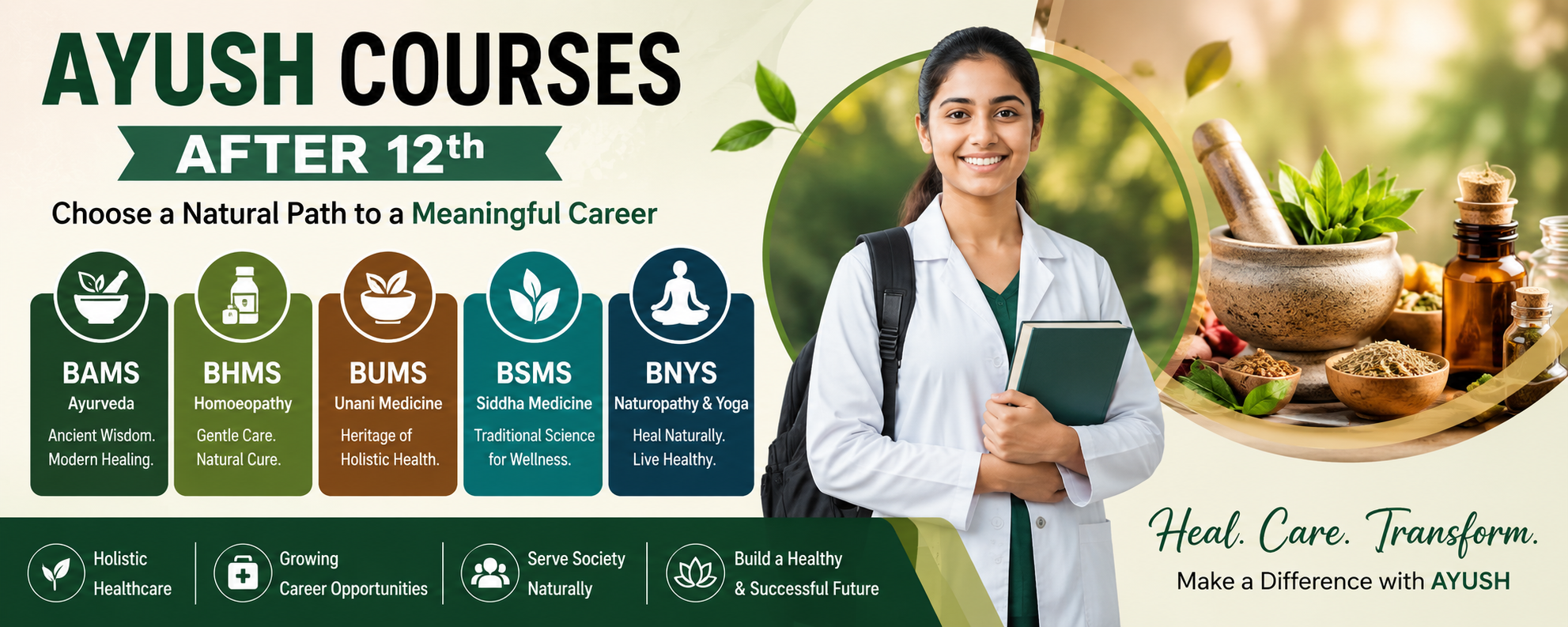
12ನೇ ತರಗತಿಯ ನಂತರ AYUSH ಕೋರ್ಸ್‌ಗಳು: BAMS, BHMS, BUMS, BSMS & BNYS ಸಂಪೂರ್ಣ ಮಾಹಿತಿ

12ನೇ ತರಗತಿಯನ್ನು Science (PCB) ವಿಭಾಗದಲ್ಲಿ ಪೂರ್ಣಗೊಳಿಸಿದ ನಂತರ, ಅನೇಕ ವಿದ್ಯಾರ್ಥಿಗಳು MBBS ಜೊತೆಗೆ ಇತರ ವೈದ್ಯಕೀಯ ಕ್ಷೇತ್ರದ ಅವಕಾಶಗಳನ್ನೂ ಹುಡುಕುತ್ತಾರೆ. AYUSH ಕೋರ್ಸ್‌ಗಳು ವಿದ್ಯಾರ್ಥಿಗಳಿಗೆ ಭಾರತೀಯ ಹಾಗೂ ಪರ್ಯಾಯ ವೈದ್ಯಕೀಯ ಪದ್ಧತಿಗಳಲ್ಲಿ ವೃತ್ತಿ ನಿರ್ಮಿಸಲು ಉತ್ತಮ ಅವಕಾಶಗಳನ್ನು ನೀಡುತ್ತವೆ.

AYUSH ಎಂದರೇನು?

AYUSH ಎಂದರೆ:
A – Ayurveda (ಆಯುರ್ವೇದ)
Y – Yoga & Naturopathy (ಯೋಗ ಮತ್ತು ಪ್ರಕೃತಿ ಚಿಕಿತ್ಸೆ)
U – Unani (ಯುನಾನಿ)
S – Siddha (ಸಿದ್ಧ)
H – Homoeopathy (ಹೋಮಿಯೋಪತಿ)

AYUSH ಕೋರ್ಸ್‌ಗಳು ನೈಸರ್ಗಿಕ ಚಿಕಿತ್ಸೆ, ಆರೋಗ್ಯ ತಡೆಗಟ್ಟುವಿಕೆ ಮತ್ತು ಸಮಗ್ರ ಚಿಕಿತ್ಸಾ ವಿಧಾನಗಳ ಮೇಲೆ ಕೇಂದ್ರೀಕರಿಸುತ್ತವೆ.

AYUSH ಕೋರ್ಸ್‌ಗಳಿಗೆ ಅರ್ಹತೆ

AYUSH ಕೋರ್ಸ್‌ಗಳಿಗೆ ಪ್ರವೇಶ ಪಡೆಯಲು ಸಾಮಾನ್ಯವಾಗಿ:

• 12ನೇ ತರಗತಿ Physics, Chemistry & Biology (PCB) ವಿಷಯಗಳೊಂದಿಗೆ ಪೂರ್ಣಗೊಳಿಸಿರಬೇಕು
• ನಿಗದಿತ ಅಂಕಗಳ ಮಾನದಂಡ ಪೂರೈಸಿರಬೇಕು
• NEET-UG ಪರೀಕ್ಷೆಯಲ್ಲಿ ಅರ್ಹತೆ ಪಡೆಯಬೇಕು
• NEET ಕೌನ್ಸೆಲಿಂಗ್ ಮತ್ತು ಪ್ರವೇಶ ಪ್ರಕ್ರಿಯೆಯನ್ನು ಪೂರ್ಣಗೊಳಿಸಬೇಕು

1. BAMS – Bachelor of Ayurvedic Medicine and Surgery (ಬ್ಯಾಚುಲರ್ ಆಫ್ ಆಯುರ್ವೇದಿಕ್ ಮೆಡಿಸಿನ್ ಅಂಡ್ ಸರ್ಜರಿ)

BAMS ಆಯುರ್ವೇದ ವೈದ್ಯಕೀಯ ಪದ್ಧತಿಗೆ ಸಂಬಂಧಿಸಿದ ಪದವಿ ಕೋರ್ಸ್ ಆಗಿದೆ.

ಕೋರ್ಸ್ ಅವಧಿ: 5.5 ವರ್ಷಗಳು (ಇಂಟರ್ನ್‌ಶಿಪ್ ಸೇರಿ)

ವಿದ್ಯಾರ್ಥಿಗಳು ಕಲಿಯುವ ವಿಷಯಗಳು:

• ಆಯುರ್ವೇದಿಕ್ ಮೆಡಿಸಿನ್
• ಮಾನವ ಶರೀರ ರಚನೆ
• ಚಿಕಿತ್ಸಾ ವಿಧಾನಗಳು
• ಔಷಧೀಯ ಸಸ್ಯಗಳು
• ಪಂಚಕರ್ಮ ಚಿಕಿತ್ಸೆ

ವೃತ್ತಿ ಅವಕಾಶಗಳು:

• ಆಯುರ್ವೇದ ವೈದ್ಯರು
• ಆಸ್ಪತ್ರೆ ಸಲಹೆಗಾರರು
• ಪಂಚಕರ್ಮ ತಜ್ಞರು
• ಸಂಶೋಧನಾ ಕ್ಷೇತ್ರ
• ಖಾಸಗಿ ಕ್ಲಿನಿಕ್ ಪ್ರಾಕ್ಟೀಸ್

2. BHMS – Bachelor of Homoeopathic Medicine and Surgery

(ಬ್ಯಾಚುಲರ್ ಆಫ್ ಹೋಮಿಯೋಪಥಿಕ್ ಮೆಡಿಸಿನ್ ಅಂಡ್ ಸರ್ಜರಿ)

BHMS ಹೋಮಿಯೋಪತಿ ಚಿಕಿತ್ಸಾ ಪದ್ಧತಿಗೆ ಸಂಬಂಧಿಸಿದ ಕೋರ್ಸ್ ಆಗಿದೆ.

ಕೋರ್ಸ್ ಅವಧಿ: 5.5 ವರ್ಷಗಳು (ಇಂಟರ್ನ್‌ಶಿಪ್ ಸೇರಿ)

ವೃತ್ತಿ ಅವಕಾಶಗಳು:

• ಹೋಮಿಯೋಪತಿ ವೈದ್ಯರು
• ಮೆಡಿಕಲ್ ಆಫೀಸರ್
• ಸಂಶೋಧನಾ ಕ್ಷೇತ್ರ
• ಖಾಸಗಿ ಕ್ಲಿನಿಕ್ ಪ್ರಾಕ್ಟೀಸ್

3. BUMS – Bachelor of Unani Medicine and Surgery

(ಬ್ಯಾಚುಲರ್ ಆಫ್ ಯುನಾನಿ ಮೆಡಿಸಿನ್ ಅಂಡ್ ಸರ್ಜರಿ)

BUMS ಯುನಾನಿ ವೈದ್ಯಕೀಯ ಪದ್ಧತಿಯನ್ನು ಆಧರಿಸಿದ ಕೋರ್ಸ್ ಆಗಿದೆ.

ವಿದ್ಯಾರ್ಥಿಗಳು ಕಲಿಯುವ ವಿಷಯಗಳು:

• ಯುನಾನಿ ಫಾರ್ಮಕಾಲಜಿ
• ಔಷಧ ತಯಾರಿಕೆ
• ಕ್ಲಿನಿಕಲ್ ಪ್ರಾಕ್ಟೀಸ್

ವೃತ್ತಿ ಅವಕಾಶಗಳು:

• ಯುನಾನಿ ವೈದ್ಯರು
• ಆರೋಗ್ಯ ಸಲಹೆಗಾರರು
• ಸರ್ಕಾರಿ ಆರೋಗ್ಯ ಸೇವೆಗಳು

4. BSMS – Bachelor of Siddha Medicine and Surgery

(ಬ್ಯಾಚುಲರ್ ಆಫ್ ಸಿದ್ಧ ಮೆಡಿಸಿನ್ ಅಂಡ್ ಸರ್ಜರಿ)

BSMS ಸಿದ್ಧ ವೈದ್ಯಕೀಯ ಪದ್ಧತಿಗೆ ಸಂಬಂಧಿಸಿದ ಕೋರ್ಸ್ ಆಗಿದ್ದು, ಮುಖ್ಯವಾಗಿ ದಕ್ಷಿಣ ಭಾರತದಲ್ಲಿ ಹೆಚ್ಚು ಪ್ರಚಲಿತದಲ್ಲಿದೆ.

ವಿದ್ಯಾರ್ಥಿಗಳು ಕಲಿಯುವ ವಿಷಯಗಳು:

• ಸಿದ್ಧ ಚಿಕಿತ್ಸಾ ವಿಧಾನಗಳು
• ಔಷಧೀಯ ಚಿಕಿತ್ಸೆ
• ಸಾಂಪ್ರದಾಯಿಕ ವೈದ್ಯಕೀಯ ಪದ್ಧತಿಗಳು

ವೃತ್ತಿ ಅವಕಾಶಗಳು:

• ಸಿದ್ಧ ವೈದ್ಯರು
• ಸಂಶೋಧಕರು
• ಆರೋಗ್ಯ ಸೇವಾ ತಜ್ಞರು

5. BNYS – Bachelor of Naturopathy and Yogic Sciences

(ಬ್ಯಾಚುಲರ್ ಆಫ್ ನ್ಯಾಚುರೋಪತಿ ಅಂಡ್ ಯೋಗಿಕ್ ಸೈನ್ಸಸ್)

BNYS ಯೋಗ ಮತ್ತು ಪ್ರಕೃತಿ ಚಿಕಿತ್ಸೆಯನ್ನು ಒಳಗೊಂಡಿರುವ ಕೋರ್ಸ್ ಆಗಿದೆ.

ವಿದ್ಯಾರ್ಥಿಗಳು ಕಲಿಯುವ ವಿಷಯಗಳು:

• ಯೋಗ ಚಿಕಿತ್ಸೆ
• ನೈಸರ್ಗಿಕ ಚಿಕಿತ್ಸೆ
• ಪೌಷ್ಟಿಕಾಂಶ
• ಜೀವನಶೈಲಿ ನಿರ್ವಹಣೆ

ವೃತ್ತಿ ಅವಕಾಶಗಳು:

• ಯೋಗ ಥೆರಪಿಸ್ಟ್
• ವೆಲ್‌ನೆಸ್ ಕನ್ಸಲ್ಟೆಂಟ್
• ಪ್ರಕೃತಿ ಚಿಕಿತ್ಸಾ ವೈದ್ಯರು

AYUSH ಕೋರ್ಸ್‌ಗಳನ್ನು ಏಕೆ ಆಯ್ಕೆ ಮಾಡಬೇಕು?

• ಆರೋಗ್ಯ ಕ್ಷೇತ್ರದಲ್ಲಿ ಹೆಚ್ಚುತ್ತಿರುವ ಅವಕಾಶಗಳು
• ಪರ್ಯಾಯ ಚಿಕಿತ್ಸಾ ಪದ್ಧತಿಗಳಿಗೆ ಹೆಚ್ಚುತ್ತಿರುವ ಬೇಡಿಕೆ
• ಸರ್ಕಾರಿ ಮತ್ತು ಖಾಸಗಿ ಕ್ಷೇತ್ರಗಳಲ್ಲಿ ಅವಕಾಶಗಳು
• ಸ್ವಂತ ವೈದ್ಯಕೀಯ ವೃತ್ತಿ ಆರಂಭಿಸುವ ಅವಕಾಶ
• ಸಮಗ್ರ ಮತ್ತು ತಡೆಗಟ್ಟುವ ಆರೋಗ್ಯ ಚಿಕಿತ್ಸೆಗೆ ಒತ್ತು

AYUSH ಕೋರ್ಸ್‌ಗಳು ವೈದ್ಯಕೀಯ ಕ್ಷೇತ್ರದಲ್ಲಿ ವಿಭಿನ್ನ ವೃತ್ತಿ ಮಾರ್ಗಗಳನ್ನು ನೀಡುತ್ತವೆ. ವಿದ್ಯಾರ್ಥಿಗಳು ತಮ್ಮ ಆಸಕ್ತಿ, ವೃತ್ತಿ ಗುರಿ ಮತ್ತು ಆಯ್ಕೆ ಮಾಡುವ ವೈದ್ಯಕೀಯ ಪದ್ಧತಿಯ ಆಧಾರದ ಮೇಲೆ ಸರಿಯಾದ ಕೋರ್ಸ್ ಆಯ್ಕೆ ಮಾಡಬಹುದು.

ICCC Bharat – AYUSH Admissions ಗೆ ನಿಮ್ಮ ವಿಶ್ವಾಸಾರ್ಹ ಮಾರ್ಗದರ್ಶಿ

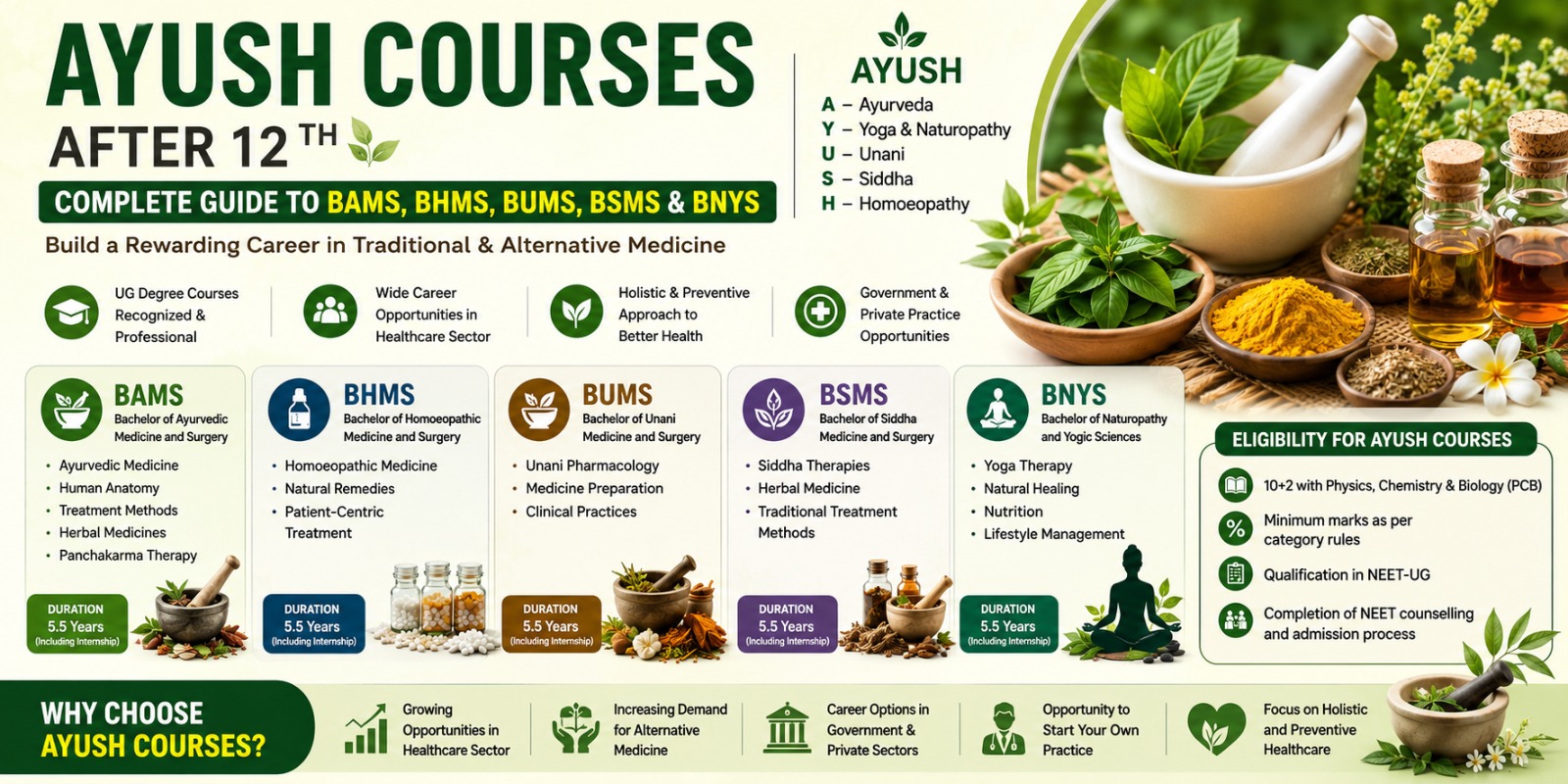
AYUSH Courses After 12th: Complete Guide to BAMS, BHMS, BUMS, BSMS & BNYS

After completing 12th with Science (PCB), many students explore different healthcare career options apart from MBBS. AYUSH courses provide opportunities to build a professional career in traditional and alternative medicine systems with clinical practice and healthcare opportunities.

What is AYUSH?

AYUSH stands for:
A – Ayurveda
Y – Yoga & Naturopathy
U – Unani
S – Siddha
H – Homoeopathy
AYUSH courses focus on natural healing methods, preventive healthcare, and holistic treatment approaches.

Eligibility for AYUSH Courses

Students who want to pursue AYUSH courses generally need:

• 10+2 qualification with Physics, Chemistry & Biology (PCB)
• Minimum required marks as per category rules
• Qualification in NEET-UG
• Completion of NEET counselling and admission process

1. BAMS – Bachelor of Ayurvedic Medicine and Surgery

BAMS is an undergraduate degree based on Ayurveda, one of the oldest healthcare systems in India.

Course Duration: 5.5 Years (including internship)

Students learn:

• Ayurvedic medicine
• Human anatomy
• Treatment methods
• Herbal medicines
• Panchakarma therapy

Career Opportunities:

• Ayurvedic Doctor
• Hospital Consultant
• Panchakarma Specialist
• Research Associate
• Private Practice

2. BHMS – Bachelor of Homoeopathic Medicine and Surgery

BHMS focuses on Homoeopathic medicine and patient treatment using natural remedies.

Course Duration: 5.5 Years (including internship)

Career Opportunities:

• Homoeopathic Doctor
• Medical Officer
• Research Professional
• Private Clinic Practice

3. BUMS – Bachelor of Unani Medicine and Surgery

BUMS is based on the Unani system of medicine, focusing on diagnosis, prevention, and treatment.

Students learn:

• Unani pharmacology
• Medicine preparation
• Clinical practices

Career Opportunities:

• Unani Physician
• Healthcare Consultant
• Government Health Services

4. BSMS – Bachelor of Siddha Medicine and Surgery

BSMS is a Siddha medicine course mainly practiced in South India.

Students learn:

• Siddha therapies
• Herbal medicine
• Traditional treatment methods

Career Opportunities:

• Siddha Doctor
• Researcher
• Healthcare Practitioner

5. BNYS – Bachelor of Naturopathy and Yogic Sciences

BNYS combines naturopathy and yoga-based healthcare practices.

Students learn:

• Yoga therapy
• Natural healing methods
• Nutrition
• Lifestyle management

Career Opportunities:

• Yoga Therapist
• Wellness Consultant
• Naturopathy Doctor

Why Choose AYUSH Courses?

• Growing opportunities in the healthcare sector
• Increasing demand for alternative medicine
• Career options in government and private sectors
• Opportunity to start your own healthcare practice
• Focus on holistic and preventive healthcare

Final Thoughts

AYUSH courses provide multiple career opportunities for students interested in medicine and healthcare. Choosing the right course depends on your interest, career goals, and preferred medical system.

ICCC Bharat – Your Trusted Guidance Partner for AYUSH Admissions

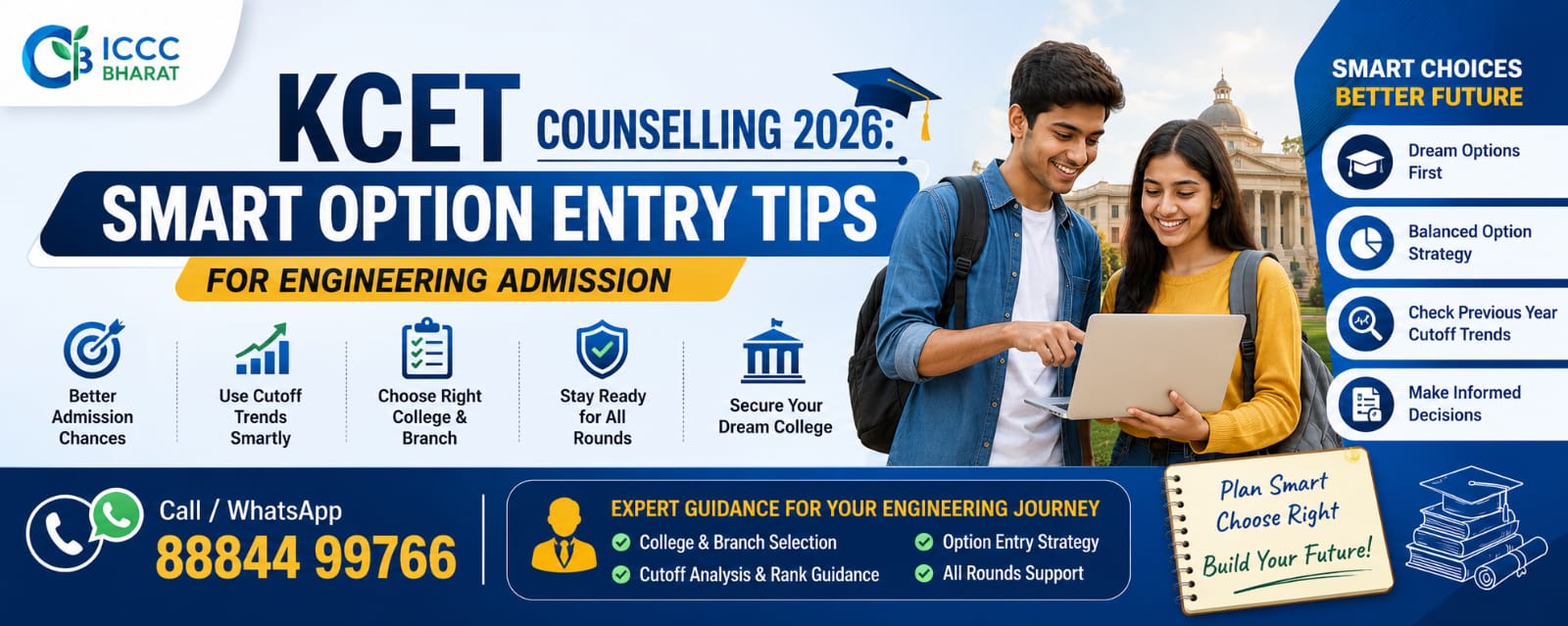
KCET 2026 ಕೌನ್ಸೆಲಿಂಗ್: ಎಂಜಿನಿಯರಿಂಗ್ ಅಡ್ಮಿಷನ್‌ಗಾಗಿ ಸ್ಮಾರ್ಟ್ ಆಪ್ಷನ್ ಎಂಟ್ರಿ ಟಿಪ್ಸ್

KCET ಕೌನ್ಸೆಲಿಂಗ್ ವಿದ್ಯಾರ್ಥಿಗಳ ಎಂಜಿನಿಯರಿಂಗ್ ಪ್ರವೇಶದ ಪ್ರಮುಖ ಹಂತವಾಗಿದೆ. ರಿಸಲ್ಟ್ ನಂತರ ಹಲವಾರು ವಿದ್ಯಾರ್ಥಿಗಳು ಕಾಲೇಜು ಆಯ್ಕೆ, ಬ್ರಾಂಚ್ ಆದ್ಯತೆ, ಕಟ್‌ಆಫ್ ಮತ್ತು ಆಪ್ಷನ್ ಎಂಟ್ರಿ ಬಗ್ಗೆ ಗೊಂದಲಕ್ಕೊಳಗಾಗುತ್ತಾರೆ. ಸರಿಯಾದ ಆಪ್ಷನ್ ಎಂಟ್ರಿ ತಂತ್ರವು ಉತ್ತಮ ಸೀಟ್ ಪಡೆಯಲು ಸಹಾಯ ಮಾಡುತ್ತದೆ.

KCET ಆಪ್ಷನ್ ಎಂಟ್ರಿ ಎಂದರೇನು?

KCET ಆಪ್ಷನ್ ಎಂಟ್ರಿ ಎಂದರೆ ವಿದ್ಯಾರ್ಥಿಗಳು ತಮ್ಮ ಇಷ್ಟದ ಕಾಲೇಜು ಮತ್ತು ಬ್ರಾಂಚ್‌ಗಳನ್ನು KEA ಕೌನ್ಸೆಲಿಂಗ್ ಪೋರ್ಟಲ್‌ನಲ್ಲಿ ಆಯ್ಕೆ ಮಾಡುವ ಪ್ರಕ್ರಿಯೆ.

ಸೀಟ್ ಅಲಾಟ್‌ಮೆಂಟ್ ಈ ಅಂಶಗಳ ಮೇಲೆ ಅವಲಂಬಿತವಾಗಿರುತ್ತದೆ:

  • KCET ರ್ಯಾಂಕ್
  • ವರ್ಗ (Category)
  • ಸೀಟ್ ಲಭ್ಯತೆ
  • ಆಯ್ಕೆ ಮಾಡಿದ ಆಪ್ಷನ್‌ಗಳ ಕ್ರಮ

ಸ್ಮಾರ್ಟ್ ಆಪ್ಷನ್ ಎಂಟ್ರಿ ಏಕೆ ಮುಖ್ಯ?

ಆಪ್ಷನ್ ಎಂಟ್ರಿ ಕೇವಲ ಕಾಲೇಜು ಲಿಸ್ಟ್ ಮಾಡುವುದಲ್ಲ. ಇದು ಒಂದು ತಂತ್ರ.

ಸರಿಯಾದ ಪ್ಲ್ಯಾನ್ ಮೂಲಕ:

  • ಉತ್ತಮ ಕಾಲೇಜಿನ ಅವಕಾಶ ಹೆಚ್ಚಿಸಬಹುದು
  • ಉತ್ತಮ ಬ್ರಾಂಚ್ ಆಯ್ಕೆ ಮಾಡಬಹುದು
  • ಕಟ್‌ಆಫ್ ಟ್ರೆಂಡ್ ಬಳಸಿಕೊಳ್ಳಬಹುದು
  • ರಿಸ್ಕ್ ಕಡಿಮೆ ಮಾಡಬಹುದು

1. ಕಾಲೇಜುಗಳನ್ನು ಯೋಚನೆ ಇಲ್ಲದೆ ಆಯ್ಕೆ ಮಾಡಬೇಡಿ

ಸ್ನೇಹಿತರ ಲಿಸ್ಟ್ ಅಥವಾ ಸೋಶಿಯಲ್ ಮೀಡಿಯಾ ನೋಡಿ ಕಾಪಿ ಮಾಡಬೇಡಿ.

ಆಯ್ಕೆ ಮಾಡುವ ಮೊದಲು ನೋಡಿ:

  • ಹಿಂದಿನ ವರ್ಷದ ಕಟ್‌ಆಫ್
  • ಕಾಲೇಜಿನ ಪ್ಲೇಸ್‌ಮೆಂಟ್
  • ಬ್ರಾಂಚ್ ಸ್ಕೋಪ್
  • ಲೊಕೇಶನ್
  • ಫೀಸ್
  • ಇಂಟರ್ನ್‌ಶಿಪ್ ಅವಕಾಶಗಳು

2. ನಿಮ್ಮ ಡ್ರೀಮ್ ಆಯ್ಕೆಯನ್ನು ಮೊದಲು ಇಡಿ

ನಿಮ್ಮ ರ್ಯಾಂಕ್ ಸ್ವಲ್ಪ ಕಡಿಮೆ ಇದ್ದರೂ ನಿಮ್ಮ ಇಷ್ಟದ ಕಾಲೇಜು ಅಥವಾ ಬ್ರಾಂಚ್ ತೆಗೆದುಹಾಕಬೇಡಿ.

ನೆನಪಿಡಿ:

“ಸೇಫ್ ಆಯ್ಕೆ ಮೊದಲು ಅಲ್ಲ, ನಿಮ್ಮ ನಿಜವಾದ ಇಷ್ಟದ ಆಯ್ಕೆ ಮೊದಲು.”

3. ಕಾಲೇಜು vs ಬ್ರಾಂಚ್ ಸರಿಯಾದ ನಿರ್ಧಾರ ಮಾಡಿ

CSEಗಾಗಿ ಮಾತ್ರ ಓಡಬೇಡಿ. ನಿಮ್ಮ ಭವಿಷ್ಯದ ಗುರಿ ಮುಖ್ಯ.

ಪರಿಗಣಿಸಿ:

  • ನಿಮಗೆ ಇಷ್ಟವಾದ ವಿಷಯ
  • ಉದ್ಯೋಗ ಅವಕಾಶಗಳು
  • ಹೈಯರ್ ಸ್ಟಡೀಸ್ ಪ್ಲ್ಯಾನ್
  • ಕಾಲೇಜಿನ ಹೆಸರು
  • ಇಂಡಸ್ಟ್ರಿ ಡಿಮ್ಯಾಂಡ್

4. ಹಿಂದಿನ ವರ್ಷದ ಕಟ್‌ಆಫ್ ಪರಿಶೀಲಿಸಿ

ಕಟ್‌ಆಫ್ ಒಂದು ಗೈಡ್ ಮಾತ್ರ, ಗ್ಯಾರಂಟಿ ಅಲ್ಲ.

ಕಟ್‌ಆಫ್ ಬದಲಾಗಬಹುದು:

  • ಸ್ಪರ್ಧೆ
  • ಸೀಟ್ ಸಂಖ್ಯೆ
  • ವಿದ್ಯಾರ್ಥಿಗಳ ಆಯ್ಕೆ
  • ಹೊಸ ಬ್ರಾಂಚ್‌ಗಳು

5. ಕಡಿಮೆ ಆಪ್ಷನ್ ಹಾಕಬೇಡಿ

ಕೇವಲ 5-10 ಆಯ್ಕೆಗಳನ್ನು ಹಾಕುವುದು ಅಪಾಯ.

ನಿಮ್ಮ ಲಿಸ್ಟ್‌ನಲ್ಲಿ ಇರಲಿ:

  • Dream Colleges
  • Possible Options
  • Safe Options
  • Backup Choices

6. ಆಪ್ಷನ್ ಕ್ರಮ ಸರಿಯಾಗಿರಲಿ

KEA ಅಲಾಟ್‌ಮೆಂಟ್‌ನಲ್ಲಿ ಆಯ್ಕೆ ಕ್ರಮ ಬಹಳ ಮುಖ್ಯ.

ನಿಮಗೆ ಯಾವುದು ಹೆಚ್ಚು ಇಷ್ಟವೋ ಅದನ್ನು ಮೇಲ್ಭಾಗದಲ್ಲಿ ಇಡಿ.

7. Mock Allotment ಅನ್ನು ಸರಿಯಾಗಿ ಬಳಸಿ

Mock allotment ನಂತರ:

  • ಆಯ್ಕೆಗಳನ್ನು ಬದಲಾಯಿಸಿ
  • ಹೊಸ ಆಯ್ಕೆ ಸೇರಿಸಿ
  • ಆದ್ಯತೆ ಸರಿಪಡಿಸಿ

Mock allotment ಅಂತಿಮವಲ್ಲ, ಆದರೆ ಉತ್ತಮ ಸೂಚನೆ.

8. ದಾಖಲೆಗಳನ್ನು ಸಿದ್ಧವಾಗಿಡಿ

ಮುಖ್ಯ ದಾಖಲೆಗಳು:

  • KCET Rank Card
  • Hall Ticket
  • 10ನೇ ಮತ್ತು 12ನೇ ಅಂಕಪಟ್ಟಿ
  • Study Certificate
  • Category Certificate (ಅನ್ವಯಿಸಿದರೆ)
  • Income Certificate
  • Verification Slip

9. ಹೊಸ ಬ್ರಾಂಚ್‌ಗಳನ್ನು ನಿರ್ಲಕ್ಷಿಸಬೇಡಿ

CSE ಮಾತ್ರವಲ್ಲ:

  • ECE
  • AI & ML
  • Data Science
  • Information Science
  • Cyber Security
  • Core Engineering

ಸರಿಯಾದ ಕಾಲೇಜಿನಲ್ಲಿ ಆಯ್ಕೆ ಮಾಡಿದರೆ ಉತ್ತಮ ಅವಕಾಶಗಳಿವೆ.

10. ಅಂತಿಮ ಲಾಕ್ ಮಾಡುವ ಮೊದಲು ಸಲಹೆ ಪಡೆಯಿರಿ

ತಜ್ಞರ ಮಾರ್ಗದರ್ಶನದಿಂದ:

  • ಯಾವ ಕಾಲೇಜು ಸಾಧ್ಯ?
  • ಯಾವ ಬ್ರಾಂಚ್ ಸೂಕ್ತ?
  • ಯಾವ ಆಯ್ಕೆ ರಿಸ್ಕ್?
  • Backup options ಯಾವುವು?

ಎಂಬುದನ್ನು ತಿಳಿದುಕೊಳ್ಳಬಹುದು.

ವಿದ್ಯಾರ್ಥಿಗಳು ತಪ್ಪಿಸಬೇಕಾದ ತಪ್ಪುಗಳು

  • ಕಟ್‌ಆಫ್ ನೋಡದೆ ಆಯ್ಕೆ ಮಾಡುವುದು
  • ಸ್ನೇಹಿತರ ಲಿಸ್ಟ್ ಕಾಪಿ ಮಾಡುವುದು
  • ಕಡಿಮೆ ಆಪ್ಷನ್ ಹಾಕುವುದು
  • ಬ್ರಾಂಚ್ ಸ್ಕೋಪ್ ಪರಿಶೀಲಿಸದೆ ಆಯ್ಕೆ ಮಾಡುವುದು
  • KEA ಡೆಡ್‌ಲೈನ್ ಮಿಸ್ ಮಾಡುವುದು

KCET 2026 ವಿದ್ಯಾರ್ಥಿಗಳಿಗೆ ಅಂತಿಮ ಸಲಹೆ

KCET ಕೌನ್ಸೆಲಿಂಗ್ ಕೇವಲ ರ್ಯಾಂಕ್ ಬಗ್ಗೆ ಅಲ್ಲ. ಸರಿಯಾದ ಸಮಯದಲ್ಲಿ ಸರಿಯಾದ ನಿರ್ಧಾರ ತೆಗೆದುಕೊಳ್ಳುವುದು ಮುಖ್ಯ.

ಸ್ಮಾರ್ಟ್ ಆಪ್ಷನ್ ಎಂಟ್ರಿ ನಿಮ್ಮ ಎಂಜಿನಿಯರಿಂಗ್ ಭವಿಷ್ಯವನ್ನು ಉತ್ತಮಗೊಳಿಸಬಹುದು.

ICCC Bharat
Trusted Engineering Admission Guidance
📞 Call / WhatsApp: 88844 99766

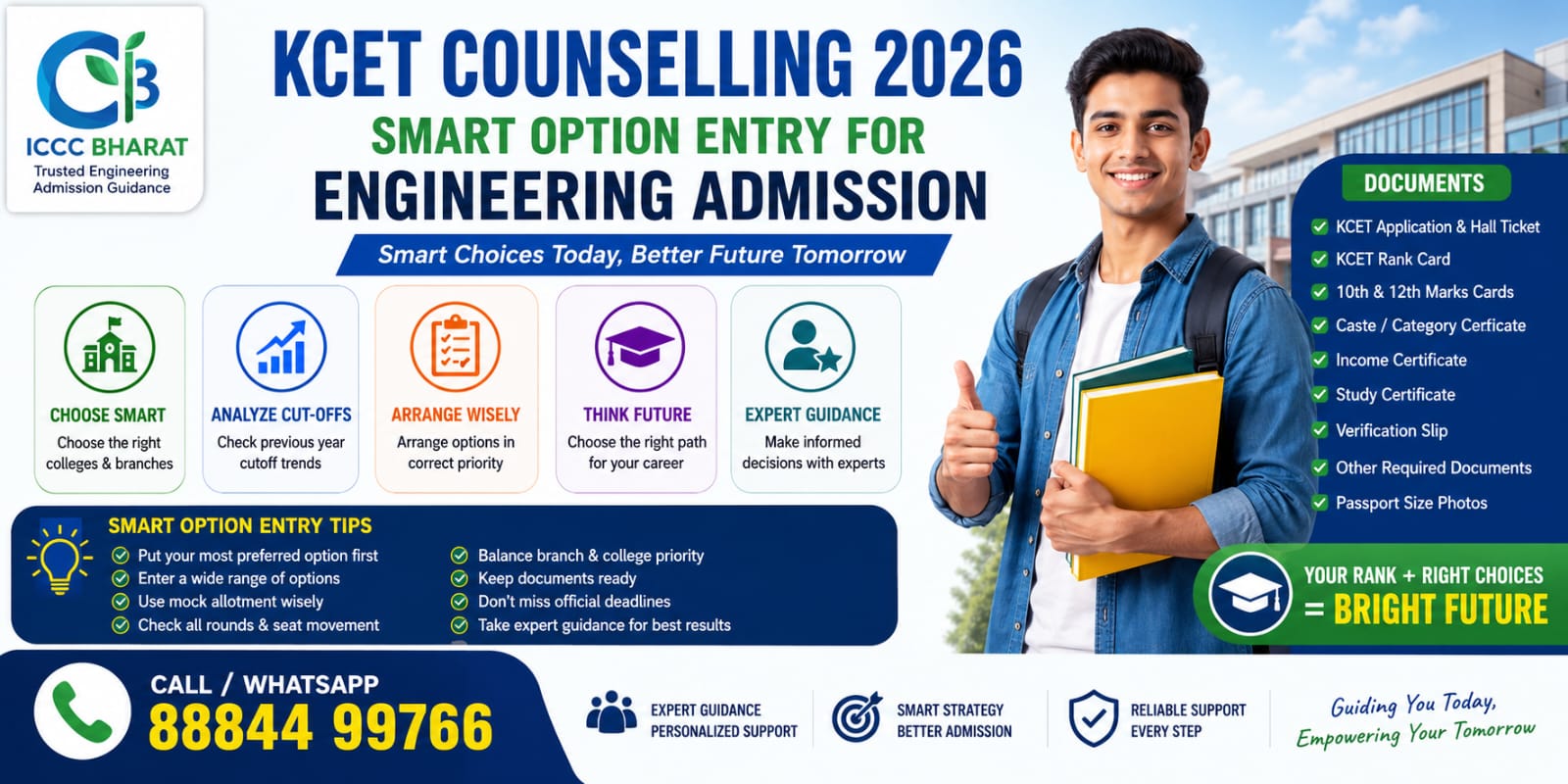
KCET Counselling 2026: Smart Option Entry Tips for Engineering Admission

KCET counselling is one of the most important stages for students seeking engineering admission in Karnataka. After the KCET results, many students and parents feel confused about college selection, branch preference, cutoff trends, and option entry order. A small mistake in option entry can affect the final seat allotment, so students must make careful and smart decisions.

What Is KCET Option Entry?

KCET option entry is the process where students select their preferred colleges and branches through the KEA counselling portal. Based on the student’s rank, category, reservation, seat availability, and option order, KEA allots seats in different counselling rounds.
For KCET 2026, candidates must follow official KEA instructions, complete document verification, download the verification slip, and enter college-course options within the given deadline. Students are advised to regularly check the KEA official website for updates.

Why Smart Option Entry Is Important
Many students think option entry is only about selecting top colleges. But in reality, option entry is a strategy. The order of choices plays a major role in seat allotment.

A smart option entry can help students:

  • Improve admission chances
  • Avoid losing better college options
  • Balance branch preference and college reputation
  • Use cutoff trends properly
  • Stay prepared for multiple rounds
  • Make practical choices based on rank

1.Do Not Choose Colleges Randomly

Students should not enter options only by copying a friend’s list or following social media suggestions. Every student has a different rank, category, location preference, budget, and career goal.

Before entering options, students should prepare a proper list of colleges based on:

  • Previous year cutoffs
  • Branch preference
  • Placement records
  • College location
  • Academic reputation
  • Infrastructure
  • Internship opportunities
  • Fees and affordability

2.Give First Preference to Your Dream Options

Even if your rank is slightly higher than the previous year cutoff, do not remove your dream college or branch completely. Cutoffs can change every year depending on competition, seat matrix, category, and student choices.
For example, if you are aiming for CSE, ECE, AI & ML, Data Science, Mechanical, Civil, or Electrical branches in a reputed college, keep those options in the correct order based on your priority.
The simple rule is:
Put your most preferred option first, not the most “safe” option first.

3.Understand College vs Branch Priority

One of the biggest doubts during KCET counselling is:
Should I choose a top college with a different branch or CSE in another college?
The answer depends on the student’s long-term goal. If the student is very clear about software, coding, AI, data science, or IT career, then branch preference becomes very important. But if the student values college brand, campus exposure, peer group, and placement network, then college reputation may also matter.

Students should compare:

  • Interest in the branch
  • Placement scope
  • Higher education plans
  • Career flexibility
  • College brand value
  • Industry demand

There is no single answer for every student. The best choice is the one that matches the student’s future career plan.

4.Check Previous Year Cutoff Trends

Previous year cutoff is one of the most useful tools during KCET option entry. It helps students understand which colleges and branches may be possible for their rank.
But students should remember that cutoff is only an indication, not a guarantee. Cutoffs may change due to:

  • Number of students participating
  • Seat availability
  • Category-wise competition
  • Branch demand
  • New courses or seat changes
  • Round-wise seat movement

Students should check Round 1, Round 2, extended round, and final cutoff trends before finalizing options.

5.Do Not Enter Very Few Options

Many students enter only a small number of options, thinking they will get only their preferred college. This is risky.
If the cutoff does not match, the student may miss out on good alternatives. It is better to enter a wide range of options, including dream colleges, moderate chances, and safe options.
A balanced option list should include:

  • Dream options
  • Possible options
  • Safe options
  • Backup branches
  • Backup colleges

6.Arrange Options in Correct Priority Order

The order of options is very important. KEA allotment is based on rank and preference order. Students should not place a less preferred college above a better option just because it looks safer.
For example:
If a student wants ECE in College A more than CSE in College B, then ECE in College A should be placed above CSE in College B.
Your option list should reflect your real preference.

7.Be Careful After Mock Allotment

Mock allotment helps students understand their possible seat based on entered options. After mock allotment, students usually get a chance to modify, add, delete, or rearrange options.
Students should use this stage carefully. If the mock result is not satisfactory, they should review the cutoff, add more options, and correct the priority order.
Mock allotment is not final allotment, but it is a very important warning signal.

8.Keep Documents Ready

Before counselling and admission, students should keep all important documents ready. Commonly required documents may include:

  • KCET application form
  • KCET hall ticket
  • KCET rank card
  • SSLC / 10th marks card
  • 2nd PUC / 12th marks card
  • Study certificate
  • Caste / category certificate if applicable
  • Income certificate if applicable
  • Kannada medium / rural / special category documents if applicable
  • Verification slip
  • Passport-size photos

Students must always follow the official KEA document instructions.

9.Do Not Ignore Good Emerging Branches

Many students focus only on CSE and ignore other strong branches. In 2026, branches like ECE, AI & ML, Data Science, Information Science, Cyber Security, Electrical, Mechanical, and core engineering branches also have good career scope when chosen from the right college.
Students should not select a branch only because of trend. They should understand the subjects, career opportunities, and future industry demand.

10.Take Expert Guidance Before Final Locking

KCET option entry can be confusing because students must compare ranks, cutoffs, colleges, branches, categories, and future career scope. Expert counselling can help students avoid common mistakes and create a smart option entry strategy.

A proper counselling plan can help students understand:

  • Which colleges are possible
  • Which branches are realistic
  • Which options are risky
  • Which colleges should be kept as backup
  • How to arrange the option list
  • How to respond after mock allotment and final allotment

Common Mistakes Students Should Avoid

  • Entering options without cutoff analysis
  • Keeping safe options above dream options
  • Selecting only famous colleges without checking branch scope
  • Ignoring lower rounds and seat movement
  • Entering too few choices
  • Depending only on friends or social media
  • Not checking fees and location
  • Missing official KEA deadlines

Final Advice for KCET 2026 Students

KCET counselling is not just about rank. It is about making the right decision at the right time. Students should carefully study college options, branch scope, cutoff trends, and career goals before submitting option entry.
Smart option entry can improve your admission chances and help you choose a better path for your engineering future.
For expert KCET counselling and engineering admission guidance, contact:
ICCC Bharat
Trusted Engineering Admission Guidance
Call / WhatsApp: 88844 99766
2026ರಲ್ಲಿ ವಿದ್ಯಾರ್ಥಿಗಳು ಇತರ ಎಂಜಿನಿಯರಿಂಗ್ ಕೋರ್ಸ್‌ಗಳಿಗಿಂತ ECE ಅನ್ನು ಏಕೆ ಆಯ್ಕೆ ಮಾಡುತ್ತಿದ್ದಾರೆ?

ಎಲೆಕ್ಟ್ರಾನಿಕ್ಸ್ ಮತ್ತು ಕಮ್ಯುನಿಕೇಶನ್ ಎಂಜಿನಿಯರಿಂಗ್ (ECE): ಭವಿಷ್ಯಕ್ಕೆ ಸೂಕ್ತವಾದ ಆಯ್ಕೆ

ಇಂದಿನ ತಂತ್ರಜ್ಞಾನ ಆಧಾರಿತ ಜಗತ್ತಿನಲ್ಲಿ ಎಲೆಕ್ಟ್ರಾನಿಕ್ಸ್ ಮತ್ತು ಕಮ್ಯುನಿಕೇಶನ್ ಎಂಜಿನಿಯರಿಂಗ್ (ECE) ವಿದ್ಯಾರ್ಥಿಗಳ ಅತ್ಯಂತ ಜನಪ್ರಿಯ ಎಂಜಿನಿಯರಿಂಗ್ ಶಾಖೆಗಳಲ್ಲಿ ಒಂದಾಗಿದೆ. ಸ್ಮಾರ್ಟ್‌ಫೋನ್‌ಗಳು, ಇಂಟರ್ನೆಟ್, ಉಪಗ್ರಹಗಳು, ರೋಬೋಟಿಕ್ಸ್, ಆಟೋಮೇಷನ್, ಕೃತಕ ಬುದ್ಧಿಮತ್ತೆ (AI) ಮತ್ತು ಸ್ಮಾರ್ಟ್ ಸಾಧನಗಳಂತಹ ಬಹುತೇಕ ಆಧುನಿಕ ತಂತ್ರಜ್ಞಾನಗಳು ECE ಮೇಲೆ ಅವಲಂಬಿತವಾಗಿವೆ.

ಇದರಿಂದಾಗಿ 2026ರಲ್ಲಿ ಅನೇಕ ವಿದ್ಯಾರ್ಥಿಗಳು ECE ಕಡೆಗೆ ಹೆಚ್ಚು ಆಕರ್ಷಿತರಾಗುತ್ತಿದ್ದಾರೆ.

ಹಾರ್ಡ್‌ವೇರ್ ಮತ್ತು ಸಾಫ್ಟ್‌ವೇರ್ ಎರಡರಲ್ಲೂ ಅವಕಾಶಗಳು

ECE ಯ ಪ್ರಮುಖ ವಿಶೇಷತೆ ಎಂದರೆ ಇದು ಕೇವಲ ಹಾರ್ಡ್‌ವೇರ್ ಅಥವಾ ಕೇವಲ ಸಾಫ್ಟ್‌ವೇರ್‌ಗೆ ಸೀಮಿತವಾಗಿಲ್ಲ.

ECE ವಿದ್ಯಾರ್ಥಿಗಳು ಕಲಿಯುವ ಪ್ರಮುಖ ವಿಷಯಗಳು:

✔ ಎಲೆಕ್ಟ್ರಾನಿಕ್ ಸರ್ಕ್ಯೂಟ್‌ಗಳು
✔ ಮೈಕ್ರೋಪ್ರೊಸೆಸರ್‌ಗಳು
✔ ಎಂಬೆಡೆಡ್ ಸಿಸ್ಟಮ್ಸ್
✔ ಡಿಜಿಟಲ್ ಎಲೆಕ್ಟ್ರಾನಿಕ್ಸ್
✔ ಕಮ್ಯುನಿಕೇಶನ್ ಸಿಸ್ಟಮ್ಸ್
✔ ನೆಟ್‌ವರ್ಕಿಂಗ್
✔ ಪ್ರೋಗ್ರಾಮಿಂಗ್

ಈ ಕಾರಣದಿಂದ ECE ಪದವೀಧರರು ಕೋರ್ ಎಲೆಕ್ಟ್ರಾನಿಕ್ಸ್ ಕಂಪನಿಗಳಲ್ಲಿಯೂ ಹಾಗೂ IT ಮತ್ತು ಸಾಫ್ಟ್‌ವೇರ್ ಕಂಪನಿಗಳಲ್ಲಿಯೂ ಉದ್ಯೋಗ ಪಡೆಯಬಹುದು.

ಸೆಮಿಕಂಡಕ್ಟರ್ ಉದ್ಯಮದಲ್ಲಿ ಭಾರೀ ಬೇಡಿಕೆ

ಭಾರತ ಹಾಗೂ ವಿಶ್ವದಾದ್ಯಂತ ಸೆಮಿಕಂಡಕ್ಟರ್ ಉದ್ಯಮ ವೇಗವಾಗಿ ಬೆಳೆಯುತ್ತಿದೆ.

ಮೊಬೈಲ್‌ಗಳು, ಲ್ಯಾಪ್‌ಟಾಪ್‌ಗಳು, ವಾಹನಗಳು, ವೈದ್ಯಕೀಯ ಸಾಧನಗಳು, ಉಪಗ್ರಹಗಳು ಹಾಗೂ ರಕ್ಷಣಾ ಕ್ಷೇತ್ರದಲ್ಲಿ ಬಳಸುವ ಚಿಪ್‌ಗಳು ಮತ್ತು ಎಲೆಕ್ಟ್ರಾನಿಕ್ ಘಟಕಗಳ ಅಭಿವೃದ್ಧಿಗೆ ECE ತಜ್ಞರ ಅಗತ್ಯವಿದೆ.

ಭಾರತ ಸರ್ಕಾರದ “ಸೆಮಿಕಂಡಕ್ಟರ್ ಮಿಷನ್” ಹಾಗೂ ಎಲೆಕ್ಟ್ರಾನಿಕ್ಸ್ ಉತ್ಪಾದನೆಗೆ ನೀಡುತ್ತಿರುವ ಉತ್ತೇಜನದಿಂದಾಗಿ ECE ವಿದ್ಯಾರ್ಥಿಗಳಿಗೆ ಹೊಸ ಉದ್ಯೋಗಾವಕಾಶಗಳು ಸೃಷ್ಟಿಯಾಗುತ್ತಿವೆ.

ಭವಿಷ್ಯದ ತಂತ್ರಜ್ಞಾನಗಳಿಗೆ ECE ಬೆನ್ನೆಲುಬು

ಕೆಳಗಿನ ಕ್ಷೇತ್ರಗಳಲ್ಲಿ ECE ಪ್ರಮುಖ ಪಾತ್ರ ವಹಿಸುತ್ತದೆ:

  • 5G ಮತ್ತು 6G ತಂತ್ರಜ್ಞಾನ
  • Artificial Intelligence (AI)
  • Internet of Things (IoT)
  • ಡ್ರೋನ್ ತಂತ್ರಜ್ಞಾನ
  • ರೋಬೋಟಿಕ್ಸ್
  • ಎಲೆಕ್ಟ್ರಿಕ್ ವಾಹನಗಳು (EV)
  • ಸ್ಮಾರ್ಟ್ ಸಿಟೀಸ್
  • ಬಾಹ್ಯಾಕಾಶ ತಂತ್ರಜ್ಞಾನ

ಈ ಕ್ಷೇತ್ರಗಳ ಬೆಳವಣಿಗೆಯೊಂದಿಗೆ ECE ಪದವೀಧರರ ಬೇಡಿಕೆಯೂ ಹೆಚ್ಚುತ್ತಿದೆ.

ಉತ್ತಮ ಪ್ಲೇಸ್ಮೆಂಟ್ ಅವಕಾಶಗಳು

ECE ವಿದ್ಯಾರ್ಥಿಗಳನ್ನು ವಿವಿಧ ಕ್ಷೇತ್ರಗಳ ಕಂಪನಿಗಳು ನೇಮಕ ಮಾಡಿಕೊಳ್ಳುತ್ತವೆ:

  • ಸೆಮಿಕಂಡಕ್ಟರ್ ಕಂಪನಿಗಳು
  • ಎಲೆಕ್ಟ್ರಾನಿಕ್ಸ್ ಕಂಪನಿಗಳು
  • ಟೆಲಿಕಾಂ ಕಂಪನಿಗಳು
  • IT ಮತ್ತು ಸಾಫ್ಟ್‌ವೇರ್ ಕಂಪನಿಗಳು
  • ಸಂಶೋಧನಾ ಸಂಸ್ಥೆಗಳು
  • ಸ್ಟಾರ್ಟ್‌ಅಪ್‌ಗಳು

Python, AI, IoT, VLSI, Embedded Systems ಮುಂತಾದ ಕೌಶಲ್ಯಗಳನ್ನು ಹೆಚ್ಚಿಸಿಕೊಂಡರೆ ಉದ್ಯೋಗಾವಕಾಶಗಳು ಇನ್ನಷ್ಟು ಉತ್ತಮವಾಗುತ್ತವೆ.

ಹೊಸ ಆವಿಷ್ಕಾರಗಳಲ್ಲಿ ಆಸಕ್ತಿ ಇರುವವರಿಗೆ ಸೂಕ್ತ

ಮೊಬೈಲ್‌ಗಳು, ರೋಬೋಟ್‌ಗಳು, ಉಪಗ್ರಹಗಳು, ಸೆನ್ಸರ್‌ಗಳು, ವೈರ್‌ಲೆಸ್ ತಂತ್ರಜ್ಞಾನಗಳು ಹೇಗೆ ಕೆಲಸ ಮಾಡುತ್ತವೆ ಎಂಬ ಕುತೂಹಲ ಇರುವ ವಿದ್ಯಾರ್ಥಿಗಳಿಗೆ ECE ಅತ್ಯುತ್ತಮ ಆಯ್ಕೆ.ಹೊಸ ಉತ್ಪನ್ನಗಳ ಅಭಿವೃದ್ಧಿ, ಸಂಶೋಧನೆ ಮತ್ತು ತಂತ್ರಜ್ಞಾನ ಆವಿಷ್ಕಾರಗಳಲ್ಲಿ ಕೆಲಸ ಮಾಡಲು ಬಯಸುವವರಿಗೆ ಈ ಶಾಖೆ ಸೂಕ್ತವಾಗಿದೆ.

ಉನ್ನತ ಶಿಕ್ಷಣ ಮತ್ತು ಸರ್ಕಾರಿ ಉದ್ಯೋಗಗಳು

ECE ವಿದ್ಯಾರ್ಥಿಗಳು ಮುಂದಿನ ಶಿಕ್ಷಣಕ್ಕಾಗಿ:

  • M.Tech
  • MS
  • MBA
  • VLSI
  • Embedded Systems
  • Robotics
  • Semiconductor Technology

ಮುಂತಾದ ಕ್ಷೇತ್ರಗಳಲ್ಲಿ ವಿಶೇಷ ಅಧ್ಯಯನ ಮಾಡಬಹುದು.

ಸರ್ಕಾರಿ ಉದ್ಯೋಗಗಳಲ್ಲಿಯೂ ಅವಕಾಶಗಳಿವೆ:

  • GATE
  • ISRO
  • DRDO
  • BEL
  • BHEL
  • BSNL
  • ರೈಲ್ವೆ ಇಲಾಖೆ

ECE ನಂತರದ ಪ್ರಮುಖ ಉದ್ಯೋಗಾವಕಾಶಗಳು

• Electronics Engineer
• Embedded Systems Engineer
• VLSI Design Engineer
• Telecommunication Engineer
• Network Engineer
• IoT Engineer
• Robotics Engineer
• Software Developer
• Data Analyst
• AI/ML Engineer
• Chip Design Engineer
• Research & Development Engineer
• Defence & Aerospace Technology Specialist

ತೀರ್ಮಾನ

2026ರಲ್ಲಿ ವಿದ್ಯಾರ್ಥಿಗಳು ECE ಅನ್ನು ಆಯ್ಕೆ ಮಾಡುತ್ತಿರುವ ಪ್ರಮುಖ ಕಾರಣಗಳು:

  • ಹಾರ್ಡ್‌ವೇರ್ ಮತ್ತು ಸಾಫ್ಟ್‌ವೇರ್ ಎರಡರಲ್ಲೂ ಅವಕಾಶಗಳು
  • ಸೆಮಿಕಂಡಕ್ಟರ್ ಉದ್ಯಮದ ಬೆಳವಣಿಗೆ
  • ಭವಿಷ್ಯದ ತಂತ್ರಜ್ಞಾನಗಳೊಂದಿಗೆ ನೇರ ಸಂಪರ್ಕ
  • ಉತ್ತಮ ಪ್ಲೇಸ್ಮೆಂಟ್ ಅವಕಾಶಗಳು
  • ಸರ್ಕಾರಿ ಮತ್ತು ಖಾಸಗಿ ವಲಯಗಳಲ್ಲಿ ಉದ್ಯೋಗಗಳು
  • ಹೆಚ್ಚಿನ ವೃತ್ತಿ ಆಯ್ಕೆಗಳ ಲಭ್ಯತೆ

ಆದರೆ ಯಾವುದೇ ಎಂಜಿನಿಯರಿಂಗ್ ಶಾಖೆಯನ್ನು ಆಯ್ಕೆ ಮಾಡುವ ಮೊದಲು ವಿದ್ಯಾರ್ಥಿಗಳು ತಮ್ಮ ಆಸಕ್ತಿ, ಕೌಶಲ್ಯ, ವೃತ್ತಿ ಗುರಿ, ಕಾಲೇಜಿನ ಗುಣಮಟ್ಟ, ಪ್ಲೇಸ್ಮೆಂಟ್ ದಾಖಲೆ ಮತ್ತು ಭವಿಷ್ಯದ ಅವಕಾಶಗಳನ್ನು ಸರಿಯಾಗಿ ಪರಿಶೀಲಿಸಬೇಕು.

ICCC BHARAT – ನಿಮ್ಮ ವಿಶ್ವಾಸಾರ್ಹ ಶಿಕ್ಷಣ ಮಾರ್ಗದರ್ಶಿ

ಎಂಜಿನಿಯರಿಂಗ್ ಪ್ರವೇಶ, ಬ್ರಾಂಚ್ ಆಯ್ಕೆ, ಕಾಲೇಜು ಹೋಲಿಕೆ, KCET ಕೌನ್ಸೆಲಿಂಗ್, ಮ್ಯಾನೇಜ್‌ಮೆಂಟ್ ಕೋಟಾ ಪ್ರವೇಶ ಹಾಗೂ ವೃತ್ತಿ ಮಾರ್ಗದರ್ಶನಕ್ಕಾಗಿ ಸಂಪರ್ಕಿಸಿ.

ICCC BHARAT Expert Guidance for admission : 88844 99766

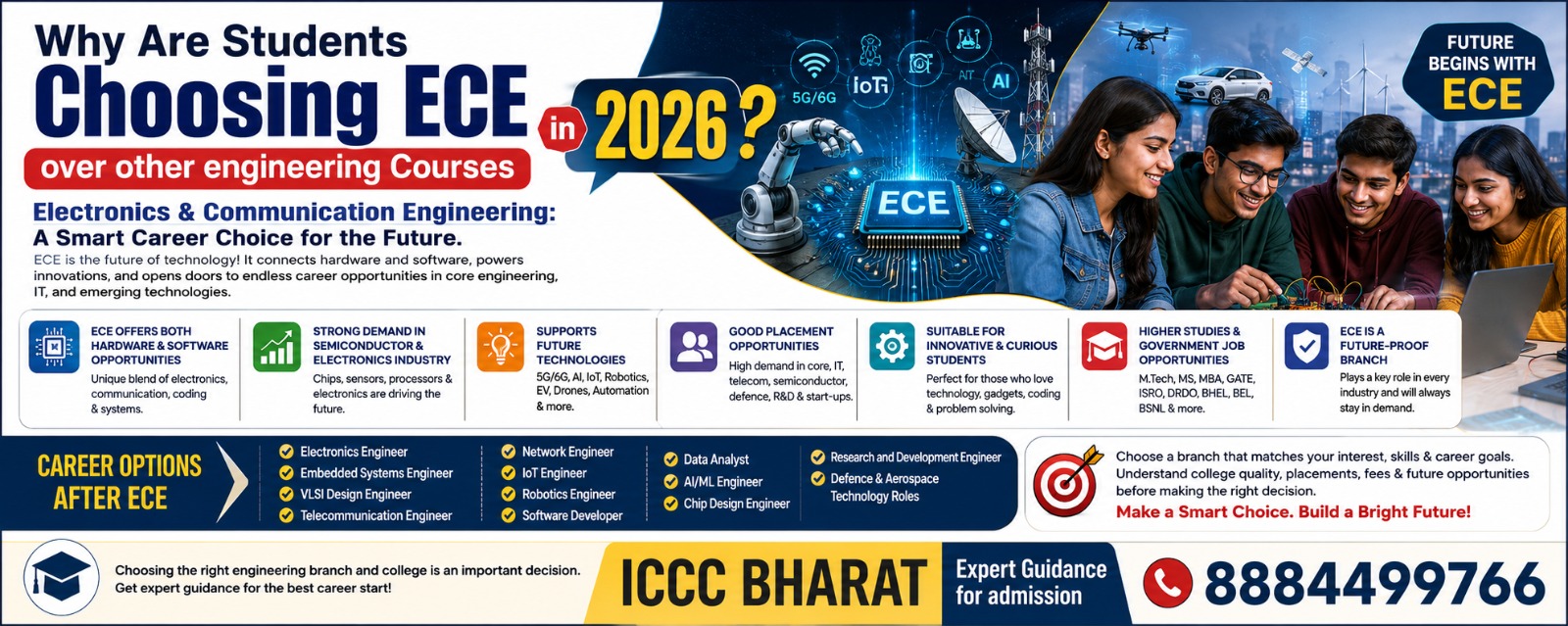
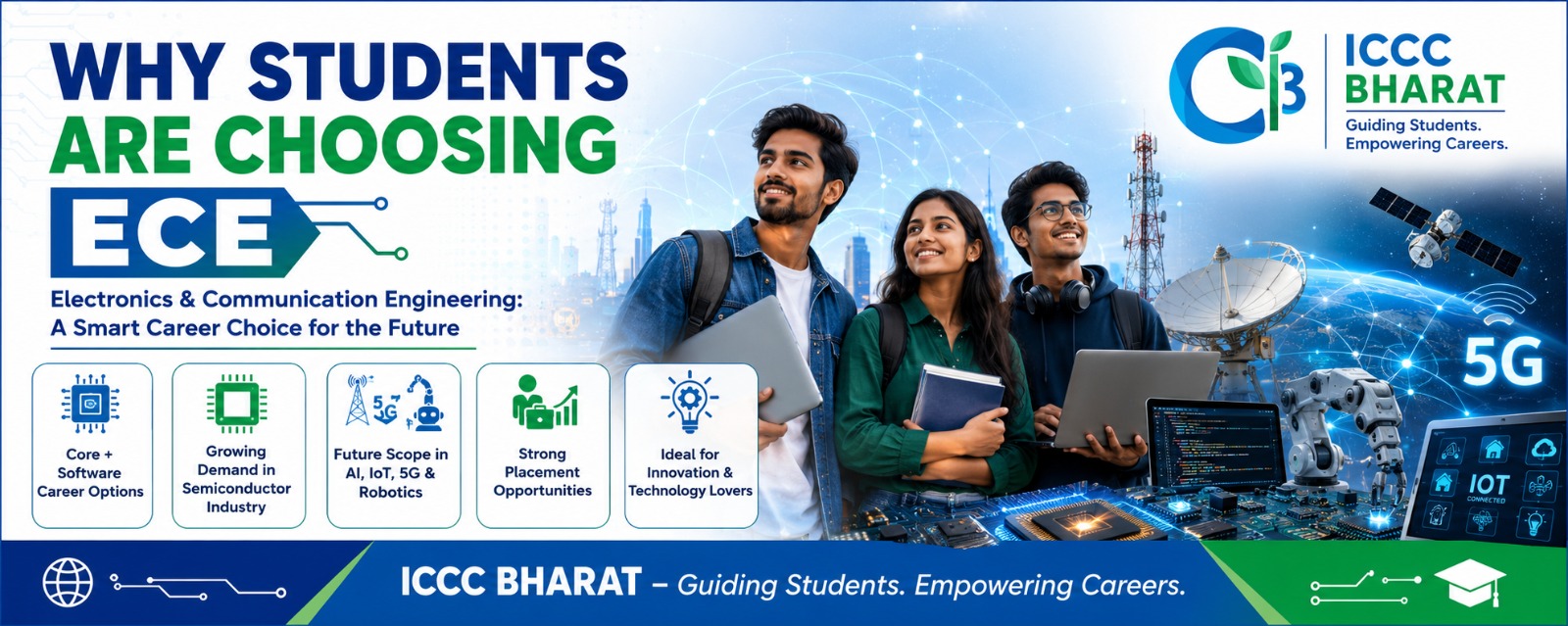
Why Are Students Choosing ECE over other engineering Courses in 2026?

Electronics & Communication Engineering: A Smart Career Choice for the Future.
Electronics & Communication Engineering, commonly known as ECE, has become one of the most preferred engineering branches among students. In today’s technology-driven world, almost every modern innovation depends on electronics, communication systems, automation, software, and smart devices. This is one of the biggest reasons why students are showing strong interest in ECE.
ECE is not limited to one career path. It gives students opportunities in both core engineering and software-related fields. Students who choose ECE can build careers in electronics, telecommunications, semiconductor industries, embedded systems, Internet of Things, robotics, artificial intelligence, automation, and IT companies.

ECE Offers Both Hardware and Software Opportunities
One major reason students choose ECE is flexibility. Unlike some branches that focus only on one area, ECE connects both hardware and software.Students learn about circuits, signals, communication systems, microprocessors, embedded systems, digital electronics, VLSI, programming, and networking. Because of this combination, ECE graduates can apply for core electronics jobs as well as software jobs.This gives students more career options after graduation.

Strong Demand in Semiconductor and Electronics Industry
The semiconductor industry is growing rapidly in India and globally. Chips, sensors, processors, and electronic components are used in smartphones, vehicles, medical devices, laptops, satellites, defence systems, and smart appliances.India is also focusing strongly on semiconductor manufacturing and electronics development. This creates new opportunities for ECE students in chip design, VLSI, testing, embedded systems, electronics manufacturing, and research-based roles.For students who want to enter a future-ready industry, ECE is becoming a very attractive choice.

ECE Supports Future Technologies
Many future technologies depend directly on electronics and communication engineering. Technologies such as 5G, 6G, Artificial Intelligence, Internet of Things, Robotics, Drones, Electric Vehicles, Smart Cities, Automation, and Space Technology require ECE knowledge.Students who choose ECE can become part of these fast-growing technology sectors. This makes the branch highly relevant for the coming years.

Good Placement Opportunities
ECE students are hired by many types of companies. They can work in core companies, telecom companies, IT companies, electronics companies, semiconductor companies, defence organizations, research companies, and start-ups.Many companies prefer ECE students because they have strong technical knowledge, analytical skills, and problem-solving ability. With additional skills like coding, VLSI, embedded systems, Python, IoT, data analytics, or AI basics, ECE students can improve their placement chances.

Suitable for Students Interested in Innovation
ECE is a good branch for students who enjoy technology, gadgets, circuits, communication, coding, and problem solving. Students who are curious about how mobile phones, satellites, robots, sensors, smart devices, and wireless networks work can find ECE very interesting. It is also a suitable branch for students who want to work on new inventions, product development, automation, electronics design, or research.

Higher Studies and Government Job Opportunities
ECE students can also go for higher studies like M .Tech, MS, MBA, or specialized courses in VLSI, Embedded Systems, Communication Engineering, Robotics, AI, IoT, or Semiconductor Technology.They can also prepare for government and public sector opportunities such as GATE, ISRO, DRDO, BHEL, BEL, BSNL, Railways, and other technical departments.

ECE Is a Future-Proof Branch
As technology continues to grow, the need for electronics and communication engineers will also increase. From mobile networks to satellites, from electric vehicles to smart homes, from healthcare devices to defence systems, ECE plays an important role everywhere.This is why many students and parents consider ECE a balanced and future-oriented engineering branch.

Career Options After ECE

After completing ECE, students can choose from multiple career paths, such as:

  • Electronics Engineer
  • Embedded Systems Engineer
  • VLSI Design Engineer
  • Telecommunication Engineer
  • Network Engineer
  • IoT Engineer
  • Robotics Engineer
  • Software Developer
  • Data Analyst
  • AI/ML Engineer
  • Chip Design Engineer
  • Research and Development Engineer
  • Defence and Aerospace Technology Roles

This wide career scope makes ECE one of the most versatile engineering branches.

Students are choosing ECE because it offers flexibility, strong career scope, good placement opportunities, and connection with future technologies. It is a branch that gives students access to both core engineering and software careers.For students who are interested in electronics, technology, communication, coding, innovation, and problem solving, ECE can be an excellent choice.

Choosing the right engineering branch and college is an important decision. Students should not select a branch only because it is popular. They should understand their interest, skills, career goals, college quality, placements, fees, and future opportunities before making a final decision.ICCC BHARAT helps students and parents with expert guidance for engineering admissions, branch selection, college comparison, counselling process, management quota options, and career planning.

ICCC BHARAT Expert Guidance for admission: 8884499766

ಕಾಲೇಜು ಆಯ್ಕೆ ಮಾಡುವಾಗ ವಿದ್ಯಾರ್ಥಿಗಳು ಮಾಡುವ ಸಾಮಾನ್ಯ ತಪ್ಪುಗಳು

ಕಾಲೇಜು ಆಯ್ಕೆ ಮಾಡುವುದು ವಿದ್ಯಾರ್ಥಿಯ ಶೈಕ್ಷಣಿಕ ಜೀವನದ ಅತ್ಯಂತ ಮಹತ್ವದ ನಿರ್ಧಾರಗಳಲ್ಲಿ ಒಂದಾಗಿದೆ. ಸರಿಯಾದ ಕಾಲೇಜು ಉತ್ತಮ ವೃತ್ತಿಜೀವನದ ಅವಕಾಶಗಳನ್ನು ತೆರೆದರೆ, ತಪ್ಪಾದ ಆಯ್ಕೆ ಅಸಮಾಧಾನ, ಆರ್ಥಿಕ ಒತ್ತಡ ಮತ್ತು ಭವಿಷ್ಯದ ಬೆಳವಣಿಗೆಗೆ ಅಡ್ಡಿಯಾಗಬಹುದು. ದುರದೃಷ್ಟವಶ ಅನೇಕ ವಿದ್ಯಾರ್ಥಿಗಳು ಕಾಲೇಜು ಆಯ್ಕೆ ಪ್ರಕ್ರಿಯೆಯಲ್ಲಿ ತಪ್ಪುಗಳನ್ನು ಮಾಡುತ್ತಾರೆ.

1. ಕೇವಲ ಶುಲ್ಕದ ಆಧಾರದ ಮೇಲೆ ಕಾಲೇಜು ಆಯ್ಕೆ ಮಾಡುವುದು

ಹೆಚ್ಚಿನ ವಿದ್ಯಾರ್ಥಿಗಳು ಕಡಿಮೆ ಶುಲ್ಕ ಇರುವ ಕಾಲೇಜುಗಳನ್ನು ಮಾತ್ರ ಆಯ್ಕೆ ಮಾಡುತ್ತಾರೆ. ಆದರೆ ಶುಲ್ಕ ಮುಖ್ಯವಾದ ಅಂಶವಾದರೂ ಅದು ಏಕೈಕ ಮಾನದಂಡವಾಗಬಾರದು. ಉತ್ತಮ ಬೋಧಕ ವೃಂದ, ಮೂಲಸೌಕರ್ಯ, ಪ್ಲೇಸ್ಮೆಂಟ್ ಹಾಗೂ ಕಲಿಕಾ ಅವಕಾಶಗಳನ್ನು ಒದಗಿಸುವ ಕಾಲೇಜು ದೀರ್ಘಾವಧಿಯಲ್ಲಿ ಹೆಚ್ಚು ಮೌಲ್ಯವನ್ನು ನೀಡುತ್ತದೆ.

2. ಮಾನ್ಯತೆ ಮತ್ತು ಅನುಮೋದನೆ ಪರಿಶೀಲಿಸದೇ ಇರುವುದು

ಕೆಲವರು ಕಾಲೇಜು ಸರ್ಕಾರ ಅಥವಾ ಸಂಬಂಧಿತ ನಿಯಂತ್ರಣ ಸಂಸ್ಥೆಗಳ ಮಾನ್ಯತೆ ಪಡೆದಿದೆಯೇ ಎಂಬುದನ್ನು ಪರಿಶೀಲಿಸುವುದಿಲ್ಲ. ಮಾನ್ಯತೆ ಇಲ್ಲದ ಕಾಲೇಜಿನಲ್ಲಿ ವ್ಯಾಸಂಗ ಮಾಡಿದರೆ ಉನ್ನತ ಶಿಕ್ಷಣ, ಉದ್ಯೋಗ ಹಾಗೂ ವಿವಿಧ ಪರೀಕ್ಷೆಗಳಲ್ಲಿ ಸಮಸ್ಯೆಗಳು ಎದುರಾಗಬಹುದು.

3. ಕೇವಲ ಕಾಲೇಜಿನ ರ್ಯಾಂಕಿಂಗ್‌ಗೆ ಮಹತ್ವ ನೀಡುವುದು

ರ್ಯಾಂಕಿಂಗ್‌ಗಳು ಕೆಲವು ಮಾಹಿತಿಯನ್ನು ನೀಡುತ್ತವೆ. ಆದರೆ ಅವು ಸಂಪೂರ್ಣ ಚಿತ್ರಣವನ್ನು ನೀಡುವುದಿಲ್ಲ. ಒಂದು ಕಾಲೇಜು ಒಟ್ಟಾರೆ ಉತ್ತಮ ರಾಂಕ್ ಹೊಂದಿದ್ದರೂ ನಿಮ್ಮ ಆಯ್ಕೆ ಮಾಡಿದ ಕೋರ್ಸ್‌ಗೆ ಅದು ಅತ್ಯುತ್ತಮ ಆಯ್ಕೆಯಾಗದೇ ಇರಬಹುದು. ಆದ್ದರಿಂದ ವಿಭಾಗದ ಗುಣಮಟ್ಟ, ಅಧ್ಯಾಪಕರು ಮತ್ತು ಉದ್ಯಮ ಸಂಪರ್ಕಗಳನ್ನು ಪರಿಶೀಲಿಸಬೇಕು.

4. ಪ್ಲೇಸ್ಮೆಂಟ್ ಅವಕಾಶಗಳ ಬಗ್ಗೆ ಮಾಹಿತಿ ಪಡೆಯದೇ ಇರುವುದು

ಅನೇಕ ವಿದ್ಯಾರ್ಥಿಗಳು ಕಾಲೇಜಿನ ಪ್ಲೇಸ್ಮೆಂಟ್ ದಾಖಲೆಗಳು ಮತ್ತು ಇಂಟರ್ನ್‌ಶಿಪ್ ಅವಕಾಶಗಳನ್ನು ಕಡೆಗಣಿಸುತ್ತಾರೆ. ಪ್ರವೇಶ ಪಡೆಯುವ ಮೊದಲು ಪ್ಲೇಸ್ಮೆಂಟ್ ಶೇಕಡಾವಾರು, ನೇಮಕಾತಿ ಮಾಡುವ ಕಂಪನಿಗಳು, ಸರಾಸರಿ ವೇತನ ಹಾಗೂ ಇಂಟರ್ನ್‌ಶಿಪ್ ಬೆಂಬಲದ ಬಗ್ಗೆ ತಿಳಿದುಕೊಳ್ಳಬೇಕು.

5. ಸ್ನೇಹಿತರು ಅಥವಾ ಕುಟುಂಬದ ಒತ್ತಡಕ್ಕೆ ಒಳಗಾಗುವುದು

ಸ್ನೇಹಿತರು ಸೇರಿಕೊಳ್ಳುತ್ತಿದ್ದಾರೆ ಅಥವಾ ಯಾರೋ ಸಲಹೆ ನೀಡಿದ್ದಾರೆ ಎಂಬ ಕಾರಣಕ್ಕೆ ಕಾಲೇಜು ಆಯ್ಕೆ ಮಾಡುವುದು ಸರಿಯಲ್ಲ. ಪ್ರತಿಯೊಬ್ಬ ವಿದ್ಯಾರ್ಥಿಯ ಆಸಕ್ತಿ, ಸಾಮರ್ಥ್ಯ ಮತ್ತು ವೃತ್ತಿ ಗುರಿಗಳು ವಿಭಿನ್ನವಾಗಿರುತ್ತವೆ.

6. ಕ್ಯಾಂಪಸ್ ಸೌಲಭ್ಯಗಳು ಮತ್ತು ವಿದ್ಯಾರ್ಥಿ ಬೆಂಬಲವನ್ನು ಕಡೆಗಣಿಸುವುದು

ಉತ್ತಮ ಕಲಿಕಾ ವಾತಾವರಣವು ಶೈಕ್ಷಣಿಕ ಯಶಸ್ಸಿಗೆ ಬಹಳ ಮುಖ್ಯ. ಪ್ರಯೋಗಾಲಯಗಳು, ಗ್ರಂಥಾಲಯ, ವಸತಿ ಸೌಲಭ್ಯ, ಕ್ರೀಡಾ ಚಟುವಟಿಕೆಗಳು, ವಿದ್ಯಾರ್ಥಿ ಸಂಘಗಳು ಹಾಗೂ ವೃತ್ತಿ ಮಾರ್ಗದರ್ಶನ ಸೇವೆಗಳನ್ನು ಪರಿಶೀಲಿಸಬೇಕು.

7. ಪ್ರವೇಶ ಮತ್ತು ಕೌನ್ಸೆಲಿಂಗ್ ದಿನಾಂಕಗಳನ್ನು ತಪ್ಪಿಸಿಕೊಳ್ಳುವುದು

ಅರ್ಹತೆಯಿರುವ ಅನೇಕ ವಿದ್ಯಾರ್ಥಿಗಳು ಅರ್ಜಿ ಸಲ್ಲಿಕೆ ದಿನಾಂಕ, ದಾಖಲೆ ಪರಿಶೀಲನೆ, ಕೌನ್ಸೆಲಿಂಗ್ ಸುತ್ತುಗಳು ಹಾಗೂ ಶುಲ್ಕ ಪಾವತಿ ದಿನಾಂಕಗಳನ್ನು ಗಮನಿಸದ ಕಾರಣ ಉತ್ತಮ ಅವಕಾಶಗಳನ್ನು ಕಳೆದುಕೊಳ್ಳುತ್ತಾರೆ.

ತೀರ್ಮಾನ

ಕಾಲೇಜು ಆಯ್ಕೆ ಒಂದು ಯೋಚಿಸಿ ತೆಗೆದುಕೊಳ್ಳಬೇಕಾದ ನಿರ್ಧಾರವಾಗಿದೆ. ಜನಪ್ರಿಯತೆ, ಕಡಿಮೆ ಶುಲ್ಕ ಅಥವಾ ಇತರರ ಪ್ರಭಾವದ ಆಧಾರದ ಮೇಲೆ ನಿರ್ಧಾರ ತೆಗೆದುಕೊಳ್ಳುವ ಬದಲು, ಮಾನ್ಯತೆ, ಶಿಕ್ಷಣದ ಗುಣಮಟ್ಟ, ಪ್ಲೇಸ್ಮೆಂಟ್, ಮೂಲಸೌಕರ್ಯ ಮತ್ತು ಭವಿಷ್ಯದ ವೃತ್ತಿ ಅವಕಾಶಗಳನ್ನು ಗಮನದಲ್ಲಿಡಬೇಕು.

ನೆನಪಿರಲಿ: ಕಾಲೇಜಿಗೆ ಪ್ರವೇಶ ಪಡೆಯುವುದು ಮಾತ್ರ ಮುಖ್ಯವಲ್ಲ, ನಿಮ್ಮ ಭವಿಷ್ಯದಲ್ಲಿ ಸರಿಯಾದ ಹೂಡಿಕೆ ಮಾಡುವುದು ಇನ್ನೂ ಮುಖ್ಯವಾಗಿದೆ.

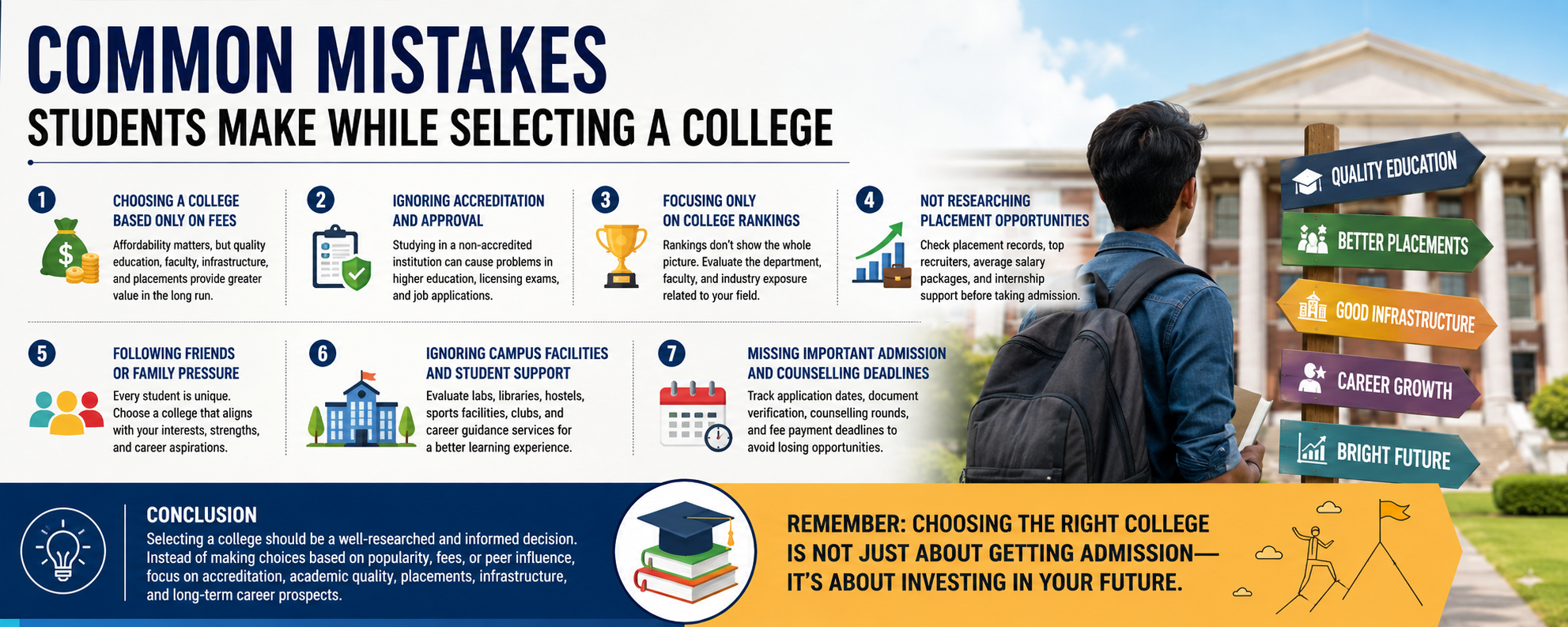
Common Mistakes Students Make While Selecting a College

Choosing a college is one of the most important decisions in a student’s academic journey. The right college can open doors to excellent career opportunities, while the wrong choice can lead to dissatisfaction, financial stress, and limited growth. Unfortunately, many students make avoidable mistakes during the college selection process.

1. Choosing a College Based Only on Fees

Many students select a college simply because it has lower fees. While affordability is important, it should not be the only factor. A college with better faculty, infrastructure, placements, and learning opportunities may provide greater value in the long run.

2. Ignoring Accreditation and Approval

Students often fail to verify whether the college is recognized by the appropriate authorities. Studying in a non-accredited institution can create problems during higher education admissions, licensing exams, and job applications.

3.Focusing Only on College Rankings

Rankings can provide useful information, but they do not tell the complete story. A college that ranks highly overall may not be the best option for your specific course or career goals. Always evaluate the department, faculty, and industry exposure related to your chosen field.

4. Not Researching Placement Opportunities

Many students overlook placement records and internship opportunities. Before taking admission, check the college’s placement statistics, recruiting companies, average salary packages, and internship support.

5. Following Friends or Family Pressure

Choosing a college because friends are joining or because someone else recommended it without proper research can lead to regret. Every student’s interests, strengths, and career aspirations are different.

6. Ignoring Campus Facilities and Student Support

A good learning environment plays a crucial role in academic success. Students should evaluate laboratories, libraries, hostels, sports facilities, student clubs, and career guidance services before making a decision.

7. Missing Important Admission and Counselling Deadlines

Many deserving students lose admission opportunities because they fail to keep track of application dates, document verification schedules, counselling rounds, and fee payment deadlines.

Conclusion

Selecting a college should be a well-researched and informed decision. Instead of making choices based on popularity, fees, or peer influence, students should focus on accreditation, academic quality, placements, infrastructure, and long-term career prospects. Taking the time to evaluate all these factors can help students build a successful and rewarding future.

Remember: Choosing the right college is not just about getting admission—it’s about investing in your future.

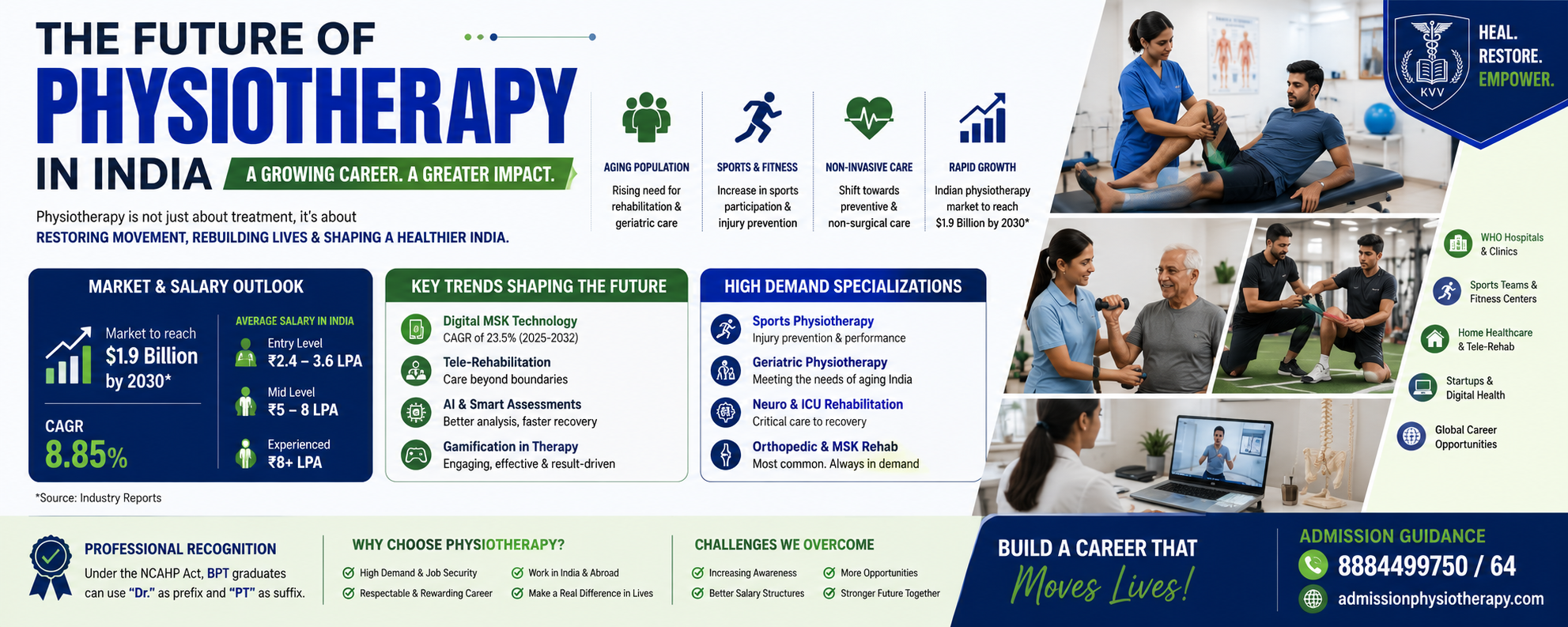
The Future of Physiotherapy in India: A Booming Healthcare Career in 2026 and Beyond

Physiotherapy in India is rapidly evolving from a supportive healthcare role into one of the most promising and respected medical professions of the future. With rising awareness about rehabilitation, preventive healthcare, sports injuries, chronic pain management, and post-surgical recovery, the demand for qualified physiotherapists is increasing significantly across India and globally.

Today, physiotherapists are not just helping patients recover from injuries — they are becoming an essential part of holistic healthcare systems. From hospitals and sports organizations to home healthcare and digital rehabilitation startups, physiotherapy professionals are finding opportunities in every sector of healthcare.

Rapid Growth of the Physiotherapy Industry

The Indian physiotherapy market is expected to grow to nearly $1.9 billion by 2030, with an impressive CAGR of 8.85%. This growth is being driven by several major factors:

  • Aging population requiring rehabilitation and geriatric care
  • Increase in lifestyle diseases and chronic pain
  • Rising participation in sports and fitness activities
  • Growing awareness about non-invasive treatment options
  • Demand for rehabilitation after surgeries and accidents

As healthcare shifts toward recovery-focused and preventive care, physiotherapy is becoming one of the fastest-growing allied health professions in India.

Technology is Transforming Physiotherapy

The future of physiotherapy is strongly connected with technology. Digital musculoskeletal (MSK) healthcare is projected to grow at a CAGR of 23.5% between 2025 and 2032.

Modern physiotherapy now includes:

  • Tele-rehabilitation and virtual consultations
  • AI-driven posture and movement assessments
  • Smart rehabilitation devices
  • Wearable fitness and therapy trackers
  • Gamification in rehabilitation exercises

These advancements are making physiotherapy more accessible, efficient, and patient-friendly, especially in rural and home-care settings.

High-Demand Specialization Areas

Physiotherapy is no longer limited to general rehabilitation. Specialized fields are creating exciting career opportunities for students.

Sports Physiotherapy

With the growth of sports leagues, fitness culture, and professional athletics in India, sports physiotherapists are in high demand for injury prevention, rehabilitation, and performance enhancement.

Geriatric Physiotherapy

India’s aging population is increasing the need for physiotherapists specializing in elderly care, mobility support, and chronic condition management.

Neuro & ICU Rehabilitation

Patients recovering from strokes, neurological disorders, and intensive care treatments require advanced rehabilitation support, creating strong demand for trained physiotherapists.

Orthopedic & Musculoskeletal Rehabilitation

Back pain, posture issues, joint problems, and work-related injuries are becoming common among young professionals, increasing the need for physiotherapy services.

Professional Recognition & Career Status

One of the biggest developments for the profession is the implementation of the National Commission for Allied and Healthcare Professions (NCAHP) Act.

This has helped standardize physiotherapy education and improve the professional status of physiotherapists in India. BPT graduates are now recognized as specialized healthcare professionals and are permitted to use:

  • “Dr.” as a prefix
  • “PT” as a suffix

This recognition is improving awareness, trust, and opportunities in both public and private healthcare sectors.

Salary & Career Opportunities

Physiotherapy offers stable and growing income opportunities.

Average Salary in India

  • Entry-level: ₹2.4 – ₹3.6 LPA
  • Mid-level professionals: ₹5 – ₹8 LPA
  • Experienced specialists: ₹8+ LPA
  • Private practice & sports rehab: Higher earning potential

Career Paths

Physiotherapists can work in:

  • Multi-speciality hospitals
  • Rehabilitation centers
  • Sports organizations and fitness clubs
  • Home healthcare services
  • Digital health startups
  • Private clinics
  • International healthcare systems

Many physiotherapists are also becoming entrepreneurs by opening their own clinics and rehabilitation centers.

Challenges in the Profession

Despite its rapid growth, physiotherapy still faces some challenges:

  • Lack of awareness in smaller towns and rural areas
  • Salary concerns for fresh graduates
  • Need for better infrastructure and advanced training
  • Competition increasing in urban regions

However, with increasing healthcare awareness and government regulation, these challenges are expected to improve steadily.

Why Physiotherapy is the Future

Physiotherapy is no longer viewed as just an “assistant” healthcare profession. It is becoming a core pillar of preventive and rehabilitation healthcare.

As India moves toward:

  • Non-invasive treatment approaches
  • Preventive healthcare models
  • Digital health integration
  • Fitness and wellness awareness

…the role of physiotherapists will become even more important.

For students interested in healthcare careers without the intense competition of MBBS, physiotherapy offers:
✅ Strong career growth
✅ Respectable profession
✅ Global opportunities
✅ Expanding demand
✅ Meaningful patient impact

Conclusion

The future of physiotherapy in India looks extremely promising. With rapid technological advancements, increasing healthcare awareness, regulatory support, and growing demand for rehabilitation services, physiotherapy is set to become one of the most sought-after healthcare professions in the coming decade.

For students passionate about helping people recover, move better, and live healthier lives, physiotherapy is not just a course — it is a future-ready career with purpose, stability, and global scope.