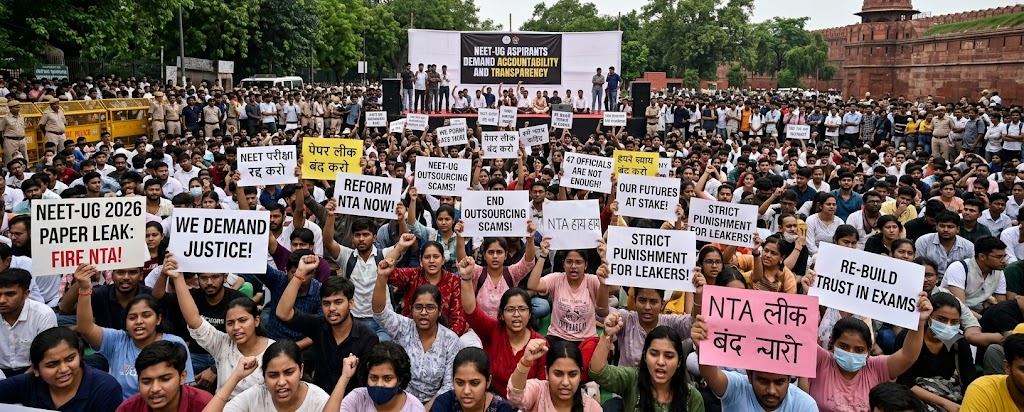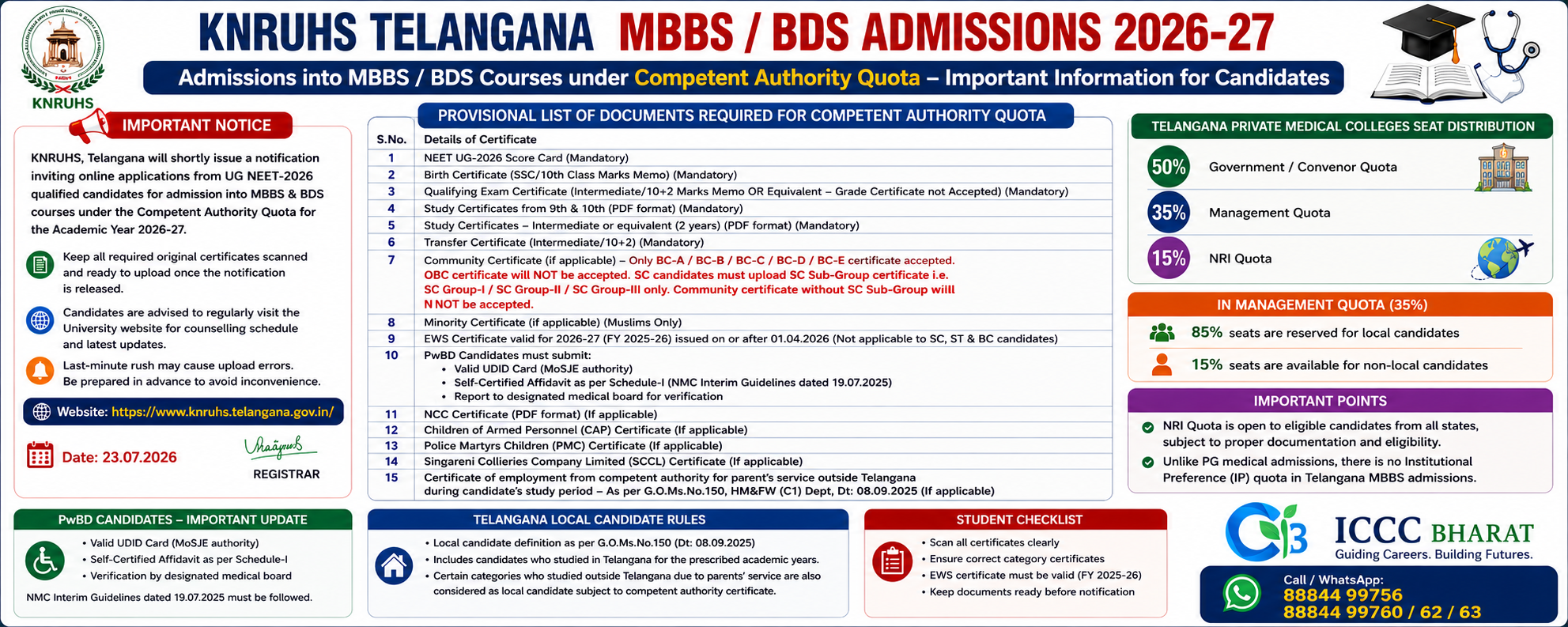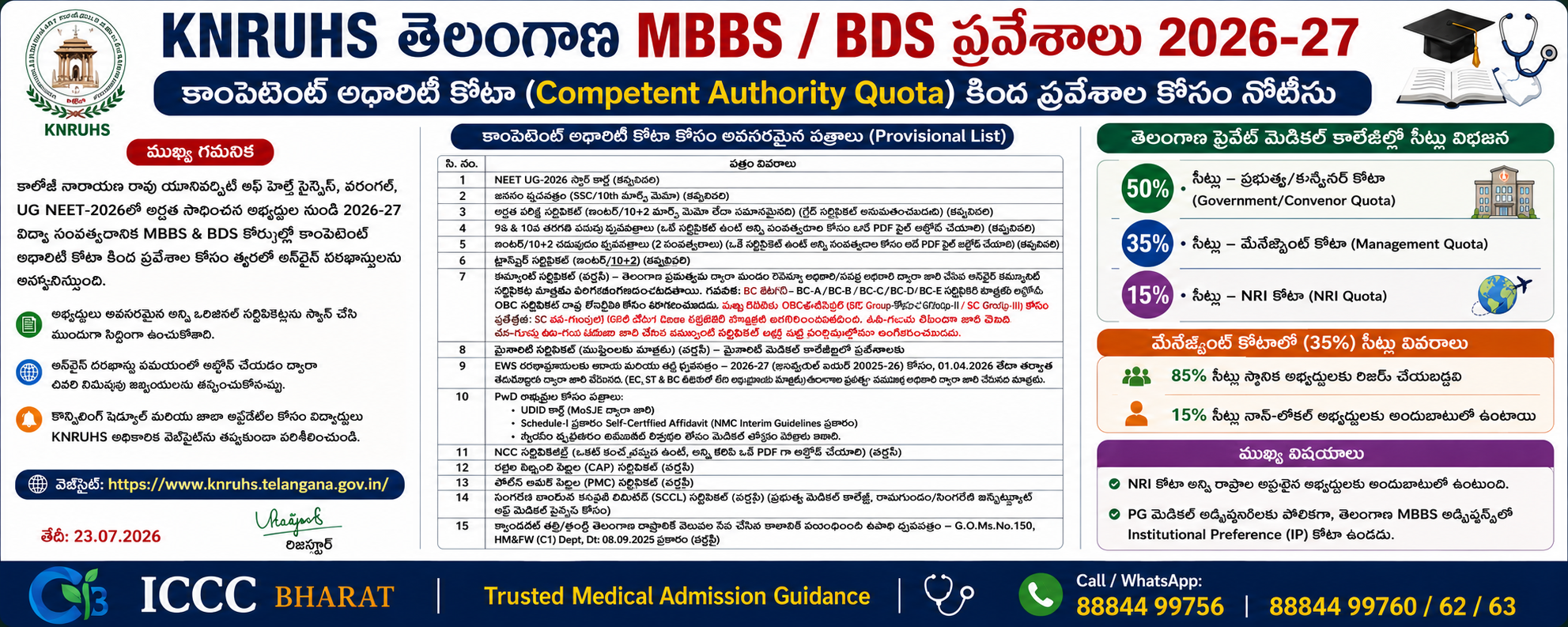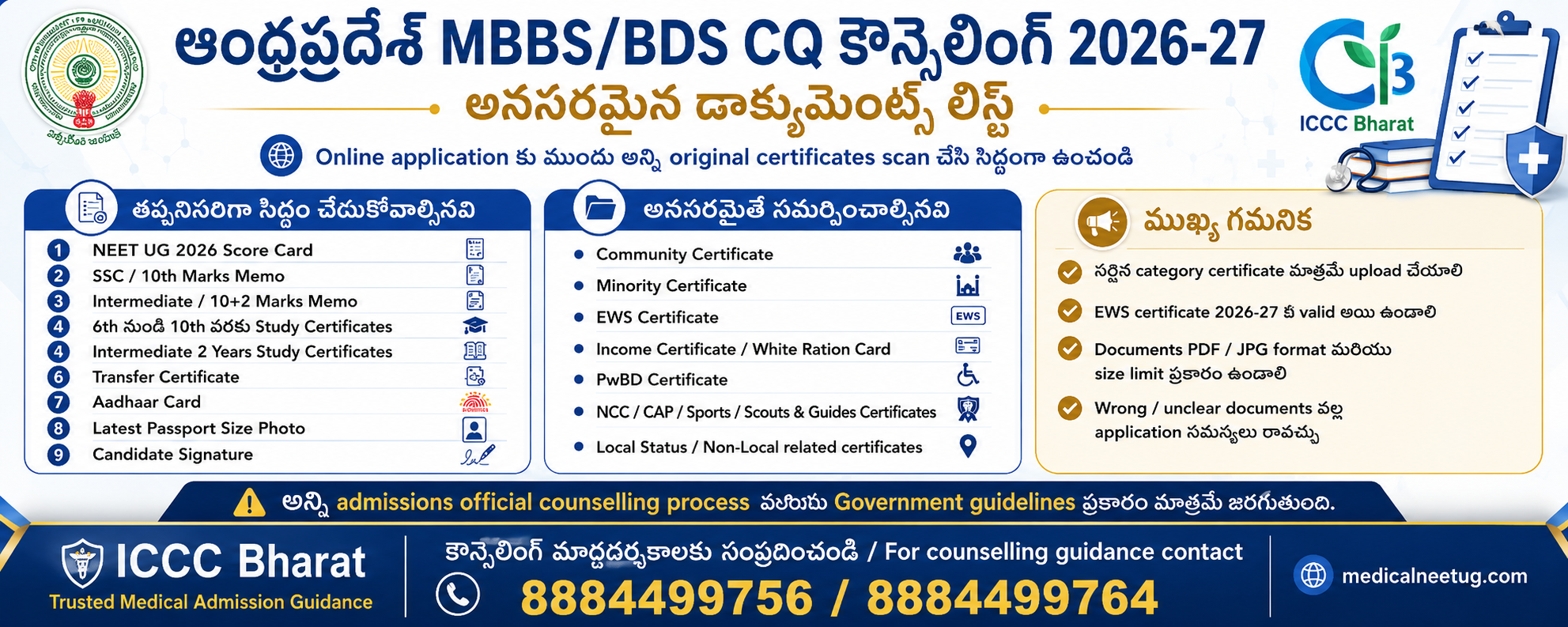
CBI Uncovers Massive Corruption in Medical Education: FIR Names Top Officials from Health Ministry, NMC, and Former UGC Chairman

The Central Bureau of Investigation (CBI) has unearthed a far-reaching corruption scandal in India’s medical education sector, registering an FIR against multiple high-ranking officials from the Ministry of Health and Family Welfare (MoHFW), National Medical Commission (NMC), and various private medical colleges, including former UGC chairman D.P. Singh, now Chancellor of TISS.

According to the FIR, the accused were part of a well-orchestrated criminal conspiracy involving the unauthorised access and dissemination of confidential regulatory files, manipulation of inspection processes, and bribery to secure favourable outcomes for private medical colleges.

The CBI has invoked Section 61(2) of the Bharatiya Nyaya Sanhita and Sections 7, 8, 9, 10, and 12 of the Prevention of Corruption Act, charging several officials and institutional heads with bribery, conspiracy, breach of official secrecy, and forgery.

Key Allegations:

  • Leaked inspection schedules and assessor names enabled colleges to stage fake setups using ghost faculty, dummy patients, and tampered biometric systems.
  • Senior health ministry officials allegedly photographed classified documents and shared them via mobile devices with intermediaries linked to colleges.
  • Bribes were routed through hawala channels, with part of the funds allegedly used to construct a Hanuman temple in Rajasthan worth ₹75 lakh.

Notable Individuals Named:

  • Virendra Kumar (Gurgaon) – Alleged key coordinator in collecting bribes and passing information.
  • Jitu Lal Meena – Then MARB member, allegedly received bribes via Kumar.
  • Mayur Raval, Registrar, Geetanjali University – Accused of tipping off colleges about inspections and demanding bribes.
  • Suresh Singh Bhadoria, Chairman, Index Medical College – Accused of issuing fake degrees and manipulating faculty records.
  • Dr. B. Hari Prasad, Dr. Krishna Kishore, and Dr. Ankam Rambabu – Operated the southern India arm, facilitating dummy faculty and NMC approvals in exchange for bribes.

Example Cases:

  • Father Colombo Institute, Warangal – Paid over ₹4 crore to Prasad for favourable inspection outcomes.
  • Gayatri Medical College, Visakhapatnam – Allegedly paid ₹50 lakh to secure NMC approval.
  • SRIMSR, Raipur – Registrar Mayur Raval allegedly demanded ₹25–30 lakh for pre-inspection leaks. NMC assessor Dr. Manjappa C.N. reportedly coordinated bribe collection through Bengaluru channels.

NMC Scam: CBI Books 35 Persons Including Three from Andhra Pradesh

The Central Bureau of Investigation (CBI) has filed an FIR against 35 individuals across India in connection with a nationwide scam involving the National Medical Commission (NMC). The charges include criminal conspiracy, bribery, and manipulation of regulatory procedures.

Key Individuals from Andhra Pradesh Named:

  • Dr. Krishna Kishore – Visakhapatnam
  • Venkat, Director of Gayatri Medical College – Visakhapatnam
  • Dr. B. Hari Prasad – Kadiri, Anantapur district

CBI Allegations:

  • The accused, in collusion with officials from the Ministry of Health and Family Welfare and NMC, allegedly:
    • Leaked inspection schedules
    • Used ‘ghost faculty’, fake patients, and tampered biometric records
    • Facilitated favorable inspection reports in exchange for bribes
    • Accessed and disseminated confidential regulatory files

Southern India Nexus:

  • Dr. Virendra Kumar, posing as a consultant, allegedly coordinated southern operations, arranging dummy faculty and facilitating NMC approvals for bribes.
  • Dr. B. Hari Prasad and Dr. Ankam Rambabu are accused of managing regulatory affairs for Father Colombo Institute of Medical Sciences, Warangal, allegedly receiving ₹66 lakh in bribes via intermediaries and banking channels.
  • Venkat reportedly paid ₹50 lakh to Dr. Hari Prasad, a part of which was routed to Dr. Virendra Kumar in Delhi through hawala channels.

Wider Implications:

  • The bribe money was reportedly used for multiple illegal purposes, including temple construction.
  • The CBI investigation is ongoing, with concrete evidence gathered of large-scale regulatory manipulation.

NEET (UG) 2025: Examination Pattern Reverts to Pre-COVID Format

In a recent public notice dated 25th January 2025, the National Testing Agency (NTA) has announced significant updates to the NEET (UG) 2025 examination. This update aims to revert the question paper pattern and duration back to its pre-COVID format, aligning the structure with the original framework adopted before the pandemic.

Key Changes in NEET (UG) 2025 Examination:

  1. No More Optional Questions:
    • The optional Section B, which was introduced temporarily during the COVID-19 period to accommodate disruptions in the education system, will no longer be available.
    • Instead, the question paper will consist of 180 compulsory questions:
      • Physics: 45 questions
      • Chemistry: 45 questions
      • Biology: 90 questions
  2. Examination Duration:
    • Candidates will be given a total of 180 minutes (3 hours) to complete the examination, eliminating the additional time granted during the pandemic.

Implications for Aspirants:

With the removal of optional questions, students must now prepare comprehensively for all topics in the NEET syllabus. The reintroduction of the single-section paper underlines the importance of mastering every subject area to maximize their score.

Preparation Tips for Students:

  • Time Management: Practice solving 180 questions within the given 3-hour time frame to build speed and accuracy.
  • Comprehensive Study: Ensure thorough preparation of the entire syllabus, as there will be no option to skip topics through optional questions.
  • Mock Tests: Regularly take full-length mock tests to simulate exam conditions and identify weak areas.

Official Communication:

Candidates are advised to keep themselves updated by visiting the official NTA website at neet.nta.nic.in for further notifications. For specific queries, students can contact the helpline at 011-40759000 or email neetug2025@nta.ac.in.

B.Sc. Nursing Admissions in Karnataka: CET-2025 Is Mandatory for Karnataka and Non-Karnataka Candidates

Aspiring candidates seeking admission to the Bachelor of Science in Nursing (B.Sc. Nursing) program in Karnataka for the academic year 2025 must take note of the revised admission guidelines issued by the Karnataka Examinations Authority (KEA). As per the recent notification, participation in the Common Entrance Test (CET-2025) is now mandatory for both Karnataka and non-Karnataka candidates who wish to secure a seat in the B.Sc. Nursing course.

Eligibility Criteria for B.Sc. Nursing Admission

To qualify for admission to B.Sc. Nursing, candidates must meet the following eligibility requirements:

  1. Academic Qualification:
    • The applicant should have passed Physics, Chemistry, Biology, and English as individual subjects in their II PUC/12th Standard (10+2) or equivalent examination.
    • A minimum of 45% aggregate marks in Physics, Chemistry, and Biology (PCB) is required for general category candidates.
    • Candidates belonging to SC/ST or other backward classes (OBC) from Karnataka must secure at least 40% aggregate marks in PCB.
  2. Reservation Guidelines:
    • Reservation criteria, such as eligibility for SC/ST/OBC quotas, apply only to Karnataka candidates.
    • Non-Karnataka candidates will not be eligible for government-quota seats under the reservation policy.

Important Guidelines for Non-Karnataka Candidates

  • Non-Karnataka candidates who wish to apply for B.Sc. Nursing through KEA must register for CET-2025.
  • However, they are not eligible for government-quota seats and will only be considered under the private or management quota.

Mandatory CET-2025 Participation

Candidates must register and appear for the CET-2025, which will include Physics, Chemistry, and Biology (PCB) subjects. The CET is a critical requirement to be eligible for B.Sc. Nursing admissions, regardless of whether candidates are from Karnataka or outside Karnataka.

The CET-2025 timetable is as follows:

  • April 16, 2025 (Wednesday):
    • Physics: 10:30 AM – 11:50 AM
    • Chemistry: 2:30 PM – 3:50 PM
  • April 17, 2025 (Thursday):
    • Mathematics: 10:30 AM – 11:50 AM
    • Biology: 2:30 PM – 3:50 PM

Candidates applying for B.Sc. Nursing must take the PCB combination during the CET-2025.

Selection Process

The final selection for admission to the B.Sc. Nursing program will be based on:

  1. Performance in CET-2025: Marks obtained in the CET for PCB subjects will play a key role in determining eligibility.
  2. II PUC/12th Standard Marks: Candidates’ scores in Physics, Chemistry, and Biology from their qualifying examination will also be considered for seat allocation.

Additional Information

  • For admission to B.Sc. Allied Health Sciences, B.P.T. (Bachelor of Physiotherapy), and BPO (Bachelor in Prosthetics and Orthotics) courses, there is no entrance exam requirement. However, candidates must still register for CET-2025, complete the application process, and pay the required fees to be eligible for counseling.

Key Takeaways

  1. All candidates, including non-Karnataka applicants, must register for CET-2025 to qualify for B.Sc. Nursing admissions in Karnataka.
  2. Non-Karnataka candidates will not be eligible for government-quota seats.
  3. Reservation benefits are limited to Karnataka SC/ST/OBC candidates.
  4. Selection is based on both CET-2025 performance and II PUC/12th Standard marks.

Conclusion

The decision to make CET-2025 mandatory for B.Sc. Nursing admissions ensures a streamlined and merit-based selection process. Candidates are urged to carefully follow the registration guidelines and prepare for the CET to enhance their chances of securing admission to their desired course. For further details, candidates can refer to the official KEA portal.

4o

O

CET 2025 Scheduled for April 16-17: Applications Open from January 23

Bengaluru: The Common Entrance Test (CET) for admissions to professional courses, including engineering and veterinary sciences, has been scheduled for April 16 and 17, 2025. The Karnataka Examinations Authority (KEA) has announced that the application process will commence on January 23, 2025, and continue until February 21.

CET 2025: Fresh Changes and Enhanced Security Measures for the April Exams

The aftermath of seat-blocking allegations during CET 2024 has prompted the state to introduce tighter security measures. Higher Education Minister MC Sudhakar emphasized that candidates must use their personal mobile numbers for registration. A one-time password (OTP) will ensure authenticity, and only one candidate can register per mobile number—no room for loopholes.

What’s the motive? It’s about fairness. The days of manipulating the system through fake or fraudulent applications are now under scrutiny, ensuring genuine candidates have a fair shot at their dream courses.

Streamlined Verification for a Seamless Process

Gone are the days of endless queues and manual verifications. In 2025, technology takes center stage with a significant role for the Student Achievement Tracking System (SATS). This innovative system will pull academic records via a web service, minimizing physical documentation requirements.

Caste and income certificates will be verified automatically, and candidates who meet the criteria can download a “successfully verified” claims certificate online. For those flagged as “not verified,” a manual submission process will still be available, ensuring no one is left behind.

What does this mean for students? Less paperwork, fewer office trips, and more time to focus on preparations.

Not Just CET—A Broader Calendar of Opportunities

While CET may dominate headlines, it’s not the only exam to watch. Here’s a glance at the key dates for other entrance exams:

  • Diploma Common Entrance Test (DCET): Applications open from April 24 to May 10, with the exam on May 31.
  • Postgraduate Programs (ME, MTech, MArch): PGCET applications run parallel from April 24 to May 10, with the exam also on May 31.
  • MBA/MCA & MPharm/PharmD: The entrance exams are scheduled for June 22, with applications accepted from April 24 to June 10.

The inclusion of new courses such as Yoga, Naturopathy, and BSc in Agriculture and Nursing under the CET 2025 umbrella reflects the state’s progressive approach to aligning education with emerging trends and demands.

A Smooth Pathway Ahead

Candidates applying under special quotas (NCC, sports, ex-servicemen, and others) have dedicated dates and support for document submission, ensuring a more inclusive process. The entire journey, from application to result, is designed to keep students informed with timely SMS updates.

This year’s CET isn’t just about the test—it’s about leveling the playing field, simplifying the process, and adapting to a tech-savvy generation. If the updates are anything to go by, CET 2025 could set a benchmark for how exams are conducted in the future.

So, gear up, future engineers and professionals—this is your chance to shine in a system that’s working harder to make it all about merit and opportunity.

NEET (UG) 2025: Key Updates and Highlights

The National Testing Agency (NTA) has released an official public notice dated 16th January 2025, outlining the conduct of the National Eligibility cum Entrance Test (NEET-UG) for the year 2025. The examination continues to be a cornerstone in the process of admitting students to undergraduate medical and allied courses across India.

Key Highlights of the Notification:

  1. Uniform NEET-UG for All Medical Disciplines
    As per Section 14 of the National Medical Commission (NMC) Act, 2019, NEET-UG serves as a common and standardized entrance test for admission to undergraduate medical education in all institutions across India. Additionally, under the National Commission for Indian System of Medicine Act, 2020, NEET-UG is extended to disciplines such as:
    • BAMS (Bachelor of Ayurvedic Medicine and Surgery)
    • BUMS (Bachelor of Unani Medicine and Surgery)
    • BSMS (Bachelor of Siddha Medicine and Surgery)
    Furthermore, NEET-UG will also govern admissions to BHMS (Bachelor of Homeopathic Medicine and Surgery) under the National Commission for Homeopathy.
  2. Inclusion of B.Sc. Nursing Under NEET-UG
    Military Nursing Service (MNS) aspirants seeking admission to B.Sc. Nursing courses offered at Armed Forces Medical Service Hospitals will now require NEET-UG scores. These scores will serve as a basis for shortlisting candidates for the four-year nursing program.
  3. Exam Mode and Format
    The NEET-UG 2025 examination will be conducted in pen-and-paper mode (OMR-based) on a single day and single shift, ensuring consistency and fairness in the evaluation process.

Why NEET-UG is Crucial?

NEET-UG stands as a hallmark of transparency and merit-based selection in medical admissions. Its application to various allied fields ensures uniformity and creates a level playing field for aspirants nationwide. By streamlining the admission process under one examination, NEET-UG eliminates the complexity of multiple entrance tests.

Guidance for Aspirants:

Candidates aiming for NEET-UG 2025 are advised to:

This notice underscores NTA’s commitment to providing an efficient and comprehensive platform for medical and allied education admissions, aligning with the broader vision of the National Medical Commission.

Conclusion:

The NEET-UG 2025 notification highlights significant steps towards streamlining admissions across diverse medical and allied courses. It ensures a robust, fair, and unified platform for students aspiring to contribute to India’s healthcare ecosystem.

For regular updates and clarity on the admission process, aspirants must actively monitor the official communications and prepare diligently for the exam.

Revamping NEETUG: The Expert Panel that Could Reshape India’s Examination System

In a groundbreaking move poised to transform India’s most competitive entrance exam, the Central Government informed the Supreme Court on January 2 of its decision to adopt the recommendations of a seven-member expert panel. Led by former ISRO Chief K. Radhakrishnan, the committee undertook an extensive review of the National Testing Agency’s (NTA) operations following a challenging year for the National Eligibility cum Entrance Test – Undergraduate (NEET-UG).

A panel member shared insights into the exhaustive deliberations and the forward-looking recommendations aimed at addressing systemic weaknesses while ensuring student welfare.

Inside the Panel’s Deliberations

The expert panel’s approach was holistic, involving collaboration with intelligence agencies, state education departments, and other stakeholders to map vulnerabilities in the current system. According to Prof. Rao, the goal was not only to address past issues but also to develop a sustainable and transparent framework for the future.

“We studied every facet of the NTA’s operations, from structural frameworks to exam logistics and vendor management,” he explained. Over 30 to 35 full-day sittings, the committee consulted with students, parents, teachers, state bureaucrats, and educationists, gathering feedback from around 30,000 individuals through direct interactions and online platforms.

Learning from Global Best Practices

A standout recommendation from the panel was fostering international collaboration. Prof. Rao emphasized the need to adopt and adapt successful examination models from countries like the USA and China, which operate robust systems like the Gaokao, China’s national college entrance exam.

“India has the potential to not just learn from global practices but also to become a leader in conducting standardized tests for developing nations,” he remarked, highlighting India’s cost-effective solutions and resource pool.

Addressing Mental Health: A Game-Changing Proposal

Recognizing the immense pressure NEET imposes on students, the panel proposed significant reforms to make exams less stressful. Key recommendations include:

  1. Multiple Exam Sessions: Reducing the stakes of a single attempt by allowing students multiple opportunities annually.
  2. Video Tutorials: Familiarizing students with the examination format to reduce anxiety.
  3. Standardized Exam Centers: Ensuring uniformity across centers, so students know exactly what to expect.

“The process of the examination itself should not be stressful,” Prof. Rao asserted.

Checks and Balances: Ensuring Accountability

To ensure the recommendations are implemented effectively, the committee emphasized the need for robust accountability measures. Suggestions included:

  • Strengthening the NTA’s governing board.
  • Establishing clear roles and Standard Operating Procedures (SOPs) for all stakeholders.
  • Implementing a monitoring system to track adherence to the reforms.

The panel also incorporated specific timelines into their recommendations, ensuring progress could be measured and delays minimized.


A New Chapter for NEET

Reflecting on the controversies that marred NEET-UG 2024, Prof. Rao expressed optimism. “If implemented sincerely, the recommendations will address security breaches, logistical lapses, and other issues that plagued the system,” he said.

The committee’s vision extends beyond addressing immediate problems. By upholding the principles of fairness, transparency, and student welfare, the reforms aim to set a benchmark for high-stakes examinations globally.

As India embarks on this transformative journey, the future of NEET-UG and the aspirations of millions of students appear to be on a path toward clarity, integrity, and inclusivity.

NTA To Focus Exclusively on Higher Education Entrance Exams from 2025

New Delhi: In a significant shift for the country’s examination ecosystem, Union Education Minister Dharmendra Pradhan announced on Tuesday that the National Testing Agency (NTA) will no longer conduct recruitment examinations starting next year. Instead, the NTA will focus solely on higher education entrance tests, streamlining its core responsibilities and reinforcing the reliability of these critical evaluations.

“From 2025 onward, the NTA will be limited to conducting only entrance exams for higher education and will not conduct any recruitment exams,” said Minister Pradhan. The move follows recommendations from a high-level panel formed earlier this year, which was tasked with suggesting reforms to enhance the integrity and efficiency of the country’s examination framework.

The panel’s recommendations came in the wake of concerns over exam leaks and cancellations—most notably, the alleged leak of the National Eligibility cum Entrance Test (NEET). Against this backdrop, the restructuring of the NTA aims to restore public confidence in the testing process and ensure zero-error assessments.

As part of the reforms, the NTA will undergo a comprehensive organizational overhaul. According to the education minister, at least ten new posts will be created, and several procedural changes will be introduced to strengthen the agency’s internal operations. The Common University Entrance Test (CUET-UG), introduced as a single-window assessment for undergraduate admissions, will continue to be conducted once a year.

Additionally, discussions are underway with the Ministry of Health and Family Welfare to determine whether NEET—currently a pen-and-paper examination—should transition to a computer-based format. The education ministry is also exploring the integration of computer-adaptive testing and other technology-driven solutions to modernize the examination process, thereby reducing the scope of human error and misconduct.

Overall, these reforms signal a strategic pivot towards more secure, reliable, and future-ready testing systems that the government hopes will uphold academic standards and public trust in high-stakes examinations.

Karnataka High Court Orders 17 Private Medical Colleges to Surrender NRI Quota MBBS Seats

Bengaluru, August 13, 2024 — In a landmark decision, the Karnataka High Court has directed 17 private medical colleges in the state to surrender a significant portion of their MBBS seats from the NRI quota to the state government quota. This ruling comes as a result of a 2018 seat-blocking scandal, where these institutions were allegedly involved in illegal seat blocking activities.

The directive, issued by the Karnataka High Court on April 25, 2024, mandates that the colleges surrender a total of 212 MBBS seats to the state government for the current academic year. The decision follows disciplinary actions taken against these colleges, which included barring students from examinations by the Rajiv Gandhi University for securing seats through illegal means.

Transparency and Fairness Emphasized

The Directorate of Medical Education (DME) has been tasked with enforcing the court’s order. The DME has instructed the National Medical Commission (NMC) to ensure that these seats are excluded from the Medical Counselling Committee (MCC) counseling process and are instead added to the state government’s seat matrix.

Additionally, the DME has required the involved colleges to submit an undertaking that they will maintain transparency and fairness in their future admissions processes. This undertaking must include a commitment to base all admissions strictly on merit and to refrain from any seat-blocking or manipulative practices.

Consequences for Non-Compliance

The order also warns that failure to comply with these directives will result in punitive actions, including the potential for further reductions in the number of seats allocated to these colleges in the future.

This ruling is seen as a significant step towards ensuring a more equitable and transparent medical admission process in Karnataka. By shifting these NRI quota seats to the state government quota, the High Court aims to provide more opportunities for meritorious students who may have been disadvantaged by the earlier malpractices.

As the academic year progresses, the DME is expected to closely monitor the compliance of the colleges with these new directives, ensuring that the admissions process aligns with the highest standards of fairness and integrity.

For students and parents, this decision is a reminder of the importance of vigilance and adherence to legal processes in the highly competitive field of medical education. The Karnataka High Court’s ruling serves as a warning to institutions that malpractice will not be tolerated, and transparency is paramount in the allocation of educational opportunities.

KEAM 2024 Registration Deadline Today: Final Chance to Apply!

The Office of the Commissioner for Entrance Examinations (CEE), Kerala, announces today as the final day for registration for the Kerala Engineering Architecture and Medical (KEAM) Examination 2024. Originally scheduled to close on April 17, the deadline was extended to today, April 19, until 5 PM. This extension provides a last opportunity for applicants to submit their forms via the official portal: cee.kerala.gov.in.

While today marks the end of registration, candidates have until April 24, 2024, to upload or submit any supporting documents required for the application process. The KEAM 2024 exams are scheduled from June 1 to June 9, 2024, offering a gateway for students aspiring to enroll in various undergraduate professional courses. These courses span across engineering, architecture, pharmacy, medicine, and medical allied fields, aiming to equip students for the academic year 2024-2025 in Kerala’s prestigious institutions.

Applicants are urged to double-check their application forms for accuracy and completeness before submission, ensuring all requirements are met within the stipulated timelines. This process is crucial for those aiming to secure a spot in the competitive educational landscape of Kerala.