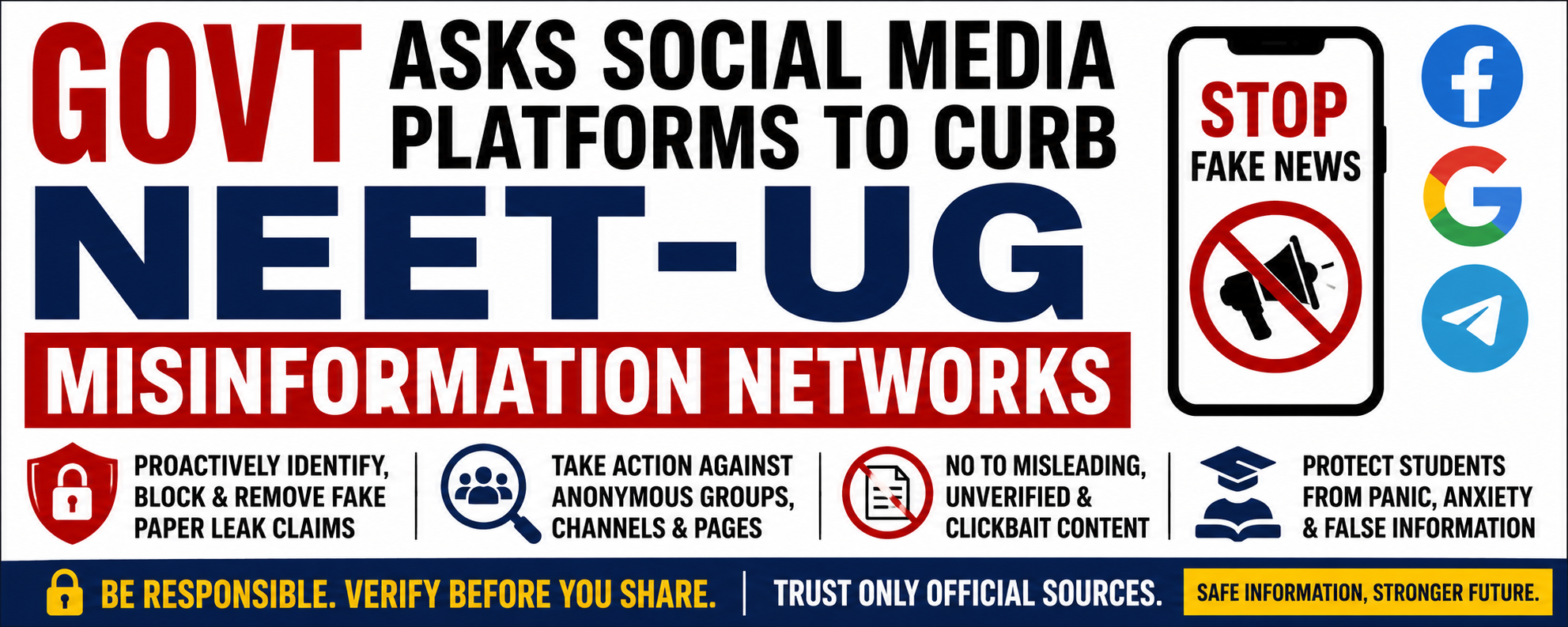
Amid the sensitive situation surrounding the NEET-UG re-examination, the Centre has asked major social media platforms to take stronger action against misinformation, fake paper leak claims and unverified exam-related content.
The move comes at a time when lakhs of students and parents are already under pressure due to the cancellation of the earlier NEET-UG examination and the upcoming re-test. In such a situation, fake messages, edited screenshots, false paper leak claims and anonymous Telegram posts can create unnecessary panic and mental stress among students.
Government Holds Meeting With Platforms
According to reports, officials from the Ministry of Education held discussions with representatives of major platforms including Meta, Google and Telegram.
The concern raised in the meeting was that anonymous groups and channels are being used to spread misleading content related to competitive examinations. Such content often includes fake paper leak claims, clickbait posts, unverified “inside information” and rumours about exam centres, admit cards or question papers.
Why This Step Is Important
NEET-UG is one of the most important entrance examinations in India. For many families, it represents years of preparation, financial sacrifice and emotional investment.
When fake news spreads before an examination, it affects students in many ways. It creates fear, confusion and loss of focus. Some students may stop preparing properly, some may believe wrong information, and some parents may panic unnecessarily.
This is why controlling misinformation is not only a technology issue. It is also a student welfare issue.
Focus on Fake Paper Leak Claims
The government has specifically asked platforms to proactively identify and remove networks that spread fake information and panic before examinations.
This includes:
Fake paper leak claims
Unverified PDFs
Fraudulent Telegram groups
Clickbait exam updates
Misleading screenshots
False admit card or exam centre claims
Paid rumours targeting anxious students
Such content can be especially dangerous because students under stress may believe it quickly.
Students and Parents Must Stay Alert
Students and parents should follow only official sources for NEET-UG updates. Any information related to exam date, admit card, exam city, paper leak, result or counselling should be verified only from official NTA or government communication.
Do not trust random Telegram groups, forwarded WhatsApp messages, edited screenshots or YouTube videos claiming “inside news”.
If any message creates fear or asks for money in exchange for paper, answers, centre details or guaranteed help, it should be treated as suspicious.
Need for Responsible Digital Behaviour
At this stage, everyone has a responsibility. Platforms must remove harmful misinformation. Authorities must communicate clearly and quickly. Coaching centres and counsellors must share verified information only. Parents must avoid forwarding unverified messages. Students must protect their mental peace.
One fake message can disturb thousands of students.
Final Message for Students
The NEET-UG re-examination is already a difficult phase for aspirants. Students should not allow rumours to disturb their preparation.
Stay focused.
Trust only official updates.
Avoid panic groups.
Do not pay anyone for fake paper claims.
Report suspicious content.
Use your time for revision, not rumours.
Conclusion
The government’s direction to social media platforms is an important step to reduce misinformation around NEET-UG. In a high-pressure examination environment, fake news can damage student confidence and create unnecessary fear.
A fair examination needs not only secure paper handling but also a clean information environment. Students deserve clarity, protection and peace of mind while preparing for their future